
Review · OSAKA
Learn Zen in a class of making Matcha tea near Osaka Castle
Passing through the low entrance to this tea room is meant to reset the social order: everyone is equal, no matter your age, nationality, or status. You will change into kimono or hakama, learn the careful gestures of tea, and take part rather than simply watch.
I like the small group size, capped at six, and the way the class connects matcha with wagashi, seasonal design, and Japanese ideas of beauty. The included photo session is another strong point. The main catch is time: one hour goes quickly, and hair styling, outdoor photos, and some costume extras cost more.
Key points to know before booking
- A true participation class: You prepare matcha for another person instead of sitting through a demonstration only.
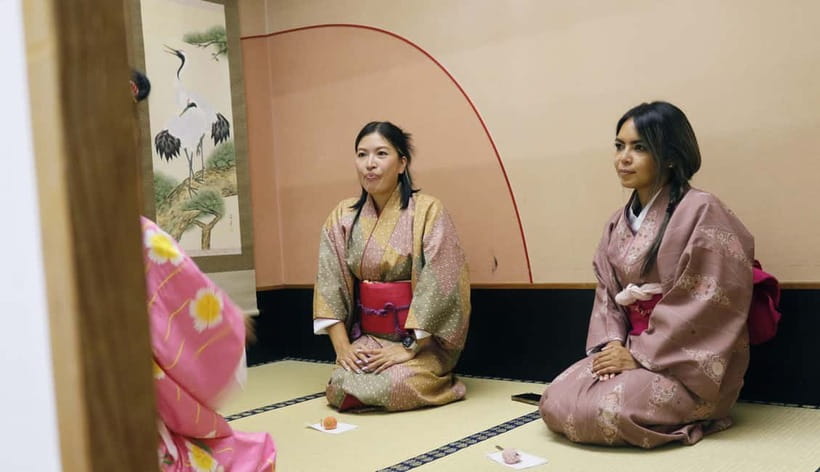
- Traditional clothing included: Women wear kimono, and men wear hakama and dogi, with the chance to take photos during the ceremony.
- Wagashi adds cultural meaning: The small Japanese sweet reflects the seasons, handcraft, and the ideas of wabi and sabi.
- Small groups matter: With no more than six participants, you should receive personal help with posture, bows, and tea movements.
- Arrive early: Reach the wooden Samurai Honor sign 30 minutes before your booked time for changing and instructions.
- Check paid extras carefully: Wagami hair styling, outdoor photography, and movie shooting are not part of the basic package.
What this Osaka tea ceremony really offers
This is not a quick cup of green tea beside Osaka Castle. It is a compact cultural lesson held at Samurai Honor, a venue that also offers martial arts and calligraphy activities. The tea class puts you inside a formal setting, dresses you in traditional clothing, and teaches the role of the person serving tea as well as the role of the person receiving it.
That last part matters. In chanoyu, the tea ceremony, hospitality is not a one-way performance. The host prepares tea with care, while the person receiving it responds with attention and proper manners. You learn that relationship through practice, not just explanation.
The activity costs $40 per person and lasts one hour. At that price, the value rests on three things: the clothing, the instructor’s time, and the photographs. You also receive matcha and wagashi, plus an English interpreter guide and a certified professional instructor.
If you want a long, quiet tea ceremony with extensive ritual, this will feel brief. If you want a clear introduction that fits neatly into an Osaka sightseeing day, the short format works well.
More Japanese castle tours around Osaka:
- Osaka Castle: Museum and Tower Entry Ticket
★ 4.5 · 2,380 reviews - Osaka Castle Walking Tour and Castle Tower Admission
★ 5.0 · 561 reviews - From Osaka: Himeji Castle, Arima Onsen & Mt. Rokko Day Tour
★ 4.6 · 339 reviews
Finding Samurai Honor in Joto-ku
The actual location is Bushi no Homare, also presented as Samurai Honor. Its address is Excellence Takayama 1F, 2-3-19 Shiginonishi, Joto-ku, Osaka-shi, Osaka 536-0014.
Use Google Maps for navigation. The supplied directions warn that the Apple Maps address is incorrect, so this is one small detail worth taking seriously. At the venue, look for a wooden sign reading Honor of the Samurai. A rack of activity pamphlets sits in front, and hanging kimono and hakama may help confirm that you have found the right place.
There is no hotel or station pickup. Transportation is your responsibility, and the activity information does not include a travel time from Osaka Castle or any particular train station. Plan your route before the day of the class rather than assuming the name means you are directly beside the castle.
Arrive 30 minutes before your reserved start time. That extra half-hour is for changing clothes and receiving instructions, not for adding more ceremony time. Wear a T-shirt under your clothing, as it should make changing simpler and more comfortable.
Changing into kimono or samurai clothing
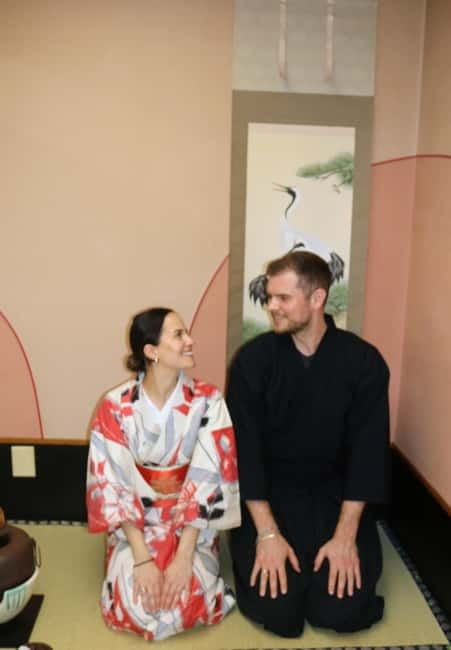
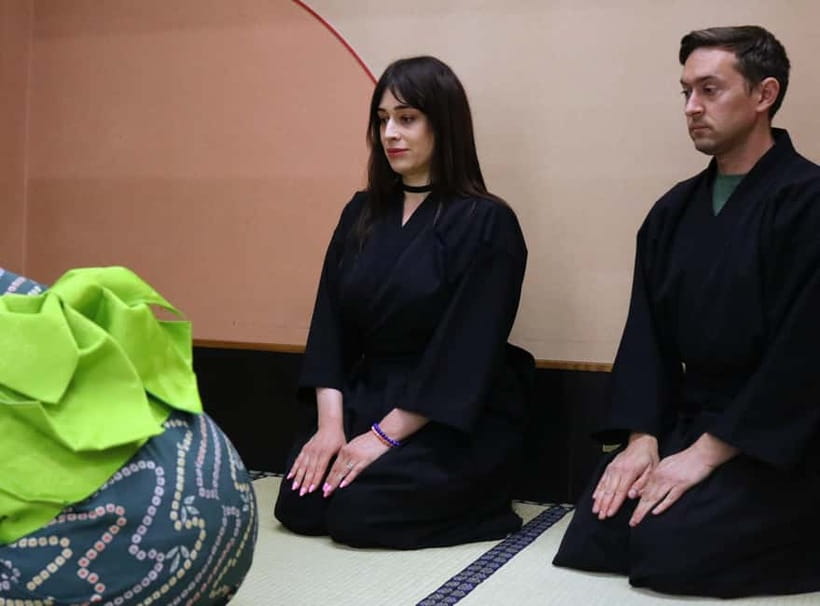
The first stage gives the class its visual appeal. Men wear hakama, the pleated traditional trousers associated with formal Japanese dress, along with dogi, a traditional robe. The activity frames this as becoming a samurai.
Women wear kimono and take on the role of Yamato Nadeshiko, a traditional ideal of Japanese womanhood. The venue provides the main clothing, and the class lets you choose among kimono colors according to the available selection.
The dressing process is not just a costume change. It sets the mood for the lesson and makes you more aware of how you sit, walk, and turn. A kimono restricts large movements, while hakama changes the way you handle your legs and posture. Those practical limits help explain why tea etiquette pays such close attention to small gestures.
Hair styling needs special attention when you book. Wagami, meaning arranged hair with kanzashi ornament, is listed as a paid option rather than part of the standard package. The paid options also list kimono accessories, outdoor photos, and other costume elements. One booking included a beautiful updo with flowers, so ask the staff what is covered for your specific reservation instead of assuming hair styling is included.
Learning how to receive and prepare matcha
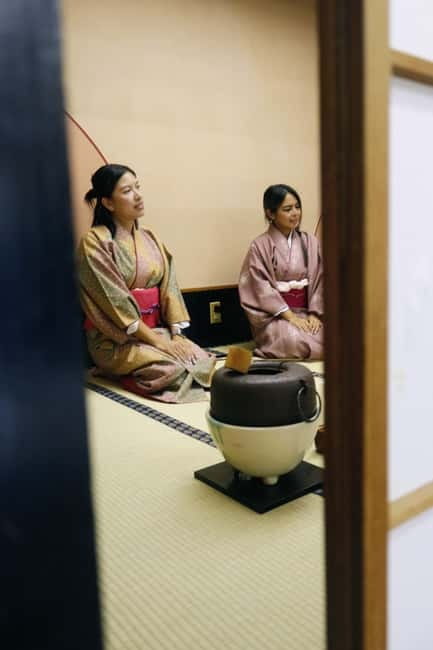
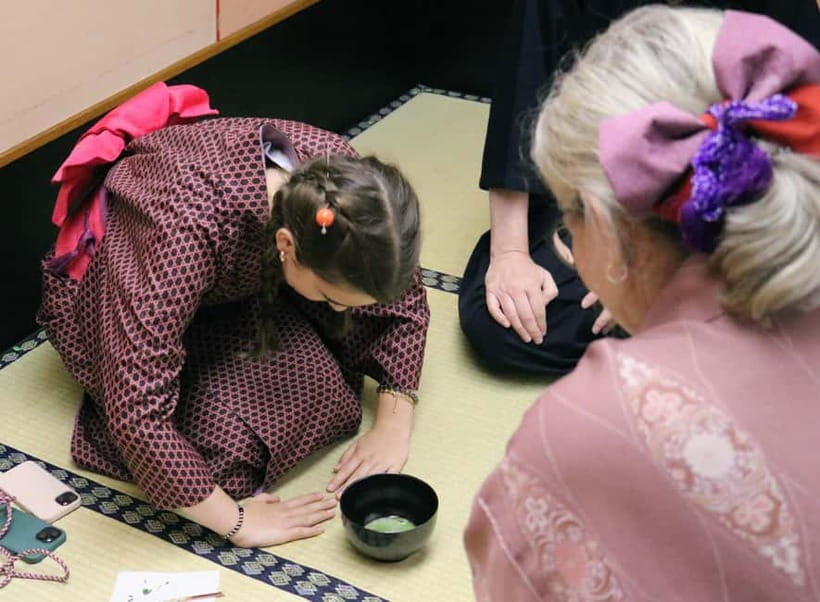
The instructor explains the tea ceremony’s basic attitude before guiding you through its movements. You learn how to sit, bow, stand, walk, and receive tea. The goal is not to memorize every rule in one hour. It is to understand why the rules create calm and respect between the person preparing tea and the person receiving it.
You then see the matcha preparation step by step. Matcha is powdered green tea whisked with hot water, rather than loose leaves steeped in a pot. The master prepares it according to traditional manners and serves it to you.
The best part for many people is that the class does not leave you on the sidelines. You get a chance to make tea for someone else. That turns etiquette into something physical. You have to hold the bowl correctly, pay attention to your movements, and think about the other person’s experience.
The class is taught in English and Japanese. An English interpreter guide is the default, and the instructor may also speak Japanese. Italian, Spanish, French, Chinese, Thai, and Indonesian interpretation may be possible, but staff availability is limited, so ask before reserving if you need one of those languages.
More workshops in castle rooms around Osaka:
- Château du Bois-Huaut: Cellar Tour and Wine Tasting Class
★ 4.8 · 53 reviews - Newcastle: Spirit Blending Class at Earp Distilling Co.
★ 4.7 · 17 reviews - Matsumoto Castle Tour & Soba Noodle Making Workshop
★ 5.0 · 10 reviews
Why the low doorway matters
The tea room entrance, called a nijiriguchi, carries a clear message. Once you pass through it, social rank is set aside. The activity explains that nationality, age, gender, and status do not determine how people are treated inside the room.
You may not spend long discussing this idea, but it gives the gestures a larger purpose. A bow is not merely a movement to copy. It is part of a shared agreement to show care and attention.
This is also where the samurai theme makes sense. The experience uses traditional clothing and the setting of Samurai Honor to connect modern visitors with older Japanese customs. It does not turn you into a historical character in a staged show. Instead, you get a simple introduction to discipline, courtesy, and hospitality through tea.
Wagashi, seasons, and Japanese ideas of beauty
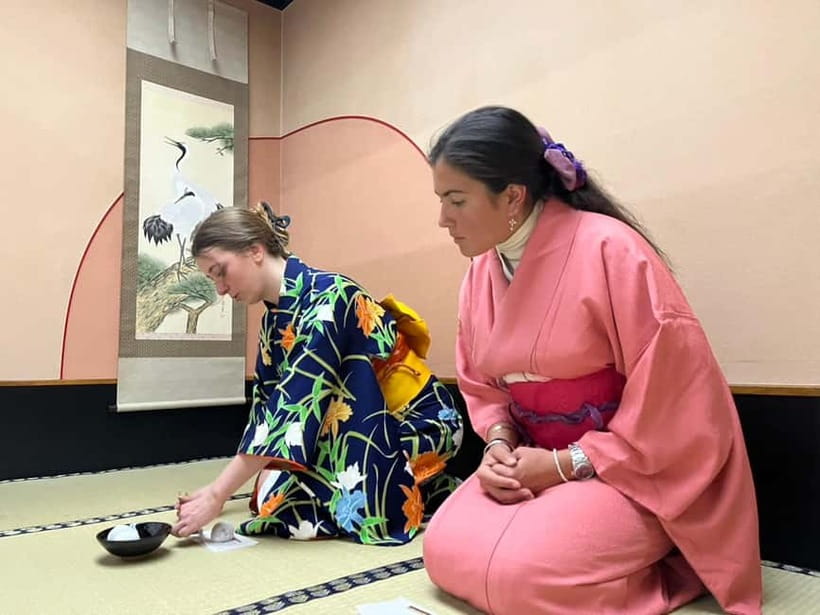
Your matcha comes with wagashi, a Japanese sweet traditionally paired with tea. These sweets are often made by hand and shaped with seasonal colors and patterns. Their appeal is visual before you taste them.
The instructor uses wagashi to explain wabi and sabi, ideas tied to restraint, simplicity, imperfection, and the beauty of age and natural change. The class also connects wagashi with the four seasons. Spring, summer, autumn, and winter are not just dates on a calendar here. They influence colors, shapes, ingredients, and the way Japanese food is presented.
Wagashi developed alongside the tea ceremony during the Kamakura period. That gives the sweet a useful place in the lesson. You are not simply being handed a snack. You are seeing how food can carry history and an attitude toward nature.
I like this detail because it keeps the class from becoming only a dress-up photo session. The sweet gives you a concrete way to understand Japanese aesthetics. You can look at its handmade shape, notice its seasonal design, and then eat it with the matcha.
Photos that preserve the experience
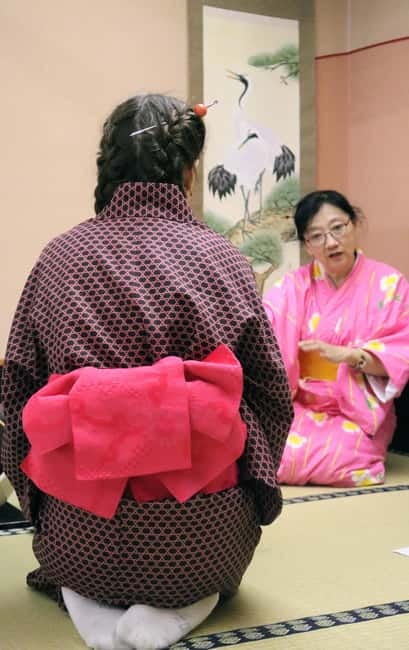
Photography is included, and a photographer takes pictures during the dressing and ceremony. The finished images are sent to your designated email address. The photographs are usually delivered the same day, which makes this practical if you are moving on to another city soon.
The photo service also lets you focus on the lesson instead of trying to hold a phone while wearing formal clothing. You can take in the instructor’s explanation and let someone else capture the details.
The basic package does not promise an outdoor photo shoot. Outdoor images are listed as a paid option for both women and men, along with movie shooting. If your main goal is a portrait session, check the extra charges before booking. The included photography is best understood as a record of the tea experience, not a full professional photo package.
The clothing selection, hair arrangement, flowers, and camera work can make this particularly appealing for couples, families with older children, and friends who want a shared memory. Keep in mind that children under 10 are not accepted.
How the one-hour schedule feels
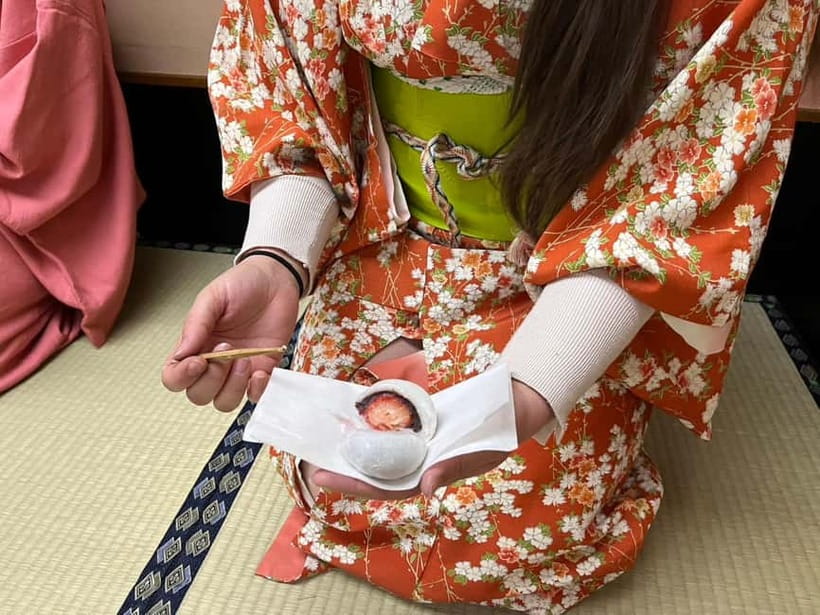
The class moves through several stages:
- Arrive 30 minutes early for clothing and instructions.
- Change into kimono or hakama.
- Receive an introduction to tea etiquette and Japanese customs.
- Watch the preparation of matcha.
- Receive matcha and wagashi.
- Practice preparing tea for another person.
- Take photographs during the activity.
- Receive the image files by email.
The class itself lasts one hour, not including the early arrival period. That is enough time for a focused introduction, but not enough for every traditional rule or a lengthy explanation of Japanese tea schools.
A small group of no more than six helps. You should have a chance to ask questions and repeat the main movements. The pace may still depend on the number of people booked, but this is far more personal than a large cultural demonstration.
For families, the activity offers a useful shared task. Children cannot join under age 10, and the traditional clothing may require patience. Older children can learn by serving tea to a parent, sibling, or another participant. The activity information does not list accessibility details, so contact the provider if you have mobility or dressing concerns.
What the $40 price includes
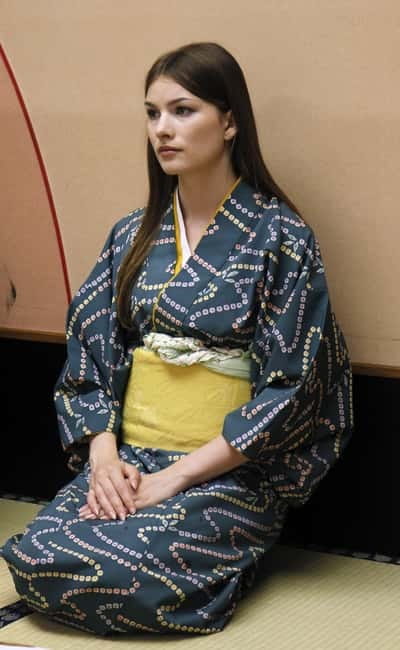
At $40 per person, the package covers more than a bowl of matcha. You receive:
- Kimono or basic samurai clothing
- Matcha
- Wagashi
- English interpreter guide staff
- A certified professional instructor
- Tax and tips
- Photography with images sent by email
There is no separate tip requirement listed, which makes the advertised cost easier to understand. The price is reasonable if you value hands-on instruction, traditional clothing, and photographs in one short activity.
The value drops if you only want to taste matcha. You could find tea in many places around Osaka for less. You are paying for the setting, the guidance, the clothing, and the chance to practice formal movements.
Budget separately for paid extras. Wagami hair styling, additional kimono accessories, outdoor photography, and movie shooting are not included in the base cost. Ask what your reservation contains before you arrive, especially if photographs or hair design are the main reason you are booking.
Who should book this experience
I would choose this class if you want an accessible first look at Japanese tea culture and prefer doing something rather than only watching. It suits visitors who enjoy clothing, food presentation, photography, and short cultural activities.
It is also a good fit for couples and families with children aged 10 or older. The shared act of preparing tea gives everyone a role. The small group limit should make it easier to receive help and take photos without feeling lost in a crowd.
You may want something else if you dislike formal sitting, careful gestures, or changing into traditional clothing. The class also may not satisfy someone seeking a full tea-school ceremony with a long period of silence and highly detailed ritual.
The experience is not suitable for children under 10, people with altitude sickness, or people over 95. It also prohibits pets, alcohol and drugs, and nudity. Bring a T-shirt, arrive early, and use Google Maps rather than Apple Maps.
Should you book this Osaka tea class?
Book it if you want a friendly, compact introduction to matcha with real participation. The strongest reasons are the small group, the included traditional clothing, the chance to prepare tea for another person, and the photographs sent by email.
Skip it if you are mainly searching for a long, quiet ceremony or a fully styled outdoor portrait session. Those goals require a different format or paid additions.
For most first-time visitors, this $40 experience offers a sensible balance of culture and fun. You learn why tea etiquette matters, taste seasonal wagashi, and leave with photographs that show more than a souvenir snapshot. Just arrive early, confirm the hair and photo options, and allow time to reach Joto-ku.
FAQ
How long does the tea ceremony experience last?
The tea ceremony class lasts one hour. You should arrive 30 minutes before your booked start time for changing and instructions.
How much does the activity cost?
The listed price is $40 per person.
What clothing is provided?
Women wear kimono. Men wear hakama and dogi, traditional Japanese clothing associated with the samurai theme.
Is matcha included?
Yes. Matcha is included in the activity, along with wagashi, a Japanese sweet served with tea.
Is the activity taught in English?
Yes. English and Japanese are available, with English as the default interpreter language.
Can I request another language?
Italian, Spanish, French, Chinese, Thai, and Indonesian may be available, but staff availability is limited. Ask about the schedule before booking.
How many people can join?
The class is limited to six participants.
Are photographs included?
Yes. Photo shooting is included, and the images are sent to your designated email address.
Is hair styling included?
Wagami, which includes arranged hair and a kanzashi ornament, is listed as a paid option. Confirm the details of your reservation before arrival.
Where is the meeting point?
The activity takes place at Bushi no Homare, also called Samurai Honor, at Excellence Takayama 1F, 2-3-19 Shiginonishi, Joto-ku, Osaka-shi, Osaka 536-0014. Look for the wooden Honor of the Samurai sign and use Google Maps, since the Apple Maps address is incorrect.
New castle tours around Osaka
- From Osaka: Himeji Castle, Arima Onsen & Mt. Rokko Day Tour★ 4.6 · 339 reviews
- Osaka: Osaka Castle 3 hours Historical Walking Tour★ 4.6 · 14 reviews
- Osaka: Osaka Castle Guided Tour with Local Guide★ 4.7 · 78 reviews
- Osaka: Osaka Castle – Tsuruhashi – Tennoji (Spanish Guide)★ 4.7 · 10 reviews
- Osaka: Castle, Tea Ceremony, Calligraphy, and Samurai Armor!★ 5.0 · 4 reviews
- Osaka: Early Morning Osaka Castle Guided Tour, Avoid Crowds★ 4.9 · 12 reviews
- Osaka: Explore Every Bit of Osaka Castle in 3 Hours★ 5.0 · 5 reviews
- Osaka: Osaka Castle & Historical Museum Guided Tour★ 4.8 · 28 reviews
Japan Castle Tours, compared.
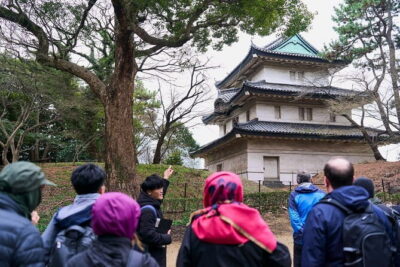
Tokyo Castle & Imperial PalaceーShogun Walking Tour
Read our review →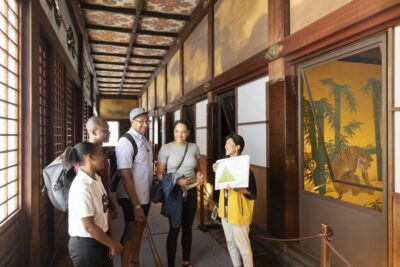
Kyoto: Nijo-jo Castle and Ninomaru Palace Guided Tour
Read our review →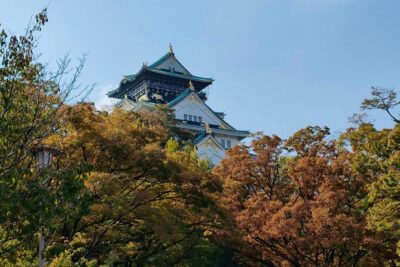
Ultimate Osaka Walking Tour: Castle, Dotonbori & Hidden Gems
Read our review →
Kyoto: Nijo Castle, Kiyomizu & Fushimi Inari Guided Tour
Read our review →
Osaka Castle Walking Tour and Castle Tower Admission
Read our review →
Imperial Palace East Garden and Edo Castle Walking Tour in Tokyo
Read our review →
Kyoto: Imperial Palace & Nijo Castle Guided Walking Tour
Read our review →Browse the lists this tour appears in