
Review · JAPAN
Tokyo Castle & Imperial PalaceーShogun Walking Tour
Edo Castle was once the largest castle in Japan, and this tour helps you see the fortress that Tokyo has largely grown around. You’ll walk past massive stone walls, moats, gates, and garden paths while learning how the shogun controlled Japan from this site for roughly 260 years. I like the way the tour connects samurai power with modern Tokyo, rather than treating the palace as a pretty park with no story.
I also like the small size, capped at 10 people, and the guides’ easygoing teaching style. Anju, Fuma, Yuka, Tomo, Keiko, and Kosei are among the guides praised for clear English, good questions, photos, and lively explanations. The main drawback is that much of the two hours takes place outdoors, and the tour does not enter the private residential areas of the Imperial Palace.
Key points to know before you go
- Edo Castle survives in walls, moats, gates, and foundations: The castle buildings are mostly gone, but its defensive design remains easy to trace.
- The East Gardens provide the tour’s calmest stretch: Ninomaru Garden, seasonal trees, koi, and old stonework give you a softer view of palace life.
- A group of 10 keeps the history conversational: You can ask questions without shouting across a crowd.
- The tour is in English only: Japanese language support is not provided.
- The meeting point is easy to identify: Look for the guide holding a Local Guide Stars sign in front of Starbucks Coffee Kōkyo Gaien Wadakura Fountain Park Store.
- Weather matters: Wear shoes suitable for walking and dress for sun, rain, or cold because a large portion of the tour is outside.
Why Edo Castle makes a better history lesson than a palace tour
The name Imperial Palace can create the wrong picture. You may expect grand rooms, royal furniture, and a look inside the emperor’s daily life. This experience is different. It focuses on the grounds around the palace, especially the remains of Edo Castle and the Imperial Palace East Gardens.
That is a good match for Tokyo. The original castle complex was enormous, but much of it disappeared through fire, war, rebuilding, and the changing needs of the city. What remains is not a complete castle you can walk through. Instead, you get pieces: gates, moats, stone foundations, towers, gardens, and carefully preserved outlines.
A guide gives those pieces meaning. Without context, a high stone wall is simply a high stone wall. With an explanation of layered defenses, controlled gates, water barriers, and the movement of retainers, the site begins to feel like a working military center.
The tour also links three different periods. You learn about the shoguns and their samurai government, the development of Edo into Tokyo, and the present imperial system. That broad view is one of the activity’s strongest features. You are not simply memorizing dates. You are seeing how political power shifted from the shogun to the emperor and how the capital changed along with it.
More Castle Walking Tours in Japan
- Ultimate Osaka Walking Tour: Castle, Dotonbori & Hidden Gems
★ 5.0 · 862 reviews - Tokyo Castle & Imperial PalaceーShogun Walking Tour
★ 5.0 · 724 reviews - Osaka Castle Walking Tour and Castle Tower Admission
★ 5.0 · 561 reviews
Meeting at Wadakura Fountain Park
The tour begins in front of Starbucks Coffee Kōkyo Gaien Wadakura Fountain Park Store at 3-1 Kōkyo Gaien, Chiyoda City, Tokyo. Look for a guide holding a Local Guide Stars sign.
This is a practical meeting place because it gives you a clear landmark near the palace grounds. Still, Tokyo’s streets and station exits can be confusing, so I would check the map before setting out. Arriving a little early gives you time to find the correct Starbucks without rushing.
The group is limited to 10 people. That matters here. Palace grounds cover a broad area, and a large group would make it harder to hear explanations or ask about details. A small group also lets the guide adjust the pace. Several guides, including Anju, Fuma, and Tomo, are praised for keeping a comfortable rhythm while still answering questions.
The tour returns to the same Starbucks after about two hours. Starting and ending at one spot keeps the outing simple, especially if you are fitting it between other Tokyo plans.
Sakurada Tatsumi Yagura and the first look at the defenses
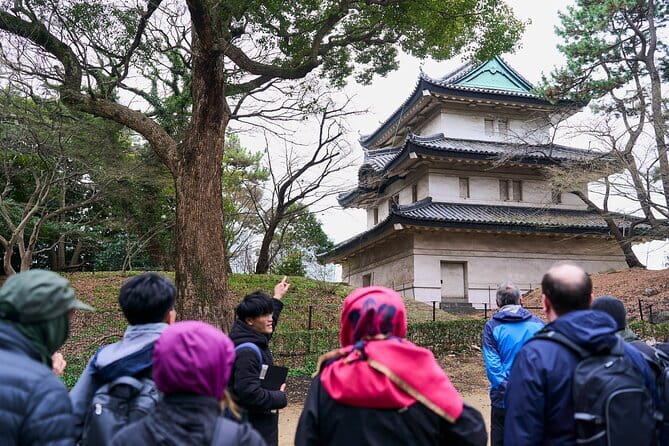
The first stop is Sakurada Tatsumi Yagura, a traditional corner tower and an early photo stop. It helps establish the basic shape of the castle defenses before you move toward the main gates and gardens.
This is a short stop, listed at about five minutes, so do not expect a long lecture here. Its value is visual. You begin to see how towers, walls, moats, and gates worked together rather than treating each structure as an isolated monument.
The guide may also help you notice details you would otherwise walk past. That was a repeated strength among the guides, with visitors specifically praising Fuma, Jessica’s guide, for pointing out features that are easy to miss.
Ote-Mon Gate shows how power was controlled
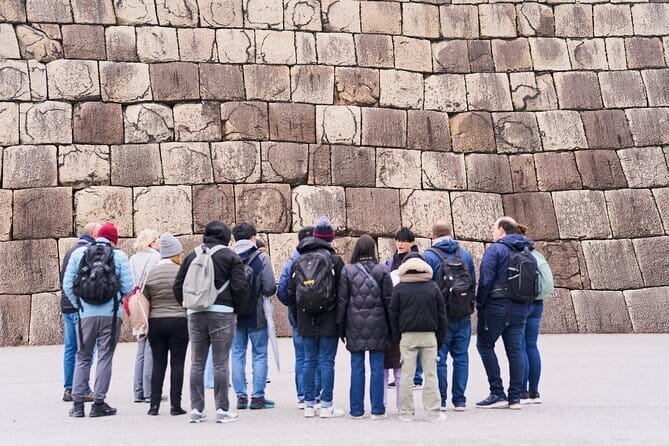
Ote-Mon Gate receives more time, around 15 minutes, and it is one of the most useful stops for understanding Edo Castle as a functioning stronghold.
A gate was not just an entrance. It controlled movement into the castle’s inner areas. The thick construction, approach, and surrounding defenses helped make Edo Castle difficult to attack. The guide explains how these layers worked and how the shogun’s residence was protected.
This is where the tour’s samurai and shogun theme becomes practical. You are not only hearing that the shogun was powerful. You are seeing the physical system that protected that power.
If you have watched a recent samurai drama, the site may feel especially engaging. One participant who had become interested in the Edo period through Shōgun found the real setting a useful way to understand the era from several angles. The guide can separate drama from history while keeping the subject approachable.
Same stronghold, another way through the gate:
- Osaka Castle: Museum and Tower Entry Ticket
★ 4.5 · 2,380 reviews - Kyoto: Nijo-jo Castle and Ninomaru Palace Guided Tour
★ 4.7 · 1,020 reviews - Kyoto: Nijo Castle, Kiyomizu & Fushimi Inari Guided Tour
★ 4.7 · 700 reviews - Imperial Palace East Garden and Edo Castle Walking Tour in Tokyo
★ 5.0 · 510 reviews
The Imperial Palace connects old rule with Japan today
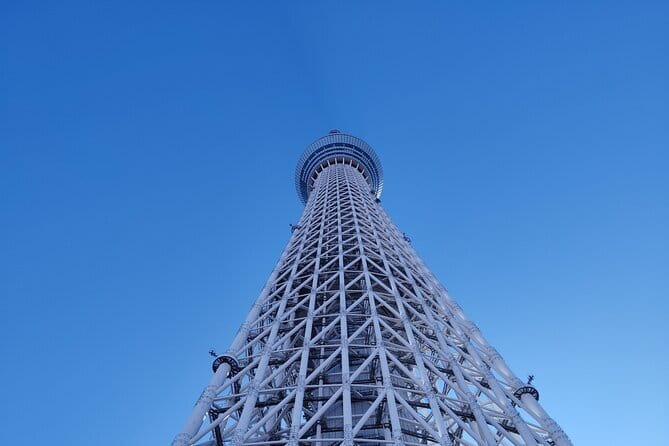
The stop at Tokyo Imperial Palace lasts about 20 minutes and shifts the focus from the former shogun’s headquarters to the present imperial institution.
Japan’s imperial line is presented as a tradition lasting roughly 2,600 years. The tour asks how that system survived major political changes, including the long period when the shogun held practical control over Japan.
This is a valuable part of the experience because the palace is not only an Edo-period site. It is also a place connected to Japan’s present identity. The guide explains how the grounds function today and how the imperial family fits into the story of the country.
Keep your expectations realistic. This is a guided walk around the palace grounds, not a visit to the emperor’s private rooms. The tour offers historical context and exterior views rather than access to every palace building.
There is also a security check when entering the Imperial Palace area. Do not bring knives or alcohol. Photography is encouraged, so a phone or camera is worth having ready.
Ninomaru Garden adds beauty to the military story

Ninomaru Garden gives the tour a welcome change of mood. After walls, gates, and defensive planning, you move into a carefully maintained garden with seasonal plants, trees from across Japan, water, and special koi.
The garden helps show another side of the ruling class. Edo Castle was a place of military control, but it was also a residence and a center of ceremony, design, and cultivated leisure. The contrast makes the history easier to picture.
This is a good place to slow down and take photographs. The tour includes about 15 minutes here, although the exact pace can depend on the group and conditions. You may want to ask about the garden’s plants or the koi, since these details can otherwise become background scenery.
I especially like this part for visitors who are less interested in military history. The garden offers visual rewards even if your main reason for booking is simply to see a quiet, attractive part of central Tokyo.
Edo Castle ruins reveal the scale of the former complex
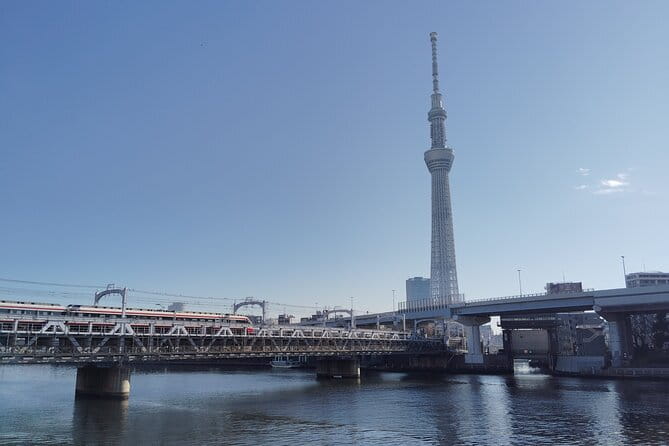
The Edo Castle ruins are the clearest reminder that the palace grounds once belonged to a far larger fortress. The buildings themselves are mostly gone, but foundations and stonework show the scale of what stood here.
The guide uses the remains to explain how large the castle was and how the site related to the surrounding moats and walls. This is where the idea of a hidden castle becomes clear. Tokyo’s modern streets may surround you, yet traces of the old stronghold remain under the present city.
You will spend around 10 minutes at the ruins. That is enough for an explanation and photographs, but not enough for a detailed archaeological study. If you want an exhaustive account of every building, this tour may feel too brief. If you want a readable overview that brings the remains to life, the timing works well.
The ruins also help connect the past to the growth of Tokyo. Edo developed around this political center, and the city’s later expansion did not erase every mark of the castle.
The Imperial Palace East Gardens finish the walk gently
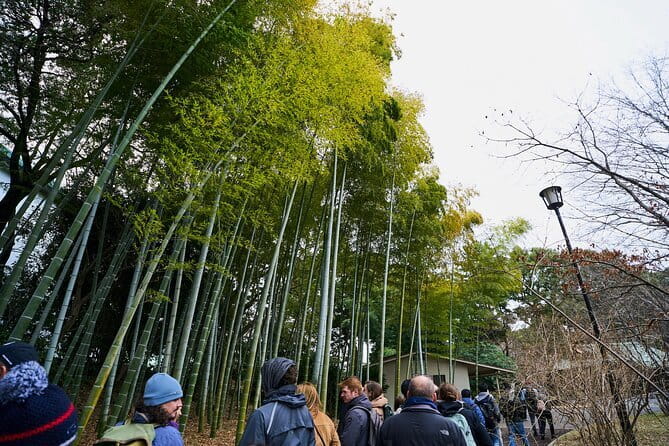
The final major stop is the Imperial Palace East Gardens, with about 20 minutes set aside for exploring and explanation. This is likely to be the most relaxed part of the walk.
You can expect garden paths, old trees, stone features, seasonal color, and views suited to photography. The gardens are also a useful reminder that the palace grounds are not only a political site. They are a public green space where you can pause and notice the quieter side of central Tokyo.
The tour includes encounters with special koi and trees gathered from different parts of Japan. These details give the final section a national character. You are seeing more than one formal garden. You are seeing how plants, water, stone, and design have been used to represent place and tradition.
The East Gardens are accessible to wheelchairs, though some slopes and sections require walking or going down on foot. If mobility is a concern, check the route with the guide at the beginning rather than waiting until you reach a difficult section.
The guides shape the quality of the experience
At two hours and $23 per person, the guide is the main reason to book rather than simply walk through the grounds alone.
The strongest guide qualities are clear English, friendly conversation, and the ability to explain large historical changes in simple terms. Anju is repeatedly praised for enthusiasm, patience, and strong explanations. Fuma is noted for fun facts and a warm manner. Yuka and Tomo are praised for answering questions and keeping the pace comfortable. Kosei brings an international perspective from having lived abroad, while Keiko is noted for patience and helpful explanations.
You may also meet a younger guide or university student. That does not mean the experience is casual or thin. One guide described as a young engineering student was praised for excellent English and a strong grasp of the palace grounds and Japanese history.
Guide assignments can change, so you should not book expecting one particular person. The useful pattern is the teaching style: friendly, interactive, and focused on making overlooked structures understandable.
Is $23 good value for two hours?
At $23, this is a reasonably priced introduction to one of Tokyo’s most important historical sites. The grounds themselves may not require a major admission charge, so the value is not in paying for an expensive ticket. The value comes from having someone explain what you are looking at.
That distinction matters. If you are happy reading signs, using a guidebook, and wandering at your own speed, you may prefer to visit independently. If you want the walls, gates, gardens, and ruins to fit into one clear story, $23 is a fair fee.
The group size strengthens the value. A 10-person maximum is more personal than a large coach-style outing, and the pace is not built around rushing from one photo stop to the next. Several people found the tour worth the time because the guide pointed out details they would have missed alone.
The two-hour length also makes it easy to fit into a busy Tokyo day. You get a solid history lesson without giving up half a day. Just remember that two hours outdoors can feel longer in rain, heat, or cold.
Who will enjoy this tour most?
I would choose this walk if you want a clear introduction to samurai government, Edo Castle, and the imperial family in one outing.
It suits:
- First-time visitors who want historical context for Tokyo
- People interested in samurai, shoguns, and the Edo period
- Visitors who enjoy gardens but want more than a photo stop
- Families and couples who prefer a relaxed walking experience
- Anyone who values a small English-speaking group
- Visitors who want a short activity near central Tokyo
It may be less suitable if you want to enter palace interiors, spend hours in a garden, or explore entirely on your own. It is also not the best choice for anyone hoping to avoid outdoor walking.
Wear comfortable shoes and clothing suited to the forecast. Bring a camera, but do not let the photographs distract you from the explanations. The best moments come when the guide shows how the gate, wall, moat, and garden fit into a larger story.
Should you book the Tokyo Castle and Imperial Palace Shogun Walking Tour?
Book it if the price works for you and you want the Imperial Palace grounds to make historical sense. The castle ruins are fragmentary, but a good guide turns those fragments into a picture of shogun-era power, samurai administration, and the later imperial system.
I would be especially happy to recommend it to someone who has already seen Tokyo’s modern side and wants a calmer, older-feeling two hours. The gardens soften the military subject, the group size keeps the walk personal, and the English explanations make the site much easier to understand.
Skip it if you want private palace rooms or a long, unhurried garden visit. For most visitors interested in Japanese history, though, this is a practical way to place Edo Castle and the Imperial Palace at the center of Tokyo’s story.
FAQ
How long does the Tokyo Castle and Imperial Palace Shogun Walking Tour last?
The tour lasts two hours and returns to the starting point at Starbucks Coffee Kōkyo Gaien Wadakura Fountain Park Store.
How large is the tour group?
The tour is limited to 10 participants, making it a small-group experience.
What language is the tour conducted in?
The live tour is conducted in English only. Japanese language support is not available.
Where does the tour meet?
Meet in front of Starbucks Coffee Kōkyo Gaien Wadakura Fountain Park Store at 3-1 Kōkyo Gaien, Chiyoda City, Tokyo. The guide carries a Local Guide Stars sign.
What places are included in the walk?
The route includes Sakurada Tatsumi Yagura, Ote-Mon Gate, Tokyo Imperial Palace, Ninomaru Garden, Edo Castle ruins, and the Imperial Palace East Gardens.
Is there a security check?
Yes. There is a security check when entering the Imperial Palace area. Knives and alcohol are not permitted.
Is the tour suitable for wheelchair users?
Wheelchairs can be used within the Imperial Palace grounds, but some slopes and sections require walking or going down on foot.
New castle tours around Japan
- Peace Memorial Park, Hiroshima Castle, & Garden Private Tour★ 4.8 · 7 reviews
- From Osaka: Himeji Castle, Arima Onsen & Mt. Rokko Day Tour★ 4.6 · 339 reviews
- Osaka/kyoto: Himeji Castle, Kobe. Luxury Day Trip with Guide★ 5.0 · 2 reviews
- Osaka: Osaka Castle 3 hours Historical Walking Tour★ 4.6 · 14 reviews
- Osaka: Osaka Castle Guided Tour with Local Guide★ 4.7 · 78 reviews
- Osaka: Osaka Castle – Tsuruhashi – Tennoji (Spanish Guide)★ 4.7 · 10 reviews
- Osaka: Castle, Tea Ceremony, Calligraphy, and Samurai Armor!★ 5.0 · 4 reviews
- Osaka: Early Morning Osaka Castle Guided Tour, Avoid Crowds★ 4.9 · 12 reviews
Castle Walking Tours, compared.

Edinburgh Castle: Guided Walking Tour with Entry Ticket
Read our review →
Prague: 3-Hour Walking Tour of Old Town & Prague Castle
Read our review →
Edinburgh Castle Guided Walking Tour in English
Read our review →
Budapest: Buda Castle Walk with Saint Stephen’s Hall
Read our review →

Prague 3-hour Afternoon Walking Tour including Prague Castle
Read our review →
Royal Mile and Edinburgh Castle – Small Group Walking Tour
Read our review →
Browse the lists this tour appears in