
Review · JAPAN
Hiroshima; Hiroshima Peace Memorial Museum and Castle Tour
The most powerful part of this Hiroshima tour is the way it links the Peace Memorial Museum with the places around it. You do not simply look at exhibits and move on. A guide helps explain the memorials, the hypocenter, the Atomic Bomb Dome, and the remains of ordinary buildings where daily life ended in an instant.
I especially like two things here. First, the guides often adjust the pace and detail to suit your group. Maria, Ihsan, Mehak, and Leo are praised for clear explanations and thoughtful care. Second, the route includes less obvious sites such as a school, hospital, and bank connected with the bombing. The main drawback is that Hiroshima Castle is a shorter, less essential stop, and its admission fee is not included.
Key points
- The museum comes with human context: Your guide helps you approach difficult exhibits at a measured pace.
- The Peace Park is more than a photo stop: Learn the meaning behind its monuments and memorials.
- The hypocenter makes the history immediate: See where the bomb exploded and how nearby buildings connect to the story.
- Surviving buildings add daily-life detail: A school, bank, or hospital can explain the destruction more clearly than statistics alone.
- The castle changes the subject: Samurai displays offer a look at Hiroshima before the bombing, but require a separate ticket.
- Three hours is useful but serious: Wear good shoes and allow emotional space for the museum.
A serious beginning at the Peace Memorial Museum
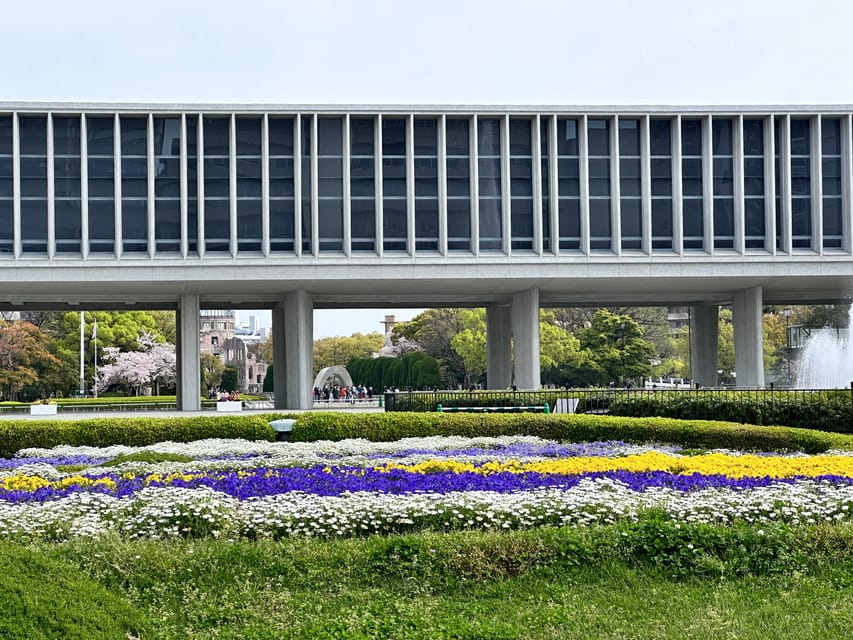
The tour starts near the taxi stand by the Peace Memorial Museum, at 1-2 Nakajimacho. From there, you spend about an hour inside the museum, with your guide helping you understand the exhibits and the events leading to the atomic bombing.
The museum is not light sightseeing. Some displays show the physical suffering caused by the bomb, including personal belongings, photographs, and accounts of the aftermath. The activity information warns that parts of the exhibition can be shocking. I would take that warning seriously, especially if you are traveling with children or anyone who finds war museums difficult.
A guide is useful here because the museum can feel crowded with information. Maria, one of the most frequently praised guides, is described as giving visitors time to read while explaining other sections herself. That balance matters. You are not rushed from case to case, yet you also do not have to work out the whole historical sequence alone.
The optional audio guide is not included, but you may not need it if you have a live guide. Your guide can answer questions in the moment and adjust the explanation to your interests. That personal exchange is one of the stronger reasons to choose this tour instead of visiting the museum without help.
The museum portion also benefits from emotional pacing. Several guides are praised for showing empathy after difficult exhibits and allowing time for breaks. This is a place where a good guide should know when to explain and when to give you quiet time.
More castle museums around Japan:
- Osaka Castle: Museum and Tower Entry Ticket
★ 4.5 · 2,380 reviews - Osaka: Osaka Castle & Historical Museum Guided Tour
★ 4.8 · 28 reviews - Nagoya: Full-Day Tour of Castle& Toyota Commemorative Museum
★ 5.0 · 4 reviews
Walking through Peace Memorial Park
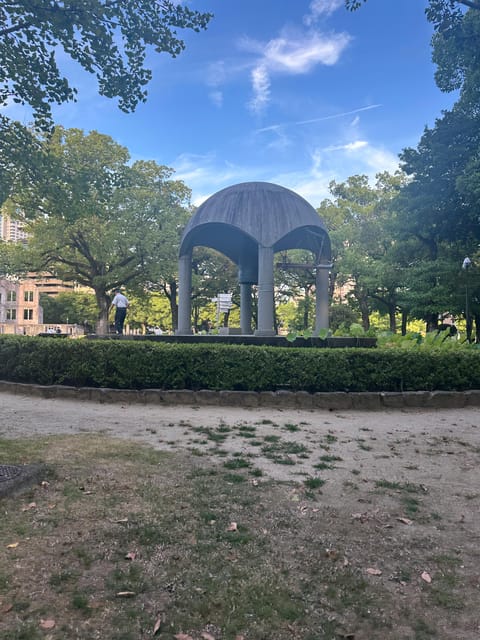
After the museum, the route continues through Peace Memorial Park for roughly an hour. This is not just a stroll between landmarks. The guide explains the meaning behind the memorials, monuments, and the idea of peace that shapes the park.
For many people, this will be the most reflective section of the tour. The museum shows what happened through objects and testimony. The park asks what should come after such destruction. A guide can connect the two, explaining why particular monuments were built and how Hiroshima presents its message to the world.
The pace appears to be one of the tour’s strengths. Maria is repeatedly described as patient when people wanted more time to read or pause. Other guides, including Ihsan and Mehak, are praised for keeping groups engaged without overwhelming them. That matters in a park where you may want both explanation and silence.
You will have chances for photographs, but this is not a photo-first outing. The park’s meaning deserves attention, and the guide helps keep the visit from becoming a quick checklist of famous sights.
The Atomic Bomb Dome and the hypocenter
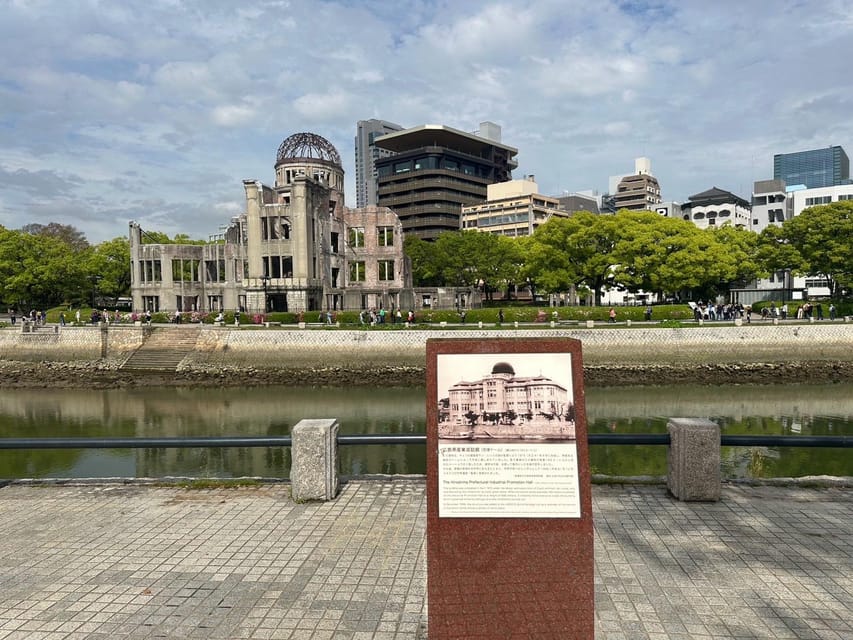
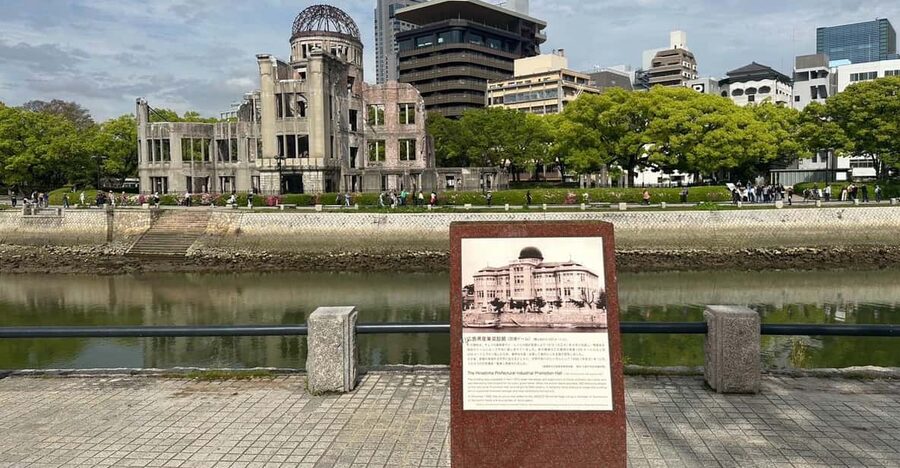
The walk to the Atomic Bomb Dome takes about ten minutes, followed by a short visit of roughly ten minutes. The Dome is one of Hiroshima’s most recognizable structures, but seeing it with some explanation gives the building more weight than a quick look from across the river.
The guide also takes you to the hypocenter, the location connected with the bomb’s explosion. This helps you understand the geography of the event. The museum presents the human story, while the hypocenter gives you a physical point on the map.
The short timing here does not mean the site is unimportant. It means the guide is fitting several connected places into a three-hour route. You may stop for photographs and hear the basic historical context, but you should not expect a long, quiet study session at the Dome.
Some guides also include surviving buildings that are less familiar to first-time visitors. Past participants have described visits to a bank where only one employee survived, a school that was almost destroyed, and a hospital linked to the bombing. These sites bring the story down to the level of work, school, treatment, and ordinary routines.
That is a real strength of the tour. A famous monument tells you what Hiroshima means today. A damaged bank or school can help you picture what the city was like before the blast and how quickly normal life disappeared.
The exact extra stops may depend on your guide, the group’s interests, and the available time. You should ask at the beginning if these locations matter to you. Maria, in particular, is praised for finding less visited places and shaping the route around questions from the group.
Hiroshima Castle and the prewar city
The final major stop is Hiroshima Castle, with about 40 minutes for a guided visit and sightseeing. This changes the tone of the day. After hours focused on the bombing and its aftermath, the castle offers a look at Hiroshima’s earlier political and military life.
Inside, you can see displays connected with samurai life, swords, helmets, and related objects. This gives you a broader view of the city rather than treating Hiroshima only as the site of a wartime tragedy. The guide can help place the castle within Japanese history and culture.
Still, keep your expectations in check. One detailed assessment found the castle less interesting than the rest of the tour. The castle ticket is also not included in the $67 price, so you will pay separately if you want to enter.
For me, the castle works best as an optional change of subject rather than the main reason to book. If you have already visited several Japanese castles, or if your time in Hiroshima is very limited, you may prefer to spend longer at the Peace Park or museum. If you want a wider view of Hiroshima’s past, the castle gives the tour a useful closing chapter.
The route also includes Hiroshima Gokoku Shrine. The information provided does not assign a separate duration to the shrine, so it may be included as part of the castle area or as a brief stop. Ask your guide how it fits into the day if shrine architecture and local religious culture are high on your list.
More castles to explore around Japan:
- Tokyo Castle & Imperial PalaceーShogun Walking Tour
★ 4.7 · 1,068 reviews - Kyoto: Nijo-jo Castle and Ninomaru Palace Guided Tour
★ 4.7 · 1,020 reviews - Ultimate Osaka Walking Tour: Castle, Dotonbori & Hidden Gems
★ 5.0 · 862 reviews - Tokyo Castle & Imperial PalaceーShogun Walking Tour
★ 5.0 · 724 reviews
What the guides add
This experience depends heavily on the guide. The strongest praise goes to guides who explain difficult history clearly, answer questions patiently, and notice what interests each group.
Maria receives especially frequent praise. She is described as friendly, flexible, and able to adjust the route for families, older visitors, and people who wanted more time with the museum exhibits. She also gives restaurant suggestions and ideas for using the rest of your time in Hiroshima.
Ihsan is praised for keeping the three hours engaging and for adapting his explanations to the conversation. Mehak is described as warm and passionate, with a clear way of explaining why the bombing happened and what followed. Leo is noted for tailoring the tour to a group’s interests, while Bilal and Ali are praised for detailed explanations and extra time on some occasions.
Those reports also point to a practical benefit: you can ask questions as the story develops. If a date, monument, or political decision is confusing, you do not have to save the question for later. That is particularly helpful for visitors who know the basic outline of World War II but want a clearer understanding of Hiroshima’s place in it.
The listed languages are English, Hindi, Malay, and Urdu. English appears often in the guide descriptions, but you should select your preferred language when booking and confirm it if the subject is especially important to you.
Is $67 a fair price?
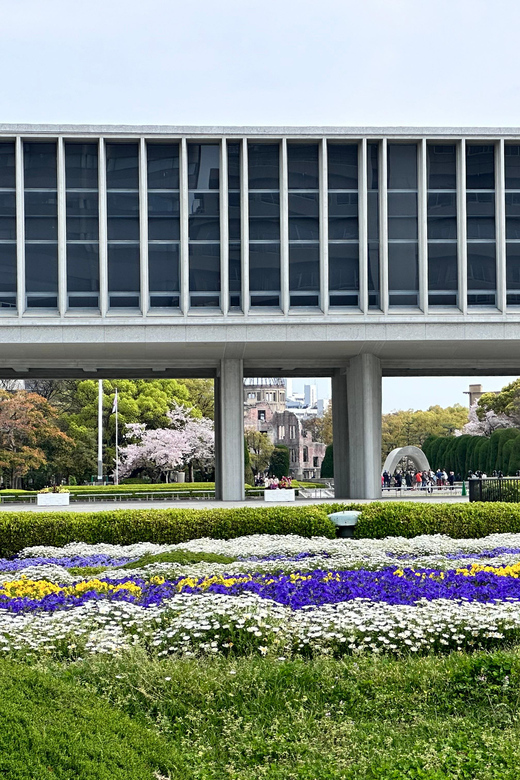
At $67 per person, the tour is not the cheapest way to see Hiroshima. The museum admission and walking tour are included, along with traditional Hiroshima snacks, but the optional museum audio guide, castle ticket, food, and drinks are extra.
The value comes from the human guidance rather than transport or luxury. You are paying for someone to organize a difficult historical visit, explain the park’s symbols, answer questions, and potentially show you places that are easy to miss. If you would otherwise spend hours reading labels and maps, that can be worthwhile.
The price also makes more sense for a small or private group. Several descriptions refer to personal attention, flexible pacing, and routes adjusted to individual interests. One person specifically preferred the smaller experience after seeing much larger groups nearby.
You should not expect a full-day city tour for this price. The advertised duration is three hours, and the route covers a lot. Some guides have stayed longer when circumstances required it, but you should treat that as goodwill, not part of the guaranteed schedule.
The included traditional snacks are a pleasant extra, but they are not a meal. Plan separate food and drink if you need lunch or a substantial break.
Walking, timing, and emotional preparation
Wear comfortable shoes. The route links the museum, Peace Park, Atomic Bomb Dome, surrounding historical sites, and the castle area, with at least one ten-minute walk clearly included. Even if the distance is manageable, you will spend much of the three hours standing and walking.
The tour is listed as wheelchair accessible, but the same information also says it is not suitable for wheelchair users. That is a direct conflict. If you use a wheelchair, contact the provider before booking and ask exactly which parts of the route and buildings can be accessed.
The age guidance also says the activity is not suitable for people over 95. That is unusually specific, so older visitors should confirm the current policy and consider the walking demands.
You should also think about the emotional shape of the day. This is not a casual sightseeing circuit with a sad museum added on. The museum and bombing sites are the center of the experience. A guide can help, but no guide can make the exhibits easy.
Families can still find value here. One guide is praised for adapting the material for children aged 8, 13, and 16. For younger children, you may want to discuss the content in advance and decide how much of the museum is appropriate.
Who should book this Hiroshima tour?
I would choose this tour if you want context rather than a checklist. It suits first-time visitors who want help understanding the museum, Peace Park, the hypocenter, and the Atomic Bomb Dome in one connected visit.
It is also a good fit if you have only a short stay in Hiroshima. Three hours gives you a clear introduction, then leaves time for lunch, shopping, Miyajima, or another museum. The guide may also suggest places to eat and ways to use the rest of your day.
History-minded families can benefit from the personal pace. So can visitors who feel unsure about how to approach a memorial site respectfully. The guide provides structure without removing your own time to look, think, and ask questions.
I would hesitate if you prefer to explore museums entirely alone, want a relaxed castle-focused outing, or dislike emotionally difficult exhibits. The castle is not the strongest portion, and the serious subject matter is unavoidable.
Final verdict
This is a thoughtful introduction to Hiroshima, with its best moments concentrated around the Peace Memorial Museum, Peace Park, the hypocenter, and the lesser-known bombed buildings. The guides are the main reason to book. Maria, Ihsan, Mehak, Leo, Bilal, and Ali are all described as warm, flexible, and well prepared, though your exact guide will depend on availability.
Book it if you want a personal explanation of Hiroshima’s past and a respectful way to connect the museum with the city outside. Before paying, confirm the castle admission cost, preferred language, accessibility arrangements, and how much time you want at the museum. If those details suit you, $67 is a fair price for a focused, serious, and useful three-hour introduction.
FAQ
How long does the Hiroshima tour last?
The scheduled duration is three hours. The route includes about one hour at the Peace Memorial Museum, about one hour in Peace Memorial Park, around ten minutes at the Atomic Bomb Dome, a ten-minute walk, and about 40 minutes at Hiroshima Castle.
What is included in the price?
The $67 price includes the walking tour, Peace Memorial Museum admission, traditional Hiroshima snacks, and a tour guide.
Is the Hiroshima Castle ticket included?
No. The castle ticket is not included, so you will need to pay separately if admission is required for your visit.
Is the museum audio guide included?
No. The Peace Memorial Museum optional audio guide is an extra cost. Since the tour includes a live guide, you can ask whether you need the audio guide for your preferred level of detail.
What languages are available?
The listed guide languages are English, Hindi, Malay, and Urdu.
Is the tour suitable for children?
The supplied information does not set a minimum age. One guide successfully adjusted the experience for children aged 8, 13, and 16, but the museum includes shocking images and exhibits. Consider the subject matter carefully before bringing younger children.
Is the tour wheelchair accessible?
The information is inconsistent. It lists the activity as wheelchair accessible but also says it is not suitable for wheelchair users. If you use a wheelchair, contact Fukuhara Tours before booking to confirm the actual route and building access.
New castle tours around Japan
- Peace Memorial Park, Hiroshima Castle, & Garden Private Tour★ 4.8 · 7 reviews
- From Osaka: Himeji Castle, Arima Onsen & Mt. Rokko Day Tour★ 4.6 · 339 reviews
- Osaka/kyoto: Himeji Castle, Kobe. Luxury Day Trip with Guide★ 5.0 · 2 reviews
- Osaka: Osaka Castle 3 hours Historical Walking Tour★ 4.6 · 14 reviews
- Osaka: Osaka Castle Guided Tour with Local Guide★ 4.7 · 78 reviews
- Osaka: Osaka Castle – Tsuruhashi – Tennoji (Spanish Guide)★ 4.7 · 10 reviews
- Osaka: Castle, Tea Ceremony, Calligraphy, and Samurai Armor!★ 5.0 · 4 reviews
- Osaka: Early Morning Osaka Castle Guided Tour, Avoid Crowds★ 4.9 · 12 reviews
Japan Castle Tours, compared.
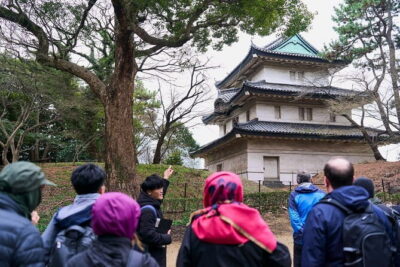
Tokyo Castle & Imperial PalaceーShogun Walking Tour
Read our review →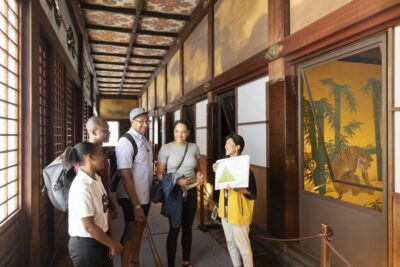
Kyoto: Nijo-jo Castle and Ninomaru Palace Guided Tour
Read our review →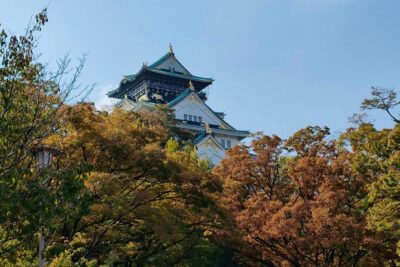
Ultimate Osaka Walking Tour: Castle, Dotonbori & Hidden Gems
Read our review →
Kyoto: Nijo Castle, Kiyomizu & Fushimi Inari Guided Tour
Read our review →
Osaka Castle Walking Tour and Castle Tower Admission
Read our review →
Imperial Palace East Garden and Edo Castle Walking Tour in Tokyo
Read our review →
Kyoto: Imperial Palace & Nijo Castle Guided Walking Tour
Read our review →Browse the lists this tour appears in