
Review · JAPAN
From Nagoya: Inuyama Castle, Ena Gorge, Magome, Tsumago Tour
The best thing about this day trip is its variety. In ten hours, you move from a hilltop Japanese castle to a dam-made lake, then into two preserved post towns along the old Nakasendo road. It gives you a useful taste of central Japan beyond Nagoya without the fuss of changing trains and buses.
I like Inuyama Castle, one of Japan’s twelve surviving ancient castle towers, and I like the generous free time in Magome and Tsumago. You can look around at your own pace, stop for local snacks, and take photos instead of being hurried from one landmark to the next.
The main tradeoff is the long day and considerable bus time. English support may also depend on translation audio rather than fluent spoken English, so this suits you best if you are comfortable with a little independence.
Key points to know before booking
- Four very different stops in one day: You get a castle, a gorge, a mountain post town, and a second historic village.
- Inuyama Castle admission is included: The ticket covers entry to the castle’s First Avenue attraction.
- Magome is the main food stop: You have about 90 minutes for lunch, regional snacks, shops, and a walk.
- Ena Gorge changes with the seasons: Cherry blossoms, summer greenery, autumn leaves, and winter birds each give the area a different character.
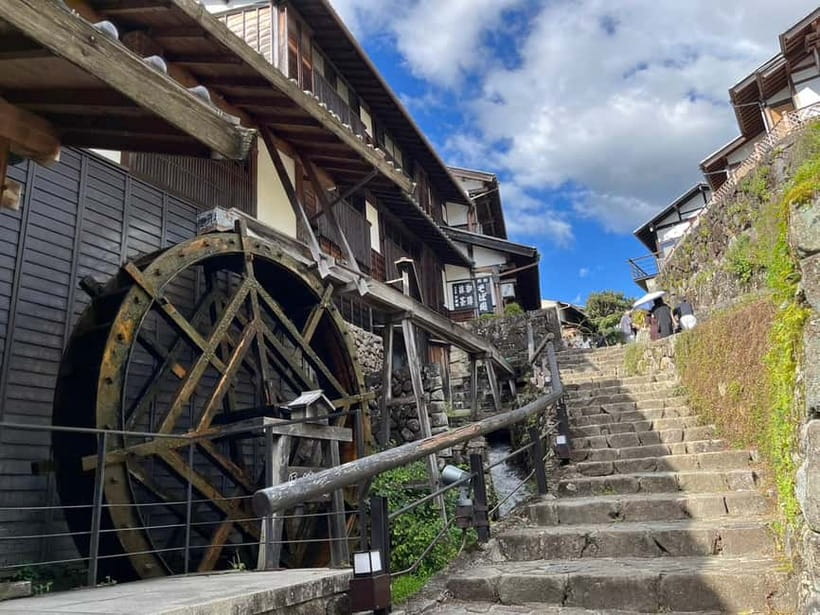
- The old Nakasendo road is the star of the afternoon: Magome and Tsumago preserve stone lanes, wooden buildings, wells, and waterwheels.
- The meeting point is easy to miss: Find the Ministop behind BIC CAMERA at Nagoya Station’s West Exit, and arrive ten minutes early.
Why this route works from Nagoya
Nagoya is a practical base for seeing central Honshu, but several of the region’s best historic places are spread across the Kiso River area. Public transport can get you there, though connecting trains and local buses take planning. This tour trades some flexibility for a direct route between four major stops.
The tour costs $60 per person, including round-trip bus transportation, the live guide, and the Inuyama Castle admission ticket. That is good value if you want to cover all four places in one day. You would otherwise need to pay for several separate train and bus rides, reserve time for connections, and work out how to link Magome and Tsumago.
You should not expect a small, private outing built around long meals or slow photography. The schedule is full, with roughly four hours of transfers in total. Still, the route has been arranged sensibly: the castle comes first, the gorge is a shorter scenic stop, Magome provides the longest break, and Tsumago finishes the sightseeing before the return to Nagoya.
More Japanese castle tours around Japan:
- Osaka Castle: Museum and Tower Entry Ticket
★ 4.5 · 2,380 reviews - Kyoto: Nijo-jo Castle and Ninomaru Palace Guided Tour
★ 4.7 · 1,020 reviews - Kyoto: Nijo Castle, Kiyomizu & Fushimi Inari Guided Tour
★ 4.7 · 700 reviews
Meeting at Nagoya Station
The starting point is the Ministop convenience store behind BIC CAMERA at the West Exit of Nagoya Station. Nagoya Station is large, so allow extra time to find the correct side of the station. Do not simply search for BIC CAMERA and stop there. The actual meeting place is the convenience store behind it.
Arrive at least ten minutes before departure. This matters on a full-day coach trip because a late start can shorten time at every stop. Bring water, cash, comfortable walking shoes, a camera, and clothing suited to the forecast.
Cash is especially useful. Personal expenses and meals are not included, and some places may not accept credit cards. Comfortable shoes matter more than stylish ones. Inuyama Castle sits on a hill, and both Magome and Tsumago have uneven stone streets and sloping paths.
Inuyama Castle, a compact National Treasure
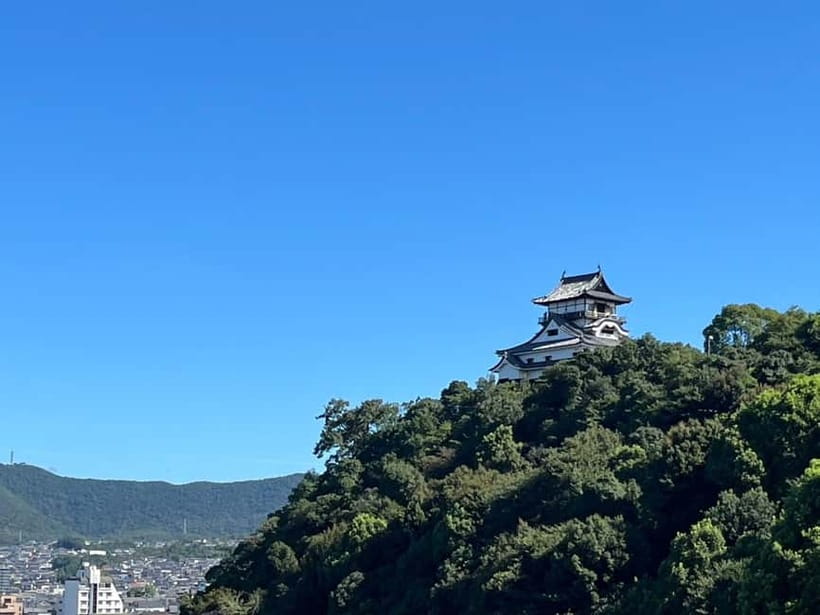
The first transfer takes about an hour. Inuyama Castle dates from the Muromachi Shogunate period and sits on a hill beside the Kiso River. It is also called Baidi Castle, a name linked to Li Bai’s poem Early Departure from Baidi Castle.
This is not a sprawling palace complex. Its appeal comes from age, position, and the surviving wooden castle tower. Inuyama is one of only twelve ancient castle towers still existing in Japan. It is also grouped with Himeji, Matsumoto, and Hikone as one of Japan’s four National Treasure castles.
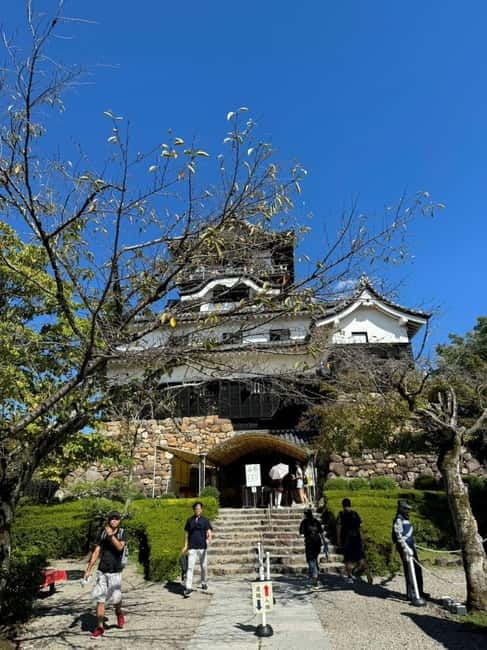
The castle’s structure is unusual. It has three floors on the outside, four floors inside, and two underground levels. That compact arrangement gives you a close look at an older style of Japanese castle architecture.
You have about an hour for the guided visit, sightseeing, and walking. Expect steps and a hill rather than a flat museum visit. The elevated position beside the Kiso River gives the castle its strongest visual moment, so keep some time for the views as well as the interior.
The admission ticket is included, which helps the value of the tour. If you have already visited Himeji or Matsumoto, Inuyama offers a smaller and older-feeling contrast. If this is your first Japanese castle, it provides a clear introduction without taking half a day on its own.
Ena Gorge and the Oi Dam lake
After about 90 minutes on the bus, you reach Ena Gorge. The next stop lasts around 30 minutes, so treat it as a scenic pause rather than a full hike or boat excursion.
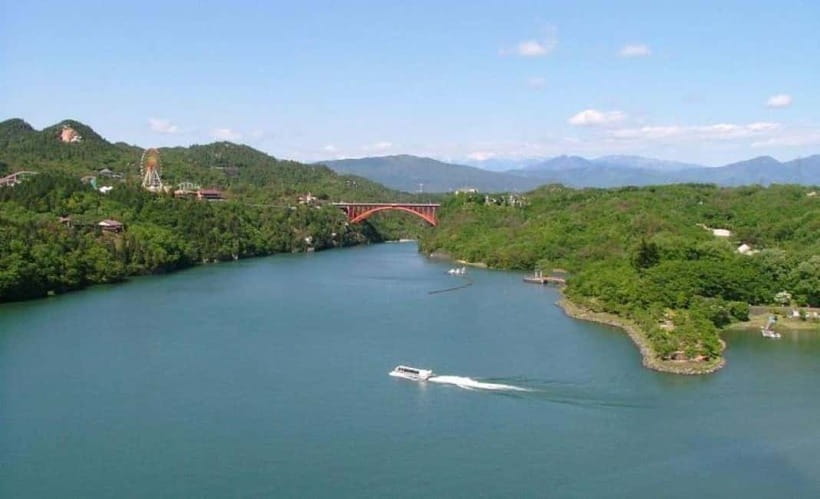
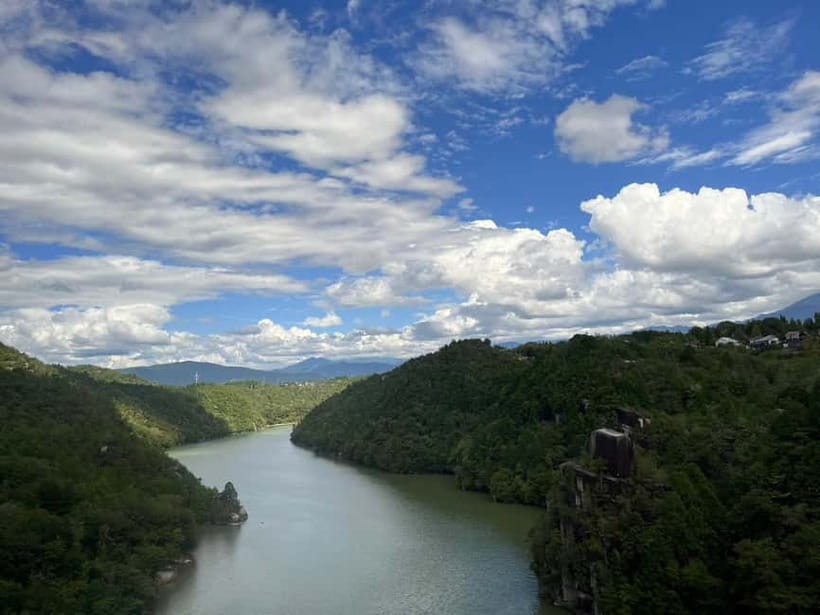
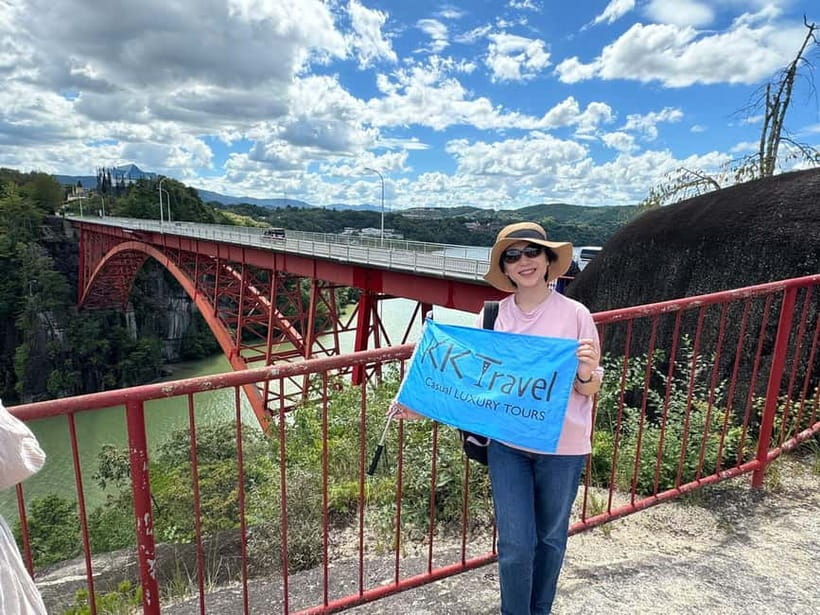
The water here is a man-made lake created when the Kiso River was stopped by the Oi Dam about 80 years ago. The area was named Ena Gorge by geographer Shige Subaru in 1920. From the lake, the gorge continues upstream toward the Nakatsu River.
The scenery comes from the meeting of water, steep rock, and unusual formations shaped by natural erosion. Umbrella Rock, which appears to pierce up from the ground, is a protected natural feature. Red rock covered with brown moss adds another distinctive touch.
This is a good place to take photographs, but the short stop sets limits. You will have time to enjoy the view and walk around, not to explore every part of the gorge. The appearance changes with the calendar:
- Spring brings about 200 cherry trees at Ren Park, along with azaleas.
- Summer frames the red Ena Gorge Bridge with thick green trees.
- Autumn adds red leaves and maples to the lake.
- Winter brings mandarin ducks and starlings, making bird observation possible.
The gorge is worth keeping in the route because it breaks up the historic sightseeing with open scenery. Just do not book this day expecting a long nature walk.
More castles to explore around Japan:
- Tokyo Castle & Imperial PalaceーShogun Walking Tour
★ 4.7 · 1,068 reviews - Ultimate Osaka Walking Tour: Castle, Dotonbori & Hidden Gems
★ 5.0 · 862 reviews - Tokyo Castle & Imperial PalaceーShogun Walking Tour
★ 5.0 · 724 reviews - Osaka Castle Walking Tour and Castle Tower Admission
★ 5.0 · 561 reviews
Magome-juku and the old Nakasendo road
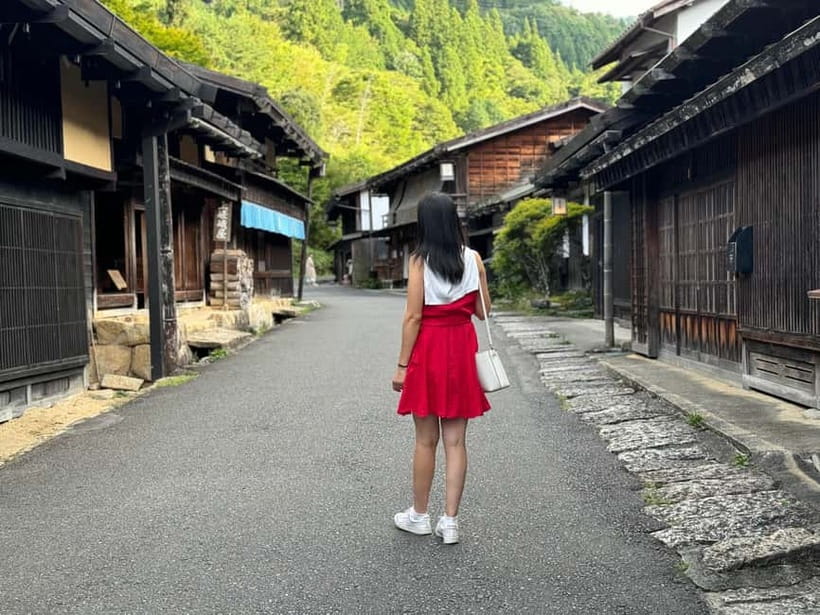
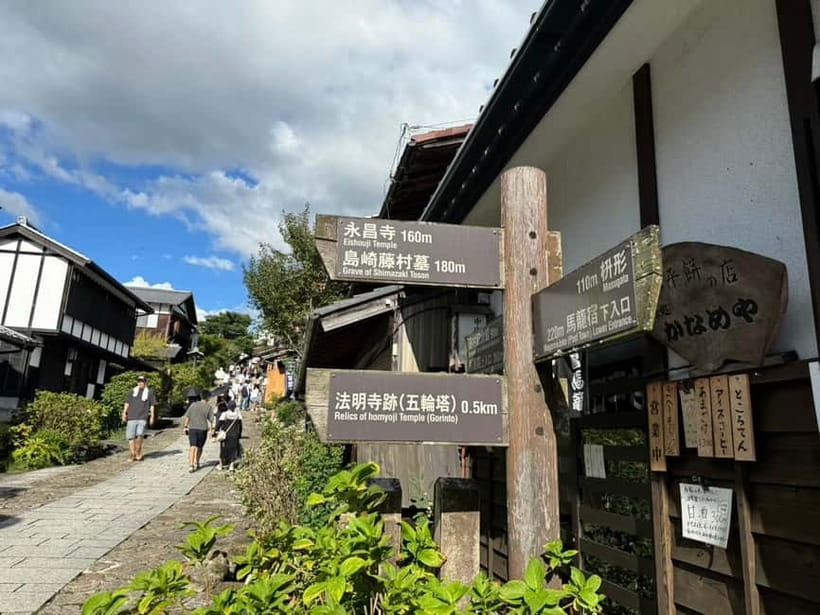
A 45-minute transfer brings you to Magome-juku, the most substantial stop of the day. You have about 90 minutes here for lunch, street food, a guided walk, sightseeing, and free time.
Magome was the 43rd of the 69 post stations along the Nakasendo route during the Edo period. The route connected Edo, now Tokyo, with other parts of Japan and stretched about 540 kilometers. Magome was roughly 332 kilometers from Edo Nihonbashi, the road’s starting point.
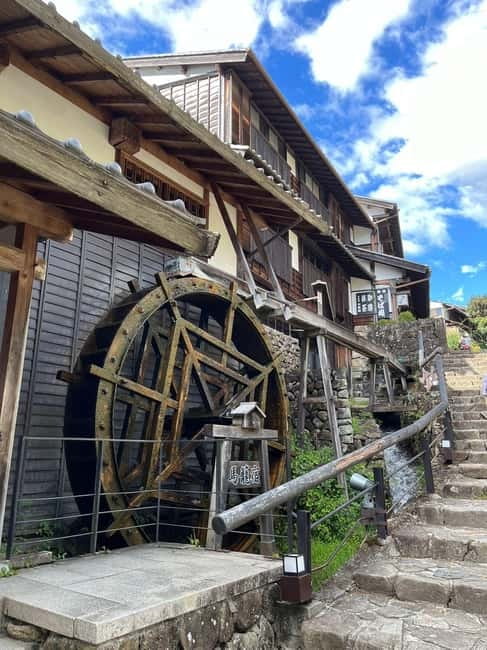
The post town is built along a steep mountain road, with stone paving and wooden buildings lining the street. Today, those buildings hold tea shops, izakayas, art shops, and small lodgings. Flowers outside the houses, old wells, and preserved waterwheels help you picture how the road once worked.
I recommend using the first part of the stop to follow the guide and understand the layout. Then use the free time for food and browsing. Regional snacks are part of the experience here, and 90 minutes gives you a chance to eat without turning lunch into a rushed grab-and-go affair.
Magome is not a flat shopping street. The slope and stone pavement are part of its charm, but they require sensible shoes. You should also keep an eye on the meeting time. It is easy to spend longer than planned at a tea shop or photographing the wooden facades.
The town has been carefully preserved, so it can feel more orderly than an ordinary working neighborhood. That is not a flaw, but it means you are visiting a maintained historic setting rather than an untouched village. The payoff is that the old road, buildings, wells, and waterwheels are easy to see in one compact area.
Tsumago-juku, the quieter final stop
From Magome, the bus ride takes about 30 minutes to Tsumago-juku. You have roughly an hour for a guided visit, walking, sightseeing, and free time.
Tsumago is a small post town with preserved wooden buildings and a calm, old-fashioned feel. It is closely linked to Magome by the former post road, which is now a popular hiking route. That route has received one star in the Michelin Green Guide, a useful sign that the connection between the two towns is more than a convenient tourist label.
This tour does not give you a full hike between Magome and Tsumago. Instead, you visit both places by bus. That makes the day manageable, especially for people who want to see the towns but do not want a long mountain walk. The drawback is that you miss the full walking experience between them.
Use Tsumago for details that reward a slower pace: wooden fronts, narrow lanes, and the small scale of the settlement. After the busier food and shopping break in Magome, Tsumago works well as a quieter final look at the Nakasendo route.
You then face the longest transfer of the day, about two hours back to Nagoya. This is a good time to rest, but it also explains why the tour feels like a full-day commitment rather than a relaxed half-day outing.
Guide communication and transport
The tour provides a live guide, with Japanese and Chinese listed as the main languages. English support is not presented as a guaranteed fluent spoken service. In practice, an English-speaking visitor may receive clear route and timing information through translation audio, as one Italian guest described, while another account noted a guide who could communicate in three languages.
That arrangement can work well if you mainly need help with meeting times, directions, and the story behind each stop. You should not book it expecting a long English lecture at every site. Be ready to read signs, use your phone for extra detail, or enjoy some independent exploration.
The bus is the key convenience. It takes you directly between places that are awkward to connect in a single day. Several people especially valued being delivered to each stop and having enough time to look around. The only practical complaint raised was that seats were not assigned in advance. If sitting together matters to you, ask about the seating arrangement before departure, though no specific seat policy is provided.
Who will enjoy this day trip
This outing suits you if you want a broad introduction to central Japan and prefer a ready-made route. It is especially useful for:
- First-time visitors based in Nagoya
- People interested in castles and Edo-period roads
- Anyone who wants local snacks and historic streets without arranging several train connections
- Photographers who enjoy seasonal scenery
- Visitors happy with guided highlights plus free time
It is less suitable if you want a slow day, a full Nakasendo hike, extensive time at Ena Gorge, or detailed English commentary at every stop. Families and older visitors should also consider the hills, stone paving, castle steps, and ten-hour duration.
The schedule gives you enough time to see each place, but not enough to wander without watching the clock. That is the price of fitting four destinations into one day.
Practical details that affect the value
The price includes transport, the live guide, and Inuyama Castle admission. It does not include lunch, snacks, drinks, shopping, or other personal costs. Budget extra for Magome, where you will likely want to try regional food or stop at a tea shop.
Free cancellation is available up to 24 hours before departure, and you can reserve now and pay later. Those options help if your Nagoya plans depend on the weather. Still, check the forecast because the gorge, castle views, and old streets are all more enjoyable with suitable clothing.
The operator is KKT Co., Ltd. The listed rating is 4.4 from 18 reviews, with particularly strong praise for punctuality, smooth organization, helpful staff, scenic value, and the amount of free time. The useful lesson is simple: this tour’s strength is not luxury. It is the practical combination of transport, a packed route, and enough independent time at the main stops.
Should you book this tour?
Book it if you want to see Inuyama Castle, Ena Gorge, Magome, and Tsumago in one efficient day from Nagoya. At $60, the transport and included castle ticket make it a strong value, especially if planning the connections yourself would eat into your holiday.
Skip it if your priority is a long Nakasendo hike, an unhurried lunch, or fully detailed English guiding. For most visitors, though, this is a smart regional sampler: busy, scenic, useful, and full of old Japan beyond the city.
FAQ
Where does the tour meet in Nagoya?
The meeting point is the Ministop convenience store behind BIC CAMERA at Nagoya Station’s West Exit.
How early should I arrive?
Arrive at least ten minutes before the scheduled departure.
How long does the tour last?
The tour lasts about ten hours, including transfers and sightseeing.
What transportation is included?
Round-trip transportation by bus from Nagoya Station is included.
Is Inuyama Castle admission included?
Yes. The Inuyama Castle First Avenue admission ticket is included.
Are meals included?
No. Dining expenses, personal expenses, and other costs not listed are excluded.
What languages are available?
Japanese and Chinese are listed for the driver and tour service. English support may be provided through translation audio, but fluent English guiding is not guaranteed.
How much free time is available at Magome?
You have about one and a half hours at Magome for lunch, local snacks, sightseeing, guided walking, and free time.
Can I cancel the booking?
You can cancel up to 24 hours before departure for a full refund. Reserve now and pay later is also available.
New castle tours around Japan
- Peace Memorial Park, Hiroshima Castle, & Garden Private Tour★ 4.8 · 7 reviews
- From Osaka: Himeji Castle, Arima Onsen & Mt. Rokko Day Tour★ 4.6 · 339 reviews
- Osaka/kyoto: Himeji Castle, Kobe. Luxury Day Trip with Guide★ 5.0 · 2 reviews
- Osaka: Osaka Castle 3 hours Historical Walking Tour★ 4.6 · 14 reviews
- Osaka: Osaka Castle Guided Tour with Local Guide★ 4.7 · 78 reviews
- Osaka: Osaka Castle – Tsuruhashi – Tennoji (Spanish Guide)★ 4.7 · 10 reviews
- Osaka: Castle, Tea Ceremony, Calligraphy, and Samurai Armor!★ 5.0 · 4 reviews
- Osaka: Early Morning Osaka Castle Guided Tour, Avoid Crowds★ 4.9 · 12 reviews
Japan Castle Tours, compared.
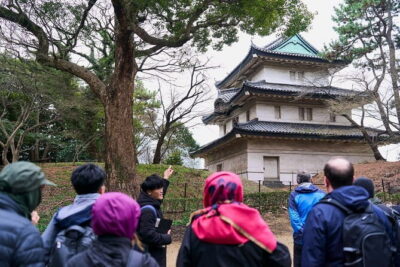
Tokyo Castle & Imperial PalaceーShogun Walking Tour
Read our review →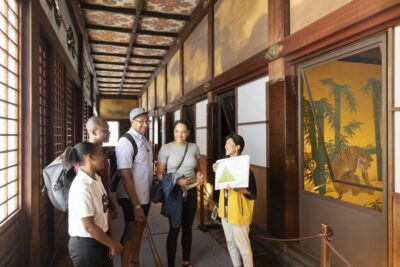
Kyoto: Nijo-jo Castle and Ninomaru Palace Guided Tour
Read our review →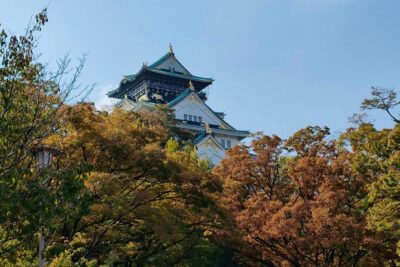
Ultimate Osaka Walking Tour: Castle, Dotonbori & Hidden Gems
Read our review →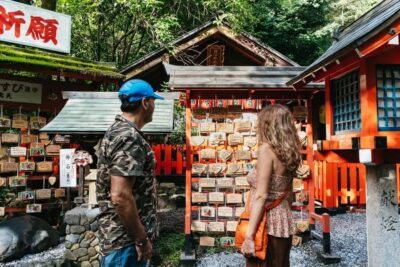
Kyoto: Nijo Castle, Kiyomizu & Fushimi Inari Guided Tour
Read our review →
Osaka Castle Walking Tour and Castle Tower Admission
Read our review →
Imperial Palace East Garden and Edo Castle Walking Tour in Tokyo
Read our review →
Kyoto: Imperial Palace & Nijo Castle Guided Walking Tour
Read our review →Browse the lists this tour appears in