
Review · OSAKA
Samurai Armor & Sword experience with phot near Osaka Castle
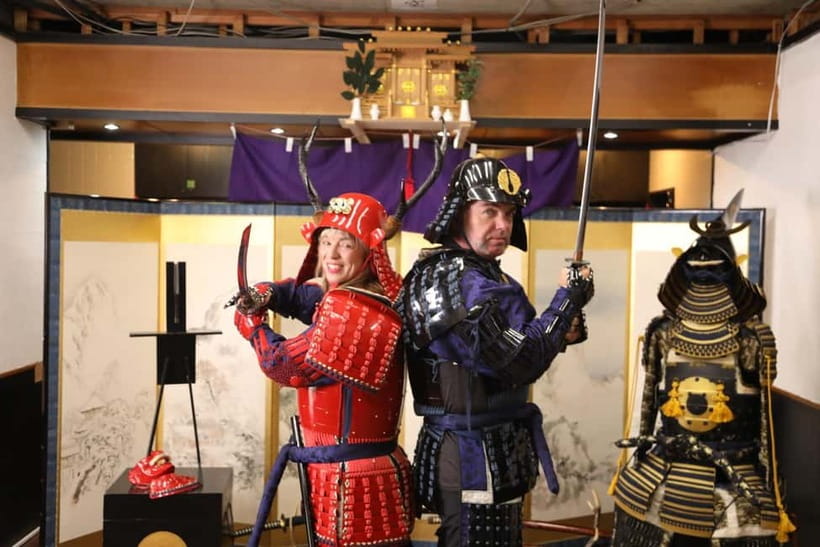
The sharpest part of this Osaka experience is not the costume photo. It is the careful ritual around the blade. You change into dogi and hakama, bow before a shrine, learn how a samurai carried and drew his sword, then try cutting with a real samurai sword under a certified instructor.
I like two things here: the practical sword lesson, which gives the session more weight than a quick dress-up, and the private format, which lets the instructor focus on your stance and movements. The armor photographs are also a fine souvenir, with the finished images sent to your email.
The main drawback is practical rather than cultural. The activity has had occasional overbooking cancellations, so I would confirm the booking and keep a little flexibility in your Osaka schedule. Also, the studio is not at Osaka Castle itself, and Apple Maps gives the wrong address.
Key points to know before booking
- Real sword cutting is part of the 90-minute session, not just a photo opportunity.
- You learn samurai manners and sword movements, including battou, chiburui, and nottou.
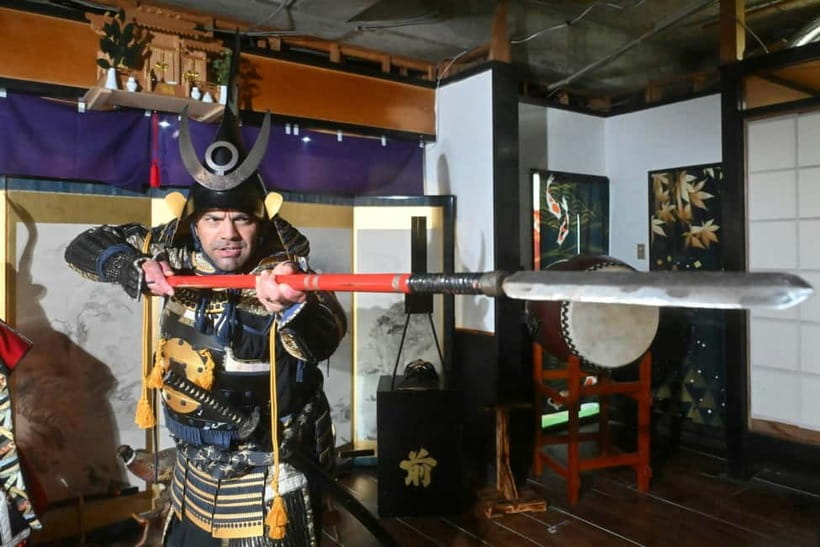
- Armor, helmet, sword, and naginata-style imagery make the final photographs more memorable.
- The activity is private, with instruction in English or Japanese.
- You must arrive 30 minutes early to receive directions and change clothes.
- Google Maps is essential: search for Bushi no Homare at Excellence Takayama 1F, 2-3-19 Shiginonishi, Joto-ku, Osaka.
Starting as a samurai at Bushi no Homare
This is a small cultural activity, not a stage show. The actual location is Bushi no Homare, also presented as Samurai Honor, at Excellence Takayama 1F in Osaka’s Joto-ku.
The meeting point is marked by a wooden sign reading Honor of the Samurai. Look for a rack holding activity pamphlets. Kimonos and hakama may also be hanging outside, which makes the place easier to spot.
Give yourself time to find it. The supplied address is correct on Google Maps, while Apple Maps is incorrect. That is the sort of small detail that can turn a relaxed afternoon into a hurried one, especially since you are asked to arrive 30 minutes before your booked start time.
That early arrival is useful. You need time to change into samurai clothing, and the instructors need to explain the session before the formal practice begins. Wear a T-shirt under your clothes. Food, alcohol, drugs, pets, strollers, and party groups are not allowed. Assistance dogs are permitted.
The session lasts 90 minutes and costs about $106 per person. That is not cheap for a short activity, but the price includes clothing, indoor armor use, a certified professional instructor, tax, tips, and photographs sent to a designated email address. Since the group is private, you are paying for direct attention as well as the costume and sword work.
More Japanese castle tours around Osaka:
- Osaka Castle: Museum and Tower Entry Ticket
★ 4.5 · 2,380 reviews - Osaka Castle Walking Tour and Castle Tower Admission
★ 5.0 · 561 reviews - From Osaka: Himeji Castle, Arima Onsen & Mt. Rokko Day Tour
★ 4.6 · 339 reviews
Bowing before the shrine
The class begins and ends with a bow before a shrine in the dojo. The shrine represents the old connection between martial training and the power of a war deity.
You do not need to be familiar with Japanese religious customs to take part. The instructor explains what to do. This opening ritual gives the activity a clear shape and a sense of discipline. You are not simply handed a sword and told to pose.
That distinction matters. Samurai culture is often reduced to armor, blades, and dramatic movie scenes. Here, the lesson starts with conduct. The sword is treated as a responsibility, not merely as a prop.
The instructor also explains the role of Bushido, the code associated with samurai conduct. The emphasis is on pride, self-respect, and responsibility when carrying a weapon in public. The result is a more thoughtful introduction than a basic historical costume rental.
Changing into dogi and hakama
Your first practical step is changing into dogi and hakama. The dogi is the training jacket, while the hakama is the pleated garment worn below the waist.
The clothes help you move into the role, but they also prepare you for the physical work. You will need a stable stance and enough freedom to practice controlled sword movements. A T-shirt is the sensible choice underneath, since the session involves changing clothes and wearing armor indoors.
The instructors explain that Japanese swords were traditionally associated with the samurai class. Boys in samurai families began with wooden swords, then were permitted to wear a serious sword at around age 15. The point is not to suggest that you become a historical samurai in 90 minutes. It is to show why the sword carried social meaning as well as cutting power.
The lesson also covers how closely a samurai lived with the sword. The sword remained nearby during ordinary activities, including meals and sleep, because it was both a weapon and a mark of duty. This background makes the handling exercises feel less like random choreography.
Walking with the sword at your waist
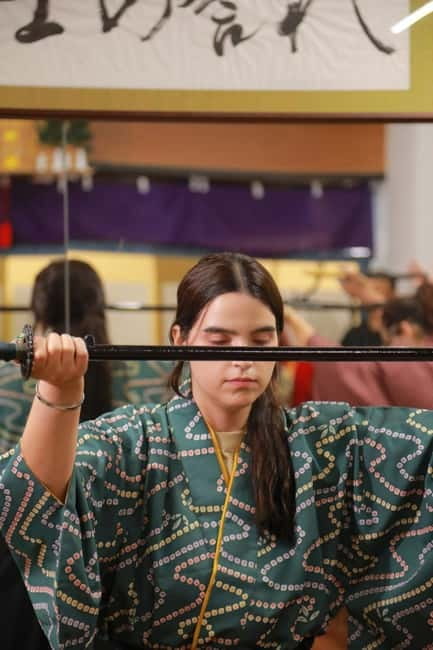
One of the more unusual sections is the practice of walking with a sword belt. You insert the sword with the cutting edge facing upward, then learn how a samurai moved without letting scabbards collide.
The class explains why a samurai traditionally walked on the left side of the road. The position helped keep sword scabbards from striking one another. You also learn about keeping the koiguchi, the mouth of the scabbard, ready for a fast draw.
This is a small movement lesson, but it gives you a better feel for the social rules around swords. The weapon affected posture, spacing, and manners. It was not something worn casually.
I like this part because it slows the activity down. You learn that sword culture was built from repeated habits, not only dramatic attacks. It also gives you something specific to remember afterward, unlike a costume photograph that could have been taken almost anywhere.
More castles to explore around Osaka:
- Ultimate Osaka Walking Tour: Castle, Dotonbori & Hidden Gems
★ 5.0 · 862 reviews - Osaka Castle Guided Tour
★ 4.7 · 249 reviews - Osaka: Castle History Walking Tour / Castle Tower Admission
★ 4.9 · 230 reviews - Osaka: Osaka Castle Guided Tour with Local Guide
★ 4.7 · 78 reviews
Practicing battou, chiburui, and nottou
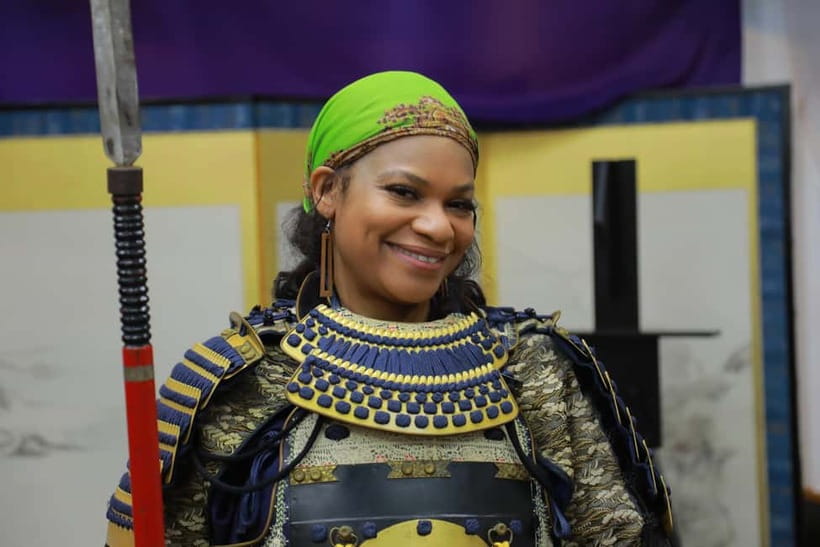
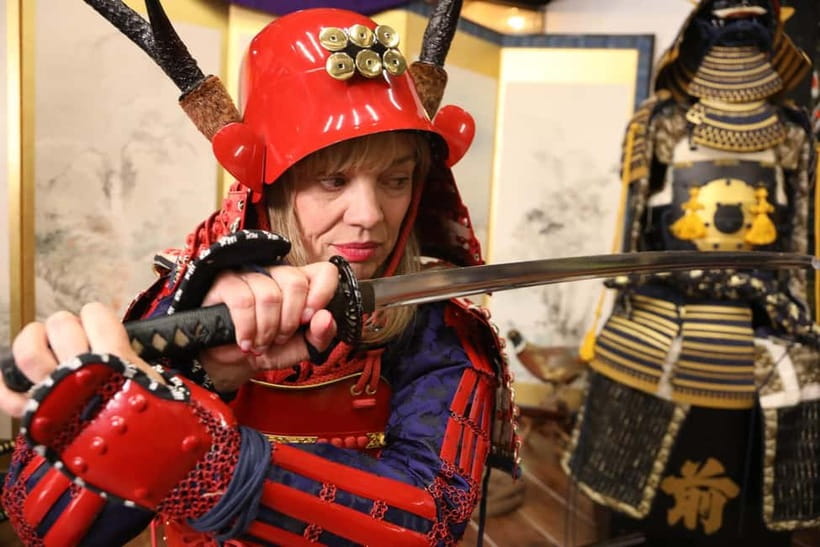
The next stage uses an iai practice sword. You work on the basic sequence from a standing position:
- Battou: drawing the sword from its scabbard
- Chiburui: the symbolic movement for removing blood from the blade after a cut
- Nottou: returning the sword to its scabbard
The instructor demonstrates the basic kata and stances, then has you repeat the movements. The focus is control. You are taught to swing with the weight of the sword rather than relying on arm strength.
When the movement is done correctly, the sword can make a distinctive hi-nari sound as it cuts through the air. That sound gives you immediate feedback. It is not a score, but it tells you that the swing has better shape and timing.
Do not expect to master the forms in one class. The value is in learning the sequence and understanding why each motion exists. Drawing, cutting, clearing the blade, and sheathing it are treated as a connected routine.
The instructor’s job is especially important here. English and Japanese instruction are available, and the activity includes English-speaking staff. If you need Italian, Spanish, French, Chinese, Thai, or Indonesian interpretation, you should ask about staff availability before booking. Those languages are not guaranteed.
Cutting with a real samurai sword
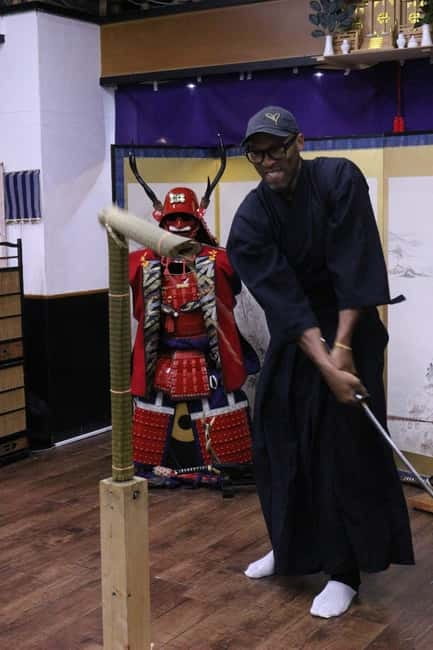
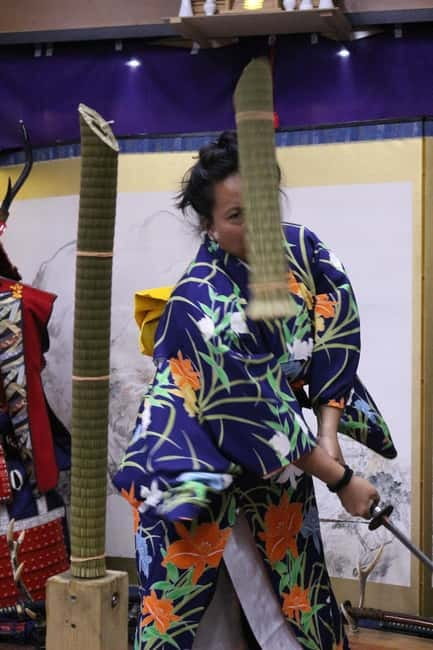
The session then moves from practice to cutting with a real samurai sword. This is the moment that separates the experience from a standard armor photo session.
You receive instruction in the stance, swing, and handling before attempting the cut. The activity is led by a certified professional instructor, and the real blade is used as part of a supervised lesson. You should follow the directions closely and treat this section as a serious training exercise, not a chance to show off.
The provided details do not specify the cutting material or how many attempts you receive, so I would not book this expecting a long sequence of cuts. Think of it as a brief introduction to the sword’s cutting performance.
That restraint is part of the appeal. A real blade gives the lesson physical meaning, but the session is still designed for visitors with no previous samurai training. The instructor’s explanation of balance and swing helps you understand why the sword was valued, rather than leaving you with only a dramatic pose.
If you are nervous around weapons, this is worth considering before you reserve. The sword cutting is central to the activity. If your main goal is a quiet cultural talk or a costume portrait, a different Osaka activity may suit you better.
Putting on armor and taking the portrait
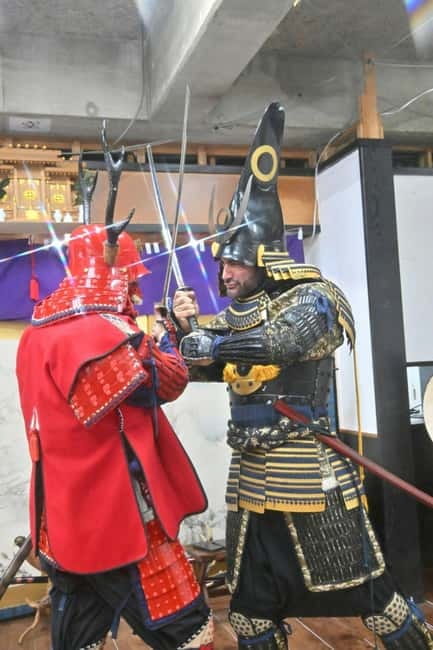
After the sword work, you put on samurai armor and a helmet. The armor is used indoors, and the final photographs record your transformation from visitor to armored warrior.
The session also evokes the way samurai used armor and a drawn sword to display dignity before battle. The visual effect is strong, especially with the sword at your waist and a spear, or naginata, ready at hand.
The photographs are included. The finished data is sent to the designated email address, so you do not need to pay for a separate printed package. The photography is focused on commemorating the experience, not on producing a full movie. Movie shooting is available only as a paid option.
This is where the activity becomes particularly useful for couples, friends, or families with older children. You can share the lesson, then leave with a personal record of it. The armor shots are likely to be the images you show at home, while the sword practice gives the photographs some meaning behind them.
What the $106 price really covers
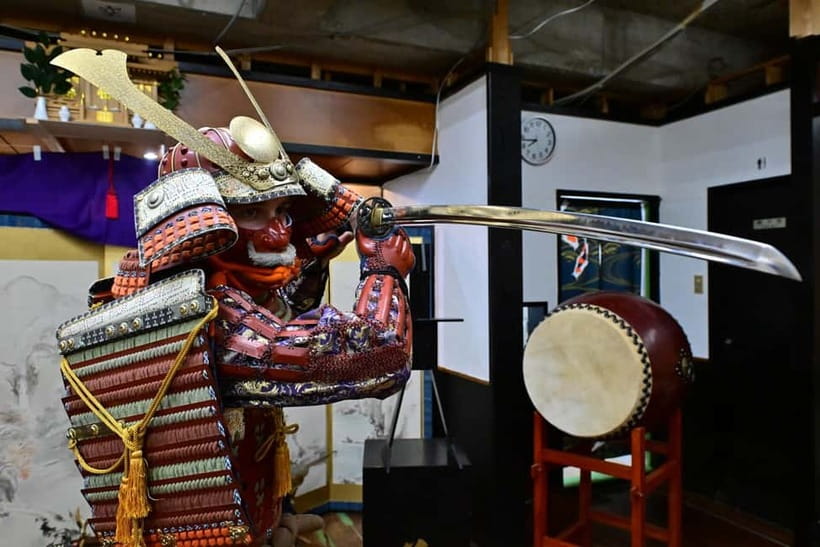
At $106 per person, this is a specialty experience. It costs more than a simple kimono rental because the session combines instruction, clothing, armor, sword practice, real-sword cutting, and photography.
I see the value in the private format. You are not waiting for a large group to take turns with a prop sword. You receive instruction in walking, drawing, swinging, and sheathing, with the chance to ask questions as you go.
The price also includes tax and tips, which keeps the final cost clear. Transportation is not included, and you must make your own way to the studio. There is no hotel or train-station pickup.
For me, the cost makes sense if you want a hands-on activity with a strong visual souvenir. It is less convincing if you only want a quick costume photograph. The 90-minute schedule is compact, but it is packed with several distinct parts, so the early arrival matters.
Who will enjoy this most
I would recommend this for adults and children aged 10 or older who like history, martial arts, Japanese clothing, or photography. You do not need prior sword experience. The class is built around basic movements and instructor guidance.
It suits a private pair or small family better than a large party. The private-group format keeps the attention on your group and makes the experience feel more personal.
It is also a good choice after visiting Osaka Castle, provided you allow enough time to travel to the studio. The activity is described as being near Osaka Castle, but the meeting address is in Joto-ku, not inside the castle grounds. Plan the route by Google Maps and do not assume you can simply walk out of the castle and find the wooden sign.
The experience is not suitable for children under 10, babies under 1, people over 80, or people with altitude sickness. The altitude restriction may sound unusual for Osaka, but it is part of the stated safety guidance. Party groups and bachelor or bachelorette groups are not accepted.
Booking details worth checking twice
Cancellation is free up to 24 hours before the start time, and you can reserve now and pay later. Those terms help if your Osaka plans are still moving.
I would still check the confirmation carefully because overbooking has caused cancellations, including cancellations close to the scheduled time. That is a serious planning concern if you have arranged the activity around a fixed Osaka Castle visit or a tight departure schedule.
English and Japanese are the standard languages. Other language support may be possible, but staff schedules are limited. Ask before reserving if you need an interpreter in Italian, Spanish, French, Chinese, Thai, or Indonesian.
The experience provider is 株式会社武士の誉れ, and the activity has an overall rating of 4.6 from 16 ratings. The strongest points are clear instruction, friendly staff, safe handling, and good photographs. One booking problem remains the main warning, so I would keep a backup plan for the day.
Should you book the samurai armor and sword experience?
Book it if you want more than a costume rental. The bow before the shrine, the explanation of samurai conduct, the walking lesson, the basic kata, real-sword cutting, and the armor portrait give you several layers in one short session.
Skip it if you dislike weapons, have mobility or age concerns covered by the restrictions, or need a location directly at Osaka Castle. You should also think twice if your schedule cannot absorb a last-minute cancellation.
For the right visitor, $106 is fair for a private, instructor-led activity with armor and photographs included. Arrive early, use Google Maps, wear a T-shirt, and treat the sword lesson with respect. Do that, and you get a memorable Osaka experience with more substance than a staged samurai pose.
FAQ
Where does the samurai experience take place?
It takes place at Bushi no Homare, also called Samurai Honor, at Excellence Takayama 1F, 2-3-19 Shiginonishi, Joto-ku, Osaka-shi, Osaka 536-0014.
Is the activity inside Osaka Castle?
No. The activity is described as being near Osaka Castle, but the actual studio is at the Joto-ku address listed above.
What landmark should I look for?
Look for a wooden sign reading Honor of the Samurai. A rack with Samurai Honor pamphlets is in front of the store, and kimonos and hakama may be hanging outside.
Which map should I use?
Use Google Maps. The supplied information states that Apple Maps shows the wrong address.
How early should I arrive?
Arrive 30 minutes before your reserved start time for instructions and changing clothes.
How long does the activity last?
The experience lasts 90 minutes.
What languages are available?
Instruction is available in English and Japanese. Interpreter support in Italian, Spanish, French, Chinese, Thai, and Indonesian may be possible, but you must ask about staff availability before booking.
Is the group private?
Yes. The activity is offered as a private group experience.
Is armor included?
Yes. Samurai clothing and indoor use of samurai armor are included. The armor session also includes photography.
Are photographs included?
Yes. Photos are taken during the armor portion, and the data is sent to the designated email address. Movie shooting is a paid option.
What is included in the price?
The price includes samurai clothing, indoor samurai armor, an English-speaking staff member, a certified professional instructor, tax, tips, and photography.
What should I bring?
Bring a T-shirt to wear under the activity clothing.
Who should not book this activity?
It is not suitable for children under 10, babies under 1, people over 80, or people with altitude sickness. Pets, baby strollers, food, alcohol, drugs, party groups, and bachelor or bachelorette groups are not allowed. Assistance dogs are allowed.
Can I cancel for a full refund?
Yes. You can cancel up to 24 hours in advance for a full refund.
New castle tours around Osaka
- From Osaka: Himeji Castle, Arima Onsen & Mt. Rokko Day Tour★ 4.6 · 339 reviews
- Osaka: Osaka Castle 3 hours Historical Walking Tour★ 4.6 · 14 reviews
- Osaka: Osaka Castle Guided Tour with Local Guide★ 4.7 · 78 reviews
- Osaka: Osaka Castle – Tsuruhashi – Tennoji (Spanish Guide)★ 4.7 · 10 reviews
- Osaka: Castle, Tea Ceremony, Calligraphy, and Samurai Armor!★ 5.0 · 4 reviews
- Osaka: Early Morning Osaka Castle Guided Tour, Avoid Crowds★ 4.9 · 12 reviews
- Osaka: Explore Every Bit of Osaka Castle in 3 Hours★ 5.0 · 5 reviews
- Osaka: Castle History Walking Tour / Castle Tower Admission★ 4.9 · 230 reviews
Japan Castle Tours, compared.
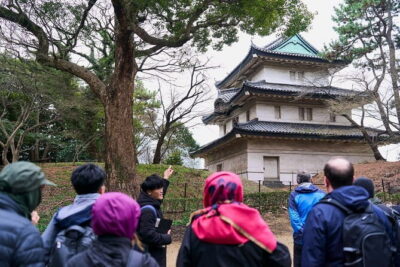
Tokyo Castle & Imperial PalaceーShogun Walking Tour
Read our review →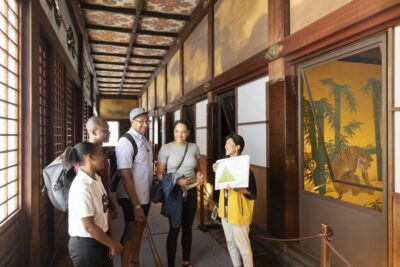
Kyoto: Nijo-jo Castle and Ninomaru Palace Guided Tour
Read our review →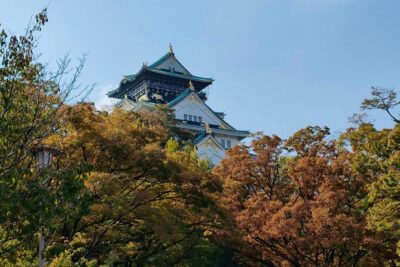
Ultimate Osaka Walking Tour: Castle, Dotonbori & Hidden Gems
Read our review →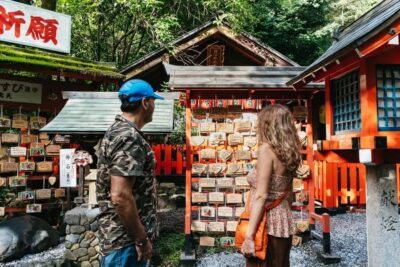
Kyoto: Nijo Castle, Kiyomizu & Fushimi Inari Guided Tour
Read our review →
Osaka Castle Walking Tour and Castle Tower Admission
Read our review →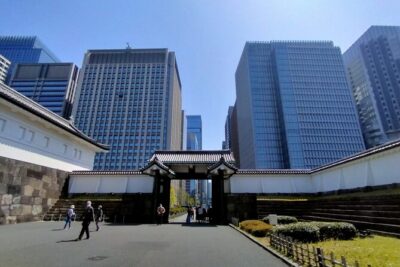
Imperial Palace East Garden and Edo Castle Walking Tour in Tokyo
Read our review →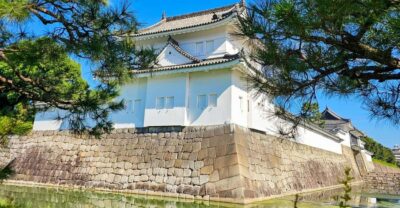
Kyoto: Imperial Palace & Nijo Castle Guided Walking Tour
Read our review →Browse the lists this tour appears in