
Review · GERMANY
Nuremberg: Castle and Old Town Tour – incl. Tickets and red beer tasting
Nuremberg’s best introduction may be its castle tower view, followed by a glass of the city’s dark red beer. This small-group walk links the imperial castle, major churches, Pegnitz bridges, Albrecht Dürer’s world, and less obvious corners of the old town in one well-paced route.
I like the maximum group size of 10, which gives guide Darius room to answer questions and adjust the pace. I also like the mix of grand sights and local touches, from the Deep Well and Sinwell Tower to a brewery tasting and personal stories about growing up in Nuremberg. The drawback is clear: the old town is hilly, the tower involves about 100 steps, and this is not a good choice if walking is difficult.
Key points to know before booking
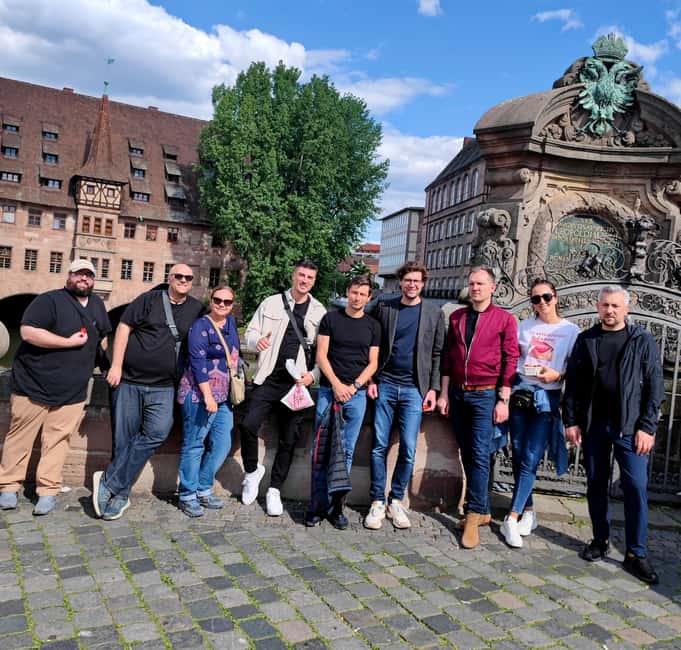
- The Sinwell Tower gives you the best broad view of Nuremberg: Be ready for about 100 steps.
- The Deep Well and tower admission are included: You are not only viewing the castle from outside.
- Three major churches are part of the route: St. Sebaldus, Frauenkirche, and St. Lorenz each add a different layer of art and city history.
- The walk ends with red beer at Altstadthof Brewery: The tasting is included, and other beers are available from the tap.
- Darius brings local stories to the route: His family connections and personal knowledge make the walk feel less like a standard checklist.
- The route covers a lot in 210 minutes: Wear comfortable shoes and expect hills, stairs, and plenty of time on foot.
Why this Nuremberg walk works so well
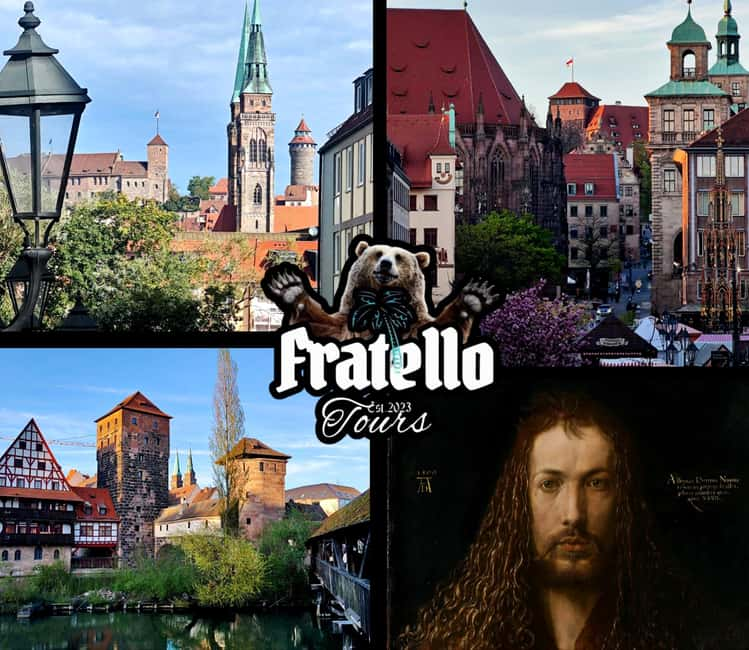
This is not simply a castle visit followed by a drink. It is a compact tour of how Nuremberg grew into an important imperial city, how artists and merchants shaped its center, and how the city rebuilt after severe wartime destruction.
The route also gives you useful orientation. You begin at the northern edge of the old town near Hexenhäusle, walk through the castle quarter, cross the central market area, continue through the southern part of the old town, and return toward the starting point. By the end, you have seen the main sights on both sides of the Pegnitz and gained a practical map of central Nuremberg.
Darius is the guide most closely associated with this experience. His style, based on the information provided, is personal and conversational. He brings in family stories, local customs, food, photography tips, and recommendations for places to see later. That matters because Nuremberg’s monuments can otherwise feel like a string of attractive buildings without a clear connection.
The small group is another real advantage. With no more than 10 people, you should be able to hear explanations, ask questions, and stay connected to the guide in narrow lanes or busy squares. The route still covers a lot, so do not expect a slow museum-style tour with long stops at every site.
More Medieval Old Town Tours in Germany:
- From Frankfurt: Heidelberg, Castle and Old City Guided Tour
★ 4.5 · 677 reviews - Heidelberg Castle and Old Town Tour from Frankfurt
★ 4.0 · 587 reviews - Nuremberg:Complete Tour! Castle/Old Town/World War history
★ 5.0 · 45 reviews
Starting at Hexenhäusle and entering the castle quarter
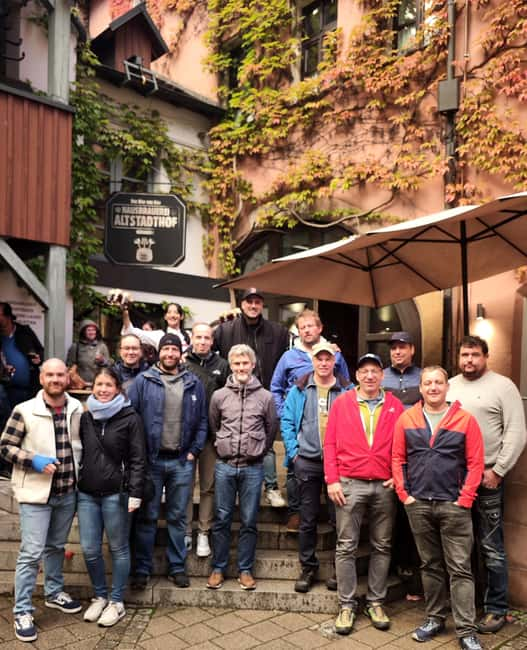
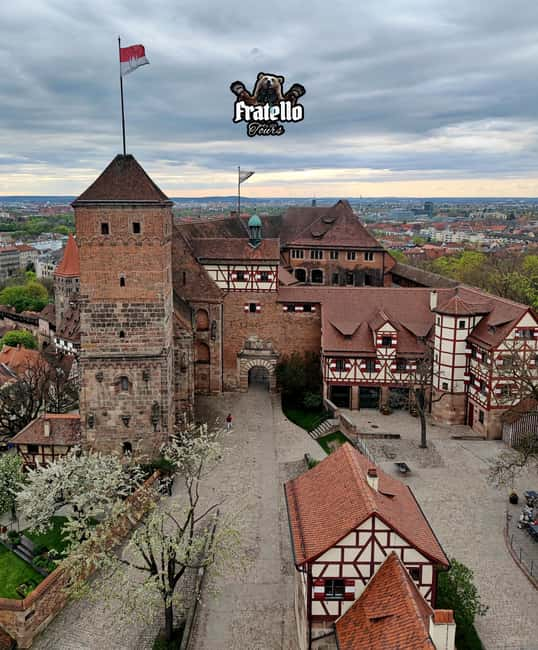
The meeting point is on the bridge in front of the Hexenhäusle restaurant, on Vestnertorgraben in the old town. This is a useful location because the tour begins near the Imperial Castle rather than spending its first half hour getting there.
The castle area introduces Nuremberg at its most powerful. In the 15th century, emperors, major patrician families, artists, and thinkers helped make the city an important center. Your guide connects the buildings and open spaces to that period, while also explaining how the city’s identity changed over time.
The castle grounds and garden offer a calmer start than the market squares later in the walk. The garden is also a good place to get your bearings, with views across the rooftops and a sense of how the castle sits above the old town.
The castle visit is not just an exterior photo stop. Admission to the Deep Well and Sinwell Tower is included, giving the experience more substance than a free walk around the castle grounds.
The Deep Well and Sinwell Tower
The Deep Well is one of the castle’s most memorable features. A guided visit to the well takes about 15 minutes, enough time to understand why water storage mattered in a fortified complex and why this particular structure has remained such a strong part of the castle story.
Next comes Sinwell Tower, another 15-minute guided stop. The tower is one of Nuremberg’s symbols, and the climb involves roughly 100 steps. That is manageable for many people, but it is not a small detail if you have knee problems, balance issues, or limited stamina.
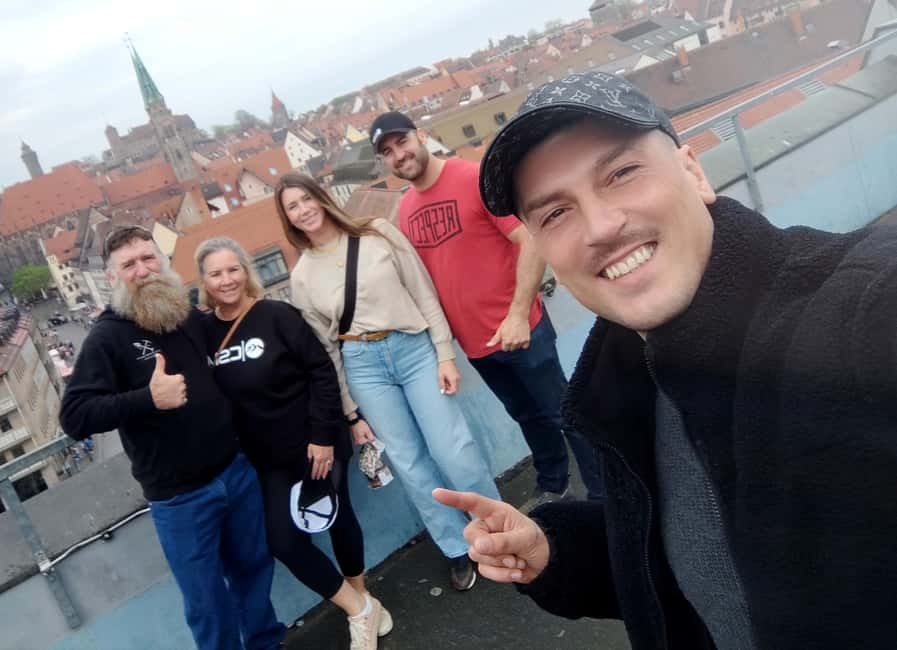
The reward is the view. From the tower, you can look across the old town and see how the churches, bridges, market spaces, and rooflines fit together. This is the point where the route becomes easier to understand. You are no longer seeing separate attractions. You are looking at one compact historic center.
I would plan this tour early in your Nuremberg stay. The tower view helps you recognize places you pass later, and Darius also gives suggestions for what to do with the rest of your visit.
St. Sebaldus Church and the medieval center
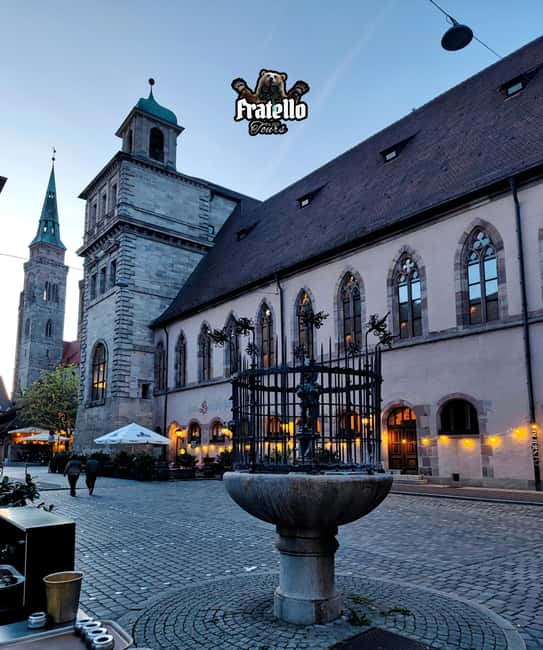
From the castle quarter, the route continues to St. Sebaldus Church. You spend about 15 minutes inside, hearing about the church and viewing its art treasures.
This stop adds an important religious and artistic side to the tour. Nuremberg’s churches are not all the same, and visiting three of them keeps the experience from becoming a castle-only history lesson. St. Sebaldus also places you close to the old city center, where medieval power, trade, and daily life came together.
The tour then moves to the Schöner Brunnen, or Beautiful Fountain, for a short photo stop. The fountain is beside the Hauptmarkt and is one of the old town’s most recognizable details. You have about five minutes here, so this is more about a quick explanation and a picture than a long historical talk.
The Hauptmarkt itself gets around 10 minutes. This is where the route opens into one of Nuremberg’s main public spaces. It gives you a chance to pause, take in the surrounding buildings, and see how the church, fountain, and market area relate to one another.
More castles to explore around Germany:
- From Munich: Neuschwanstein & Linderhof Castle Full-Day Trip
★ 4.6 · 14,646 reviews - Neuschwanstein & Linderhof Castle-Fairytale Day Tour from Munich
★ 4.5 · 7,275 reviews - Neuschwanstein Castle Tour from Munich
★ 4.5 · 5,117 reviews - From Munich: Neuschwanstein Castle Full-Day Trip
★ 4.7 · 3,977 reviews
Frauenkirche, the Holy Spirit Hospital, and central Nuremberg
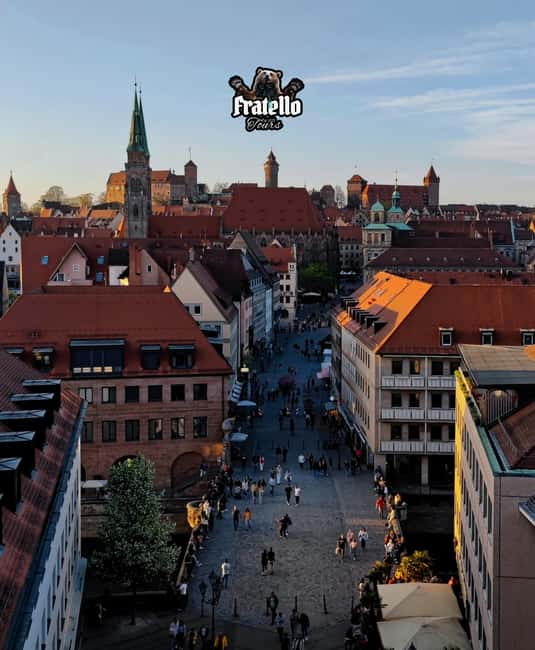
The Church of Our Lady, or Frauenkirche, receives another 15-minute visit. Its position on the Hauptmarkt makes it an easy part of the walking route, but the stop is still useful because it lets you look inside rather than merely photograph the facade.
The tour’s church visits are one of its strongest features. You get context about art and religious life, while the guide helps you notice details you might pass on your own. The walk does not treat the old town as a collection of pretty facades. It explains why these places mattered.
A short stop follows at the Holy Spirit Hospital, a photogenic building over the Pegnitz. This is a five-minute photo stop, so you should not expect an extended interior visit. Its position above the water makes it one of the route’s more attractive views, especially when seen from the surrounding bridges.
The sequence is well chosen. After the elevated castle area and two major religious buildings, the Holy Spirit Hospital brings you back to the river and the practical urban life of the old town.
St. Lorenz and the artistic side of Nuremberg
The walk continues to St. Lorenz Church, with about 15 minutes inside. This is the third major church on the route and helps round out the religious and artistic story of central Nuremberg.
The tour also follows the influence of Albrecht Dürer, the city’s best-known artist. A photo stop at Albrecht Dürer’s House links the historic streets to the person most visitors associate with Nuremberg’s cultural life. The visit is brief, so this is not a full museum tour, but it gives you useful context for the artist’s place in the city.
Dürer’s presence is part of what makes this walk more than a basic city orientation. You hear about artists alongside emperors, wealthy families, and philosophers. That broader view helps explain why Nuremberg’s historic center has such a strong artistic character.
The route also includes local stories about food and daily life. Some groups have sampled Nuremberg gingerbread during the walk, and the guide has discussed Elisen Lebkuchen, a particularly well-known local style. The supplied details do not make this a guaranteed part of every booking, so think of it as a possible extra rather than part of the formal inclusions.
Bridges over the Pegnitz
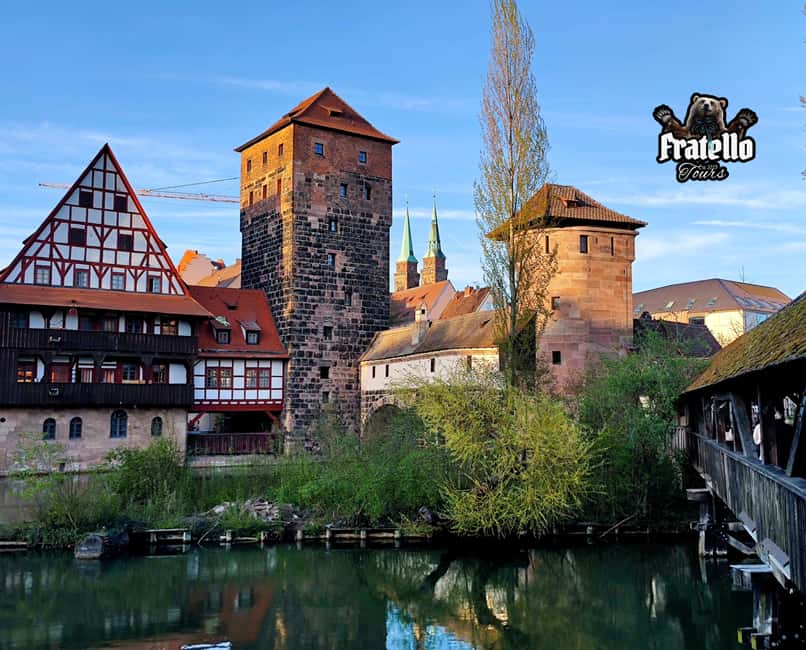
The bridges are short stops, but they give the walk variety and some of its best photographs. Karlsbrücke receives about five minutes, followed by photo stops at the Hangman’s Bridge and Kettensteg.
These crossings show a different side of Nuremberg. Instead of grand churches and imperial buildings, you see the river as a defining part of the city’s layout. The Hangman’s Bridge and Kettensteg also offer attractive views of the water, old facades, and tightly packed historic streets.
The route then reaches Weissgerbergasse, one of the old town’s most appealing streets, for another photo stop. Its buildings provide a strong sense of the older residential city, and the short visit gives you time to take pictures without turning the tour into a long architectural lecture.
The word hidden can be overused in tour descriptions, but this route does make an effort to show less obvious corners. Darius’s local knowledge is most useful here. He can point out details you might miss if you only follow the main shopping streets and public squares.
Finishing with red beer at Altstadthof Brewery
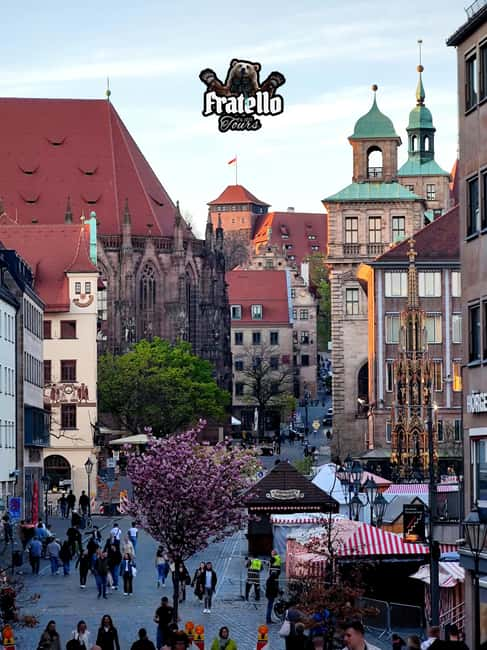
The final major stop is Altstadthof Brewery, where you spend about 20 minutes tasting Nuremberg’s red beer and other beers fresh from the tap. This is a smart ending. After more than three hours of walking, a seated drink gives the group time to relax and talk.
Red beer is a local specialty and gives the tasting a clear sense of place. You are not simply adding a random beverage to a sightseeing tour. The brewery stop connects the old town’s past to its present food and drink culture.
The included tasting adds value to the $69 price. Comparable paid castle admissions, a guided tour of three churches, and a drink stop could quickly add up, even before considering the small group and the guide’s local input. The price is less attractive if you want only a quick overview or plan to visit the castle and churches independently, but it is reasonable for a half-day experience covering so many central sights.
A meal is not listed as included. Some participants have continued to dinner with the guide and group, including at a family restaurant connected to Darius, but you should treat that as an optional social opportunity rather than part of the booked tour. The formal ending is the brewery visit before the group returns to Hexenhäusle.
Pace, walking demands, and the best time to go
The advertised duration is 210 minutes, or three and a half hours. That is long enough to cover the main sights without turning the day into a rushed sprint, but you will be standing and walking for most of it.
Nuremberg’s old town is somewhat hilly. The Sinwell Tower adds about 100 steps, and the route includes bridges, uneven historic streets, and repeated stops inside churches. Comfortable shoes are essential. If you need frequent seated breaks or have a mobility impairment, this is not the right tour.
Weather also matters. Much of the experience takes place outdoors, and cold or wet conditions will affect your comfort. Winter can be especially demanding because the castle grounds, bridges, and squares leave you exposed to the elements. The tour can still work in poor weather, but bring suitable clothing and do not judge the route only by its indoor stops.
The guide can adapt to the group to some degree. Accounts of the experience describe extra patience when someone needed more time to walk, along with time for photographs and independent looking. Still, adaptation has limits because the route and duration are substantial.
The language options are German and English. Some content may be presented in its original language, so ask the guide if a particular explanation is unclear.
Who should book this experience
I would choose this tour if you want a strong first look at Nuremberg and prefer a local guide to a self-guided route. It suits history lovers, art fans, first-time visitors, families with older children, and anyone who wants a human connection to the city rather than a list of dates.
It is particularly useful if you have only one or two days in Nuremberg. You see the castle, three major churches, market squares, river bridges, Dürer’s house, and several attractive streets in one outing. The guide’s recommendations can then help you decide where to return on your own.
Families should consider the walking length and tower stairs. Teenagers may enjoy the mix of views, stories, bridges, and beer culture, while younger children may find the church explanations and long route tiring.
I would skip it if you want a slow castle-only visit, a museum-heavy tour, or a route designed for limited mobility. I would also avoid booking it late in the day if you hope to explore every stop at leisure. The tour gives you a broad introduction, not hours inside each site.
Is the $69 price fair?
At $69 per person, the value depends on how you normally travel. You are paying for 210 minutes with a live English or German guide, a group capped at 10, admission to the Deep Well and Sinwell Tower, guided visits to three major churches, a route through the bridges and old town, and red beer at the brewery.
That is a solid package for someone who wants structure and personal guidance. The small group matters because Darius can speak with people individually, answer questions, and adjust the route when practical. The local stories are also difficult to reproduce with a guidebook.
The price is less compelling for independent travelers who are happy to see the churches from outside, skip the tower, and find a brewery alone. In that case, a self-guided walk costs less. But you would miss the connections between the sites, the local shortcuts, and the included admissions and tasting.
Should you book the Nuremberg Castle and Old Town Tour?
Book it if you want the city explained by someone who knows it personally, not just recited from a script. The strongest reasons are the small group, the castle admissions, the broad route through the old town, and Darius’s personal way of connecting history with modern Nuremberg.
Go in ready to walk, climb, listen, and spend time outdoors. If you can manage the hills and tower stairs, this is a useful first-day tour that gives you both the major sights and a better feel for where local life continues beyond the postcard views.
FAQ
How long does the Nuremberg Castle and Old Town Tour last?
The tour lasts 210 minutes, or three and a half hours.
What is included in the tour price?
The price includes the guided old town tour, admission to the Deep Well and Sinwell Tower, guided visits to three major churches, the bridge route, hidden local spots, and a red beer tasting at Altstadthof Brewery.
Where does the tour begin?
The meeting point is at the bridge directly in front of the Hexenhäusle restaurant on Vestnertorgraben in Nuremberg’s old town.
Where does the tour finish?
The tour returns to the Hexenhäusle meeting point after the brewery stop.
Which languages are available?
The live guide speaks German and English. Some content may be presented in its original language.
How large is the group?
The group has a maximum of 10 people.
Does the tour include the Sinwell Tower?
Yes. Admission to the Sinwell Tower is included, and the climb involves about 100 steps.
Is the tour suitable for people with mobility impairments?
No. The route is hilly, includes substantial walking and stairs, and is listed as unsuitable for people with mobility impairments.
New castle tours around Germany
- Potsdam: The evening Wannsee tour. Castles, parks, and villas.★ 4.7 · 63 reviews
- Nuremberg:Complete Tour! Castle/Old Town/World War history★ 5.0 · 45 reviews
- Munich: Neuschwanstein Castle and Linderhof Palace Day Trip★ 4.8 · 5 reviews
- Munich: Neuschwanstein Castle Chinese Day Tour★ 4.9 · 26 reviews
- Munich – Neuschwanstein Castle+Linderhof Private Tour★ 5.0 · 2 reviews
- Lichtenwalde Castle: Guided tour★ 4.6 · 2 reviews
- Kombi Ticket Neuschwanstein and Hohenschwangau Castle★ 4.2 · 32 reviews
- Koblenz: Old Town Tour with the Ehrenbreitstein Fortress★ 4.8 · 4 reviews
Medieval Old Town Tours, compared.
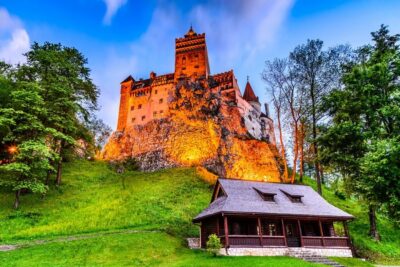
Bucharest: Dracula’s Castle, Peles Castle, & Brasov Old Town
Read our review →
Prague: 3-Hour Walking Tour of Old Town & Prague Castle
Read our review →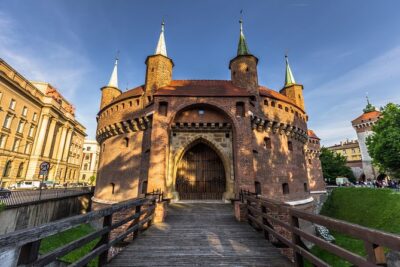
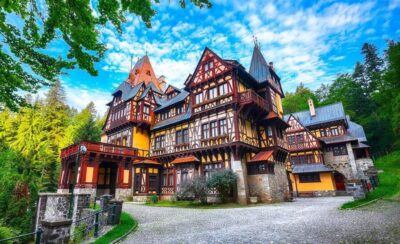
Bucharest: Peles Castle, Bran Castle, & Brasov Old Town Tour
Read our review →
Colmar, Medieval Village & Castle Small Group from Strasbourg
Read our review →
From Frankfurt: Heidelberg, Castle and Old City Guided Tour
Read our review →
Heidelberg Castle and Old Town Tour from Frankfurt
Read our review →
Kraków: Old Town & Wawel Castle Walking Tour in English
Read our review →Browse the lists this tour appears in