
Review · GERMANY
Koblenz: Old Town Tour with the Ehrenbreitstein Fortress
Ehrenbreitstein Fortress gives this Koblenz tour its best moment: from its perch 118 meters above the Rhine, you get a broad view over the river valley before walking into the city’s compact old town. I like the private format, which lets your guide adjust the pace and give your group more attention. I also like the mix of grand sights and smaller details, including the Schängelbrunnen fountain and the quirky stories tucked between the churches.
The main consideration is time. Three hours is enough for a strong introduction, but not for a long fortress visit, a slow meal, and a full museum stop. The fortress admission is not included, and you should confirm the exact pickup arrangement if you are arriving by cruise ship or staying outside central Koblenz.
Key points at a glance
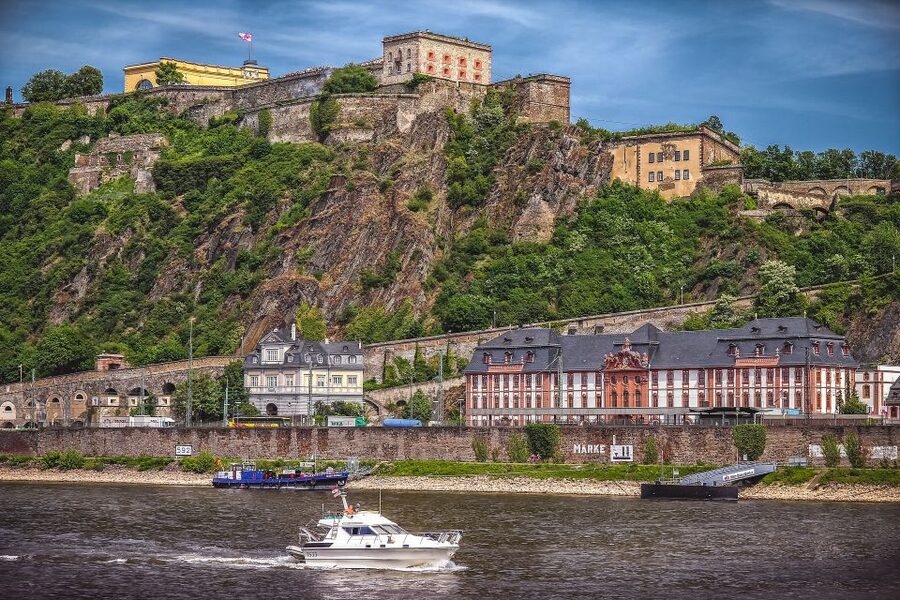
- Ehrenbreitstein Fortress: Begin high above the Rhine at a major defensive complex rebuilt between 1817 and 1828.
- Private group of up to 20: Your guide is exclusively with your party, with English, German, and Italian available.
- Old town highlights: Walk through Münzplatz, the church quarter, Schängelbrunnen, and Deutsches Eck.
- A tour shaped by local stories: Expect political history, Roman origins, French connections, and unusual city symbols.
- Three-hour schedule: A useful choice for a short stay or cruise call, but the pace will be purposeful.
- Pickup options: Pickup is available at a cruise docking location or centrally located hotel, while the stated meeting point is the Koblenz cable car station.
Starting above the Rhine at Ehrenbreitstein Fortress
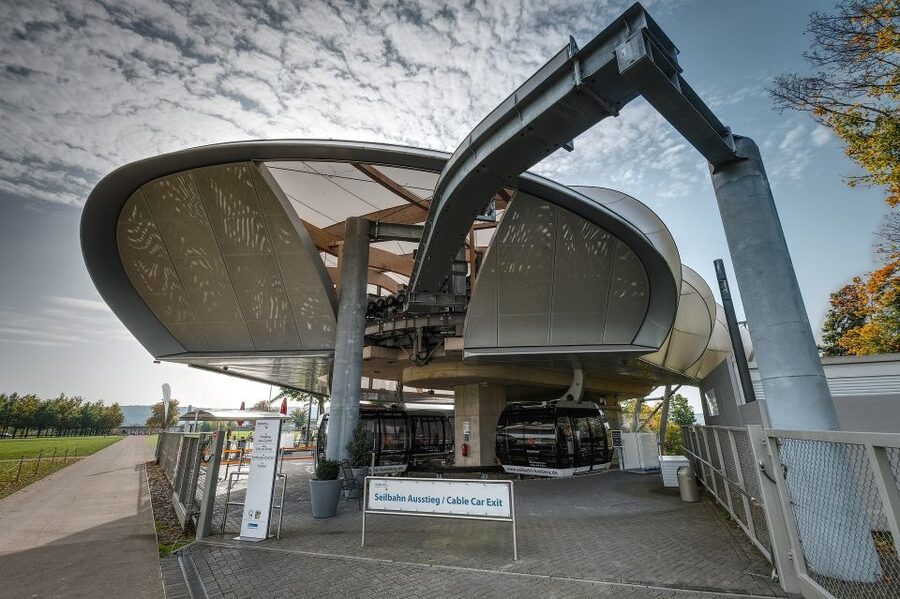
The tour begins at the cable car station on the Koblenz side, beside the route up to Ehrenbreitstein Fortress. This is a practical starting point because the fortress sits across the Rhine from the city center and the cable car connects the two areas. The activity description also lists pickup at your cruise docking location or at a centrally located hotel, so confirm the exact meeting arrangement when booking.
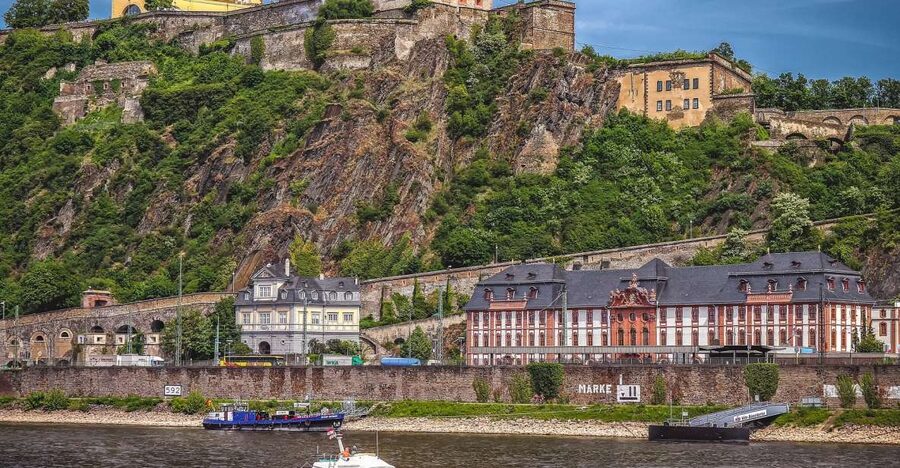
The fortress is the first major stop, and it earns the opening slot. At 118 meters above the Rhine, it gives you an instant sense of Koblenz’s position at the meeting point of two major rivers. You are not simply looking at rooftops. You are seeing the river corridor that helped make this part of Germany so important for trade, travel, and military defense.
The present fortress was built between 1817 and 1828 as part of a defensive effort to protect the Middle Rhine region. The site has an older and more troubled story. French troops destroyed the fortress in 1801, and its ruins later drew the attention of the British poet Lord Byron, who wrote about its shattered walls and former military strength. His poem helped turn the ruined fortress into a symbol of war, destruction, and memory.
The rebuilt complex is described as the second-largest fortress in Europe. That is a useful reason to allow enough time for the stop, but this three-hour tour cannot cover every corner at length. Your guide’s job is to explain the most important parts and connect the fortress to Koblenz below, rather than send you off on an extended independent visit.
One unusual historical detail concerns the conflict between France and Germany in 1672. The Archbishop refused requests from both sides for permission to move troops along the Rhine. It is a small story, but it shows how a ruler in Koblenz could affect events far beyond the city walls.
The fortress is open to the public and connected to town by cable car. Entrance fees are separate from the tour price, so budget for that extra cost. The cable car ride itself is part of the practical appeal of the location, but the supplied tour details do not state whether its fare is included. Ask before you arrive.
More fortresses and citadels around Germany:
- Erfurt: Guided Tour of The Petersberg Citadel
★ 4.8 · 674 reviews - Dresden: Königstein Fortress Paddle Steamer Cruise
★ 4.6 · 591 reviews - Erfurt: Flashlight tour of the petersberg citadel
★ 4.8 · 74 reviews
Why the fortress views are worth your first hour
I like starting here because it gives the rest of the walk some context. After seeing the Rhine from above, you can better understand why Koblenz developed where it did. The city’s name comes from the Roman Castellum apud confluentes, meaning a fort at the confluence.
The view is also the most open part of the tour. In the old town, your attention shifts to façades, fountains, churches, and narrow streets. At Ehrenbreitstein, the Rhine Valley opens out in front of you. If you are choosing this tour mainly for scenery, this is the key stop.
The private guide format should help here. One guide stays with your group rather than splitting you among strangers, and the tour can be conducted in English, German, or Italian. A private group may include as many as 20 people, so do not assume private means a one-on-one visit. It means the group is reserved for your party.
Münzplatz and the Roman beginning of Koblenz
From the fortress, the tour continues into Koblenz’s old town and reaches Münzplatz. The square’s name comes from the electoral coin called the Münz, which was minted here in the 11th century. That detail gives the square a direct link to the city’s medieval financial and political life.
Münzplatz also connects modern Koblenz with its Roman beginning. This is where the Romans first founded Castellum apud confluentes, the fort at the confluence that gave Koblenz its name. You get a useful lesson in how cities grow: a military position becomes a settlement, then a political center, then a modern city organized around public squares and traffic.
The fountain added to Münzplatz for Koblenz’s 2,000-year anniversary in 1992 was designed by Wili Heinzen. It was a gift to the city and its citizens from Sparkasse Koblenz. That makes the square more than a backdrop for old buildings. It also marks the city’s effort to tell its own story in modern times.
This is one place where a private guide can add real value. A quick photograph of a fountain will not tell you why the square has that name or why the Roman reference matters. The tour is designed to supply those connections without requiring you to read a long historical panel at every stop.
The church quarter between Liebfrauenkirche and St. Castor
From Münzplatz, you enter the romantic street between two important churches. The Liebfrauenkirche is easy to recognize by its onion domes and its position on the highest point of the city. It was built in the 17th century, served as one of the main parish churches during the French Revolution, and was destroyed in 1944. The church was rebuilt in 1955.
That rebuilding is an important part of the stop. In Koblenz, old does not always mean untouched. War damaged much of the city, and the churches you see today can combine historic plans with postwar reconstruction. A guide can help you read the difference between original fabric, rebuilt sections, and later repairs.
The Basilica of St. Castor is the oldest church in Koblenz. Its construction took place between 817 and 836, under the Archbishop of Trier and with support from Emperor Louis the Pious. It began as a Carolingian proprietary church, a term describing a church controlled by a particular ruler or institution rather than functioning as an ordinary parish church.
The two churches make a strong pairing. Liebfrauenkirche shows the city’s later religious and architectural character, while St. Castor reaches back to the Carolingian period. You see them in close succession, so the walk delivers a quick lesson in changing styles, political power, and the cost of wartime destruction.
The tradeoff is that a three-hour tour will give you an exterior-focused introduction unless your guide and timing allow more. The details provided do not promise extended interior visits. If seeing church interiors is your priority, ask how much time is planned inside each one.
More Medieval Old Town Tours in Germany:
- From Frankfurt: Heidelberg, Castle and Old City Guided Tour
★ 4.5 · 677 reviews - Heidelberg Castle and Old Town Tour from Frankfurt
★ 4.0 · 587 reviews - Nuremberg: Castle and Old Town Tour – incl. Tickets and red beer tasting
★ 4.9 · 68 reviews - Nuremberg:Complete Tour! Castle/Old Town/World War history
★ 5.0 · 45 reviews
Schängelbrunnen and Koblenz’s local sense of humor
The tour also reaches the city hall area and the Schängelbrunnen fountain. This is one of the most local stops on the route. The fountain is regarded as a symbol of Koblenz and was designed in 1940 by Carl Burger in honor of the poet Josef Cornelius.
The name Schängel comes from Koblenz’s 20-year allegiance to France from 1794 to 1813. A city’s nickname often tells you more than a formal monument does, and this one points to the complicated relationship between Koblenz and French rule.
This is where the tour appears to move beyond a standard checklist of big monuments. The guide is expected to point out quirky attractions as well as places of historical importance. That balance matters. You get the fortress, churches, and imperial memorial, but you also get the kind of city detail you might walk past without knowing its meaning.
I would pay attention here if you enjoy local symbols and small stories. The fountain is not as visually overwhelming as Ehrenbreitstein or Deutsches Eck, yet it helps you understand how people in Koblenz see their own city.
Deutsches Eck and the Kaiser Wilhelm memorial
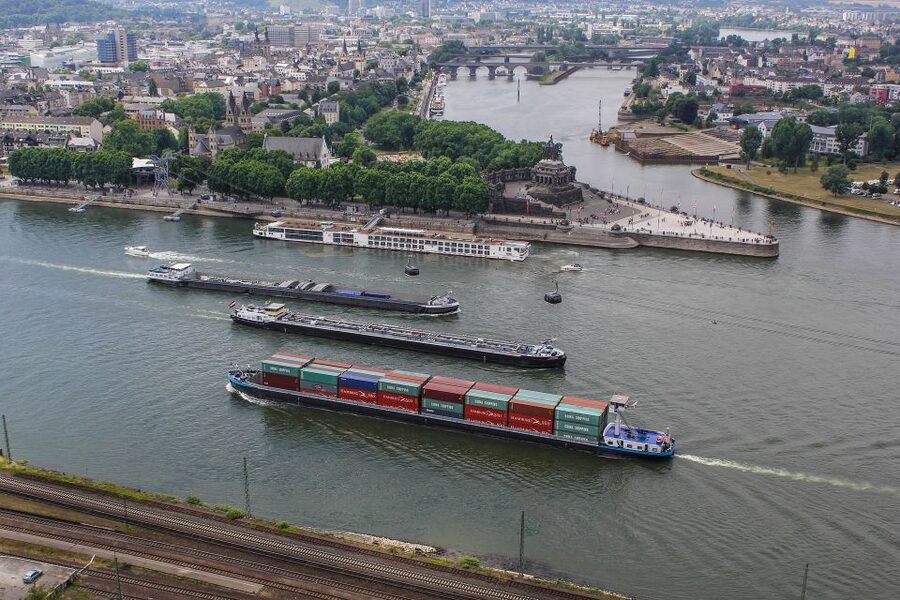
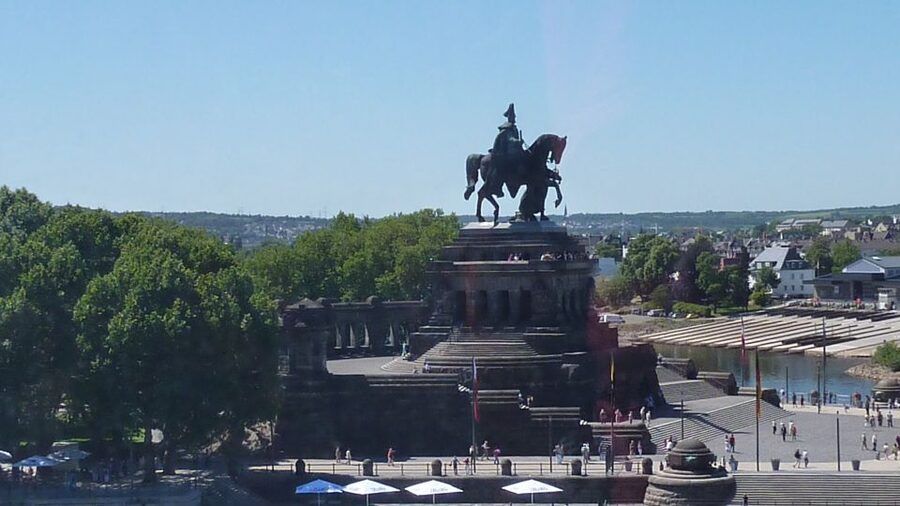
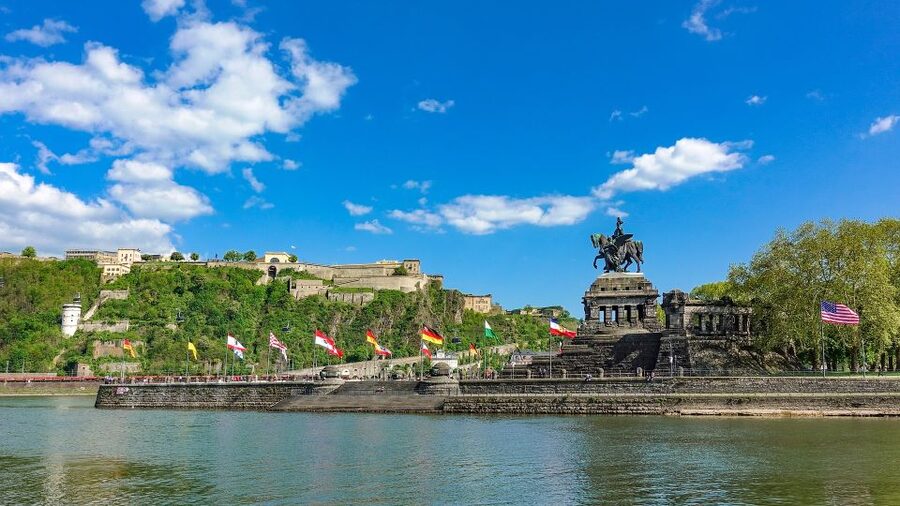
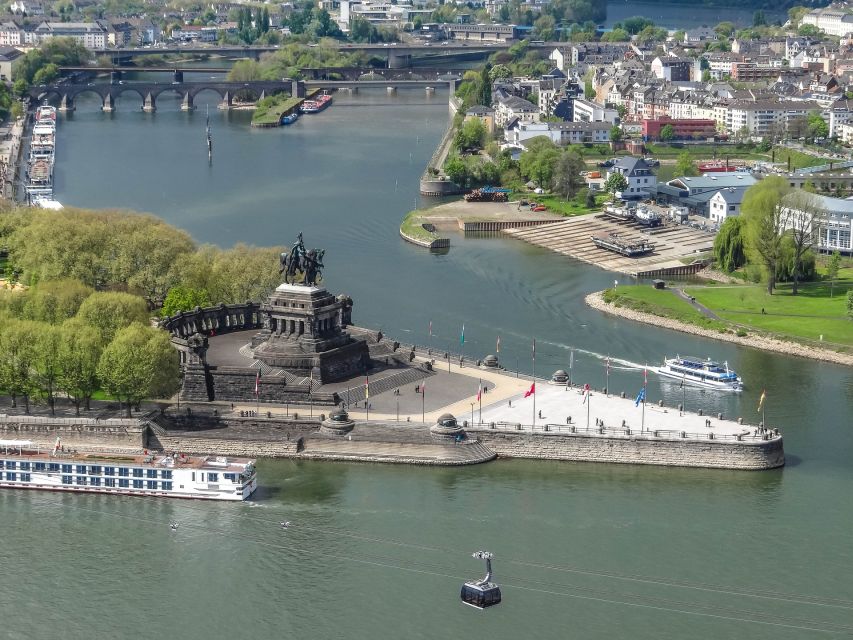
The final major sight is Deutsches Eck, the headland where the rivers meet. The name means German Corner, and it is one of Koblenz’s defining places. The position makes the city’s geography plain: Koblenz is shaped by water, with the Rhine and Moselle meeting at the edge of the old town.
The Kaiser Wilhelm memorial was erected in 1897 for Kaiser Wilhelm I, the first German Emperor. It gives the headland a strong national dimension. After spending time with Roman, medieval, French, and local stories, you reach a monument tied to modern German statehood.
The end of the route is a useful place to review the city’s layers. Koblenz is not just a Rhine viewpoint or a pretty old town. It has been a Roman military site, a religious center, a strategic fortress town, a place shaped by French rule, and a symbol of German unity.
The activity ends back at the meeting point. That is convenient if you need to return to a cruise ship or continue sightseeing from the cable car area. Still, allow yourself enough time after the official finish if your onward plans are strict. The tour lasts three hours, but the walking pace and any pickup arrangement can affect your actual schedule.
What the private format is worth at $430
The price is $430 per group of up to 20 people. That makes the value depend heavily on group size. For a full party of 20, the cost works out to about $21.50 per person before fortress admission. For two people, the per-person cost is much higher.
I see the strongest value for families, multigenerational groups, cruise parties, or friends who want one guide for their own schedule. You are paying for a private guide rather than a seat on a large shared walk, and the guide can explain the route in your chosen language: English, German, or Italian.
The price makes less sense for a solo visitor or a couple who only want a quick look at Deutsches Eck. In that case, a public city walk or independent old town visit may cost less. This tour earns its price when the private setup, fortress visit, and efficient three-hour route solve a real planning problem.
Remember that the fortress entrance fee is not included. The supplied information also does not give a separate cable car price, so ask about both before booking. These are small costs compared with the group fee, but they matter when you are planning a short port day.
Cancellation is flexible up to 24 hours before the activity for a full refund, and you can reserve now and pay later. That is useful when your cruise or hotel plans are still shifting. The tour is wheelchair accessible, though you should still confirm the practical route through the fortress and cable car system for your specific mobility needs.
Who will enjoy this Koblenz tour most
I would choose this experience if you want the main Koblenz sights explained in a short window. It suits first-time visitors, cruise passengers, families, and groups that prefer a guide who stays with them from the fortress through the old town.
It is also a good fit if you enjoy history in layers. The route covers Roman foundations, medieval coin-making, Carolingian church history, French rule, postwar rebuilding, local poetry, and German imperial symbolism.
You may want something else if you prefer a slow museum visit, a long church interior tour, or plenty of free time for cafés and shopping. Three hours is efficient, not leisurely. The tour covers a lot, and the private format helps, but it cannot turn a short route into a full-day exploration.
The strongest part is the combination of high Rhine Valley views and small old-town stories. Many city tours offer one or the other. Here, the fortress provides the broad setting, while Münzplatz, the churches, Schängelbrunnen, and Deutsches Eck fill in the human and political details.
Should you book it?
Book this tour if your time in Koblenz is limited and you want a guide to connect the fortress with the old town. The private setup is especially worthwhile for a larger group, and the route includes the city’s most important landmarks without requiring you to build the day yourself.
Before paying, confirm three points: the pickup location, the cable car arrangements, and the separate fortress admission. If those details fit your schedule, this is a well-focused way to see Koblenz from its best viewpoint and then walk through the city’s main historic quarter.
FAQ
How long does the Koblenz tour last?
The tour lasts three hours. Starting times depend on availability.
What language is the tour offered in?
The live guide is available in English, German, or Italian.
Is the tour private?
Yes. It is a private group tour for your party, with a maximum group size of 20 people.
Where does the tour start?
The stated meeting point is at the cable car station on the Koblenz side. Pickup is also available at a cruise docking location or at a centrally located hotel, so confirm the arrangement when booking.
Is Ehrenbreitstein Fortress admission included?
No. Entrance fees for Ehrenbreitstein Fortress are not included in the tour price.
Is the tour wheelchair accessible?
Yes, the activity is listed as wheelchair accessible.
Can I cancel the tour for a refund?
You can cancel up to 24 hours in advance for a full refund. The tour also offers a reserve-now-and-pay-later option.
New castle tours around Germany
- Potsdam: The evening Wannsee tour. Castles, parks, and villas.★ 4.7 · 63 reviews
- Nuremberg: Castle and Old Town Tour – incl. Tickets and red beer tasting★ 4.9 · 68 reviews
- Nuremberg:Complete Tour! Castle/Old Town/World War history★ 5.0 · 45 reviews
- Munich: Neuschwanstein Castle and Linderhof Palace Day Trip★ 4.8 · 5 reviews
- Munich: Neuschwanstein Castle Chinese Day Tour★ 4.9 · 26 reviews
- Munich – Neuschwanstein Castle+Linderhof Private Tour★ 5.0 · 2 reviews
- Lichtenwalde Castle: Guided tour★ 4.6 · 2 reviews
- Kombi Ticket Neuschwanstein and Hohenschwangau Castle★ 4.2 · 32 reviews
Fortress & Citadel Tours, compared.
Carcassonne: Castle and Ramparts Entry Ticket
Read our review →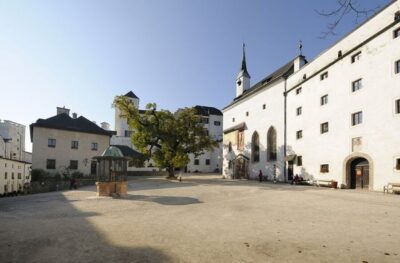
Salzburg: Hohensalzburg Fortress Admission Ticket
Read our review →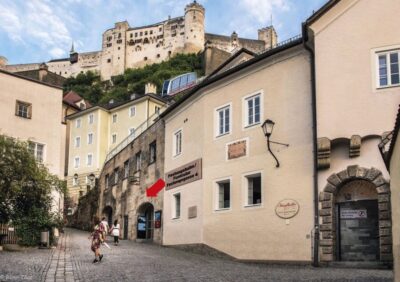
Salzburg: Best of Mozart Fortress Concert and Dinner
Read our review →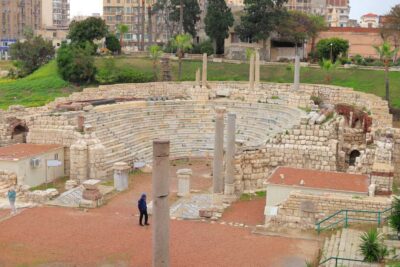
From Cairo Alexandria Catacombs, Citadel Day Trip with Lunch
Read our review →
Hue Customizable Tour with Imperial Citadel & Forbidden City
Read our review →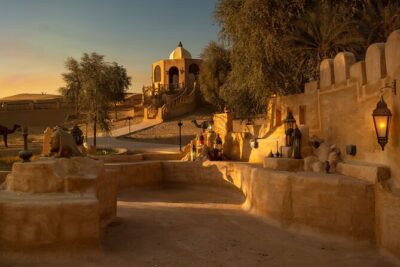
Desert Safari: Luxury Fortress Dinner, Camel Ride & Dune Bashing
Read our review →
Cairo: Egyptian Museum, Citadel, and Old Cairo Guided Tour
Read our review →
Cairo Citadel, Old Cairo and Khan El Khalili: Private Tour
Read our review →Browse the lists this tour appears in