
Review · JAPAN
Matsumoto Castle Town Walking Tour
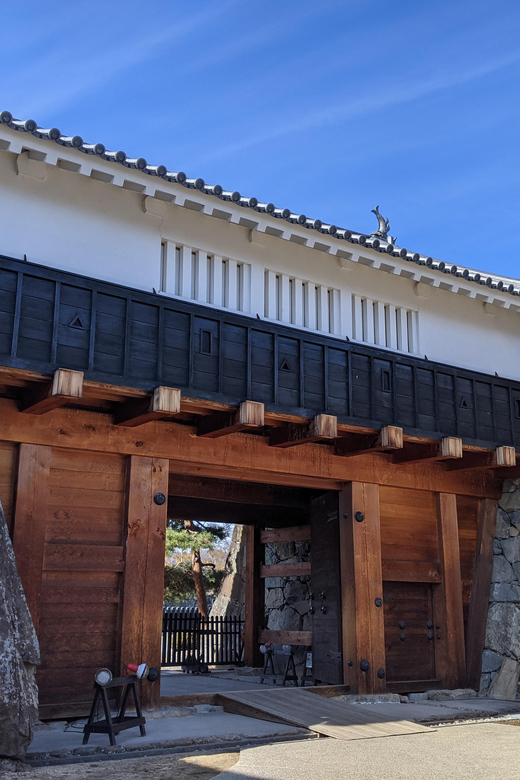
Matsumoto Castle is the star here, but the clever part is the route. You do not simply walk from the station to the front gate. Your guide follows the old, indirect approach used to protect the castle from attack, then connects the visit to Nawate Street’s frog character and Nakamachi’s preserved merchant buildings.
I like the way the tour joins the castle to the living city around it, and I like the small-group feel that can turn the outing into a private walk. Guides such as Shin, Tom, Naomi, and Kei bring maps, local stories, cultural advice, and sometimes excellent photography tips. The main drawback is the castle tower itself: its stairs are steep and narrow, so this is not a good choice if you have mobility limits.
Key points at a glance
- Follow the samurai approach: Walk a historic route from Matsumoto Station instead of taking the most direct path to the castle.
- Spend two hours at Matsumoto Castle: Castle entry is included, with an English-speaking guide to explain its defenses, architecture, and legends.
- See Nawate’s frog-themed shopping street: Browse small shops and food stalls beside the former castle moat.
- Explore Nakamachi at an easy pace: Find cafés, restaurants, craft shops, and preserved streets with local context.
- Allow for a flexible finish: Weekend and holiday crowds can make the castle portion take longer than expected.
- Pay for context, not lunch: The $63 price includes the guide and castle admission, but snacks, meals, and souvenirs cost extra.
Why the route to Matsumoto Castle matters

Matsumoto Castle is often treated as a quick photo stop: admire the black exterior, climb the tower, and move on. This walk gives the building a setting and a reason for being where it is.
Starting at Matsumoto Station, you follow a route that reflects the castle town’s defensive design. A direct road to the castle was not always possible for samurai or outsiders. The winding approach helped protect the stronghold from attack and gave the castle’s defenders more control over who came near.
That detail changes how you see Matsumoto. Streets are no longer just convenient paths between the station and the castle. They become part of the city’s military story. Your guide introduces Matsumoto’s past along the way, so the castle does not appear as an isolated monument.
I especially like this format for a first visit. You begin with a clear meeting point at the front of the JR Line ticket office, near the Starbucks inside the station on the second floor. From there, the guide provides orientation before the main sight. You get a sense of how the station, old streets, castle, river, and shopping districts fit together.
The walk is also useful if you are short on time. Matsumoto’s sights are concentrated, but a first-time visitor can easily miss the historical connections between them. This tour gives you a route to follow and a local person to answer questions along the way.
More Castle Walking Tours in Japan
- Tokyo Castle & Imperial PalaceーShogun Walking Tour
★ 4.7 · 1,068 reviews - Ultimate Osaka Walking Tour: Castle, Dotonbori & Hidden Gems
★ 5.0 · 862 reviews - Tokyo Castle & Imperial PalaceーShogun Walking Tour
★ 5.0 · 724 reviews
Two hours inside Matsumoto Castle
The castle visit takes about two hours, although the exact length can change with crowd levels. Admission is included in the $63 price, so you do not need to arrange a separate castle ticket.
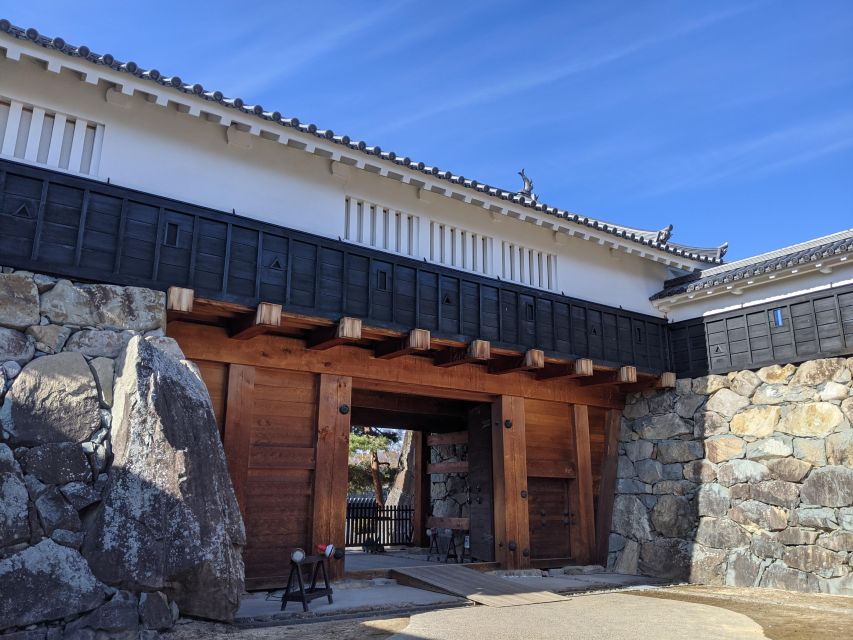
Matsumoto Castle is famous for its dark exterior and imposing wooden tower. Inside, the focus is less polished and more physical than at many modern museums. You move through the actual structure, learning how the tower worked as a defensive building and how samurai used it.
Your guide explains the castle’s architecture, history, and the people who defended it. Guides have used printed maps and photographs to make the layout easier to understand. That help matters because the castle contains plenty of details that are easy to overlook when you are moving through a busy interior.
You can expect stories about the castle’s defenders and legends tied to the site. A good guide also helps you connect those stories to what you see: narrow passages, defensive design, changes in elevation, and the practical demands of moving through a fortified building.
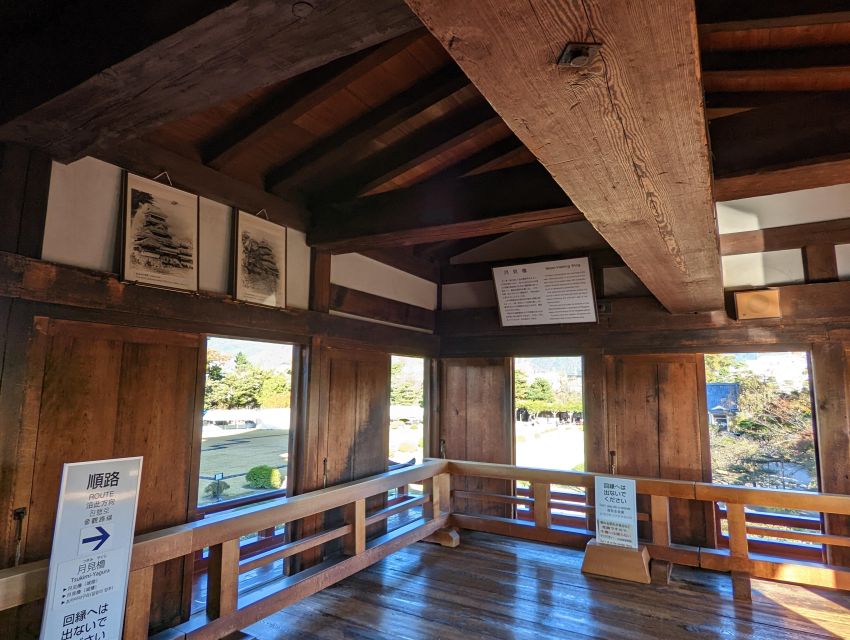
The tower is not an easy climb. The stairs are steep, narrow, and uneven in places. You should expect to use handrails and move carefully, especially when other people are coming up or down. This is the clearest limitation of the tour. The experience is not suitable for wheelchair users or people with mobility impairments.
Crowds are another factor. The castle is especially busy on weekends and during holiday periods. The schedule allows two hours, but the visit can end earlier or later. One guide, Shin, has been able to help a solo participant enter quickly on a busy holiday, and some tours have benefited from e-ticket arrangements. Still, you should not count on a completely empty castle or a fixed finish time.
The guide adds the most value inside the castle if you want interpretation rather than a self-guided walk. Matsumoto Castle has signage and volunteer guides, so independent visitors can certainly see it without this tour. The paid experience makes more sense if you want the building explained in clear English and want to understand how the castle fits into the city’s history.
Nawate Street and its friendly frogs
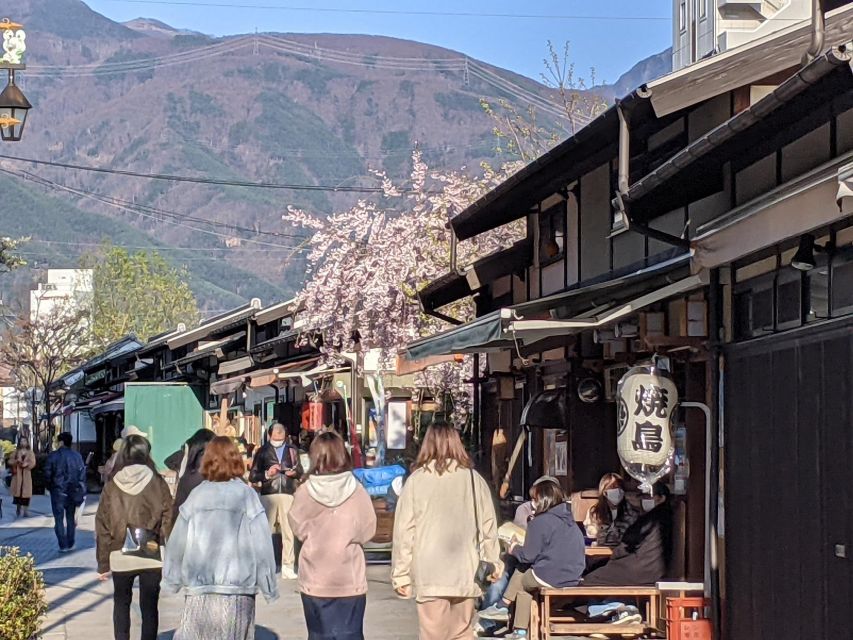
After the castle, the route turns toward Nawate Street. This small shopping lane once ran between the castle’s large moats. Today, it has a more relaxed commercial feel, with food vendors, small stores, and merchants who are known for calling out to people passing by.
The street is associated with friendly frogs, giving this stop a lighter tone after the serious castle visit. The frog theme is part of what makes Nawate memorable. It is not a grand avenue or a major museum. Its appeal comes from the compact scale, local shops, snacks, and the sense that this remains part of everyday Matsumoto.
You receive about 30 minutes here. That is enough for a guided introduction and a quick look at the shops, but it is not a long browsing session. If you see a snack or souvenir you want, you may need to make a quick decision. Miscellaneous purchases are not included in the tour price.
This is also where a guide can help you notice small details you might otherwise pass by. The merchants, street layout, and relationship to the former moats all make more sense when you know what you are looking at. The tour does not turn Nawate into a formal lecture. Instead, it gives you a short local story and time to look around.
I would not book this experience solely for Nawate Street. On its own, it is a brief shopping stop. As part of the castle-town route, though, it gives the afternoon a nice change of pace. You move from military history to food, crafts, and local character without needing another train or taxi.
Nakamachi’s old merchant streets
Nakamachi Street runs parallel to Nawate, separated by a small river. It offers a second view of Matsumoto’s past, this time through historic commercial buildings and shops rather than castle defenses.
The street is known for cafés, restaurants, and craft stores. Its appeal is the preserved town atmosphere and the chance to see how Matsumoto’s traditional character continues through small businesses. You are not only looking at old buildings. You are seeing a district that still serves as a place to eat, shop, and spend time.
The scheduled visit lasts about 30 minutes and includes guided sightseeing followed by free time. That combination works well. Your guide can explain the street’s role in the city, then you can look at a craft shop or make a note of a café for later.
This stop is one of the strongest reasons to choose the tour instead of visiting Matsumoto Castle alone. A castle-only visit gives you the main landmark but not much sense of the surrounding town. Nakamachi shows you the quieter, more domestic side of Matsumoto.
The walk may also reveal small shrines or side streets, depending on the guide and the pace of the group. Naomi, for example, has helped visitors find places they would probably have missed alone, while also giving practical suggestions for later stops in Japan. The exact route can vary, so treat these extras as possible bonuses rather than promised stops.
More Japanese castle tours around Japan:
- Osaka Castle: Museum and Tower Entry Ticket
★ 4.5 · 2,380 reviews - Kyoto: Nijo-jo Castle and Ninomaru Palace Guided Tour
★ 4.7 · 1,020 reviews - Kyoto: Nijo Castle, Kiyomizu & Fushimi Inari Guided Tour
★ 4.7 · 700 reviews - Osaka Castle Walking Tour and Castle Tower Admission
★ 5.0 · 561 reviews
The guides make the difference
The guide is the key variable in a walking tour. The named guides associated with this experience include Akiko, Shin, Tom, Kei, Tim, Naomi, Naoimi, and Keith. The strongest pattern is a warm, personal style rather than a rushed script.
Shin has used a binder with maps and photographs to explain the castle and the city. That is useful for visual learners and makes architectural details easier to follow. He has also been praised for patience and for allowing a small group to enter shops and move at its own pace.
Tom brings long experience living in Japan and a strong grasp of local and social history. He is also a professional photographer, so you may receive help choosing a better castle angle or framing a portrait. He has taken photographs for participants as well, though photography assistance should be viewed as a guide-specific extra, not a guaranteed part of every departure.
Kei is known for enthusiasm and for answering questions while taking photos. Naomi has been described as patient, friendly, and generous with local suggestions, including advice for onward travel. Akiko’s style appears especially personal and relaxed. These details matter because three hours with a guide can feel either useful or tiring. Here, the emphasis is on conversation and explanation.
The tour may be especially rewarding if you are alone or in a small party. Several departures have effectively become private walks when no one else booked. That can lead to longer conversations about Matsumoto, Japanese culture, and your own travel plans.
You should still keep expectations sensible. The guide cannot control castle crowds, weather, or how long you spend browsing. The experience is also delivered in English only, so you should be comfortable following spoken English while walking and inside a busy historic building.
Is $63 a fair price?
At $63 per person, the value depends on how much interpretation you want. The price includes a three-hour guided walk and admission to Matsumoto Castle, which is the most important cost within the route. Lunch, snacks, souvenirs, and other personal expenses are separate.
If you only want to enter the castle, you can likely spend less by visiting independently. The castle has signage and volunteer guides, and the building is the main attraction. A self-guided visit also gives you more control over timing.
The paid tour earns its keep through the route and the explanation. You get a historical approach from the station, a guided castle visit, Nawate, and Nakamachi without having to research the old streets yourself. You also have someone to answer questions about local customs, city history, and what you are seeing.
I consider the price reasonable for a first visit, particularly if you value a small group and clear English. It is less compelling for repeat visitors who already understand Matsumoto Castle and prefer to browse independently. Solo participants may find the cost easier to justify when the group is tiny or the outing becomes nearly private.
Bring money for food and shopping. Nawate is a natural place to pick up a snack, and Nakamachi has cafés and craft stores, but the tour does not include a meal or purchases.
Timing, meeting point, and practical limits
The tour begins at Matsumoto Station. Meet at the front of the JR Line ticket office, by the Starbucks inside the station on the second floor. Arriving early gives you time to find the meeting point without starting the walk in a hurry.
The advertised duration is three hours. The rough plan is two hours at the castle, 30 minutes at Nawate, and 30 minutes at Nakamachi, ending back at Matsumoto Station. These are estimates, not a strict timetable.
Allow extra flexibility if you are booking a train, restaurant, or another timed attraction afterward. Holiday and weekend crowds can slow entry and movement inside Matsumoto Castle. The tour may finish earlier or later than planned.
Wear comfortable shoes. The route includes walking through historic streets and climbing the castle tower’s steep, narrow stairs. This is not a wheelchair-accessible activity and is not suitable for people with mobility impairments.
Cancellation is flexible: you can cancel up to 24 hours before the start for a full refund. You can also reserve and pay later, which helps if your Japan itinerary is still changing.
Who should book this Matsumoto walk?
I would choose this tour if you are visiting Matsumoto for the first time and want the castle placed in its town setting. It suits people who enjoy history but prefer short stories, practical context, and street-level details to a formal museum talk.
It is also a good match for solo visitors, couples, and small groups who want room for questions. The guides have helped with photography, onward travel suggestions, maps, and local customs. Those touches can be especially useful early in a Japan trip.
Families with older children may enjoy the castle legends and samurai connections, though the tower stairs require care. Anyone with mobility limits should skip this activity and consider seeing the castle from outside or choosing an accessible alternative.
Independent museum-goers may not need it. If your only goal is to see the castle quickly, the guide and extra streets may feel unnecessary. You can also explore Nawate and Nakamachi on your own if you have time to read about them beforehand.
Should you book it?
Book it if you want more than a castle photo. The strongest part of the experience is the link between the samurai route, Matsumoto Castle, Nawate, and Nakamachi. You finish with a better sense of how the city’s old defenses, shopping streets, river, and daily life fit together.
The tour is a particularly good value when the group is small and your guide is one of the strong storytellers in the team. Just plan around the steep castle stairs, allow time for crowds, and remember that food and shopping are extra. If those limits suit you, this is a practical and personable way to get your bearings in Matsumoto.
FAQ
Where does the Matsumoto Castle Town Walking Tour start?
It starts at Matsumoto Station, at the front of the JR Line ticket office and by the Starbucks inside the station on the second floor.
How long does the tour last?
The tour lasts about three hours. The schedule allows roughly two hours at Matsumoto Castle, 30 minutes at Nawate Street, and 30 minutes at Nakamachi Street.
What language is the tour offered in?
The tour is offered in English with a live English-speaking guide.
Is Matsumoto Castle admission included?
Yes. Entry to Matsumoto Castle is included in the tour price.
Is lunch included?
No. Lunch is not included. Snacks, souvenirs, and other personal purchases are also separate.
Are the castle stairs difficult?
Yes. The stairs to the top of Matsumoto Castle’s tower are steep and narrow.
Is the tour suitable for wheelchair users?
No. The tour is not suitable for wheelchair users or people with mobility impairments.
Can the tour finish later than three hours?
Yes. The timing is an estimate, and the tour may finish earlier or later depending on how busy Matsumoto Castle is, especially on weekends and during holidays.
Can I cancel the booking?
Yes. You can cancel up to 24 hours in advance for a full refund. You can also reserve now and pay later.
New castle tours around Japan
- Peace Memorial Park, Hiroshima Castle, & Garden Private Tour★ 4.8 · 7 reviews
- From Osaka: Himeji Castle, Arima Onsen & Mt. Rokko Day Tour★ 4.6 · 339 reviews
- Osaka/kyoto: Himeji Castle, Kobe. Luxury Day Trip with Guide★ 5.0 · 2 reviews
- Osaka: Osaka Castle 3 hours Historical Walking Tour★ 4.6 · 14 reviews
- Osaka: Osaka Castle Guided Tour with Local Guide★ 4.7 · 78 reviews
- Osaka: Osaka Castle – Tsuruhashi – Tennoji (Spanish Guide)★ 4.7 · 10 reviews
- Osaka: Castle, Tea Ceremony, Calligraphy, and Samurai Armor!★ 5.0 · 4 reviews
- Osaka: Early Morning Osaka Castle Guided Tour, Avoid Crowds★ 4.9 · 12 reviews
Castle Walking Tours, compared.

Edinburgh Castle: Guided Walking Tour with Entry Ticket
Read our review →
Prague: 3-Hour Walking Tour of Old Town & Prague Castle
Read our review →
Edinburgh Castle Guided Walking Tour in English
Read our review →
Budapest: Buda Castle Walk with Saint Stephen’s Hall
Read our review →

Prague 3-hour Afternoon Walking Tour including Prague Castle
Read our review →
Royal Mile and Edinburgh Castle – Small Group Walking Tour
Read our review →
Browse the lists this tour appears in