

Review · THE USA
Charleston walking tour with a Citadel history professor
Charleston’s past is tucked into side alleys, churchyards, and building details that are easy to miss from a passing carriage or a quick stroll. Eric Lager, a Citadel history professor with nearly two decades in college teaching and public history, uses those small clues to explain how the city grew from a colonial port into the Charleston you see today.
I especially like the small group limit of 12 and the mix of architecture, religion, politics, war, and personal stories. You get more room for questions than on a large city tour, and Eric’s teaching background gives the walk a clear sense of purpose. The one thing to consider is the three-hour length: this is a serious history walk, not a quick introduction, and the route takes place outdoors in sun or rain.
Key points about the Charleston History Walk
- Meet Eric Lager, a Citadel history professor: Expect a trained historian who explains context, not just dates and names.
- Explore Charleston from 1670 to the present: The walk connects colonial settlement, the American Revolution, the antebellum era, the Civil War, and modern Charleston.
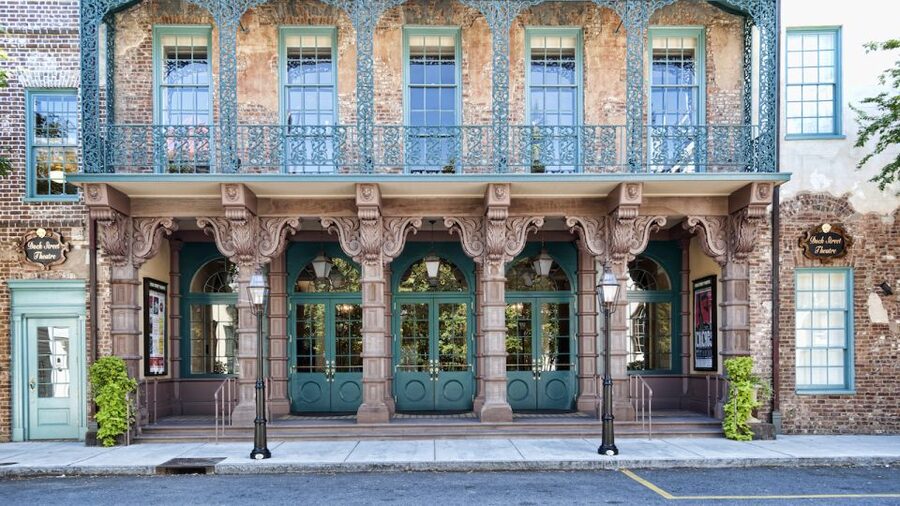
- See major sites and easy-to-miss corners: The route includes Dock Street Theater, the French Huguenot Church, Washington Park, the Four Corners of Law, old alleys, and graveyards.
- Walk in a group capped at 12 people: Smaller numbers make it easier to hear, ask questions, and study details around you.
- Expect architecture alongside history: Eric explains why homes and public buildings were designed as they were, and how religious and cultural forces shaped the city.
- Bring shoes and water: The tour lasts three hours, takes place outdoors, and runs rain or shine unless conditions become unsafe.
Why a history professor changes the way you see Charleston

Charleston can be an attractive place to stroll without knowing much about its past. Colorful facades, narrow streets, old churches, and shaded squares do much of the visual work. But the city becomes far more interesting when someone explains why a building looks the way it does, who used it, and what was happening around it at the time.
That is the purpose of this walk. Eric Lager focuses on South Carolina and Charleston during the Colonial Era, the American Revolution, the antebellum period, and the Civil War. His background matters because the tour is not limited to a string of famous names. You can expect connections between architecture, religion, politics, military events, culture, and everyday life.
Eric has taught at the college level and worked in public history for nearly twenty years. Several people who took the walk appreciated his ability to answer questions without losing the thread of the tour. That combination is useful in Charleston, where nearly every block raises another question.
You may ask why a church faces a certain way, why a house has a particular layout, or how a public square gained its name. Instead of treating those points as separate facts, Eric ties them back to Charleston’s larger story. His humor also keeps the material from becoming a lecture on the sidewalk.
More fortresses and citadels around the world:
- Carcassonne: Castle and Ramparts Entry Ticket
★ 4.6 · 2,884 reviews - Salzburg: Hohensalzburg Fortress Admission Ticket
★ 4.6 · 2,236 reviews - Salzburg: Best of Mozart Fortress Concert and Dinner
★ 4.5 · 1,424 reviews
Starting at 108 Meeting Street
The meeting point is at 108 Meeting Street, beside the brick wall on the sidewalk. Look for a building with four small white Ionic Greek columns. It now serves as a graphic design center for the city and is not open to the public.
The location is directly across from Hibernian Hall and the pink Mills House Hotel, which gives you two useful landmarks. There are restrooms at the Mills House Hotel, but none at the meeting point itself. Use that facility before the walk begins, since three hours outdoors is a long stretch if you start unprepared.
You will want comfortable shoes and water. Charleston’s historic district is well suited to walking, but the tour can include old alleys and graveyards, and you will spend a great deal of time standing while Eric explains what you are seeing.
The walk is in English. Hotel pickup and drop-off are not provided, so plan to reach Meeting Street on your own.
The first layer: Charleston’s colonial beginnings

The tour looks at Charleston from its founding in 1670 onward. That starting point gives you a useful frame for understanding the city as more than a collection of handsome buildings.
Colonial Charleston developed around trade, government, religion, and the waterfront. Those forces shaped the street plan and the people who lived there. Eric uses the city itself to show how early Charleston functioned, rather than asking you to remember a list of dates.
The colonial section is especially useful if you want to understand how Charleston became important in South Carolina and in American history. You will hear about the people who helped build the city, as well as the famous and infamous figures who left their mark on it.
The subject is not treated as a polished tale of old homes and gracious streets. Charleston’s past includes political conflict, religious differences, slavery, war, wealth, and social divisions. A good history walk should make the city more interesting without pretending that every part of its past was admirable. This tour’s broad time span allows those difficult subjects to fit into the larger story.
Dock Street Theater and Charleston’s public life

Dock Street Theater is one of the listed sights, and it offers a good example of how Charleston’s public life changed over time. A theater is not simply a pretty facade. It points to entertainment, social rank, public gathering, and the city’s changing cultural life.
At this stop, you can expect Eric to put the building into its historical setting. His approach, based on the details emphasized throughout the walk, includes more than the date a structure was built. He discusses how buildings were used and why their design mattered.
The theater also helps break up the political and military portions of the tour. Charleston’s past was shaped by performances, religious services, business, public debate, and private homes as much as by battles and elections.
You may find that this is the kind of stop that changes how you look at other buildings later in your visit. Instead of seeing an old facade as decoration, you begin to ask what purpose it served and who had access to it.
More Castle Walking Tours in the world:
- Edinburgh Castle: Guided Walking Tour with Entry Ticket
★ 4.7 · 11,699 reviews - Prague: 3-Hour Walking Tour of Old Town & Prague Castle
★ 4.7 · 5,696 reviews - Edinburgh Castle: Guided Walking Tour with Entry Ticket
★ 5.0 · 5,540 reviews - Edinburgh Castle Guided Walking Tour in English
★ 5.0 · 5,214 reviews
The French Huguenot Church and Charleston’s many influences
The French Huguenot Church brings religion and migration into the walk. Its presence points to the different cultural and religious groups that helped shape Charleston.
Eric’s subject areas include religious context, and that is important here. Churches tell you about more than worship. They can reveal who belonged to a community, how groups organized themselves, and how religious identity affected public life.
Charleston is often presented as if it developed from one clear tradition. The French Huguenot Church complicates that picture in a useful way. It reminds you that the city’s story includes different European influences and competing religious communities.
The church is also part of the architectural experience. Look closely at how the building fits into the surrounding streetscape, and listen for the reasons behind its form and setting. The tour does not promise entry into house museums or other private interiors, so the emphasis is on what Eric can explain from public spaces.
The Four Corners of Law and Washington Park
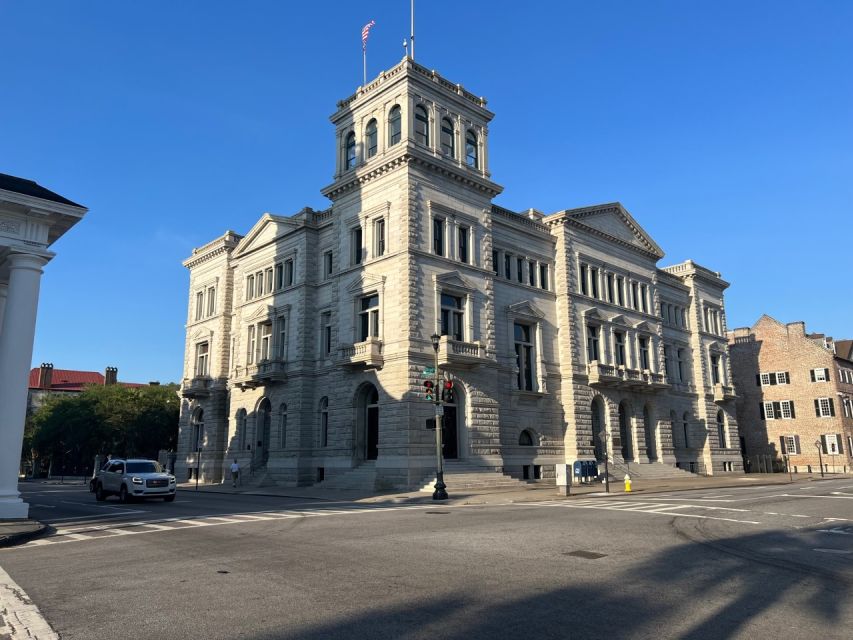
The Four Corners of Law is one of Charleston’s best-known public intersections. The name refers to the presence of government, religion, and civic authority gathered around one point. It is a compact place to consider how Charleston organized power.
Eric uses sites such as this to connect buildings with institutions. You are not only looking at architecture. You are considering who made decisions, how law worked, and how religious and civic authority shaped daily life.
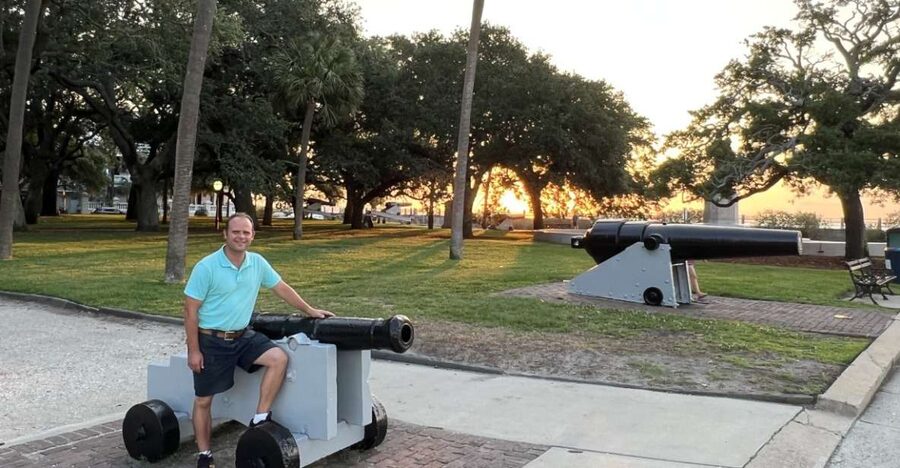
Washington Park provides another setting for that discussion. Parks and public spaces give you a way to think about how the city presented itself and how people moved through it. They also offer a pause from the tighter streets and building fronts.
This portion should appeal to anyone who likes political and civic history. If your interest is limited to scenic streets and interiors, the discussion may feel more detailed than you want. At $40, however, the value comes from this added explanation. You are paying for interpretation, not simply a route through attractive places.
Alleys, graveyards, and the details you might miss
The walk includes old alleys and graveyards, areas that many people would pass without understanding. These places can reveal how Charleston handled space, memory, religion, and death.
A graveyard may show differences in status, faith, dates, and family connections. An alley can hint at the practical side of urban life, including how people, goods, and workers moved through the city. The point is not that every narrow passage has a dramatic secret. The point is that Eric teaches you to read the city’s less obvious features.
This is where a small group helps most. In a group of 20, it can be hard to gather around a small marker or hear a detailed explanation. With no more than 12 people, you should have a better chance of seeing what Eric points out and asking about it.
The small format also makes the walk feel more like a conversation. Several people who took the tour appreciated that Eric addressed questions and made time to connect with individuals in the group. That personal contact is a practical advantage, not just a pleasant extra.
Stories of famous and infamous Charlestonians
Dates alone rarely make a city memorable. Eric builds the walk around stories of the people who shaped Charleston, including characters with admirable reputations and those whose actions were far less appealing.
That balance matters. A city’s history is not only a procession of heroes. People made money, held office, fought wars, defended beliefs, caused harm, and sometimes became notorious. Personal stories give you a way into larger subjects such as slavery, political power, revolution, and the Civil War.
Eric’s sense of humor is another part of the experience. He keeps the tone friendly and lively without turning serious history into a joke. Several people valued that balance, especially during a long walk filled with names, dates, and changing eras.
You should expect a lot of information. Some people even wished they had taken notes. If you want to remember every name and detail, bring a small notebook or use your phone discreetly when appropriate. If you prefer to listen without taking notes, focus on the main connections rather than trying to retain everything.
Architecture as evidence, not decoration

One of the strongest features of this tour is its attention to buildings. Eric explains why homes were designed in particular ways and how construction choices served practical purposes.
That approach gives you more than a collection of architectural terms. You begin to see how climate, social customs, wealth, religion, and city growth affected the built environment. A doorway, window, porch, or floor plan can tell you something about the people who lived there and the conditions they faced.
The architecture also links different periods. Colonial choices affected later development, while changing wealth and social habits altered the city’s homes and public buildings. You get a stronger sense of Charleston as a living place rather than a preserved display.
The tour does not include entry to house museums. If you want to see restored interiors, you will need to arrange those separately. That is not a flaw in the walk, but it is worth knowing when planning your day. This experience is built around public streets, exterior details, and Eric’s explanation.
Three hours at a steady walking pace
The advertised duration is three hours, though the walk may sometimes finish a little earlier or run slightly longer depending on the group and discussion. The pace is described as easy, but you should still be ready to walk and stand for an extended period.
The long format is a good fit if you want a serious introduction to Charleston. In three hours, Eric can move beyond the basic facts and show how the city’s colonial, revolutionary, antebellum, Civil War, and modern periods connect.
It may be too much if you have only a short window in town or want an activity with frequent indoor breaks. Charleston’s weather also matters. The tour runs rain or shine unless conditions are unsafe, so check the forecast and dress for the day.
There is no hotel pickup, no food, and no drink included. Bring your own water, and plan a meal before or after the walk. Comfortable footwear is more important than dressing up.
Is $40 a fair price?
At $40 per person, this walk costs more than a basic large-group stroll, but the comparison is not quite even. You are paying for three hours with a trained historian, a group capped at 12, and a route that covers more than the postcard version of Charleston.
The small group is the clearest value. You can hear the guide more easily, ask questions, and look at details without being separated from the explanation. A history professor also brings a different level of preparation than a guide who simply recites a standard script.
The price makes the most sense for you if you want context and stories. If you only want to see the main streets, take photographs, and move on quickly, a shorter or less expensive option may be enough.
I would schedule this early in your Charleston visit. The walk gives you a useful map of the historic district and teaches you what to notice later. It may also help you decide which churches, museums, and buildings deserve a closer look.
Who should book this walk?
This tour suits you if you enjoy history, architecture, local personalities, or the way cities change over time. It is also a strong choice for first-time visitors who want a broad introduction rather than a narrow theme.
People who already know Charleston can still get value from the walk. The emphasis on building details, religious context, cultural influences, and lesser-seen corners can add depth even if you have visited before.
Families with older children and teenagers may also find the stories easier to follow than a formal museum visit, though the three-hour length requires patience. The small format helps keep the experience interactive.
You should think twice if you dislike long outdoor walks, need regular indoor seating, or want to enter historic houses. The tour is not suitable for wheelchair users, and pets are not allowed, although assistance dogs are permitted.
Practical details before you go
Cancellation is free up to 24 hours before the tour for a full refund. You can also reserve now and pay later, which gives you some flexibility when planning a Charleston stay.
Meet at the brick wall outside 108 Meeting Street, across from Hibernian Hall and the pink Mills House Hotel. Since there are no restrooms at the meeting location, use the facilities at the Mills House before the start.
Bring water, wear comfortable shoes, and prepare for the weather. The tour is conducted in English and does not include food, drinks, hotel transportation, or admission to house museums.
Should you book the Charleston History Walk?
Book it if you want to understand Charleston rather than simply walk past it. Eric Lager’s background, the small group, and the three-hour route create a useful balance of scholarship, storytelling, architecture, and local character.
I especially recommend it for history fans and first-time visitors who can spare half a day. Schedule it near the start of your stay, listen for the links between the sites, and keep the rest of the day open for your own museum or church visits.
Skip it if you want a short, mostly scenic outing or if three hours on foot sounds tiring. For everyone else, $40 is a reasonable price for a focused walk that can change how you read Charleston’s streets.
FAQ
How long does the Charleston walking tour last?
The tour lasts three hours.
Who leads the tour?
Eric Lager leads the walk. He is a Citadel history professor with experience teaching at the college level and working in public history.
What historical periods does the tour cover?
The tour covers Charleston from its founding in 1670 to the present, including the Colonial Era, the American Revolution, the antebellum period, and the Civil War.
What sights are included?
The walk includes Dock Street Theater, the French Huguenot Church, Washington Park, the Four Corners of Law, old alleys, and graveyards.
How large is the group?
The group is limited to no more than 12 people. Past groups have also been kept to 10 people or fewer.
Where does the tour meet?
The meeting point is along the brick wall on the sidewalk outside 108 Meeting Street. The building has four small white Ionic Greek columns and is across from Hibernian Hall and the pink Mills House Hotel.
Are restrooms available at the meeting point?
There are no restrooms at 108 Meeting Street. Restrooms are available at the Mills House Hotel across the street.
What should I bring?
Bring comfortable shoes and water.
Does the tour operate in bad weather?
The tour takes place rain or shine unless the conditions are unsafe.
Is the tour accessible to wheelchair users?
The tour is not suitable for wheelchair users. Pets are not allowed, but assistance dogs are permitted.
More history behind the walls around the world
- Edinburgh: Edinburgh Castle Guided History Tour with Tickets
★ 4.8 · 9,933 reviews - Charleston historical walking tour with a Professor of History at The Citadel
★ 5.0 · 1,284 reviews - Buda Castle District Dark History, Legends and Vampire Night Tour
★ 4.5 · 1,240 reviews - Luxembourg: Nature, History and Castles Full-Day Tour
★ 4.5 · 529 reviews
New castle tours around the world
- From Prague: Karlštejn Castle & Koněprusy Caves Tour★ 4.9 · 183 reviews
- Prague: 2.5-Hour Vyšehrad Castle with Gorlice & Tickets★ 4.5 · 118 reviews
- Prague: Alchemy & Mysteries Bridge and Castle Evening Tour★ 5.0 · 8 reviews
- Prague Castle: 1-Hour Introduction Tour with Entry Ticket★ 4.2 · 41 reviews
- Potsdam: The evening Wannsee tour. Castles, parks, and villas.★ 4.7 · 63 reviews
- Prague: Stunning Viewpoints, Castle, City & Park Bike Tour★ 4.6 · 38 reviews
- Prague: River & Park Bike Tour to Troja Chateau★ 5.0 · 8 reviews
- Ljubljana: Postojna cave & Predjama castle small group tour★ 4.9 · 29 reviews
Fortress & Citadel Tours, compared.

Carcassonne: Castle and Ramparts Entry Ticket
Read our review →
Salzburg: Hohensalzburg Fortress Admission Ticket
Read our review →
Salzburg: Best of Mozart Fortress Concert and Dinner
Read our review →
From Cairo Alexandria Catacombs, Citadel Day Trip with Lunch
Read our review →
Hue Customizable Tour with Imperial Citadel & Forbidden City
Read our review →
Desert Safari: Luxury Fortress Dinner, Camel Ride & Dune Bashing
Read our review →
Cairo: Egyptian Museum, Citadel, and Old Cairo Guided Tour
Read our review →
Cairo Citadel, Old Cairo and Khan El Khalili: Private Tour
Read our review →Browse the lists this tour appears in