
Review · CORDOBA
Cordoba: 2.5-Hour Guided Jewish Quarter and Alcazar Tour
Córdoba’s best stories are packed into narrow streets, old courtyards, and buildings that changed faiths and uses over time. This 2.5-hour walking tour connects the Jewish Quarter with the Alcázar complex, giving you a clear route through the city’s medieval past without making you sort out each monument on your own.
I like the tour’s single-language guiding, which keeps the explanations moving, and the chance to see the medieval synagogue, craft souk, and small San Bartolomé Chapel in one walk. The main drawback is important: restoration work limits the Alcázar visit to the gardens and Arab Baths, and bad weather can close the gardens altogether.
Key points at a glance
- Córdoba’s Jewish Quarter: Follow narrow medieval streets, beginning near Calleja de la Hoguera and Plaza Cardenal Salazar.
- A rare medieval synagogue: Visit one of the few Jewish monuments in Córdoba to survive the city’s troubled past.
- Architecture with layered stories: See a historic mosque site, the Mudejar chapel of San Bartolomé, and an old hospital now used by the university.
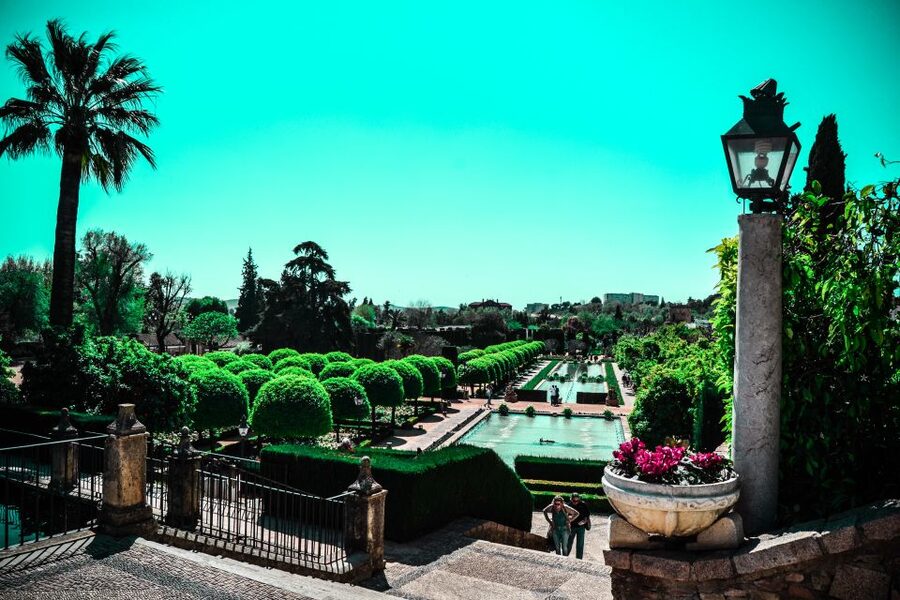
- Alcázar access has changed: Restoration currently restricts the visit to the Alcázar Gardens and Arab Baths of the Caliphal Alcázar.
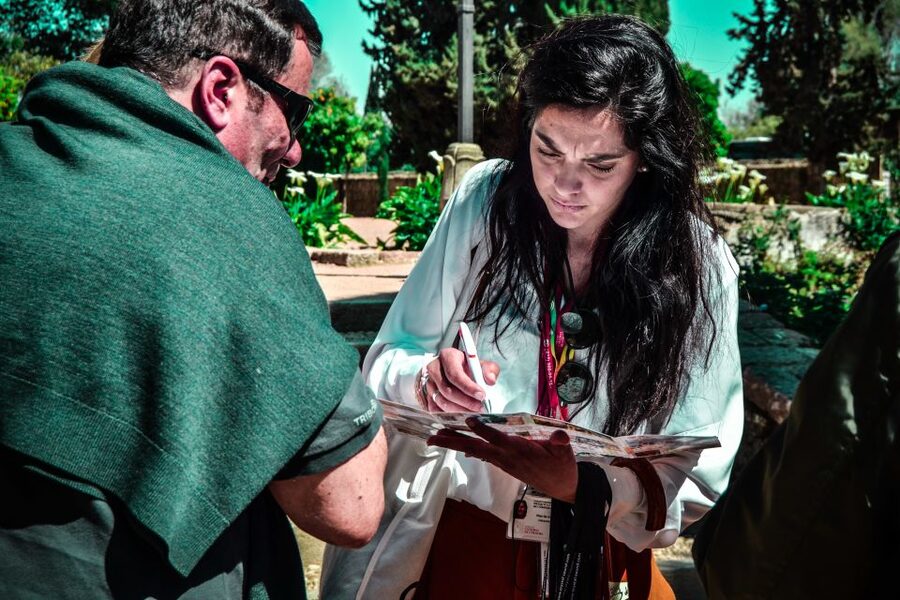
- Local guides add personality: Patricia has been praised for linking history with anecdotes, while Raphael adapted the route when the gardens were closed.
- Good value at $34: Entrance fees and a guided route are included, but food, hotel pickup, towers, and full Alcázar access are not.
Why this route makes sense in Córdoba
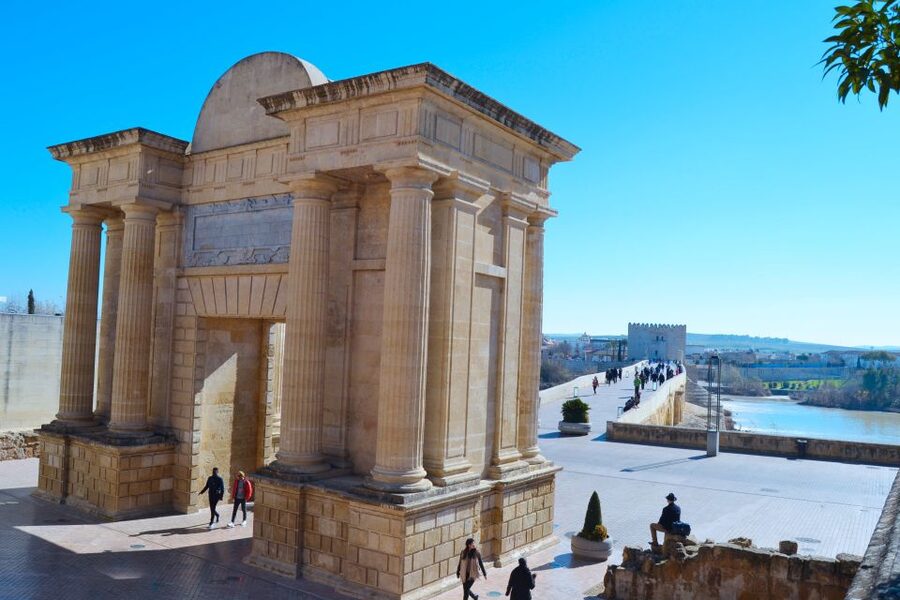
Córdoba can feel confusing at first. The old quarter is a tangle of lanes, religious buildings, courtyards, and small squares, with layers of Roman, Islamic, Jewish, and Christian history pressed into a compact area.
This tour gives you a useful thread to follow. You begin near the Mezquita-Catedral at Puerta del Perdón, walk through the Jewish Quarter, and finish at the Alcázar of the Catholic Monarchs. That order matters. The route moves from the city’s medieval streets and smaller monuments toward a large royal complex, so you get both close-up details and a broader look at Córdoba’s past.
At $34 per person, the price is reasonable if you want admission handled and prefer a guide to explain what you are seeing. The cost is less compelling if you mainly want to wander independently, especially during the current Alcázar restoration, since some of the palace areas are unavailable.
The activity is listed as 2.5 hours, though one January booking finished earlier than expected. I would keep a little flexibility in your schedule rather than planning a meal or train connection immediately afterward.
More Alcazar tours around Cordoba:
- Córdoba: Jewish Quarter, Mosque, and Alcázar Tour
★ 4.6 · 5,143 reviews - Cordoba: Alcazar Guided Tour and Skip-the-Line Ticket
★ 4.2 · 1,792 reviews - Córdoba: Mosque-Cathedral, Jewish Quarter and Alcázar Tour
★ 4.6 · 1,719 reviews
Meeting at the Mezquita’s Puerta del Perdón
The meeting point is Puerta del Perdón, beside the Mezquita-Catedral at Calle Cardenal Herrero, 1. Look for the orange umbrella.
This is a busy part of Córdoba, so arrive with enough time to find the group. The meeting point is central, but the nearby lanes can be crowded and easy to confuse. You will not be picked up at your hotel, and transport is not part of the experience.
The walking begins near Calleja de la Hoguera, a narrow lane dating from the Arabic period. The setting gives you an immediate sense of old Córdoba: shaded passages, tight corners, and buildings that reveal their age through small details rather than grand entrances.
The guide also points out a historic mosque connected with Córdoba’s Islamic period. The city is believed to have had more than a thousand mosques in the 10th century, a reminder of how large and important Córdoba once was under Muslim rule.
Calleja de la Hoguera and Plaza Cardenal Salazar
From the old lane, the route moves toward the Jewish Quarter and Plaza Cardenal Salazar. Here you see a statue of Algafequi, a 12th-century doctor associated with eye surgery in Europe.
The square also contains an old 18th-century hospital that now forms part of a university. This is one of the tour’s useful habits: it does not treat Córdoba’s buildings as frozen monuments. You learn how a hospital became a university building, how chapels changed hands, and how one city carried several religious and political identities at once.
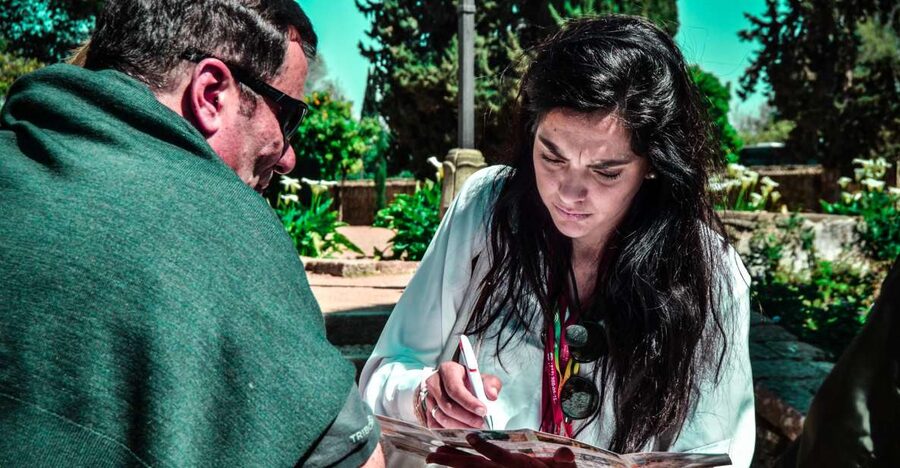
I especially like this stop for travelers who want more than a list of dates. The guide can connect medicine, education, religion, and urban life in one small square. Patricia, one of the named guides, has been noted for keeping explanations appealing to both adults and younger people, mixing historical details with anecdotes.
That style matters here. The architecture is often modest, and without context you could walk past it. A good explanation helps you notice why a statue, doorway, or former institution belongs in the story.
San Bartolomé Chapel and its unusual past
The next major stop is Capilla Mudéjar de San Bartolomé, a Christian chapel built in an Arabesque style. It was founded by a Jewish convert, which gives the building an especially complicated past.
The chapel reflects the cultural overlap that makes Córdoba so interesting. Its Christian purpose, Islamic-influenced design, and connection to a Jewish convert do not fit into neat categories. That mixture is exactly what the guide is there to explain.
You should expect stairs during the walk and at some parts of the route. The tour is not recommended for people with back problems or limited mobility, and it is not suited to those who need step-free access. Baby strollers must be left at the entrance, so families with very young children should plan carefully.
The chapel is also an example of why a guided visit can add value. A quick photograph may capture the arches and decorative style, but it will not explain the building’s changing identity. The guide points out details and shares the less obvious parts of its story.
More castles to explore around Cordoba:
- Córdoba: Mosque-Cathedral and Alcazar Tour
★ 4.5 · 637 reviews - Cordoba: Alcazar of Christian Monarchs 1–Hour Guided Tour
★ 4.3 · 583 reviews - Córdoba: Almódovar Castle Entrance Ticket
★ 4.6 · 493 reviews - Córdoba: Mosque-Cathedral & Alcazar Guided Tour
★ 4.6 · 383 reviews
The Córdoba souk and local craftwork
After San Bartolomé, you head to Córdoba’s souk, a craft market selling local products. This is a shorter, lighter part of the route after the historical explanations.
The souk gives you a chance to see how Córdoba presents its traditional crafts today. You can browse rather than rush, although the tour is still moving toward the synagogue and Alcázar, so this is not designed as a long shopping session.
I like having the souk included because it breaks up the sequence of churches, chapels, and monuments. It also gives you a look at local products without sending you far from the historic center. If you are hoping to buy something, note that food is not included and the tour does not provide a formal tasting.
The medieval synagogue in the Jewish Quarter
The synagogue is the heart of the Jewish Quarter portion. Built in the 14th century, it is one of the few Jewish monuments in Córdoba to survive the city’s turbulent history.
The building is not presented simply as an isolated religious site. Its location and survival help explain the Jewish community’s place in medieval Córdoba, as well as the major changes that followed. The guide supplies the historical connections, while the small scale of the building lets you look closely at its design.
This is one reason I would choose the tour over a general old-town walk. You get a focused look at Jewish Córdoba rather than only passing through the quarter’s prettiest lanes. The synagogue also gives the route a clear center before the final move toward the Alcázar.
The tour is conducted in either English or Spanish, depending on the selected option. The guide does not switch back and forth between languages, which is helpful if you want a steady explanation rather than repeated commentary.
What you actually see at the Alcázar today
The tour ends at the Alcázar of the Catholic Monarchs, but current restoration work changes what you can enter. The palace interiors and other areas are not available as part of the normal visit at present.
Instead, the accessible portions are the Alcázar Gardens and the Arab Baths of the Caliphal Alcázar, both within the same monumental complex. The guide explains the Catholic Monarchs and the Alcázar’s role in Córdoba’s past, but you should not book this expecting a full palace tour.
This is the most important practical point before reserving. The experience still includes the Alcázar complex and entrance fees, but the advertised sense of a complete palace visit would be misleading under the current restrictions.
The gardens provide a different finish from the tight streets of the Jewish Quarter. You move from enclosed lanes to an open royal setting, with water, planted spaces, and the remains of the wider complex. The Arab Baths add another layer, linking the site to the earlier Caliphal period.
Access can also depend on weather. On one occasion, rain meant the Alcázar Gardens were closed, and the guide, Raphael, extended the Jewish Quarter portion instead. That kind of adjustment is useful, but it cannot replace seeing the gardens if they are the part you most want.
The tour does not include the Alcázar towers. If tower views are a priority, you will need to arrange that separately if access is available.
The guide can shape the experience
The guide is a major part of the value here. Patricia has been praised for making the history work for mixed-age groups, using anecdotes alongside the main facts. Raphael showed flexibility when weather and closures changed the planned finish.
The group may be small. One August departure had only five people, which can make it easier to hear the guide and ask questions. Group size is not guaranteed, so I would not book solely on the hope of a private-feeling walk.
The tour is offered in English or Spanish. Choose carefully at booking, since the single-language format is one of its strengths. You get a more natural flow when the guide can keep the explanation in one language from start to finish.
A good guide also helps with Córdoba’s terminology. You will hear about the Mezquita-Catedral, the Jewish Quarter, Mudéjar design, the Caliphal Alcázar, and the Catholic Monarchs in a relatively short period. The route is much easier to follow when someone explains how these periods connect.
Is $34 good value?
For $34, you receive a guided walking tour and entrance fees. That makes the price fair if you want to visit the synagogue and current Alcázar areas while getting explanations along the way.
The value depends heavily on your expectations. If you want a compact introduction to Córdoba’s religious and political layers, the price works well. You are paying not only for admission, but also for the route, language support, and historical context.
The value drops if you expect access to every part of the Alcázar. Restoration limits the visit, and the towers are excluded. Bad weather can also close the gardens, leaving the guide to adapt the route.
Food and hotel pickup are not included. You should wear comfortable shoes, since the route involves substantial walking and stairs. I would also bring water, though the supplied information does not promise refreshment stops.
Free cancellation is available up to 24 hours before the start, and you can reserve now and pay later. Those terms are useful if your Córdoba plans may shift, but the central decision remains the Alcázar restriction.
Who should book this Córdoba walking tour?
I would choose this experience if you want a short, guided introduction to the Jewish Quarter and prefer not to manage several admission points yourself. It suits first-time visitors who want a clear historical route and travelers who enjoy architecture explained through personal stories and local context.
It is also a good fit if the medieval synagogue matters to you. The route gives that monument proper attention instead of treating it as a quick photo stop.
Families with older children may appreciate the mixed history and manageable length, though the stairs and no-stroller rule require planning. Patricia’s approach, which links anecdotes with explanations for adults and young people, suggests the tour can work well for a mixed-age group.
I would hesitate if you have back or mobility problems, need step-free access, or dislike walking on narrow historic streets. I would also wait or choose another option if your main goal is the full interior of the Alcázar, since restoration currently prevents that.
Practical details before you reserve
The tour lasts about 2.5 hours, though one departure was shorter than advertised. English and Spanish options are available, and the guide stays with one language rather than alternating between both.
Wear comfortable shoes. There are many stairs, and the activity is not recommended for people with back problems or mobility impairments. Baby strollers must remain at the entrance.
The tour includes entrance fees, but not food, hotel pickup, or access to the towers. Meet at Puerta del Perdón by the Mezquita-Catedral and look for the orange umbrella.
Most importantly, check the current Alcázar access conditions before you commit. At present, the gardens and Arab Baths are open parts of the complex, while restoration keeps other sections closed. Weather may also affect the gardens.
Should you book it?
Book this tour if you want Córdoba’s Jewish Quarter explained by a local guide, with the synagogue, San Bartolomé Chapel, souk, and current Alcázar access tied into one efficient walk. At $34, the combination of admission and guiding is sensible.
Skip it if you need a complete Alcázar palace visit, tower access, or a route without stairs. The experience is strongest as a Jewish Quarter and old Córdoba history tour with a limited Alcázar finish, not as a full palace tour.
FAQ
Where does the tour meet?
Meet at Puerta del Perdón beside the Mezquita-Catedral at Calle Cardenal Herrero, 1. Look for the orange umbrella.
How long does the tour last?
The stated duration is 2.5 hours, although one booking finished sooner than expected.
Which languages are available?
The tour is available in English and Spanish. The guide uses one language rather than switching between languages during the visit.
What parts of the Alcázar are currently open to the tour?
Because of restoration work, the visit currently includes the Alcázar Gardens and the Arab Baths of the Caliphal Alcázar. Other areas of the palace are not accessible as part of the tour.
Does the tour visit the Alcázar towers?
No. Tower visits are not included.
Is the tour suitable for people with limited mobility?
No. The route includes many stairs and is not recommended for people with back problems or mobility impairments. Baby strollers must be left at the entrance.
What is included in the price?
The price includes the guided tour and entrance fees. Food and hotel pickup are not included.
New castle tours around Cordoba
- Córdoba: Mosque and Alcazar Private Tour with tickets★ 5.0 · 5 reviews
- Guided visit to the Mosque of Cordoba and Alcazar of Cordoba★ 4.5 · 15 reviews
- Cordóba: Gardens & Fortress of Catholic Monarchs Guided Tour★ 4.3 · 336 reviews
- Cordoba: Alcazar of The Christian Monarchs Tickets and Tour★ 3.9 · 94 reviews
- Córdoba: Mosque-Cathedral & Alcazar Guided Tour★ 4.6 · 383 reviews
- Córdoba: Mosque, Jewish Quarter and Alcázar 3-Hour Tour★ 4.7 · 377 reviews
- Alcazar of Cordoba Entry Ticket and Guided Tour★ 4.3 · 372 reviews
- Córdoba: Alcázar and Jewish Quarter 2-Hour Guided Tour★ 4.2 · 50 reviews
Alcazar Tours, compared.
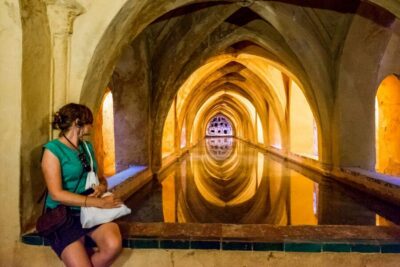
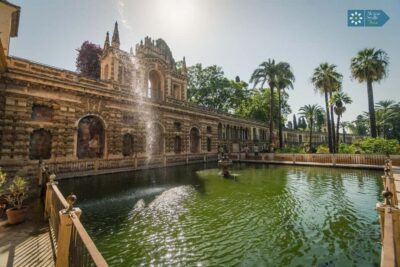
Seville: Alcázar, Cathedral & Giralda Skip-the-Line Tour
Read our review →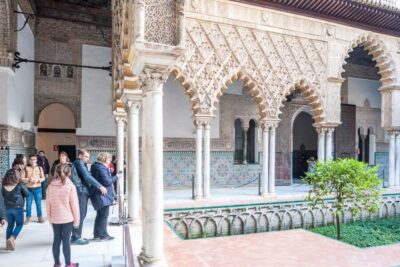
Seville: Cathedral, Giralda & Alcazar Entry With Guided Tour
Read our review →
Madrid: Segovia and Toledo Tour, Alcazar, and Cathedral
Read our review →
Seville: Priority Access Cathedral, Giralda & Alcázar Tour
Read our review →
Córdoba: Jewish Quarter, Mosque, and Alcázar Tour
Read our review →
Seville: Alcázar and Cathedral Entry Ticket and Guided Tour
Read our review →
Alcazar and Cathedral of Seville Tour with Skip the Line Tickets
Read our review →Browse the lists this tour appears in