

Review · BUDAPEST
Budapest: Castle District Walking Tour
Buda Castle Hill packs royal power, medieval streets, wartime scars, Ottoman memories, and some of Budapest’s finest views into one compact ridge. This two-hour walk helps you connect those layers instead of simply snapping photos at Fisherman’s Bastion and moving on.
I like the route’s unusual details, especially the Medieval Jewish Prayer House, the underground cave system, and the story linking Walt Disney with the Bastion. I also like the practical local advice, from free viewpoints to places to eat after the walk. The drawback is clear: the uphill climb and stairs can be tiring, and the tour is not suitable for wheelchair users or anyone who needs a fully step-free route.
Key points at a glance
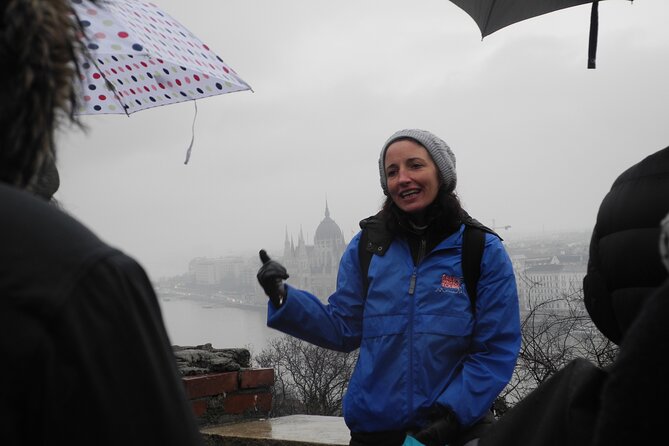
- See the Castle District’s major sights together: The Royal Palace, Matthias Church, Fisherman’s Bastion, Maria Magdalena Church Tower, lookout terraces, and more.
- Hear the district’s many stories: Your guide covers Hungarian, German, Jewish, Ottoman, royal, and wartime life.
- Expect a 10-minute uphill walk: Comfortable shoes and a moderate level of fitness matter here.
- Look beyond the postcard views: The walk includes public art, baroque homes, a former Jewish prayer house, and traces of WWII destruction.
- Use the guide for practical help: You can ask about restaurants, free viewpoints, nearby attractions, and what to do next.
- Budget carefully: The $2.27 charge is a booking and administration fee, while tipping the guide is expected and commonly reaches about €10 per person.
Why Castle Hill deserves a guided walk
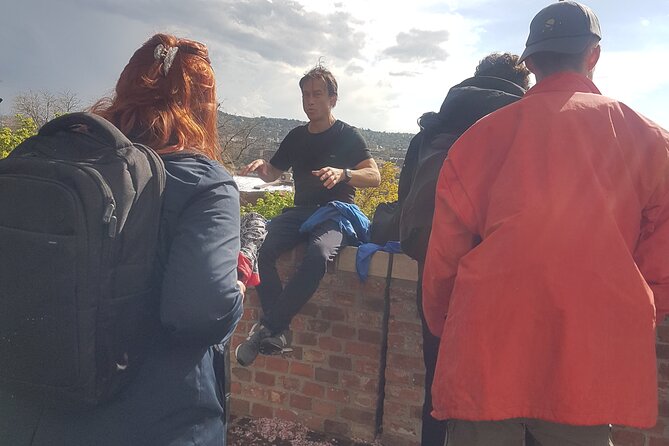
Budapest’s Castle District is easy to underestimate. Many people come for the postcard view from Fisherman’s Bastion, admire Matthias Church, and leave without noticing the layers behind the cream-colored walls.
This hill has seen roughly 800 years of wars and occupations. It has been a royal center, a defensive stronghold, a home for ordinary Hungarian, German, and Jewish residents, and a heavily damaged wartime zone. The guide’s job is to tie those pieces together as you walk.
I find that especially useful here because the area can feel polished and confusing at the same time. A pretty baroque house may sit beside a scarred building. A quiet street may conceal an old religious site. A terrace may offer a free view that is almost as good as a paid lookout.
The walk is in English and lasts two hours. It is designed for international visitors, not for Hungarian residents seeking a specialist local-history course. The tone is broad, lively, and practical, with room for questions along the way.
More Castle Walking Tours in Budapest
- Budapest: Buda Castle Walk with Saint Stephen’s Hall
★ 4.5 · 3,012 reviews - Budapest: Buda Castle District Walking Tour
★ 4.6 · 2,108 reviews - Budapest: 3-Hour Grand City Tour and Castle Walk
★ 4.3 · 1,437 reviews
Starting at Batthyány tér and climbing toward the Castle
You meet the guide at the Batthyány tér metro exit, close to St. Anna Church. Look for a royal blue flag or sign. This is a useful meeting point because the area has public toilets and a food market, so you can arrive prepared rather than hunting for facilities once the climb begins.
The route includes about a 10-minute uphill walk. That may not sound dramatic, but Castle Hill also brings stairs and uneven walking. One guide, Andras, reportedly waited for the group to catch up before continuing his explanation, and that is the right pace for this setting. You should expect pauses, but you should not expect a flat stroll.
Wear shoes with a firm sole. Bring water, and dress for the weather. Rain does not stop the walk, so a wet day calls for proper clothing rather than optimism. The route is not suitable for wheelchair users, and anyone with limited mobility should think carefully before booking. Strollers can also be awkward because of the stairs, even though the general description may sound broadly accessible.
The maximum group size is 30 people. That is not a tiny private tour, but it is still small enough for questions if everyone stays close. Groups of eight or more cannot book this activity, either together or by making separate reservations.
The Royal Palace and the many lives of Buda Castle
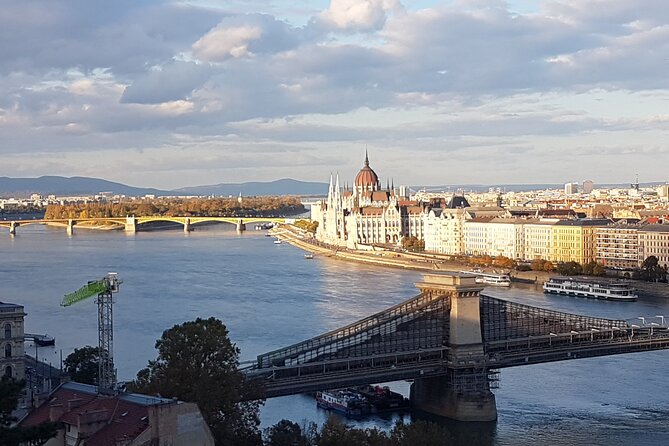
The Royal Palace is the biggest visual anchor on Castle Hill. You see the massive former residence of Hungary’s kings and learn why it has been rebuilt again and again after war damage.
That repeated rebuilding is important. The palace is not simply an untouched medieval royal home. Its appearance reflects different periods, changing rulers, destruction, and reconstruction. The guide explains the role of the site in Hungarian history and points out where the president and prime ministers’ offices are located today.
You also hear about the Turul, the mythical bird associated with Hungary. It is a useful moment for understanding how national symbols appear in public spaces, monuments, and stories around the country.
Do not expect the two-hour walk to function as a full palace museum visit. The strength here is the outdoor setting and the explanation of how the palace fits into the wider district. If you want to spend several hours inside cultural collections afterward, you will need to plan that separately.
The palace area also provides some of the best chances to pause and take photographs. The Pest side of the Danube opens out below, giving you the classic Budapest panorama. Your guide can also point out free viewpoints, which helps you avoid paying for every possible terrace.
Matthias Church and Fisherman’s Bastion beyond the postcard
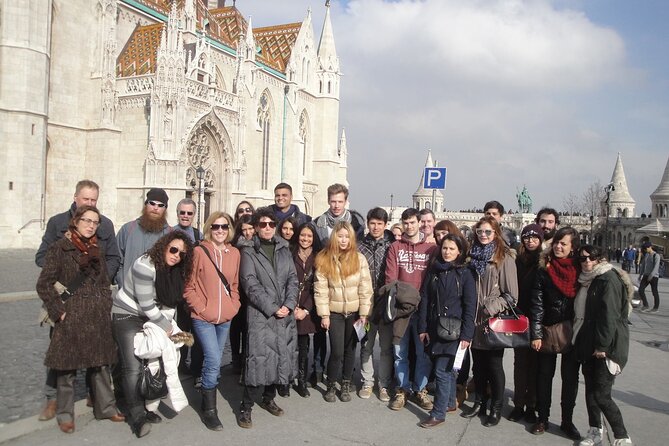
Matthias Church is one of the district’s essential stops. The tour gives you historical context for the church and its place within Castle Hill, rather than treating it as a decorative backdrop.
Fisherman’s Bastion is the other major draw. Its arches and terraces frame the Danube and Pest in a way that makes the city look almost arranged for a photograph. The guide explains the Bastion’s connection with Walt Disney, an unexpected detail that gives the familiar structure a fresh angle.
You will also learn about the different forms of the cross, including crosses with one, two, or three horizontal strips. That sort of small visual lesson can make a difference later in your Budapest sightseeing. You begin to read symbols on buildings instead of seeing only stone and ornament.
The views are excellent, but this is also where crowds and stairs can slow the group. If you want long, quiet photography time, a guided walk is not the ideal format. The schedule moves you through the main sights, and one point of feedback was that a little more free time at the top would have been welcome.
The tradeoff is simple: you gain context and cover more ground, but you give up some freedom to linger.
Same stronghold, another way through the gate:
- Budapest: Buda Castle Cave Tour
★ 4.7 · 5,677 reviews - Budapest: Buda Castle District Vampires and Myths Night Tour
★ 4.6 · 3,830 reviews - Buda Castle District Dark History, Legends and Vampire Night Tour
★ 4.5 · 1,240 reviews - Budapest: Buda Castle District Walking Tour with a Historian
★ 4.9 · 867 reviews
Baroque homes, Jewish history, and wartime destruction
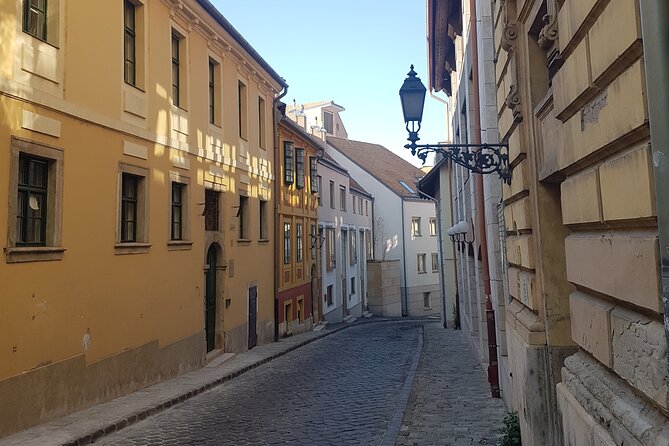
The Castle District is not only palaces and viewpoints. Some of its most meaningful places are ordinary-looking buildings that reveal how people lived.
The walk includes beautiful baroque residential buildings and the Medieval Jewish Prayer House. You learn about the German, Jewish, and Hungarian populations who lived in the area, which gives the district a human scale. This is a valuable part of the route because grand royal stories can otherwise push everyday life into the background.
The guide also discusses the massive destruction during World War II and identifies the location of the Nazi stronghold. Those subjects change the mood. The district’s attractive streets are also a record of violence, occupation, and rebuilding.
I appreciate that the walk does not present Castle Hill as a flawless historic quarter. Its appeal comes partly from the contrast between restored façades and the evidence of what happened here. You may find the material sobering, but it gives the sightseeing more meaning than a simple parade of monuments.
The tour also touches on where wealthy Hungarians live today. That detail connects the old district with modern Budapest and helps you notice the difference between formal public buildings and private residential streets.
Ottoman traces and Gül Baba’s pilgrimage site
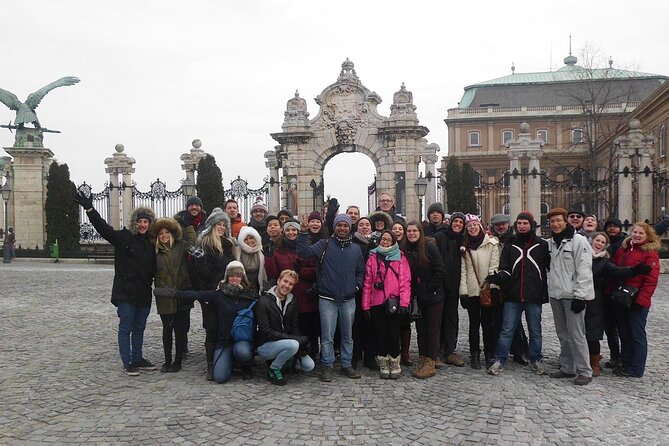
Castle Hill also opens a window onto the Ottoman period. The walk explains where the Muslim pilgrimage site connected with Gül Baba is located.
Gül Baba was an Ottoman Turkish monk and soldier, and his association with Budapest is one of the less obvious stories in a standard first visit. You get a reminder that the city’s past is not only a Hungarian royal story. Different empires, faiths, and populations have left marks here.
The guide also discusses the defensive role of the hill over the centuries. That makes the height of the district easier to understand. You are not simply climbing for a view. The hill’s position mattered in war, and the underground spaces helped support life and defense below the streets.
Underground chambers, public art, and the lighter side of the route
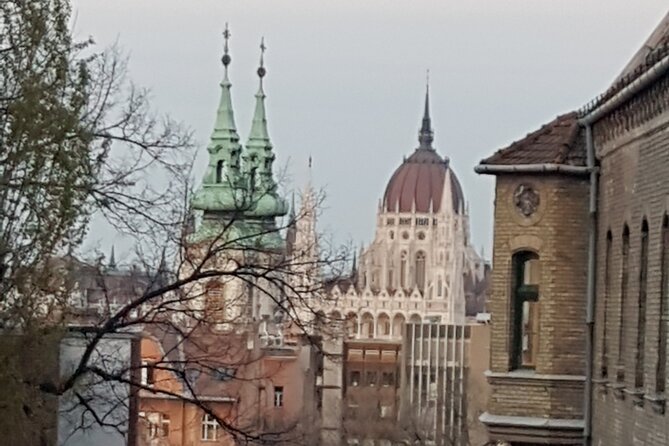
The Castle District has an underground life as well as a grand surface. Your guide introduces the labyrinths, cave system, and the way these spaces played a part in defense.
The walk does not promise a full underground cave visit, so think of this as an explanation and a look at the area’s subterranean character rather than a separate cave expedition. Still, the subject adds useful depth. The hill is not just a collection of buildings. It is also a network of spaces below them.
The route includes urban public art and small monuments, including some of the funniest statues in Budapest. These give the walk a needed change of tone after the war and occupation stories.
You also hear about the huszár, the light cavalry fighter often linked with womanizing in the local storytelling. This is the kind of detail that makes a history walk feel less like a list of dates. Guides such as Rita, Dora, Boulash, Gary, Judith, Udit, Odea, Odia, and Andras have been praised for using humor, personal stories, questions, and simple explanations to keep the walk moving.
The exact guide varies by departure. What you should look for is a person who explains clearly, waits for the slower members of the group, and welcomes questions. The best moments of this tour depend heavily on that human connection.
What the two-hour format does well
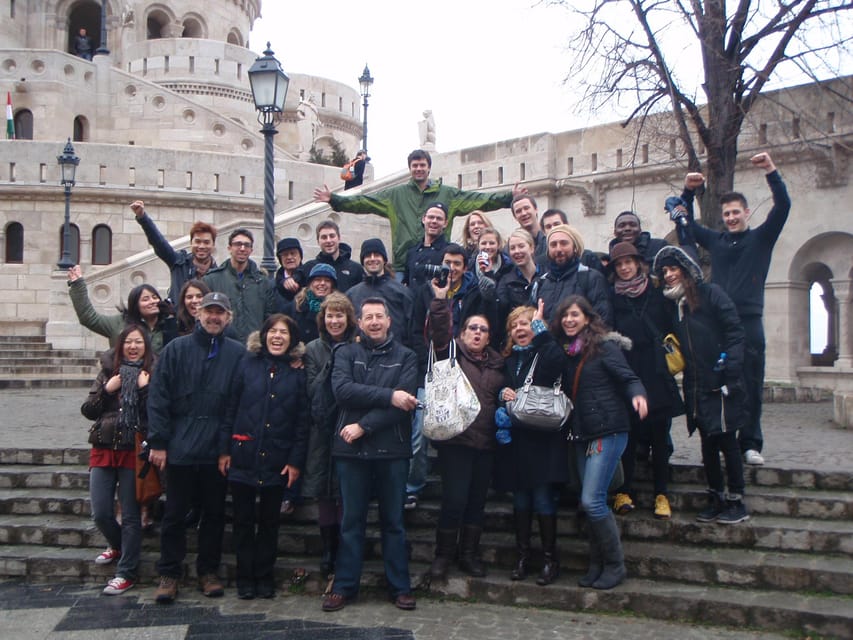
Two hours is enough to give you a solid map of the district without taking over your entire day. You see the main landmarks, hear the major historical turns, and finish with practical information and time for remaining questions.
That format is especially useful at the start of a Budapest stay. Afterward, you know where you want to return, which museums or churches deserve more time, and which viewpoints cost nothing. You also gain a better sense of the hill’s layout, which can save you from wandering back and forth.
The short length does impose limits. The walk cannot provide a long museum visit, a slow meal, or extended photography at each terrace. If your priority is entering every major building, this is not enough time. It works best as an orientation walk with real historical substance.
The guides’ ability to answer questions is another strength. You can ask about Hungarian customs, local food, further sights, or practical transport after the tour. Rita, for example, has been especially useful with restaurant suggestions and ideas for what to visit next.
Price, tipping, and what you are really paying
The advertised price of $2.27 per person looks almost too low for a two-hour guided tour. In practical terms, it is a booking, administration, and marketing fee paid through GetYourGuide. It guarantees your place, but it is not the full amount you should budget for the guide.
The experience relies on tips. You are encouraged to decide what the walk was worth at the end, and the usual amount given is about €10 per person, with some people paying more.
That makes the value quite good if you want a broad introduction to Castle Hill and are comfortable with the tipping model. You get a local English-speaking guide, a planned route, historical explanation, and practical suggestions without paying a standard high upfront tour price.
Still, factor in the tip honestly. If you prefer one fixed price with no expected gratuity, this arrangement may feel less straightforward. A good guide can make the walk worth far more than the booking fee, but the low advertised price should not be treated as the complete cost.
Free cancellation is available up to 24 hours before the activity for a full refund, and you can reserve now and pay later. Check the available departure times when booking because the start time changes by date.
Who will enjoy this Castle District walk most
I would choose this tour if you are visiting Budapest for the first time and want the major Castle Hill sights explained in plain English. It is also a good fit if you enjoy history but do not want a formal lecture.
You will get the most from it if you can manage the uphill section and stairs, stay with a group, and ask questions. The walk suits couples, solo visitors, and small groups who want orientation before exploring on their own.
I would be cautious if you use a wheelchair, have difficulty with stairs, or want a slow, private photography session. People over 95 are specifically advised not to book, and the moderate fitness requirement should be taken seriously at any age.
Families with young children may manage the walk, but strollers are not a good match for the steps. Older children who enjoy stories, statues, symbols, and unusual historical details may find it more rewarding than a long museum visit.
Should you book the Castle District Walking Tour?
Book it if you want a lively two-hour introduction to Buda Castle Hill, especially one that goes beyond Matthias Church and Fisherman’s Bastion. The mix of royal history, Jewish heritage, Ottoman connections, WWII destruction, underground spaces, public art, and Danube views gives you much more than a photo stop.
Skip it if stairs are a serious problem or if you want to explore at your own pace. Also remember that the $2.27 price is a booking fee, and you should plan for a tip of around €10 per person.
For most first-time visitors who can handle the climb, I think the route is a smart start. You leave with a clearer sense of the district, a list of places to revisit, and a better understanding of why this hill matters to Budapest.
FAQ
Where does the tour start?
Meet at the Batthyány tér metro exit, close to St. Anna Church. Look for a guide holding a royal blue flag or sign.
How long does the tour last?
The walking tour lasts two hours. Starting times vary, so check availability for your chosen date.
What language is the tour in?
The live tour guide speaks English.
How difficult is the walk?
You should have a moderate level of physical fitness and be able to complete a 10-minute uphill walk. The route also includes stairs, so comfortable shoes are important.
Is the tour suitable for wheelchair users or people with strollers?
The activity is not suitable for wheelchair users. Stairs can also make the route difficult with a stroller, so families should consider that before booking.
Does the price include a tip for the guide?
No. The $2.27 charge is a booking, administration, and marketing fee. You are encouraged to tip the guide separately, with about €10 per person described as the usual amount.
New castle tours around Budapest
- German guided tour through Budapest’s castle district★ 5.0 · 129 reviews
- Budapest: The WWII Siege of Buda Castle & Bomb Shelter Tour★ 4.8 · 130 reviews
- Budapest: Private Walking Tour of the Castle District★ 5.0 · 2 reviews
- Budapest: Castle District Walk with Matthias Church Entry★ 4.8 · 33 reviews
- Budapest Hike to Visegrád Castle w or wo Sauna/Danube beach★ 5.0 · 16 reviews
- Budapest: E-Bike Guided Tour and Castle Hill★ 4.9 · 241 reviews
- Castle District & Pest Driving Tour with Danube River Cruise★ 4.6 · 15 reviews
- Budapest: Evening Castle Hill Tour with Fishermen’s Bastion★ 4.9 · 42 reviews
Castle Walking Tours, compared.

Edinburgh Castle: Guided Walking Tour with Entry Ticket
Read our review →
Prague: 3-Hour Walking Tour of Old Town & Prague Castle
Read our review →
Edinburgh Castle Guided Walking Tour in English
Read our review →
Budapest: Buda Castle Walk with Saint Stephen’s Hall
Read our review →

Prague 3-hour Afternoon Walking Tour including Prague Castle
Read our review →
Royal Mile and Edinburgh Castle – Small Group Walking Tour
Read our review →
Browse the lists this tour appears in