
Review · BUDAPEST
Budapest: Buda Castle Cave Tour
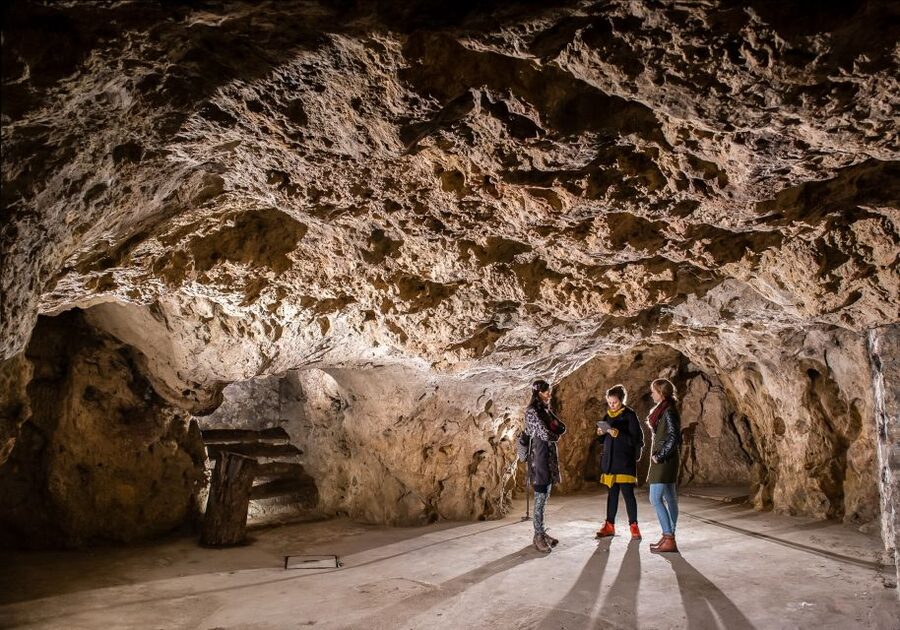
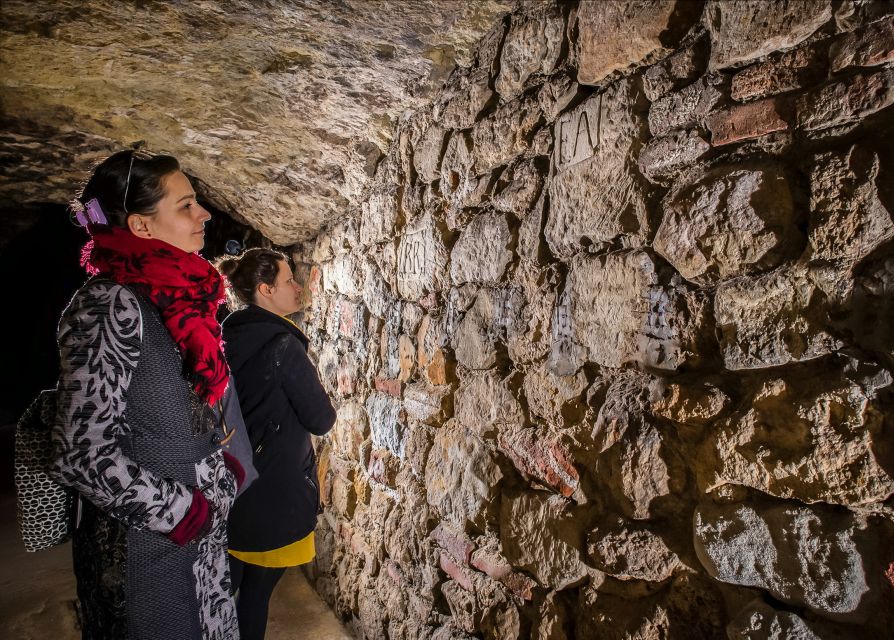
Beneath Budapest’s grand Buda Castle District lies a very different world: a maze of natural limestone chambers joined to 800-year-old man-made cellars. The cave tour connects geology with medieval life, wartime survival, and the hard work that turned natural openings into a long underground network.
I like two things here. First, the setting is genuinely unusual, not just another room in a palace. Second, the guides give the place a human voice. Vicky, Eva, and Viktoria are among the guides praised for clear stories, humor, and strong command of the subject. The main drawback is practical: the cave is cold, not suitable for wheelchairs or people with mobility limits, and the meeting details can vary by tour option.
Key points to know before you book
- The cave stays at about 12°C: Bring a warm layer even in warm Budapest weather.
- Two tour lengths are offered: The shorter route lasts about 40 minutes, while the regular tour takes about 1.5 hours and covers roughly 1.5 kilometers.
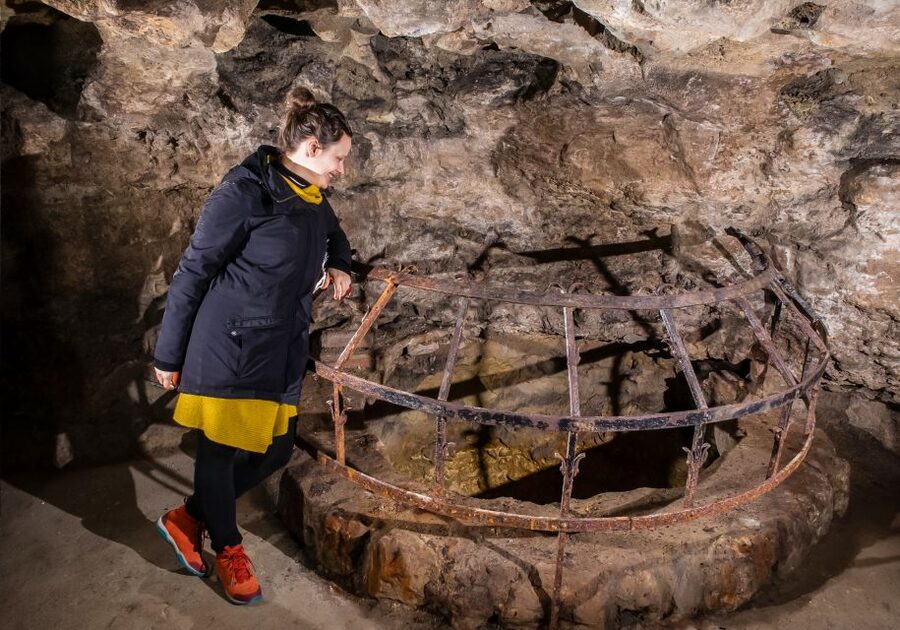
- Nature and human labor share the stage: You see limestone formations beside medieval cellars, bomb shelters, and other altered spaces.
- Guides carry the experience: Vicky, Eva, and Viktoria have been praised for lively storytelling, humor, and clear explanations.
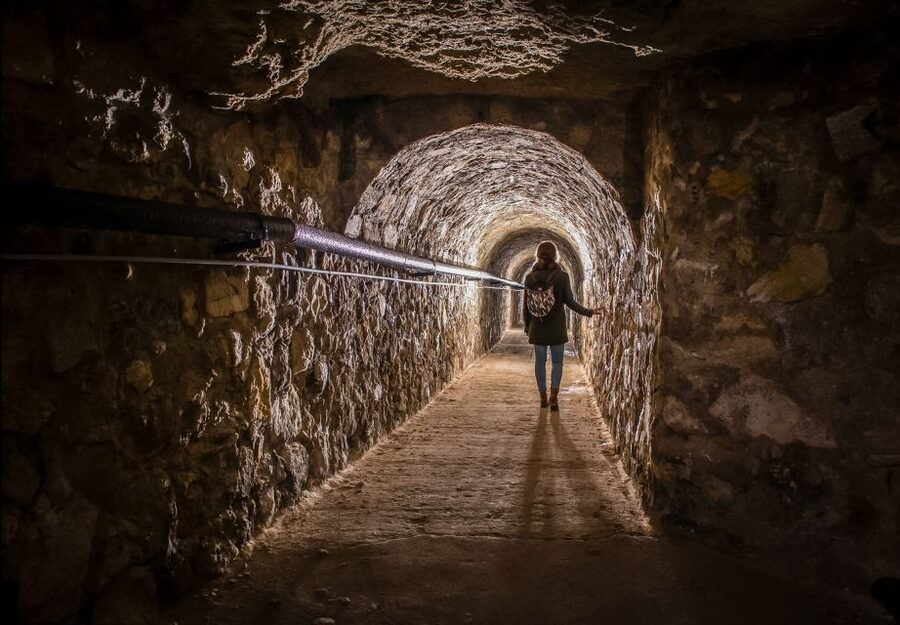
- The floor is paved and lit, but not effortless: Mud, uneven moments, low or narrow sections, and the need to lean against walls can make clothes and shoes dirty.
- Book the longer route if you can: The 40-minute visit is worthwhile, but the full tour gives you a better sense of the underground network.
Why the caves beneath Buda Castle are worth your time
Most people visit Castle Hill for Matthias Church, Fisherman’s Bastion, and the grand views across the Danube. Those sights are open and bright. This tour takes you below them, into a world shaped first by geology and later by generations of people.
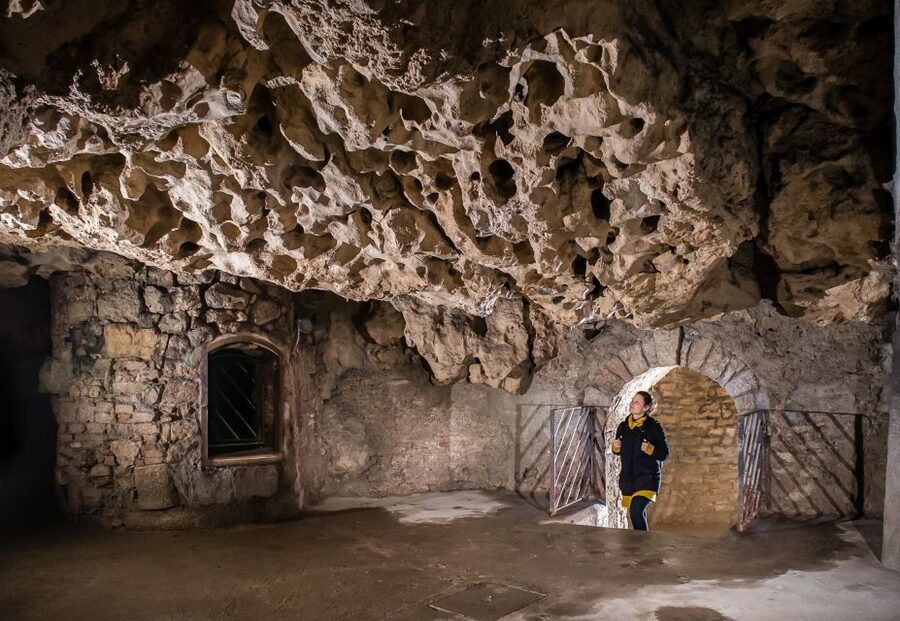
The caves began as natural cavities in limestone. Over time, people enlarged, linked, and adapted them. The result is not a simple natural cave walk. It is a record of how residents used the space beneath the district for practical needs, shelter, storage, and confinement.
That combination makes the tour more interesting than a geology lesson alone. You are not simply looking at rock. You are seeing where nature provided the starting point and people kept changing the space to suit their needs.
I especially like the sense of time packed into a short walk. The route can move from natural formations to medieval-era spaces and then to wartime use. The setting gives historical facts some weight. A bomb shelter is easier to picture when you are standing underground, rather than reading about one on a museum label.
More castles to explore around Budapest:
- Budapest: Buda Castle District Vampires and Myths Night Tour
★ 4.6 · 3,830 reviews - Budapest: Buda Castle Walk with Saint Stephen’s Hall
★ 4.5 · 3,012 reviews - Budapest: Buda Castle District Walking Tour
★ 4.6 · 2,108 reviews
Starting at Trinity Square or Dárda Street
The meeting point depends on the option you book. The longer route generally begins at Trinity Square, or Szentháromság tér, in the heart of the Buda Castle District. The shorter option meets at Dárda Street, where you enter the underground cave system.
Check the exact meeting point on your booking confirmation before setting out. The two starting locations are not interchangeable, and the meeting information can be easy to overlook when you are also planning your castle sightseeing.
After a short introduction, the guide leads the group underground. This is a useful moment to get comfortable with the temperature and the surroundings. The cave has lighting and paved roads, but it is still an enclosed place, and you will not have mobile phone service once inside.
Guides are an important part of the experience. Vicky is often singled out for a warm, funny delivery and careful attention to the group. Eva has also led tours with clear explanations of both the cave’s natural features and its past. Viktoria is another guide known for combining stories with visual explanation. The quality of the tour depends partly on who leads it, but the format clearly gives the guide room to make the history lively rather than dry.
What you see on the 40-minute route
The short tour is a good choice if your Budapest schedule is tight or if you are unsure how you will feel underground. It gives you a look at the cave system, some historical context, and the basic story of how natural cavities became a working underground network.
You can expect to see limestone chambers and man-made sections rather than one continuous wild cave. The paved route and electric lighting make the walk manageable, although this is not a polished palace interior. The walls and floor retain the practical feel of an underground passage.
The shorter route also works well as an introduction to Castle Hill. You can spend the rest of your time above ground at the church, old streets, and viewpoints without giving up an unusual experience below the district.
The trade-off is coverage. Forty minutes goes quickly, and you will see less of the wider network. If you are especially interested in wartime history, medieval spaces, or the way the tunnels were altered over time, the longer option is the better use of your $19.
Why the 1.5-hour tour gives you more
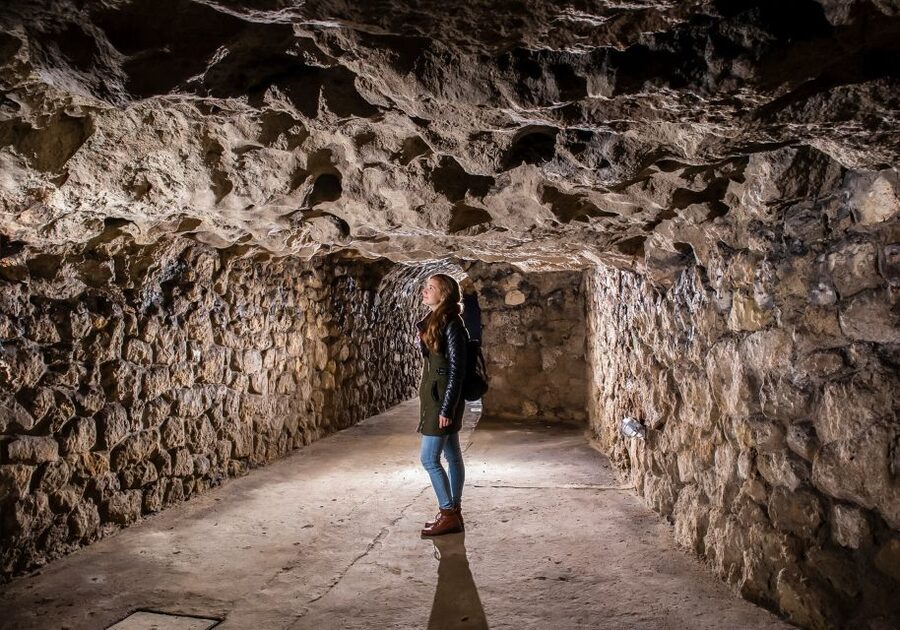
The regular route lasts about 1.5 hours and covers roughly 1.5 kilometers. That extra time matters because the caves are not just one chamber with a few facts attached. Their interest comes from the succession of spaces and uses.
A longer visit gives the guide more time to explain the limestone, the way the caverns formed, and the work required to connect or expand them. You also get a clearer picture of the cave as a network rather than a single attraction.
Historical themes range widely. The caves have served as wine cellars, bomb shelters, and even a medieval prison. Stories also reach from the Ice Age to the 20th century and later decades. That broad time span is one of the tour’s strongest features, although you should not expect every historical site beneath Castle Hill to be included.
One important limitation is that the underground hospital is not part of this tour. If that is your main reason for going below the castle, check the exact product details before booking. This cave experience focuses on the wider cave and cellar network, not every underground attraction in the district.
Some people choose the shorter route because they are pressed for time, and it can still be a satisfying visit. But I would select the 1.5-hour tour when available. The extra hour lets the guide connect the geology, medieval construction, and wartime use into one story instead of offering only a quick sample.
Same stronghold, another way through the gate:
- Budapest: 3-Hour Grand City Tour and Castle Walk
★ 4.3 · 1,437 reviews - Buda Castle District Dark History, Legends and Vampire Night Tour
★ 4.5 · 1,240 reviews - Budapest: Buda Castle District Walking Tour with a Historian
★ 4.9 · 867 reviews - Budapest Castle District Walking Tour
★ 5.0 · 630 reviews
Limestone, cellars, and the work of many centuries
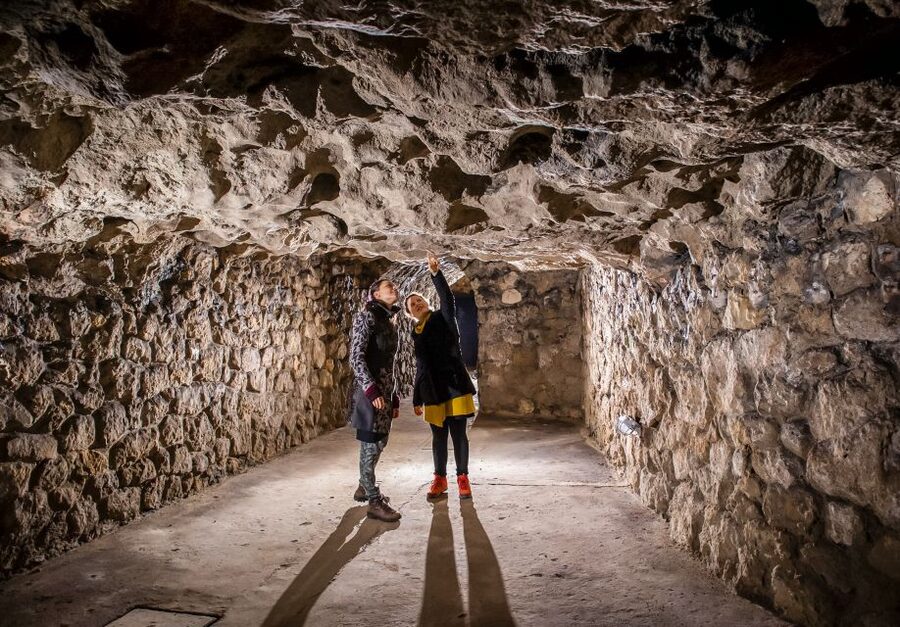
The natural rock is the visual anchor. Limestone creates the chambers and irregular surfaces, while human hands made the system more useful. The contrast is easy to see: one section may feel like a natural cavern, while another has the shape of a cellar or tunnel built for a clear purpose.
The 800-year-old man-made cellars are especially valuable because they show how closely daily life was tied to the underground space. These are not decorative ruins. They reflect storage and working needs in a district that changed many times above ground.
The guide also explains how the caves functioned as shelters. During wartime, underground rooms could offer protection that ordinary buildings could not. Hearing those stories in the actual chambers gives the subject a direct, physical quality without turning the tour into a museum lecture.
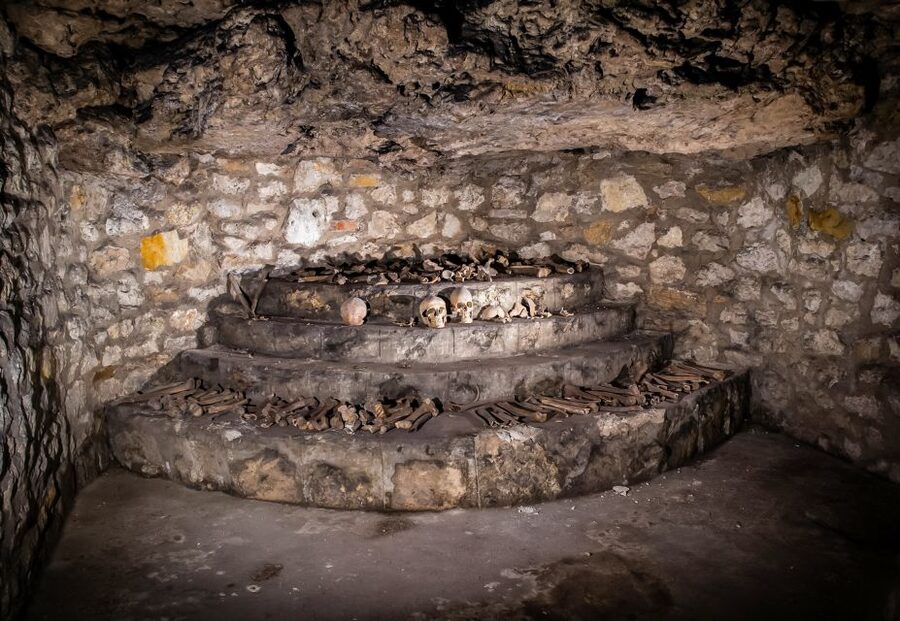
The cave can also produce more unusual details. Past explanations have included ventilation systems, animal remains, Ottoman-era connections, and grim stories linked to the site. The exact emphasis can vary by guide, but you should expect a mixture of geology, construction, folklore, and difficult episodes from the past.
Temperature, clothing, and the physical side of the tour
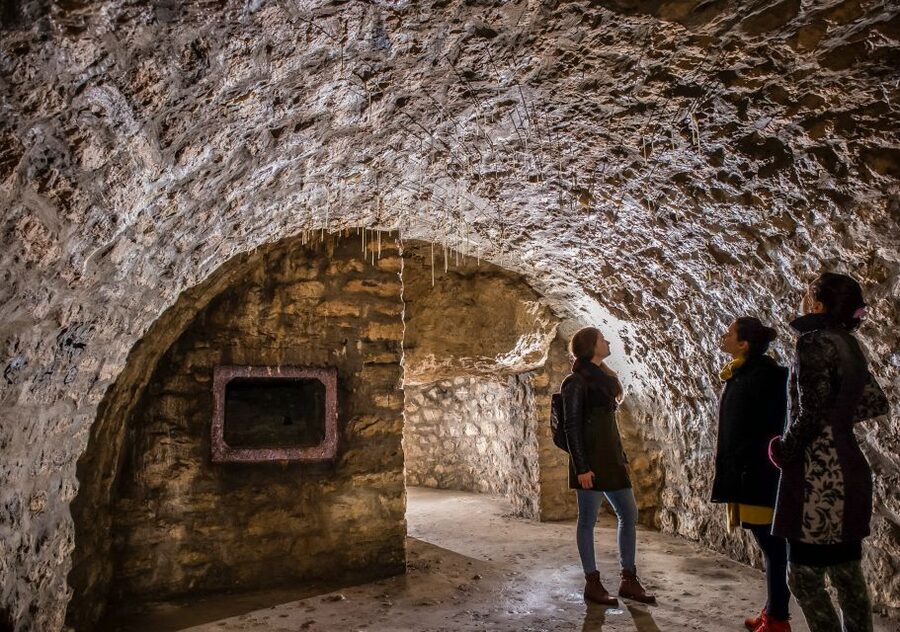
The temperature inside is about 12°C, or 54°F, throughout the year. I would bring a sweater or light jacket even if Budapest is hot above ground. You may feel comfortable at first and then notice the cold more as the tour continues.
Wear closed-toe shoes with a secure sole. The route is paved and lit, but some areas may be muddy, and you may brush against or lean on the walls. Do not wear your best trousers or shoes. The chance of dirt is part of the deal.
The tour is not suitable for wheelchair users, people with mobility impairments, or people with visual impairments. It is also not recommended for people with claustrophobia. Children under three cannot join.
The caves are described as fairly spacious in many sections, so the experience is not necessarily a crawl through tiny passages. Still, spacious chambers do not remove the basic fact that you are underground. If enclosed spaces make you uneasy, think carefully before booking.
There is no cell phone service in the cave. That is useful to know if you need to stay in touch with family members above ground. Keep your phone away rather than expecting to use it for navigation or messages.
Rules that affect the visit
You cannot bring pets, baby strollers, food, drinks, or alcohol into the tour. Smoking, littering, video recording, and drug use are also prohibited. Baby carriages are not permitted, and children under three are excluded.
These rules are stricter than you may expect from a normal walking tour. The cave is a protected and controlled environment, so listen closely to the guide and follow the written instructions. Disruptive behavior or arriving under the influence can result in removal without a refund.
The ban on video recording may disappoint anyone hoping to document the route. Plan to experience the chambers directly and take photographs only if the guide and current rules allow it. The supplied tour information specifically prohibits video recording.
Is $19 a fair price?
At $19 per person, the tour offers good value if you want an experience beyond Budapest’s familiar surface sights. You receive a live English-speaking guide, a structured walk through a place you cannot sensibly explore alone, and explanations that link the rock to centuries of human use.
The value is strongest on the longer tour. Ninety minutes gives you time to understand the cave as a system and not merely a cold underground room. The 40-minute option is still fairly priced for a quick look, but it provides less historical and geographic context.
I would not book this solely because you want dramatic natural cave formations. The appeal is the combination of natural limestone and altered spaces. If your main interest is architecture, art, or panoramic views, the castle’s above-ground sights may deserve priority.
Free cancellation up to 24 hours before the start and the option to reserve now and pay later make it easier to fit the tour into a changing Budapest schedule. Tour times can be announced only some weeks or days ahead, so check availability rather than assuming there will be many departures each day. If you want the longer route, book early when possible, since it may have limited daily availability.
How to fit it into a Castle Hill day
The cave tour works best as part of a wider visit to Buda Castle District. You can see the main above-ground sights before or after, but allow extra time to reach the correct meeting point and adjust to the cave schedule.
Trinity Square is a natural anchor for the longer tour. The shorter route at Dárda Street requires more care with directions, especially if you are meeting other people later. Confirm where your tour ends as well as where it begins, since the end point may not match the starting point.
Do not plan a tight connection immediately afterward. The official duration ranges from 40 minutes to 1.5 hours, and the longer tour can use the full time. The cave also lacks phone service, so agree on a meeting point above ground before you enter if you are splitting up from your group.
Who should book this Budapest cave tour?
I would recommend it to history fans, geology-curious visitors, repeat visitors to Budapest, and anyone who enjoys unusual places with a strong local connection. It is also a good rainy-day or hot-weather choice, since the cave offers a completely different environment from the streets above.
Families with older children may enjoy the mixture of tunnels, stories, and unusual underground spaces. The age restriction only excludes children under three, but the cold, walking, and enclosed setting may still be tiring for younger children.
This is not the right pick for a fully accessible sightseeing experience, anyone who dislikes enclosed places, or visitors who need constant phone access. It is also not ideal if you only have time for a quick castle photo stop and cannot spare an hour.
Should you book it?
Book the Buda Castle Cave Tour if you want to understand Castle Hill from below, not just admire its buildings from above. The strongest version is the 1.5-hour route, which gives you time to see the natural caverns, old cellars, shelter spaces, and the transitions between them.
Choose the 40-minute tour if your schedule is limited or you want a cautious introduction to underground sightseeing. Bring warm clothes, closed shoes, and a willingness to get a little dirty. For $19, this is a distinctive addition to a Budapest itinerary, provided you are comfortable with the physical limits and the no-phone, no-video setting.
FAQ
How long does the Buda Castle Cave Tour last?
The available options last about 40 minutes or 1.5 hours. The regular walking route is roughly 1.5 kilometers long.
How cold is it inside the cave?
The cave temperature is about 12°C, or 54°F. Bring warm clothing, even if the weather above ground is warm.
Where does the tour meet?
The meeting point depends on the option booked. The longer tour meets at Trinity Square, also called Szentháromság tér, while the shorter option meets at Dárda Street.
Is the cave tour suitable for people with claustrophobia?
The tour is not recommended for people with claustrophobia. Some chambers are spacious, but the experience still takes place underground and includes enclosed passages.
Can wheelchair users or people with mobility impairments join?
No. The tour is not accessible for wheelchair users and is not suitable for people with mobility impairments or visual impairments.
What should I wear and bring?
Wear warm clothes and closed-toe shoes that can get dirty. Some areas may be muddy, and you may lean against the cave walls. Food, drinks, pets, strollers, smoking, and video recording are not allowed.
New castle tours around Budapest
- German guided tour through Budapest’s castle district★ 5.0 · 129 reviews
- Budapest: Castle District Walking Tour★ 4.8 · 223 reviews
- Budapest: The WWII Siege of Buda Castle & Bomb Shelter Tour★ 4.8 · 130 reviews
- Budapest: Private Walking Tour of the Castle District★ 5.0 · 2 reviews
- Budapest: Castle District Walk with Matthias Church Entry★ 4.8 · 33 reviews
- Budapest: E-Bike Guided Tour and Castle Hill★ 4.9 · 241 reviews
- Budapest Hike to Visegrád Castle w or wo Sauna/Danube beach★ 5.0 · 16 reviews
- Castle District & Pest Driving Tour with Danube River Cruise★ 4.6 · 15 reviews
Budapest Castle Tours, compared.

Budapest: Buda Castle District Vampires and Myths Night Tour
Read our review →
Budapest: Buda Castle Walk with Saint Stephen’s Hall
Read our review →

Budapest: 3-Hour Grand City Tour and Castle Walk
Read our review →
Buda Castle District Dark History, Legends and Vampire Night Tour
Read our review →
1.5 Hour Budapest Segway Tour – To The Castle Area
Read our review →
Walking tour in the Buda Castle incl. Fisherman’s Bastion
Read our review →
Browse the lists this tour appears in