
Review · BUDAPEST
Budapest: The WWII Siege of Buda Castle & Bomb Shelter Tour
The most striking part of this tour is not a grand palace room. It is the underground shelter system beneath Buda Castle, where civilians, wounded people, German and Hungarian soldiers, and palace staff endured 52 days of cold, hunger, darkness, overcrowding, and disease. Your guide links those spaces to the siege above, using diaries and memoirs rather than a string of dates.
I like the way the tour combines street-level clues with an original bomb shelter, and I like its compact 90-minute length. Guides such as Rita, Jonas, Kopp, and Balazs have earned praise for turning a difficult subject into a clear, engaging walk. The main drawback is physical: steep stairs, uneven cobbles, narrow corridors, and low-light spaces make this a poor fit for anyone with mobility limits or claustrophobia.
Key points at a glance
- A 52-day siege brought into focus: Learn how the Soviet encirclement of Budapest began on Christmas Eve 1944.
- A real underground setting: Enter the Buda Castle Cave, an old cellar, and an authentic World War II bomb shelter.
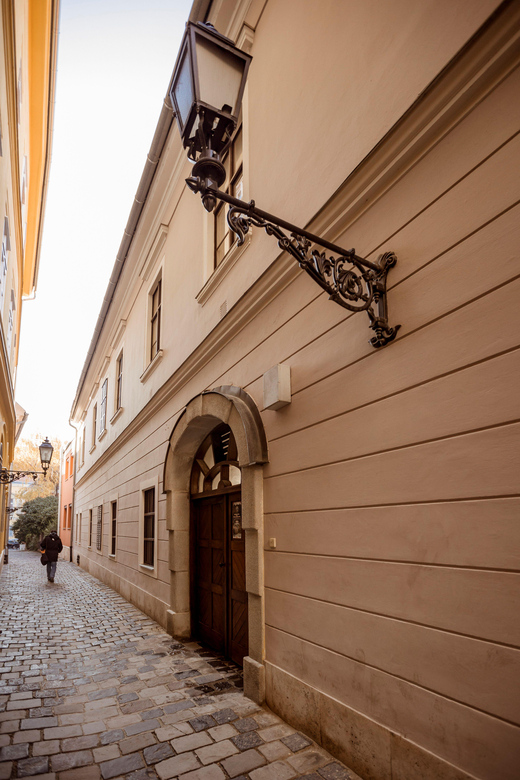
- History above ground too: Follow Úri Street and Lovas Way while your guide points out bullet holes, sealed doorways, and ventilation shafts.
- Strong guide-led experience: Rita, Jonas, Kopp, and Balazs are among the guides praised for clear explanations and lively storytelling.
- Short but serious: The 90-minute route suits a morning or afternoon plan, but it packs in a heavy subject.
- Plan for the conditions: Wear sturdy shoes, bring water, and dress in layers for the cave temperature of about 12°C, or 54°F.
Why the Buda Castle siege matters
Budapest’s World War II story is often reduced to ruined buildings and a few familiar photographs. This tour gives you a more human view. On Christmas Eve 1944, the Soviet Red Army surrounded German-occupied Budapest. The siege lasted 52 days, trapping people in a city cut off from normal food, water, medical care, and escape.
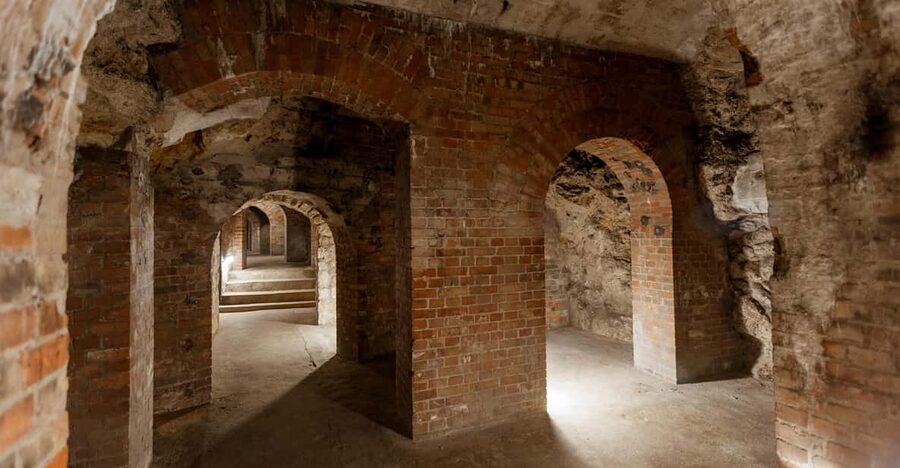
Buda Castle became a refuge and a military position at the same time. Tens of thousands crowded into cellars, caves, shelters, and underground areas beneath the Royal Palace and the old residential quarter. Soldiers and civilians shared the same fear, though not the same role in the fighting. The wounded needed care. Families needed food and water. Palace workers tried to protect valuable objects. Everyone dealt with cold, darkness, exhaustion, and the risk of disease.
I find this setting valuable because it puts the siege at human scale. Instead of hearing only about armies moving across a map, you hear what it meant to spend night after night underground with little air, little light, and no clear idea when the fighting would end. The guide uses personal accounts to explain that daily strain, which gives the tour its emotional force.
The siege is often compared with Stalingrad because of its brutal encirclement and the suffering caused by prolonged urban combat. You do not need a strong military background to follow the tour, but some interest in twentieth-century history will make the details especially rewarding.
More castles to explore around Budapest:
- Budapest: Buda Castle Cave Tour
★ 4.7 · 5,677 reviews - Budapest: Buda Castle District Vampires and Myths Night Tour
★ 4.6 · 3,830 reviews - Budapest: Buda Castle Walk with Saint Stephen’s Hall
★ 4.5 · 3,012 reviews
Meeting at Dísz Square
The tour begins at De la Motte-B.-Palace, at Dísz Square 15. Look for the large green gate next to the Posta building and a staff member carrying a turquoise umbrella with the Buda Castle Walks logo.
This is a useful detail to take seriously. Construction and building work can make the starting area harder to read, and one person had trouble finding the meeting point. Arrive early enough to get your bearings. The tour starts promptly and cannot wait for late arrivals.
Dísz Square puts you in the Palace District before the serious underground section begins. You are already walking through a place shaped by war, restoration, and centuries of royal and residential use. Your guide sets the scene here, explaining the role of Buda Castle during the final months of the war and separating the wider siege of Budapest from the specific ordeal of Castle Hill.
The route finishes at Szentháromság Square, not back at the starting point. That makes the tour easy to combine with more sightseeing in the Matthias Church and Fisherman’s Bastion area, but remember that you will need to arrange your own way back to your hotel or the lower part of the hill.
Walking Úri Street and spotting the scars
From Dísz Square, the walk continues through Úri Street and the Castle District. This section is more than a transfer between two cave entrances. It gives your guide room to show how the siege remains visible in the built environment.
Along the way, you might see bullet holes, unusual doorways, and ventilation shafts connected with public shelters. These small details can be easy to miss when you walk the district on your own. A guide points out what to look for and explains how buildings were used during the fighting.
This above-ground portion also helps you picture the people who went below. The shelter was not an isolated museum room. It was part of a living quarter where residents moved between homes, cellars, military positions, and communal refuge spaces. The streets above and the caves below formed one connected survival system.
The outdoor walk has a practical cost. Castle Hill has cobbled streets, and the route includes regular walking before and after the underground visit. One person described the amount of walking as substantial, so do not treat this as a seated museum talk with a short cave stop. Comfortable shoes matter, especially in wet weather.
Entering the Buda Castle Cave
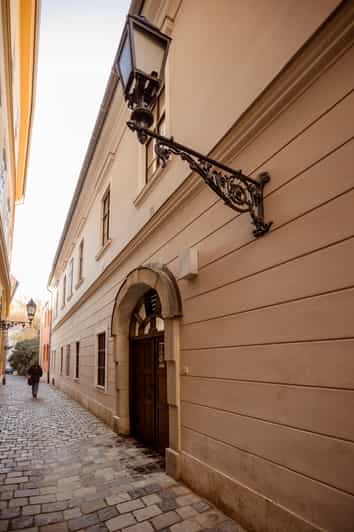
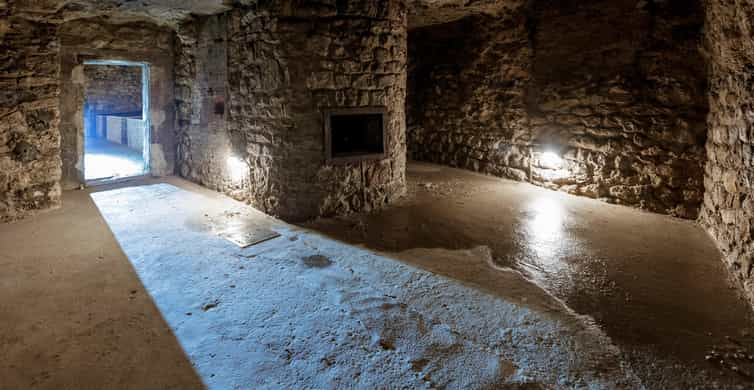
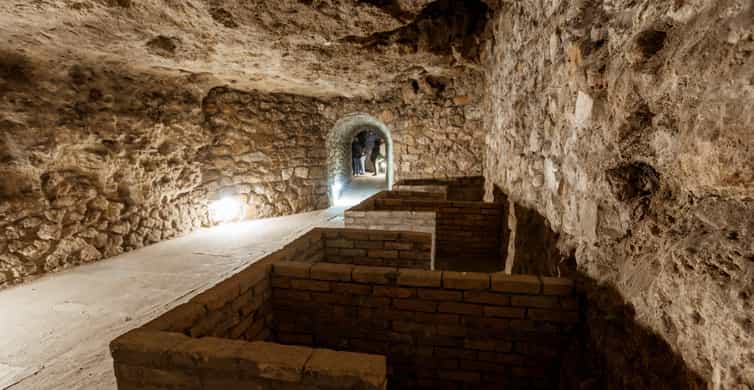
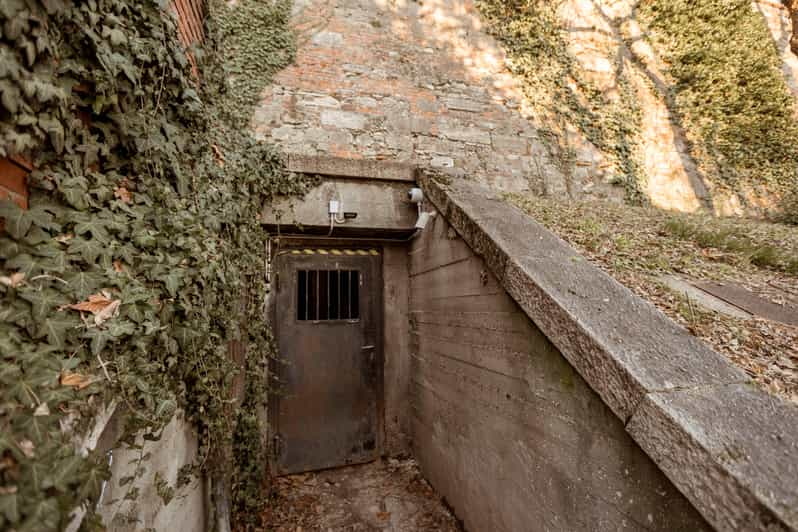
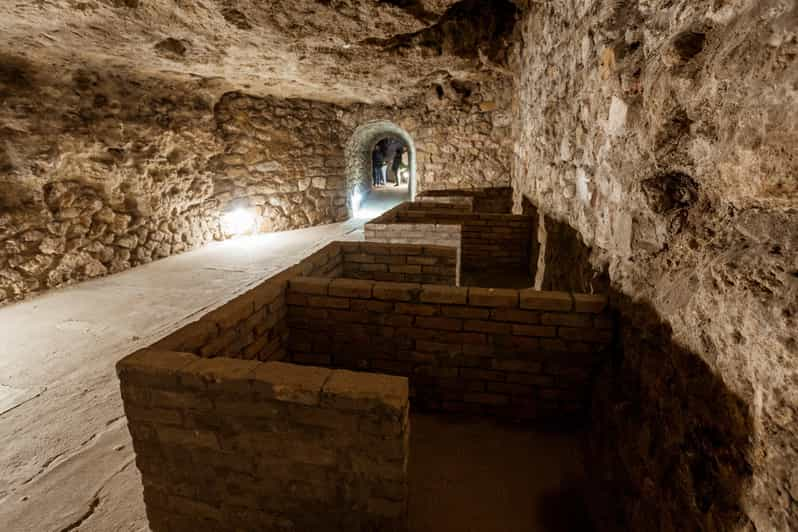
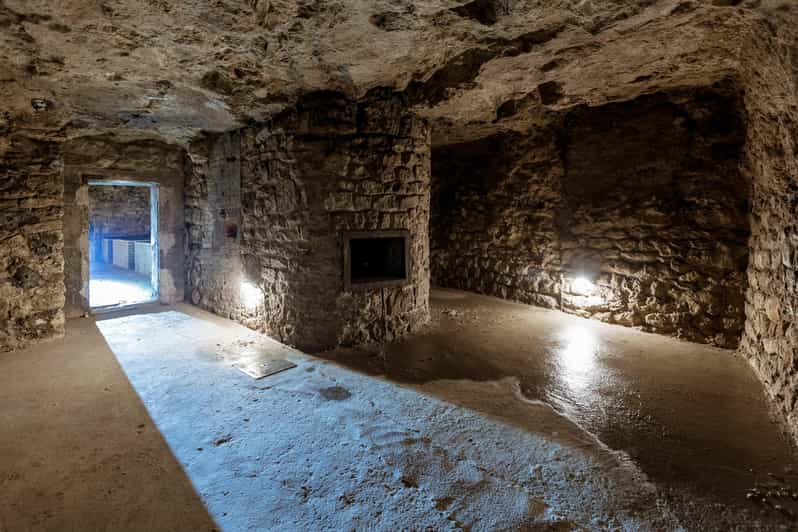
The cave visit lasts about 35 minutes within the 90-minute tour. You go down into a system of natural and adapted underground spaces beneath the Castle District, including an old dwelling-house cellar and an original World War II bomb shelter.
The setting does much of the teaching. The temperature is about 12°C throughout the year, so even a warm summer day above ground can turn cool below. A light jacket or extra layer is sensible. The floor may be solid but wet, and the route includes steep stairs, dark but illuminated sections, narrow corridors, and confined areas.
I like the way the cave changes your sense of scale. A written account can describe overcrowding, but a narrow passage makes the problem easier to picture. You begin to understand how many people could be forced into spaces designed for storage, household use, or shelter rather than long-term living.
The cave is not suitable for people with claustrophobia, wheelchair users, or people with mobility impairments. Children under 14 are not permitted. Those limits are not minor footnotes here. You should be comfortable on stairs and steady on uneven or sometimes damp surfaces before booking.
The route runs in all weather because much of the important material is underground, but you still walk outside on cobbled streets. Rain will not cancel the programme, so bring suitable clothing and footwear.
Same stronghold, another way through the gate:
- Budapest: Buda Castle District Walking Tour
★ 4.6 · 2,108 reviews - Budapest: 3-Hour Grand City Tour and Castle Walk
★ 4.3 · 1,437 reviews - Buda Castle District Dark History, Legends and Vampire Night Tour
★ 4.5 · 1,240 reviews - Budapest: Buda Castle District Walking Tour with a Historian
★ 4.9 · 867 reviews
What the guide adds to the underground rooms
The rooms themselves are important, but the guide is what turns them into a historical experience. The tour is held in English, and the strongest praise has gone to guides who explain events before, during, and after World War II rather than treating the siege as an isolated episode.
Rita has been singled out for detailed explanations and for connecting the siege with the wider history of Budapest. Jonas, sometimes introduced by a nickname, has been praised for a friendly, engaging approach. Kopp has handled wider questions about history, politics, and philosophy while keeping the walk focused. Balazs has brought particular passion to the suffering of Hungarian civilians.
Guide style can vary. One person found Jonas’s pronunciation occasionally difficult to follow, especially as a non-native English speaker. That is worth bearing in mind if you need very slow, carefully articulated English. On some departures, personal headphones have helped people hear every word, but you should not assume every group or guide will use them.
Group size also appears to vary with demand. Some departures have been almost private, while others have had a small group. A small group makes it easier to ask questions and stay close in the tunnels. A private-feeling departure can make a difficult subject more personal, but it is not something you can count on when booking.
The human cost of 52 days underground
The central story is survival under pressure. Water was scarce. Food was scarce. The temperature dropped. Darkness and crowding made ordinary hygiene hard, and disease spread through packed shelter spaces. People tried to save possessions and protect the treasures of the Royal Palace while the city around them broke apart.
The guide also explains that the shelter population was mixed. Soldiers shared underground areas with civilians and the wounded. That fact matters because it prevents a simple picture of a military bunker. These spaces became temporary homes, hospitals, hiding places, and places of fear for people with very different experiences of the war.
I appreciate that the tour does not turn this suffering into a spectacle. The subject is grim, and one person found the experience emotionally difficult. That reaction is understandable. You should book this tour for serious historical interest, not for light entertainment or a theatrical ghost-story atmosphere.
The diaries and memoirs help keep the story personal. They give the guide a way to explain cold, hunger, fear, and uncertainty through remembered experience. You come away with a clearer idea of what the siege meant to people who had no control over how long it would last.
Lovas Way and the final walk to Szentháromság Square
After the cave, the route continues along Lovas Way before ending at Szentháromság Square. The return to daylight gives you a chance to connect the underground material with the Castle District you have just crossed.
The ending point is useful for continuing your visit. You are near some of Buda Castle’s best-known sights, so you can continue exploring the square and nearby buildings after the tour. One useful plan is to spend time in the Palace District before the tour, then use the walk itself to focus on the siege rather than trying to cover every castle sight at once.
The final outdoor section may also offer open views from the western side of the castle walls, depending on the exact timing and route. Finishing before sunset has given some people a chance to see the area in a different light, but views are not the main reason to book this experience.
The tour does not provide a full survey of every Buda Castle attraction. It is tightly focused on the siege, shelter system, and wartime traces. That focus is a strength if you want a specific subject. It may feel narrow if you are looking for royal interiors, medieval architecture, or a general introduction to Budapest.
Is $24 a fair price?
At $24 per person, I consider this good value for a 90-minute guided experience that includes both the Castle District and entry into the Buda Castle Cave. You are paying for access to a place that is difficult to interpret on your own, plus a guide who can link physical details with personal accounts and military context.
The value depends on your interests. If you already plan to walk around Buda Castle for free, the extra cost buys the underground visit and the historical explanation. That is worthwhile if you want more than a photo stop at the palace or a quick look at the main square.
The tour is less useful if you dislike guided walks, prefer to move at your own pace, or have little interest in World War II. The subject takes up nearly the entire experience, and the emotional tone is sober. You will not get a broad tour of Budapest’s food, art, architecture, or royal collections.
The 90-minute length is a practical advantage. It is long enough to build a coherent story but short enough to fit before dinner, another Castle Hill visit, or an evening programme. Because the route includes real walking and stairs, you should leave a little recovery time if your day already includes extensive sightseeing.
You can cancel up to 24 hours before the start for a full refund, and a reserve-now, pay-later option is available. Those policies make it easier to fit the tour into a changing Budapest schedule.
Who should book this tour?
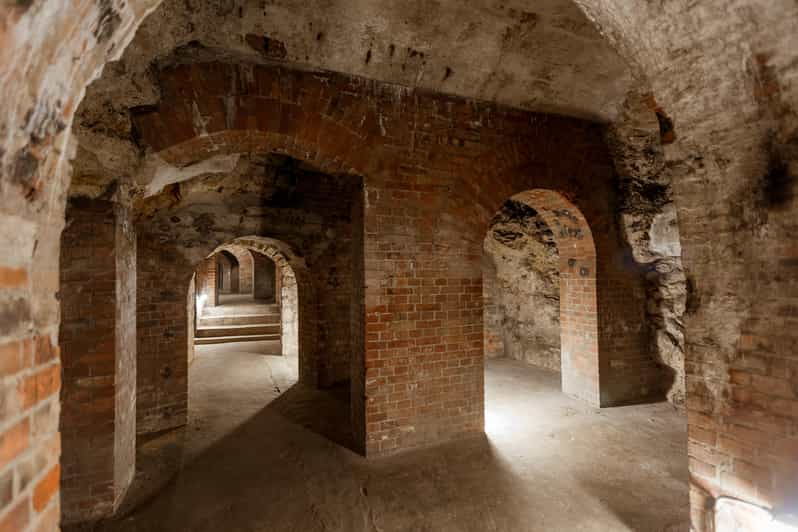
I would choose this tour if you like twentieth-century history, urban archaeology, or first-person accounts of war. It is especially suited to adults and older teenagers aged 14 and above who can handle a serious topic and a physically demanding underground route.
It also works well for someone who has already seen the main Castle Hill sights and wants a less familiar angle. The bullet holes, sealed doorways, shelter vents, cellar, and cave make the district feel different from a standard palace visit.
You should think twice if you have mobility problems, use a wheelchair, dislike narrow spaces, or find underground environments stressful. The combination of steep stairs, tight corridors, uneven ground, and a cool cellar is central to the experience, not an occasional inconvenience.
Bring water and a small snack, since those are recommended for the walk. Wear comfortable shoes and layers. The tour goes ahead in rain, so a weatherproof outer layer will help on the outdoor portions.
Should you book the Buda Castle siege tour?
Book it if you want a focused, human account of the 1944 to 1945 siege and you are comfortable going underground. The cave and bomb shelter give the subject a physical reality that a standard city tour cannot match, while the route through Úri Street and Lovas Way shows how the story remains tied to the streets above.
I would not book it as a casual castle orientation or a family activity for young children. The subject is painful, the route is demanding, and the caves are not suited to everyone.
For the right person, $24 is a sensible price for a clear, well-paced history walk with a real shelter, personal wartime accounts, and guides who can answer questions beyond the basic timeline. Arrive early at Dísz Square, dress for 12°C underground, and expect the tour to stay with you after you return to the sunlight.
FAQ
How long does the Buda Castle siege tour last?
The tour lasts 90 minutes, including outdoor walking in the Castle District and the visit to the Buda Castle Cave.
Where does the tour begin?
It begins at De la Motte-B.-Palace, Dísz Square 15, 1014 Budapest. Meet next to the Posta building at the large green gate and look for the turquoise Buda Castle Walks umbrella.
Where does the tour finish?
The tour ends at Szentháromság Square.
Is the tour held in English?
Yes. The live guided tour is conducted in English.
Is the tour suitable for children?
The tour is recommended for ages 14 and above. Children under 14 are not permitted.
What should I wear for the cave?
Wear comfortable walking shoes and dress in layers. The cellar and cave stay at about 12°C, or 54°F, throughout the year. Expect steep stairs, narrow corridors, dark illuminated areas, and sometimes wet surfaces.
New castle tours around Budapest
- German guided tour through Budapest’s castle district★ 5.0 · 129 reviews
- Budapest: Castle District Walking Tour★ 4.8 · 223 reviews
- Budapest: Private Walking Tour of the Castle District★ 5.0 · 2 reviews
- Budapest: Castle District Walk with Matthias Church Entry★ 4.8 · 33 reviews
- Budapest Hike to Visegrád Castle w or wo Sauna/Danube beach★ 5.0 · 16 reviews
- Budapest: E-Bike Guided Tour and Castle Hill★ 4.9 · 241 reviews
- Castle District & Pest Driving Tour with Danube River Cruise★ 4.6 · 15 reviews
- Budapest: Evening Castle Hill Tour with Fishermen’s Bastion★ 4.9 · 42 reviews
Budapest Castle Tours, compared.

Budapest: Buda Castle District Vampires and Myths Night Tour
Read our review →
Budapest: Buda Castle Walk with Saint Stephen’s Hall
Read our review →

Budapest: 3-Hour Grand City Tour and Castle Walk
Read our review →
Buda Castle District Dark History, Legends and Vampire Night Tour
Read our review →
1.5 Hour Budapest Segway Tour – To The Castle Area
Read our review →
Walking tour in the Buda Castle incl. Fisherman’s Bastion
Read our review →Browse the lists this tour appears in