
Review · MILAN
Milan: Sforza Castle and Michelangelo’s Pietà Rondanini Tour
Michelangelo’s Pietà Rondanini is the heart of this 90-minute tour. It is unfinished, raw, and far removed from the polished perfection of his earlier sculptures. A good guide helps you see why this final work, made near the end of Michelangelo’s life, feels so personal and strangely modern.
I like the way the tour links the sculpture to Sforza Castle’s political story, rather than treating the museum as an isolated art stop. I also like the short format: guides such as Giorgio, Fabio, Simone, and Stefania have been praised for making a lot of history clear in a tight visit. The main drawback is time. You see selected highlights, not every museum room, and the archaeological displays may get only a quick look.
Key points to know before booking
- Michelangelo’s final sculpture: Study the unfinished Pietà Rondanini and its elongated, rough-hewn figures.
- Leonardo’s Milan home: Learn how Leonardo worked at the castle as an engineer and architect for the Sforza court.
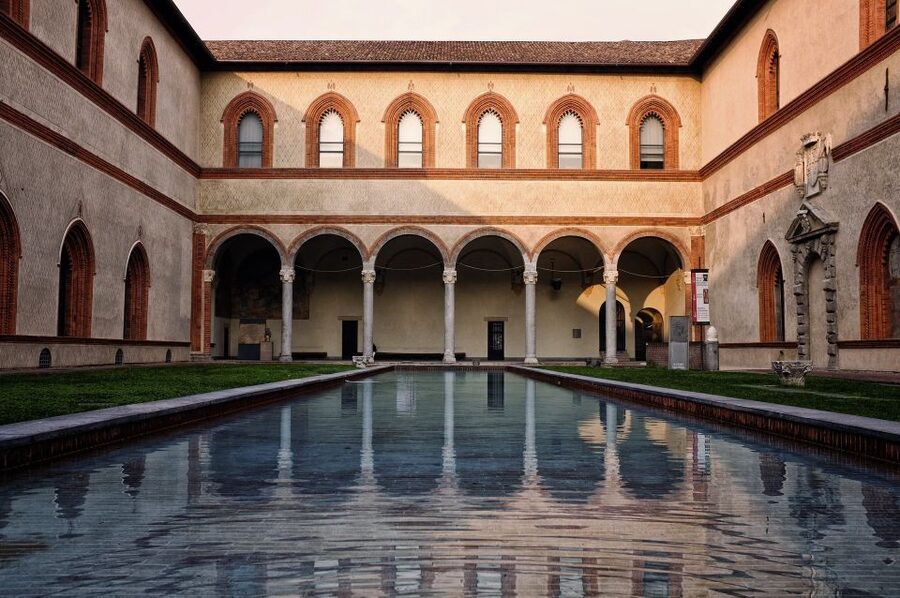
- Two impressive courtyards: Walk through the Corte Ducale and Cortile della Rocchetta while hearing how the fortress became a ducal residence.
- A small-group format: The usual experience is designed for a small group, with private tours also available.
- A useful first look at Milan: The castle’s Visconti and Sforza stories explain how Milan became a major Renaissance court.
- Simple meeting point: Find your guide under the Filarete clock tower in Piazza Castello, outside the castle courtyards.
Why the Pietà Rondanini deserves the first look
Sforza Castle holds many objects, rooms, and stories, but the Pietà Rondanini gives this tour its emotional center. Michelangelo worked on the marble until only days before his death at age 89. It was never finished in the polished manner associated with his famous earlier sculptures.
You will notice the long, narrow bodies and the rough surface left by the carving process. The figures seem to merge into the marble rather than step cleanly out of it. That unfinished quality is not a flaw to overlook. It is the point of the work, and your guide will help you read it as a record of Michelangelo’s late thoughts about suffering, faith, and mortality.
I find this kind of explanation especially useful because the sculpture can puzzle you at first. You may expect another grand, anatomically exact Michelangelo. Instead, you get something quieter and more unsettled. The guide’s analysis gives you a way to look beyond the incomplete parts and understand the feeling Michelangelo was trying to hold in the stone.
The museum setting also matters. The Pietà is housed inside the castle, so the sculpture is not part of a rushed outdoor route between landmarks. You have a focused stop where the guide can explain the work before moving on to the larger story of Milan.
More castles to explore around Milan:
- Milan: Sforza Castle Entry Ticket with Digital Audio Guide
★ 4.0 · 2,675 reviews - Milan: The Last Supper & Sforza Castle Guided Tour
★ 4.6 · 610 reviews - Milan: Last Supper and Sforza Castle Guided Tour
★ 4.6 · 498 reviews
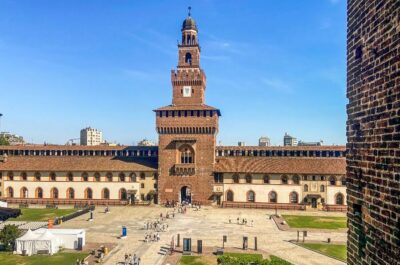
Entering Sforza Castle through the Filarete Tower
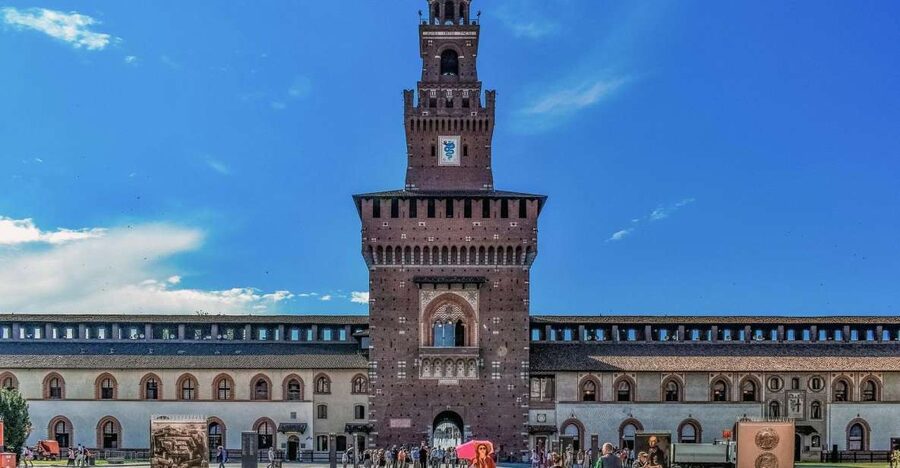
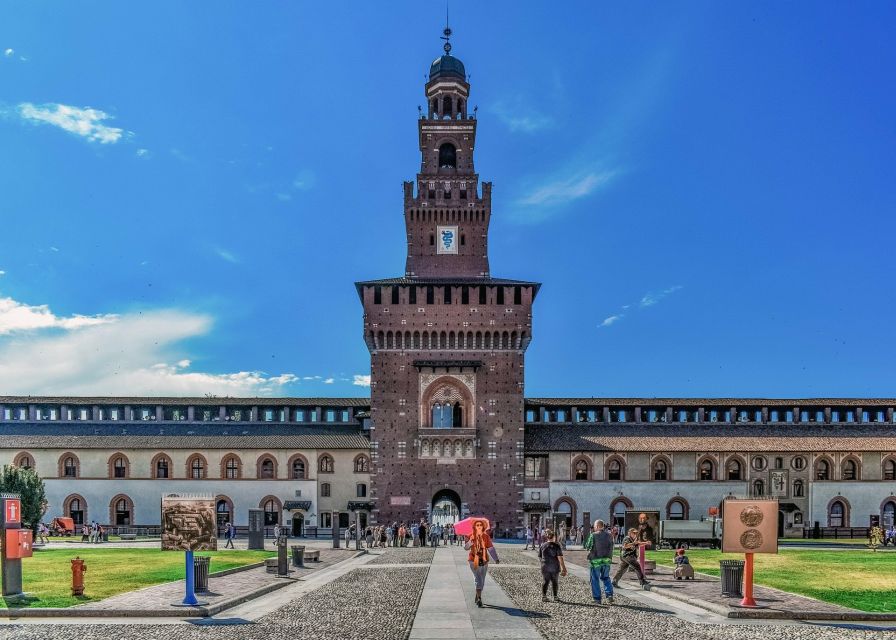
The meeting point is in Piazza Castello, under the Filarete clock tower, in front of the castle. Do not go inside the courtyards to find the guide. Look instead for the purple Hidden Experiences flag or board outside.
The Filarete Tower gives you an immediate sense of the castle’s scale. This was built as a fortress and later reshaped as a courtly residence. As you approach, the heavy walls and tower suggest military power, while the interior courtyards reveal the ambitions of Milan’s rulers.
That contrast is one of the tour’s strengths. You are not just hearing a list of dukes and dates. You are watching the building change character as the story moves from defense to court life, art, and political display.
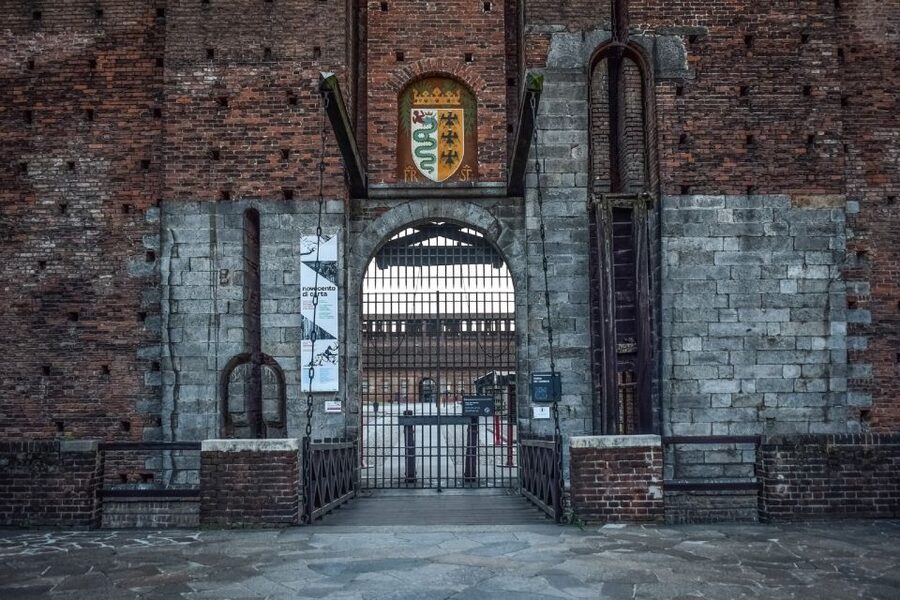
The castle began as a Visconti stronghold and later became associated with the Sforza family. Your guide explains how these ruling houses shaped Milan and how their choices turned the city into an important Renaissance center. The stories include the famous Biscione, the serpent emblem linked with Milan, along with the noblewomen and ambitious men who influenced court culture.
A guide can make these symbols easier to remember. Without context, a serpent on a coat of arms is simply decoration. With the story behind it, the Biscione becomes a quick reminder of dynastic power and Milanese identity.
The Corte Ducale and Cortile della Rocchetta
The route continues through the castle’s internal courtyards, especially the Corte Ducale and the Cortile della Rocchetta. These open spaces give you a chance to appreciate the architecture while your guide explains how the castle functioned.
The Corte Ducale reflects the more refined side of Sforza rule. This was no longer only a place for soldiers and defense. It was a court where rulers received guests, managed political relationships, and supported artists and engineers.
The Cortile della Rocchetta has a different feel. Its fortress character helps you picture the castle as a protected stronghold, even as the wider complex served the needs of a Renaissance court. The guide uses these spaces to connect architecture with daily life, showing how a building can reveal what its owners feared, valued, and wanted others to see.
You will also hear about the Sforza family’s connection with Leonardo da Vinci. The castle was his home and workplace in Milan for nearly two decades. Most visitors know Leonardo for The Last Supper, but here you meet him in another role: court engineer, architect, and problem solver.
That broader view of Leonardo is valuable. At the castle, he was not simply painting masterpieces. He was part of a busy court and was expected to design, plan, and advise. The guide points out traces of his work and explains his complicated relationship with Ludovico il Moro and the Sforza family.
Leonardo’s Milan beyond The Last Supper
Many Milan visits place Leonardo inside the refectory of Santa Maria delle Grazie, where The Last Supper receives the attention. This castle tour gives you a different way to understand his Milanese years.
Leonardo’s work for the Sforza court shows how Renaissance artists often had wide duties. A court could ask the same person to work on art, buildings, military design, celebrations, and engineering. That mixture of creativity and practical service is part of what made Renaissance courts so powerful.
The guide does not present Leonardo as an isolated genius floating above history. You see him in relation to a ruler, a court, and a city that wanted to display its strength. This helps connect the castle to Milan’s larger cultural story.
Guides have received strong praise for explaining these links in clear English and for answering questions without rushing. Lore, Simon, Mary, Fabio, and Stefania are among the guides specifically praised for engaging storytelling, useful context, and an ability to connect small details with the bigger story. The guide you receive will depend on the date and language you book, but the format is built around a live explanation rather than a simple walk through the rooms.
Same stronghold, another way through the gate:
- Small-Group Barolo Wine Tasting, Alba & UNESCO Piedmont Hills
★ 5.0 · 689 reviews - Milan: The Last Supper & Sforza Castle Guided Tour
★ 4.5 · 128 reviews - Milan: Last Supper and Sforza Castle Tour
★ 4.6 · 115 reviews - Milan: Duomo, Sforza Castle, and Pieta Guided Tour
★ 4.9 · 100 reviews
What you see in 90 minutes
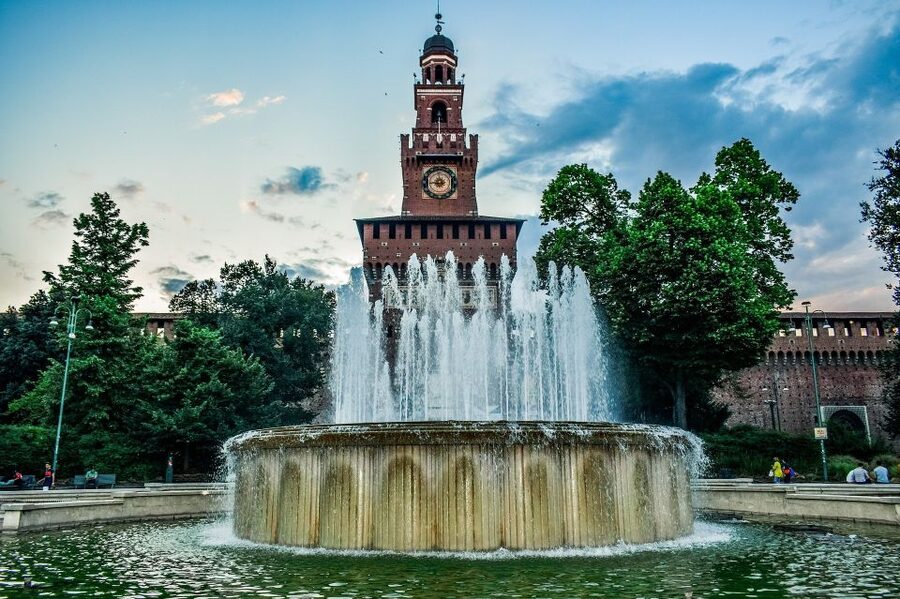
Ninety minutes is enough to understand the main themes, but not enough to inspect every object at length. The tour typically gives priority to the Pietà Rondanini, the courtyards, Leonardo’s connection with the castle, and the political history of the Visconti and Sforza families.
That focus is helpful if you have limited time in Milan. You get a clear introduction without spending half a day trying to decide which rooms matter. Anna described the experience as a concise visit in which the guide selected the most important and interesting museum sights. That is exactly the right expectation.
The tradeoff is that the castle complex contains more than this tour can cover. One visitor wanted more time in the archaeological museum, while another noted that the group moved quickly through some areas. If you are committed to studying every display, plan to return on your own if opening arrangements allow. This guided visit is best understood as a carefully chosen introduction.
The timing can also vary slightly in practice. One visitor said the tour ran a little long, while others felt the 90-minute length was just right. That is not necessarily a problem, but leave a little breathing room before your next fixed booking.
Guide quality makes the biggest difference
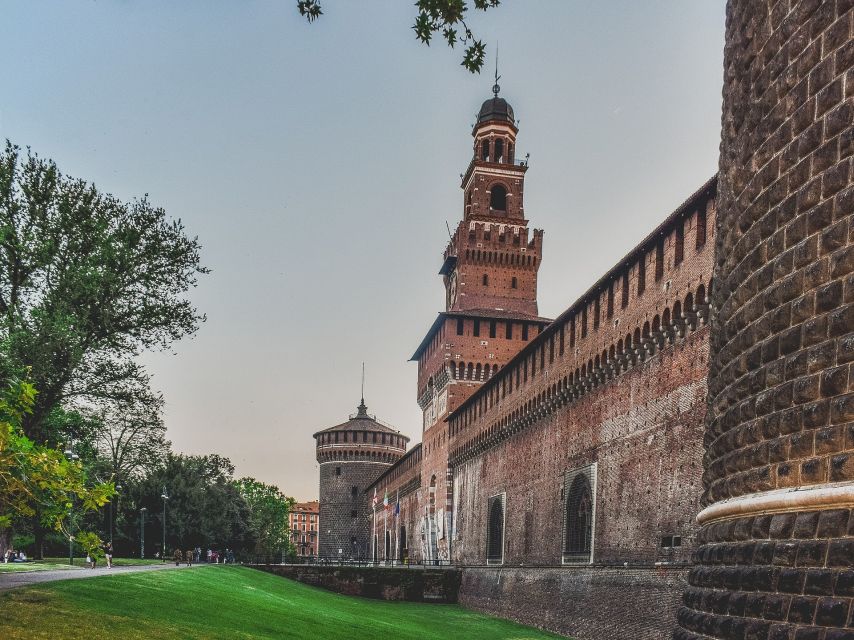
The strongest part of this experience is the guide. A castle can feel like a series of courtyards and museum labels if no one explains how the pieces fit together. Here, the guide supplies the timeline, the family connections, and the art background that turn separate sights into one story.
Several guides have been singled out for qualities that matter on a short tour: clear speech, patience, humor, strong art knowledge, and an ability to answer questions. One guide was praised for speaking slowly and clearly, which is particularly useful if English is not your first language. Another was appreciated for finding shade and breezier spots during hot weather.
Group size also affects the feel of the visit. The tour is described as small group, and some dates have resulted in groups of only three, four, or six people. A few bookings have even become private visits when numbers were low. That gives you more room to ask questions and makes it easier for the guide to adjust the pace.
There is no guarantee of a tiny group on every departure. If you prefer a fully personal experience, a private group option is available. For a standard booking, expect the benefit of a guided visit without assuming you will have the guide entirely to yourself.
Headphones are provided from 11 participants onward. This is useful in large groups or noisy courtyard areas. One visitor reported intermittent earpiece problems, so keep that small possibility in mind, though the general feedback on guide clarity is very strong.
Is $47 a fair price?
At $47 per person, the tour is not the cheapest way to enter Sforza Castle. You are paying for more than admission, though. The price includes entry to the castle and museum, a certified live guide, and a small-group format.
The value depends on how you use the visit. If you already know Milan’s history and prefer reading labels alone, the cost may feel high for 90 minutes. If you want the Pietà Rondanini explained properly and would otherwise wander without knowing which courtyards or exhibits deserve your attention, the guide adds real value.
I think the price is easier to justify for a first visit to Milan, especially if you are pairing the castle with the Duomo and Leonardo’s Last Supper. It gives you the political background behind Milan’s artistic rise and helps you see the castle as more than a large old fort.
The tour also saves mental effort. You do not have to build your own route through several museum sections or spend time researching the Visconti, Sforza, Biscione, and Leonardo before you arrive. That convenience is part of what you are buying.
Practical details that can make the visit easier
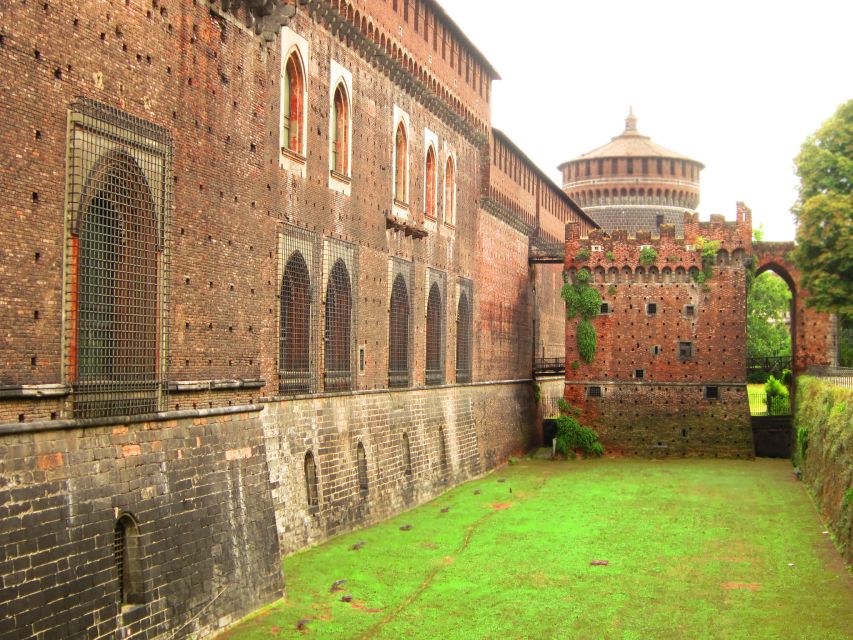
Wear shoes you can comfortably use on hard courtyard surfaces. The visit includes walking through large internal spaces and museum areas, and there is no hotel pickup included unless arranged for an extra charge.
The meeting point deserves special attention. Go to Piazza Castello and wait under the Filarete clock tower, outside the castle courtyards. The purple flag or board is the clearest sign that you are in the right place.
The tour is wheelchair accessible. Live guiding is available in Italian, English, German, French, and Spanish. Check the available departure language and time when booking, since the start times vary.
Free cancellation is available up to 24 hours before the tour for a full refund. You can also reserve now and pay later, which helps if you are still arranging a Milan itinerary.
Who will enjoy this castle tour most
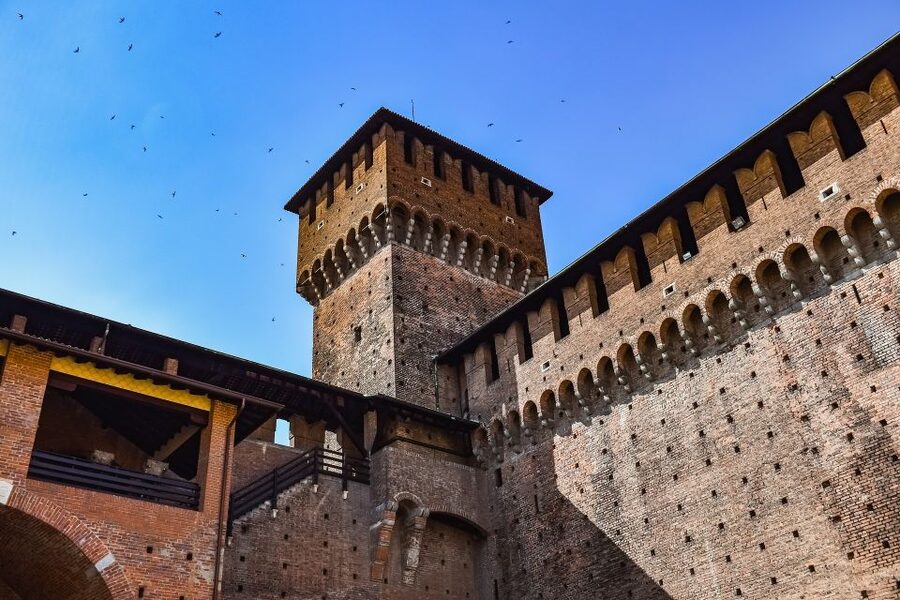
I would choose this experience if you want art and history explained together. It suits first-time visitors, couples, families with older children, and anyone who wants more from the Pietà Rondanini than a quick glance.
It is also a good match for visitors who like Leonardo but have already seen, or cannot get tickets for, The Last Supper. The castle shows a less familiar side of his Milan career.
Art lovers should enjoy the Michelangelo focus, while history fans will appreciate the Visconti and Sforza stories. The tour is less suitable if you want a full museum day, long periods of quiet viewing, or a detailed survey of every collection in the castle.
Should you book the Sforza Castle and Pietà Rondanini tour?
Book it if you want a focused introduction to Milan’s Renaissance power, with Michelangelo’s final sculpture as the main prize. The guides are consistently praised for making complex history easy to follow, and the small-group setup can make the short visit feel personal.
Skip it if you prefer exploring museums at your own pace or if $47 feels too much for a 90-minute visit. In that case, you may get more from entering independently and spending longer with the wider collections.
For most visitors, I would book it early in a Milan stay. The castle’s story gives useful context for the city, and the Pietà Rondanini is the sort of work you appreciate more after someone helps you look closely.
FAQ
How long does the Sforza Castle tour last?
The tour lasts 1.5 hours, or 90 minutes. Check the available start times when booking.
What is included in the price?
The price includes entrance fees to Sforza Castle and its museum, a certified tour guide, and headphones for groups of 11 participants or more.
Where does the tour meet?
Meet in Piazza Castello under the Filarete clock tower, in front of Sforza Castle. The meeting point is outside the courtyards. Look for the Hidden Experiences purple flag or board.
Which languages are available?
Live tours are available in Italian, English, German, French, and Spanish.
Is the tour wheelchair accessible?
Yes, the activity is listed as wheelchair accessible.
Can I cancel or pay later?
You can cancel up to 24 hours in advance for a full refund. Reserve now and pay later is also available.
New castle tours around Milan
- Milano: Highlights Private Tour, Duomo, Castle & Gelato★ 5.0 · 5 reviews
- Milan Small Group: Duomo & Rooftop, Castle, Gelato Tasting★ 4.8 · 70 reviews
- Milan: Professional Photoshoot Outside Sforza Castle★ 3.9 · 12 reviews
- Milan: Sforza Castle & Leonardo Skip-the-Line Private Tour★ 4.7 · 26 reviews
- Milan: Duomo, Sforza Castle, and Pieta Guided Tour★ 4.9 · 100 reviews
- Milan: Last Supper and Sforza Castle Tour★ 4.6 · 115 reviews
- Guided Tour: Discover Sforza Castle and Michelangelo’s Art★ 4.7 · 9 reviews
- Branca Tower and Sforza Castle Guided Tour★ 4.5 · 36 reviews
Italy Castle Tours, compared.
Milan: Sforza Castle Entry Ticket with Digital Audio Guide
Read our review →
From Siena: Chianti and Castles Tour with Wine Tastings
Read our review →
Milan: The Last Supper & Sforza Castle Guided Tour
Read our review →
Montalcino: Brunello Wine Tasting & Lunch in a Tuscan Castle
Read our review →
Lake Garda: Historic Castle Cruise with Wine Tasting
Read our review →
Trieste: Miramare Castle & Museum Entry Ticket & Audio App
Read our review →
Fortress: Prisons, Museum of Fortifications and Alps Museum
Read our review →
Browse the lists this tour appears in