
Review · ITALY
Fortress: Prisons, Museum of Fortifications and Alps Museum
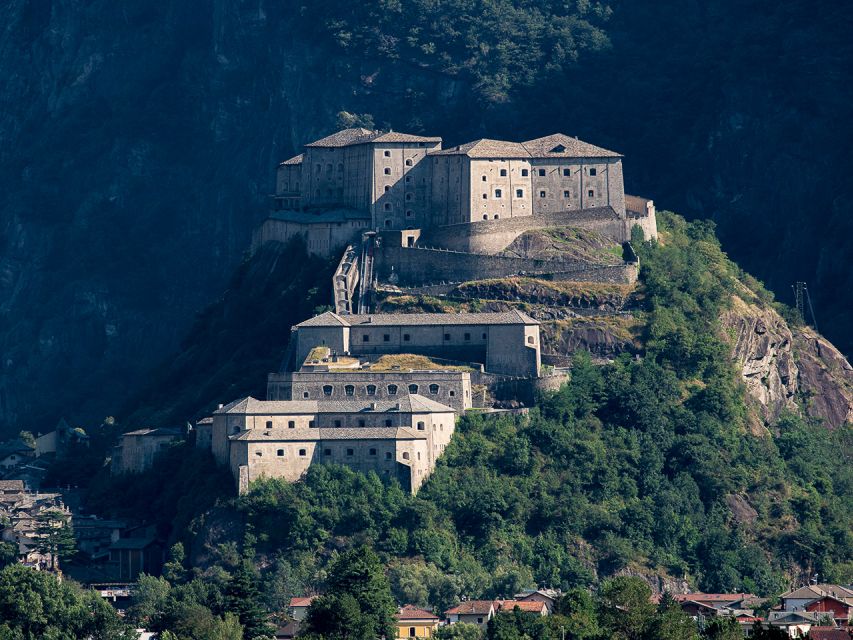
Bard Fortress rises above the Aosta Valley as a huge stone lesson in war, borders, and mountain life. You can ride the panoramic lifts, pass through courtyards and old defensive paths, then enter 24 cramped prison cells measuring about 1.3 by 2 metres. The setting does much of the teaching for you.
I like the mix of serious military history and Alpine culture, which keeps this from being just a walk through old walls. I also like the freedom to choose three exhibition spaces, use the audio guide at your own pace, and stop for mountain views along the way.
The main drawback is that this is not a guided tour with a live expert. You must download the Museon app and use your phone for the included audio guide. Also, if you come mainly because the fortress appeared in Avengers: Age of Ultron, do not expect a Marvel exhibition.
Key points before you go
- Three museum spaces included: Choose from the Museum of the Alps, Prisons, Museum of Fortifications and Frontiers, plus art exhibitions open during your visit.
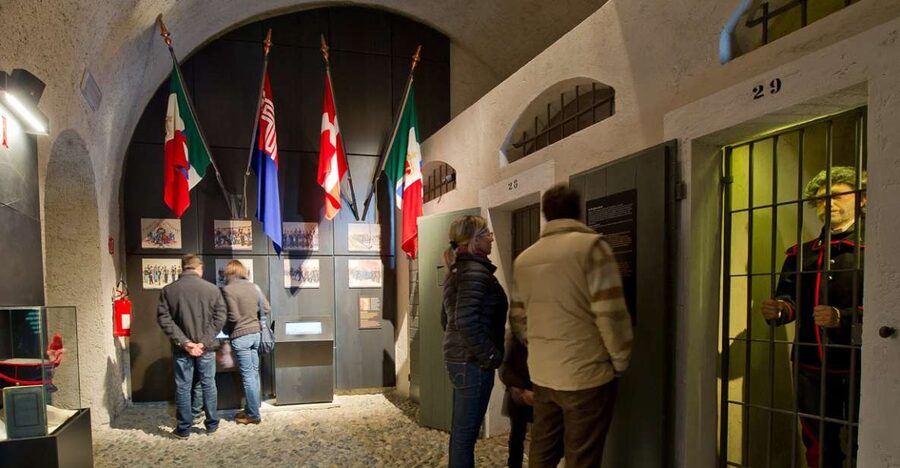
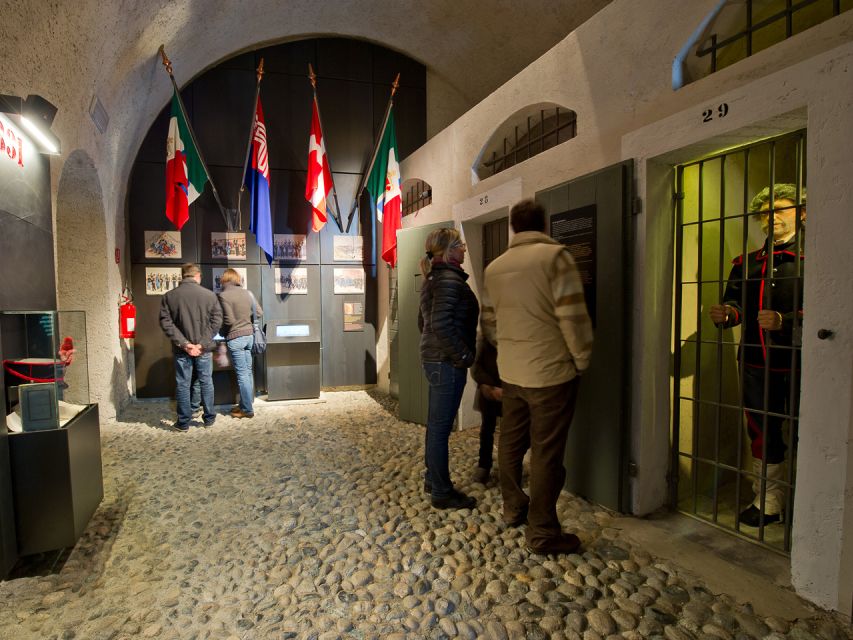
- Twenty-four original prison cells: Small rooms arranged along four sections, with an entrance gallery devoted to images of the fortress.
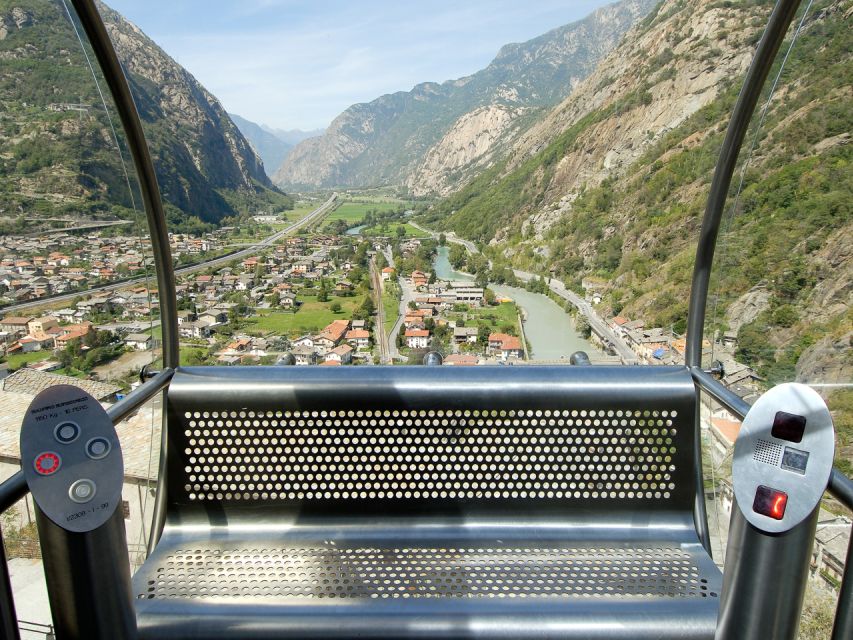
- Panoramic lifts save effort: They carry you through the fortress complex and open up views of the Aosta Valley.
- Military history told in three stages: See weapons, models, film footage, later fortress systems, and the changing idea of an Alpine boundary.
- Audio guide included: Download the Museon app and collect the QR code at the ticket counter.
- Good value at $17: The ticket includes the fortress, museums, lifts, courtyards, chapel, parade grounds, walkways, and temporary art exhibitions open at the time.
Why Bard Fortress is more than a castle visit
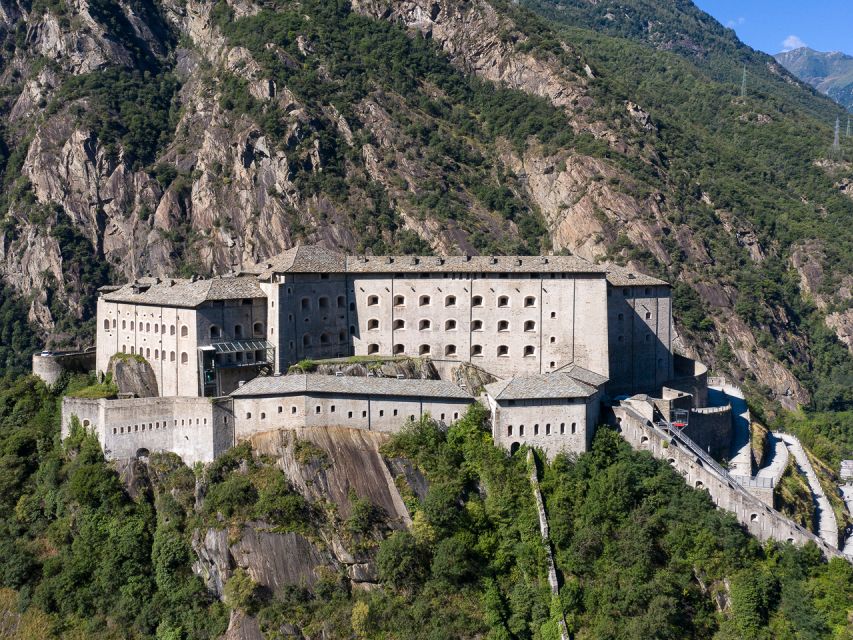
Bard Fortress is best understood as a defensive machine built into the mountains. Its position controlled movement through the Aosta Valley, making it part of the wider military story of the Western Alps.
That setting matters. You are not looking at a decorative palace with a few old cannons placed outside. The walls, slopes, lifts, courtyards, and narrow passages show how terrain shaped military planning. The fortress used the mountain itself as part of its defence.
I would set aside enough time to explore slowly. The ticket is valid for 90 days, so you are not tied to a single narrow date once you have booked. The experience is self-guided, and the pace depends on how much time you give to the exhibits and audio commentary.
The $17 price is fair because it covers far more than one museum room. You get access to the fortress grounds, panoramic lifts, three exhibition spaces of your choice, and any art exhibitions open during the visit. If you are interested in architecture, military history, Alpine traditions, or mountain scenery, the ticket offers several different experiences in one place.
More fortresses and citadels around Italy:
- Bard: Fortress Exhibitions and Museums Entrance
★ 4.3 · 29 reviews - Castel Sant’ Angelo: The most famous Fortress of Rome
★ 4.0 · 13 reviews - Carcassonne: Castle and Ramparts Entry Ticket
★ 4.6 · 2,884 reviews
Riding the panoramic lifts into the fortress
The panoramic lifts are one of the easiest ways to understand Bard Fortress. They take you upward through the complex and help you avoid treating the site as one long climb.
At the same time, the ride is part of the visit, not just transport. The fortress walls and surrounding Alpine scenery come into view as you move higher. You can then reach courtyards, parade grounds, walkways, and the chapel without missing the main architectural features.
There are two places where you can exchange your voucher for an entry ticket. The first is at the start of the first panoramic lift. The second is at the top of the medieval village, behind the Church of Bard.
That detail is worth noting before you arrive. If you approach from the village, the upper ticket counter may be more convenient. If you are starting directly at the first lift, use the lower counter. In either case, you need to exchange the voucher before entering.
The fortress is wheelchair accessible, which makes the lifts and planned circulation especially useful. The provided information does not give detailed access notes for every room or walkway, so anyone needing precise arrangements should confirm those details before the visit.
The Prisons and their tiny cells
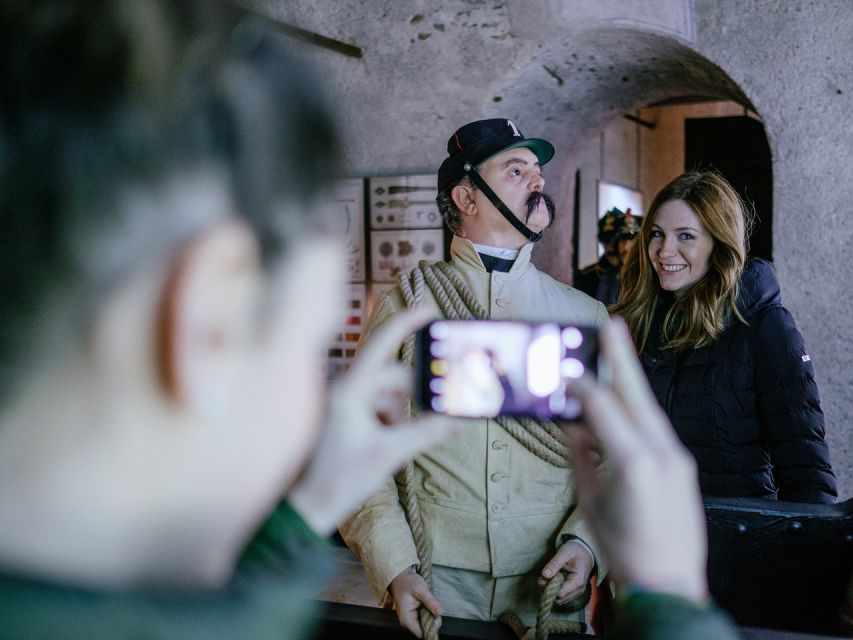
The Prisons are among the most arresting parts of the fortress. They contain 24 cells, each approximately 1.3 by 2 metres, arranged in four sections.
These are very small spaces. That physical scale gives the visit a direct force that a display case cannot match. You can see how little room prisoners had and how the fortress functioned not only as a military post but also as a place of confinement.
An entrance gallery presents an iconographic representation of the fortress. It helps you read the building before entering the cell sections, giving the prison visit a clearer sense of place.
I would visit the Prisons even if you are not especially interested in military displays. The rooms are simple, compact, and memorable. They also break up the larger story of walls and weapons by showing the human cost of a fortress system.
The compact cells may not suit visitors who dislike enclosed spaces. The exhibition is not described as a live reenactment or a guided performance, so expect an atmospheric historic space supported by interpretation rather than theatrical effects.
Three stages inside the Fortifications Museum
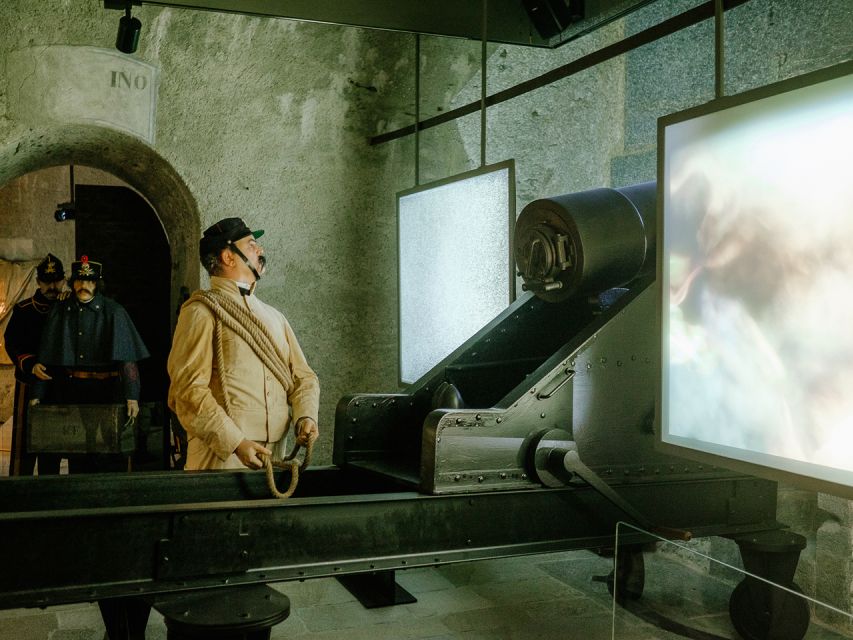
The Fortifications Museum follows the development of defensive systems in the Western Alps. Its first part uses historical settings, models, film footage, and authentic weapons to explain how fortresses changed as weapons and military strategies changed.
This is the section to choose if you want the clearest explanation of why fortresses look the way they do. Thick walls were not simply a sign of power. Their design responded to firearms, artillery, transport routes, and changing military needs.
The second part moves into the late 19th and early 20th centuries. It places Fort Bard within the larger network of 19th-century fortresses, using scale models and reconstructions to show how the system worked.
The models are useful because a fortress can be difficult to read from the ground. You may see a wall, tower, or passage without understanding its place in the full defensive plan. A scale reconstruction gives you that wider view.
The final part asks whether the Alps are a boundary. That question gives the museum a broader purpose. A boundary can mean a border or a barrier. It can block movement, but it can also mark a meeting point between regions and people.
This final section is less about memorizing dates and more about thinking about what mountains mean. The Alps have separated communities, protected routes, and connected cultures. That makes this museum relevant beyond the fortress itself.
More castle museums around Italy:
- Trieste: Miramare Castle & Museum Entry Ticket & Audio App
★ 4.2 · 213 reviews - Osaka Castle: Museum and Tower Entry Ticket
★ 4.5 · 2,380 reviews - Chapultepec Castle & Anthropology Museum Tour
★ 4.5 · 1,348 reviews - Cairo: Egyptian Museum, Citadel, and Old Cairo Guided Tour
★ 4.7 · 853 reviews
The Museum of the Alps and mountain life
The Museum of the Alps shifts the focus from military defence to the mountain environment and the people who lived within it. Its displays are arranged in three parts.
The first examines the natural and human elements of the mountain environment. This gives you a foundation for understanding why Alpine communities developed particular ways of living, working, and moving.
The second presents Alpine civilization. Here, the subject is not just scenery. It is the relationship between people and high-altitude places, including the practical culture shaped by mountain conditions.
The third section looks at the transformation of the mountains in the modern era. This adds a useful time line, showing that the Alps are not frozen in the past. Modernity changed how people viewed, used, and experienced mountain regions.
I like this museum as a counterweight to the Fortifications Museum. One explains defence and strategy. The other shows the environment and society that made those strategies important.
If your interests lean toward art, culture, or geography rather than weapons, the Museum of the Alps may be your best choice. If you have limited time, select your three spaces according to your interests instead of trying to rush through every room.
Courtyards, chapel, and original fortress details
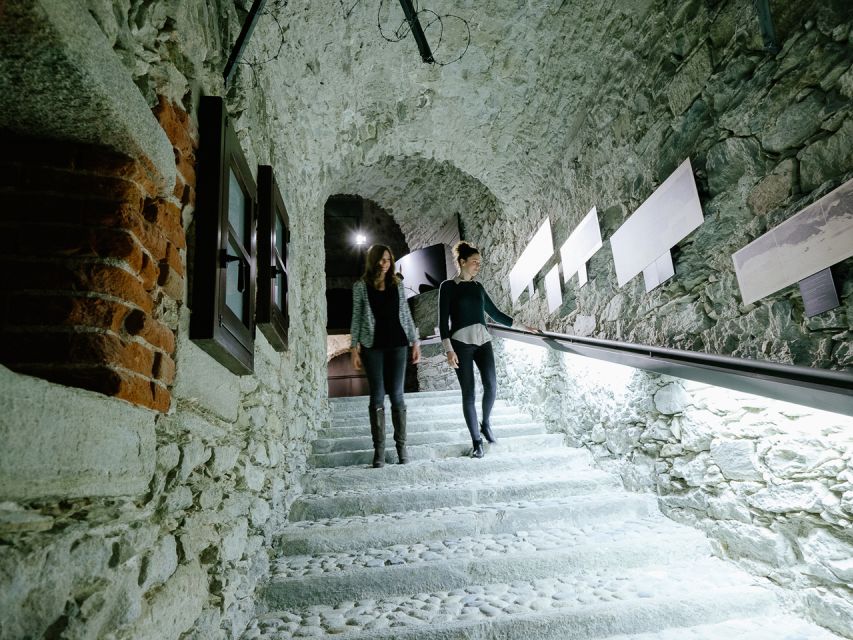
The ticket also covers the chapel, parade grounds, courtyards, and walkways. These open areas are important because they let you experience the fortress as a complete place rather than a set of indoor displays.
The original architectural elements are part of the attraction. The walls are not merely a backdrop for museum panels. They show how defensive architecture shaped daily movement through the site.
Use the walkways to connect the museum visits with the larger structure. Pause in the courtyards and look back at the walls and upper sections. The panoramic views help you understand why Bard was selected as a strategic position in the valley.
Weather will affect this part of the visit more than the indoor museums. The supplied details do not provide a weather policy, so dress for an outdoor historic site and allow time for walking between sections.
The fortress also has a bookshop with a 10 percent discount included with the ticket. That is a small extra, but useful if you want a book on the fortifications, Alpine history, or the exhibitions you have seen.
Using the audio guide without a live guide
A live guide is not included. Instead, the ticket provides an audio guide through the Museon app.
You need to download the app on your smartphone. At the ticket office, you receive a QR code to use with the included service. Downloading the app before you arrive may save time, especially if your mobile connection is weak at the fortress.
This format works well for visitors who like to stop, replay information, and choose their own pace. It is less ideal if you prefer to ask questions or hear a guide connect the exhibits into one continuous story.
The available information does not name an audio guide narrator or a live guide. Do not book this expecting a scheduled tour led by a person. You are responsible for managing the app and deciding how much interpretation you want.
Bring enough phone battery for the visit. That is practical advice for any app-based audio experience, though the provided details do not specify charging stations or Wi-Fi.
Marvel expectations and the real reason to visit
Bard Fortress was used as a filming location for part of Avengers: Age of Ultron. That connection may catch your attention, but it is not the focus of this ticket.
There is no Marvel exhibition included in the described experience. If you are coming specifically to see film props or a dedicated Avengers display, you may be disappointed.
The stronger reason to visit is the fortress itself. Its size, position, prison cells, defensive structures, and museums provide a fuller experience than a film-location stop. You can enjoy the movie connection as an extra detail, but it should not guide your booking decision.
Who will get the most from this $17 ticket
I would recommend this experience to several kinds of visitors:
- History fans who want weapons, fortress design, military strategy, and 19th-century defensive systems.
- Architecture enthusiasts who want to walk through original walls, courtyards, parade grounds, and elevated passages.
- Families with older children who may respond to the tiny prison cells, models, lifts, and clear museum sections.
- Culture-minded visitors who prefer learning about Alpine civilization and modern mountain life.
- Photographers and scenery seekers who want panoramic views as part of a historic site visit.
- Independent sightseers who like audio guides and the freedom to choose three exhibition spaces.
It may be less suitable if you want a short, fully guided tour or if you have no interest in military history, Alpine culture, museums, or historic architecture. The site offers variety, but it is still a substantial fortress visit rather than a quick photo stop.
The experience is wheelchair accessible, and the panoramic lifts help with movement through the complex. Still, exact conditions can vary by exhibition space and walkway, so visitors with specific access needs should check ahead.
Booking, cancellation, and planning details
The ticket costs $17 per person and is valid for 90 days. That is useful if your plans may change, but it does not mean the visit itself lasts 90 days. Check availability for the current starting times before you go.
You can reserve now and pay later, keeping your plans flexible. Cancellation is free up to 24 hours in advance for a full refund.
At the ticket office, exchange your voucher and collect the QR code for the Museon app. Remember that admission includes three exhibition spaces of your choice, not necessarily every permanent museum space at once. Art exhibitions open during your visit are also included in the access options described.
The ticket includes the chapel, parade grounds, courtyards, walkways, and panoramic lifts. It does not include a guided tour with a live guide.
Should you book Bard Fortress?
Book it if you want a self-guided visit that combines a real mountain fortress with museums on warfare, Alpine life, and the meaning of borders. At $17, the range of included areas makes it a solid value, especially if you take time with the Prisons and choose your three exhibition spaces carefully.
Skip it if your only aim is a Marvel attraction or a short visit led by a guide. For everyone else, Bard offers a strong mix of stonework, views, military history, prison rooms, and Alpine culture, with enough choice to shape the day around your interests.
FAQ
Where is Bard Fortress located?
Bard Fortress is in the Aosta Valley in Italy.
How much does admission cost?
The listed price is $17 per person.
How long is the ticket valid?
The ticket is valid for 90 days. Check availability for starting times.
What museums can I visit?
You can access three exhibition spaces of your choice from the Museum of the Alps, Prisons, Museum of Fortifications and Frontiers, and art exhibitions open during your visit.
Are panoramic lifts included?
Yes. Access to the panoramic lifts is included with the ticket.
Is a live guide included?
No. A guided tour with a live guide is not included. An audio guide is provided through the Museon app.
How do I use the audio guide?
Download the Museon app on your smartphone. A QR code for the included service is provided at the ticket office.
Can I cancel for a refund?
Yes. You can cancel up to 24 hours in advance for a full refund.
New castle tours around Italy
- Pastrengo: e-bike tour and wine tasting in the Castle★ 4.8 · 9 reviews
- Naples: San Martino and Sant’Elmo Castle Guided Tour★ 4.9 · 48 reviews
- Naples Express Tour: Castles, Legends & the Gulf★ 5.0 · 9 reviews
- Montone: Medieval Dinner in Cardaneto Castle★ 5.0 · 2 reviews
- Montone: Pasta Making and Dinner at Cardaneto Castle★ 5.0 · 4 reviews
- Montalcino: Brunello Wine Tasting & Lunch in a Tuscan Castle★ 4.6 · 324 reviews
- Montalcino: Castle and Vineyards Tour with Tasting★ 4.2 · 55 reviews
- Miramare: The most romantic, beautiful and sad castle.★ 4.2 · 6 reviews
Fortress & Citadel Tours, compared.
Carcassonne: Castle and Ramparts Entry Ticket
Read our review →
Salzburg: Hohensalzburg Fortress Admission Ticket
Read our review →
Salzburg: Best of Mozart Fortress Concert and Dinner
Read our review →
From Cairo Alexandria Catacombs, Citadel Day Trip with Lunch
Read our review →
Hue Customizable Tour with Imperial Citadel & Forbidden City
Read our review →
Desert Safari: Luxury Fortress Dinner, Camel Ride & Dune Bashing
Read our review →
Cairo: Egyptian Museum, Citadel, and Old Cairo Guided Tour
Read our review →
Cairo Citadel, Old Cairo and Khan El Khalili: Private Tour
Read our review →Browse the lists this tour appears in