

Review · GERMANY
Berlin: Decolonial Berlin Castle/ Humboldt Forum Guided Tour
Berlin’s Humboldt Forum is not just a reconstructed palace with museum galleries inside. It is also a place where Germany’s imperial past, colonial collections, and modern ideas about cultural ownership meet. This Afrocentric, decolonial tour asks you to look at the building and its contents from a perspective often missing from standard sightseeing.
I like the tour’s focus on the symbolic cross on the roof and the role missionaries played in colonial structures. I also like that you get more than a lecture about the palace: the tour leads you into the ethnological collection and gives you an audio walk for a closer, more critical look.
The main consideration is the balance of time. About one hour is spent seated outdoors before entering the museum, and one past participant felt the museum portion was too brief. If you want a conventional art-and-architecture tour, this may not be your best match.
Key points to know before you go
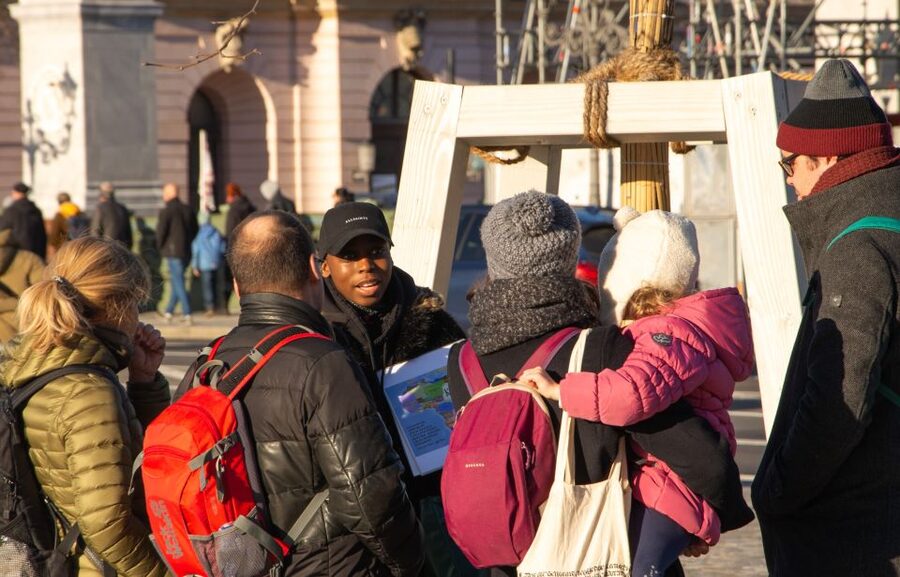
- A decolonial reading of Berlin’s palace: Learn how the palace connects to colonial power, missionary activity, and modern debates about German identity.
- Afrocentric interpretation: The tour creates space for African perspectives and questions familiar versions of German history.
- About one hour outdoors: You meet near the reconstructed Sanchi Gate and sit on white chairs before going inside.
- Critical museum visit: The ethnological collection is examined through an audio walk rather than treated as a neutral display.
- Good value for a focused subject: At $41, the price includes a live English guide and entry to the ethnological collection.
- A discussion-led experience: Expect historical explanation and interpretation to take priority over seeing every gallery in the Humboldt Forum.
Why this Humboldt Forum tour is different

Many Berlin tours explain the rebuilt palace as an architectural project. This one asks a harder question: what does it mean to rebuild a royal and imperial symbol while displaying objects gathered during the age of European colonialism?
That change in viewpoint shapes the whole experience. You are not simply told when the palace was built, destroyed, or reconstructed. You are asked to think about power, ownership, religion, science, and the way museums give objects meaning.
The tour uses an Afrocentric approach. That does not mean every subject is reduced to Africa. It means the guide gives greater weight to African perspectives and to the voices of people and societies affected by European colonial systems.
I find that useful if you have already seen Berlin’s main monuments and want a tour that examines the city’s history instead of simply celebrating it. The experience is also a good fit if you are interested in museums as political spaces, not only as rooms filled with beautiful objects.
It is less suitable if your priority is a fast introduction to the Humboldt Forum’s galleries, its architecture, or the full range of collections. The tour has a clear argument and spends time building it.
More Guided Castle Tours in Germany:
- From Frankfurt: Heidelberg, Castle and Old City Guided Tour
★ 4.5 · 677 reviews - Erfurt: Guided Tour of The Petersberg Citadel
★ 4.8 · 674 reviews - Neuschwanstein Castle Ticket With Audio Guided Tour
★ 3.5 · 473 reviews
Meeting at the reconstructed Sanchi Gate
The meeting point is near the reconstructed Sanchi Gate, outside the Humboldt Forum. Look for the white chairs, where you can sit with the group before the indoor portion begins.
This is a practical detail worth taking seriously. The first part lasts about an hour and takes place outdoors. Bring weather-appropriate clothing and comfortable shoes. Berlin weather can shift quickly, and the tour does not begin with the shelter of a museum gallery.
The Sanchi Gate itself gives the meeting point some visual interest. It also connects with the wider subject of how European museums have presented cultures, monuments, and objects from outside Europe. The tour does not treat the meeting place as a quick rendezvous only. It is the starting point for a discussion about the Humboldt Forum and the ideas built into it.
You should arrive ready to sit and listen. This is not a walk that keeps moving from one landmark to another. The outdoor section is deliberately discussion-based, and that format gives the guide time to explain the background before you enter the museum.
The first hour: palace, empire, and colonial power

The Berlin palace has roughly 500 years of history, and the tour uses that long timeline to connect the building with changing forms of authority. You learn about the palace from a decolonial perspective, with particular attention to the way royal power and colonial structures overlapped.
That approach matters because a palace can look like a piece of architecture detached from politics. Here, the building becomes evidence of how Germany has chosen to remember its past. The rebuilt exterior may suggest continuity, but the tour encourages you to ask what has been restored, what has been left out, and whose history is being displayed.
The guide also discusses colonialism and its relationship to the Berlin palace. You will not simply hear a list of dates. The goal is to understand how colonial ideas helped shape institutions, collections, and public narratives.
This is where the tour may feel more like a seminar than a standard sightseeing walk. One person who took the tour found that the historical background left less time for the Forum itself. That is a fair warning. You will get a strong framework for thinking about the museum, but you should not expect a room-by-room survey.
The outdoor setting can also affect the experience. Sitting for an hour is manageable for many people, but it may feel long if you prefer constant movement or if the weather is poor. The chairs make the session easier, and wheelchair access is available, but clothing and comfort still matter.
The Humboldt brothers and the German story
The tour explains why Wilhelm and Alexander von Humboldt are important figures in German history. Both brothers are remembered as scientists and thinkers, and their names are central to the identity of the Humboldt Forum.
The point is not simply to memorize their occupations. Their legacy helps explain why the institution presents itself as a place of research, education, and cultural exchange. The tour asks you to consider how scientific curiosity and European collecting practices could exist alongside unequal colonial relationships.
That tension is important. Museums often present collecting as a result of study and discovery. A decolonial reading asks who had the power to travel, classify, remove, buy, or display objects, and who had little say in those decisions.
You may find this section especially useful if you know the Humboldt name from Berlin’s university or other institutions but have never considered its wider connection to German history. The brothers provide a bridge between science, culture, and the authority museums claim when they organize knowledge.
The tour does not present them as simple villains or heroes. Instead, their importance becomes part of a larger discussion about the benefits and limits of European scholarship during the colonial period.
More castles to explore around Germany:
- From Munich: Neuschwanstein & Linderhof Castle Full-Day Trip
★ 4.6 · 14,646 reviews - Neuschwanstein & Linderhof Castle-Fairytale Day Tour from Munich
★ 4.5 · 7,275 reviews - Neuschwanstein Castle Tour from Munich
★ 4.5 · 5,117 reviews - From Munich: Neuschwanstein Castle Full-Day Trip
★ 4.7 · 3,977 reviews
Missionaries and the spread of colonial structures
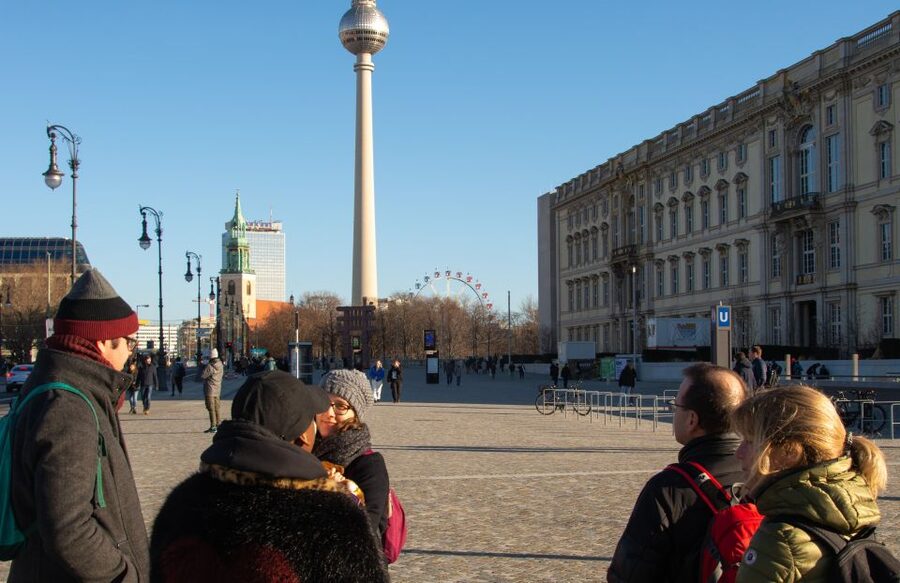
One of the more unusual parts of the experience is its attention to missionaries. Their role is often treated as a separate religious story, but this tour examines how missionary work could help establish or support colonial structures.
That does not mean every missionary acted in exactly the same way. The useful point is that religious activity, political control, economic interests, and systems of knowledge often worked alongside one another. The tour gives you a way to see those connections.
This subject can change how you read the objects inside the museum. An item may not have arrived in Europe through a single act of force. It may have passed through missionary networks, trading systems, scientific expeditions, or colonial administrations. Understanding those routes can be as important as looking at the object itself.
I especially like this emphasis because it moves the discussion beyond the simple idea that colonialism was only about armies and governments. Institutions, schools, religious groups, and museums could also help make colonial rule appear normal or permanent.
If you prefer a neutral-sounding tour that avoids present-day debate, you may find the language direct. That is part of the experience, not an accidental feature.
The cross on the roof and the message of the building
The cross on the roof of the Humboldt Forum carries symbolic weight, and the guide explains why. Its presence raises questions about Christianity, monarchy, German identity, and the way the reconstructed palace presents authority.
This is a small architectural detail with a large interpretive role. You learn to look above the entrance and ask what message the building sends before you even enter the museum. A roof ornament can appear decorative, but in this context it becomes part of the argument about power and memory.
The tour uses the cross to connect the palace’s religious symbolism with the colonial history discussed outside. That does not give you a final answer about what the symbol must mean. Instead, it gives you the tools to consider how public buildings communicate values.
You may want to spend a few minutes looking at the exterior before or after the tour. The experience gives you a new reason to pay attention to details that a normal palace visit might treat as background.
Inside the ethnological collection
After the outdoor discussion, you enter the Humboldt Forum and visit the ethnological collection. Entry to this collection is included in the $41 price.
The collection is not presented as a neutral warehouse of objects. You are encouraged to examine how items were collected, labeled, arranged, and interpreted. The tour asks you to think about the difference between an object’s original cultural setting and the meaning assigned to it in a European museum.
The audio walk is an important part of this section. It supports a critical reading of the displays and gives you something to follow as you look at the collection. Since the outdoor portion carries much of the historical explanation, the audio walk helps turn that discussion into direct observation.
Do not expect to rush through every gallery. The tour’s purpose is to examine selected ideas closely, not to give you a complete inventory of the Forum. If you want to see all the exhibitions, plan another visit and return with more time.
This is also the point where the tour’s strongest benefit becomes clear. Once you have heard about colonial systems, missionaries, scientific collecting, and the palace’s symbolism, the objects inside no longer look like isolated pieces of art. You begin to ask how they reached Berlin and what the display leaves unsaid.
What the $41 price includes

At $41 per person, this is not the cheapest way to enter a Berlin museum. The value depends on how much interpretation you want.
Your fee includes the live English-speaking guide and entry to the ethnological collection. You are paying mainly for the focused historical framework and the chance to discuss subjects that a standard museum ticket may not explain.
I consider the price reasonable for someone who wants a specialist perspective. A regular museum visit can show you objects and labels, but it may not explain the connection between the palace, colonialism, missionary activity, and the museum’s public identity.
The value is weaker if you only want to see the interior or take photographs. The group spends about half the tour outside, and the museum section is comparatively short. In that case, a normal visit may give you more time with the displays.
The experience has received an overall rating of 4.4 from 12 ratings, with several strong comments about the subject and the guide’s ability to make the material informative. There have also been clear problems. One booking resulted in the guide not appearing at the agreed time and place, while another person booked the wrong event and found the interpretive approach deeply uncomfortable.
Those issues do not define every departure, but they are useful reminders to confirm the exact meeting point and provider before you go. The provider is deSta, Dekoloniale Stadtführung.
Who will get the most from this tour
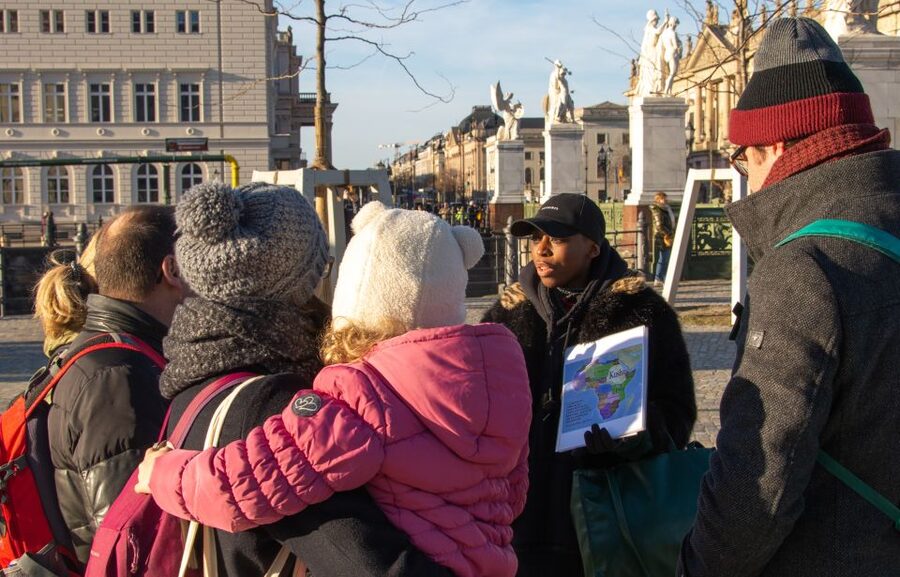
I would choose this tour if you want to:
- Examine German colonial history through a present-day critical lens
- Understand why the Humboldt brothers matter to the Forum
- Think about how missionaries and scientists contributed to colonial systems
- Study the ethnological collection rather than simply walk through it
- Hear an Afrocentric interpretation in English
- Discuss the symbolic meaning of the rebuilt palace and roof cross
You may want a different experience if you prefer:
- A general introduction to Berlin’s landmarks
- A full guided tour of every Humboldt Forum exhibition
- A short walking tour with little time spent sitting
- A presentation that avoids direct criticism of colonial institutions
- A purely architectural explanation of the palace
The tour is particularly suitable for adults, students, museum workers, history fans, and anyone trying to understand why Berlin’s colonial memory remains a current issue. Families can attend, but the subject matter and discussion format may suit older children better than very young ones.
Practical advice for a smoother visit
Wear comfortable shoes, even though much of the first hour is seated. You will still be moving into the museum, and comfortable footwear makes the transition easier.
Dress for the weather. The outdoor session lasts about an hour, so rain, cold, or strong sun can shape your experience. Food and drinks are not allowed, and large bags or luggage are not permitted.
The tour is conducted in English. It lasts two hours and has two possible starting location options connected with the reconstructed Sanchi Gate. Check the exact starting time when booking.
Wheelchair access is available. If you need a particular seating arrangement or have mobility concerns, it is sensible to confirm the meeting details in advance, especially because the first section takes place outside.
Cancellation is free up to 24 hours before the activity for a full refund. You can also reserve now and pay later, which helps if your Berlin plans are still shifting.
Should you book this decolonial Berlin tour?
Book it if you want the Humboldt Forum to raise questions, not just provide attractive rooms and historic names. The guide’s strongest work lies in linking the palace, the Humboldt brothers, missionaries, colonial structures, the roof cross, and the ethnological collection into one sustained discussion.
Skip it if your main goal is to cover the museum quickly. The outdoor hour is central to the experience, and the indoor visit may feel short if you want detailed coverage of every gallery.
For the right audience, $41 is a fair price for a focused English tour with museum entry. Confirm the meeting point and provider carefully, dress for an outdoor discussion, and arrive ready to listen to a challenging interpretation of Berlin’s past.
FAQ
Where does the tour meet?
Meet your guide near the reconstructed Sanchi Gate at the Humboldt Forum. The white chairs mark the meeting area.
How long does the experience last?
The tour lasts two hours.
What language is the tour conducted in?
The live tour is conducted in English.
How much time is spent outside?
You will be seated outside for approximately one hour before entering the museum.
Is entry to the ethnological collection included?
Yes. Entry to the ethnological collection is included in the tour price.
Is the tour wheelchair accessible?
Yes, the activity is listed as wheelchair accessible.
What should I bring, and what is not allowed?
Bring comfortable shoes and weather-appropriate clothing. Food, drinks, luggage, and large bags are not allowed.
New castle tours around Germany
- Potsdam: The evening Wannsee tour. Castles, parks, and villas.★ 4.7 · 63 reviews
- Nuremberg:Complete Tour! Castle/Old Town/World War history★ 5.0 · 45 reviews
- Nuremberg: Castle and Old Town Tour – incl. Tickets and red beer tasting★ 4.9 · 68 reviews
- Munich: Neuschwanstein Castle and Linderhof Palace Day Trip★ 4.8 · 5 reviews
- Munich – Neuschwanstein Castle+Linderhof Private Tour★ 5.0 · 2 reviews
- Munich: Neuschwanstein Castle Chinese Day Tour★ 4.9 · 26 reviews
- Lichtenwalde Castle: Guided tour★ 4.6 · 2 reviews
- Kombi Ticket Neuschwanstein and Hohenschwangau Castle★ 4.2 · 32 reviews
Guided Castle Tours, compared.

Edinburgh Castle: Guided Walking Tour with Entry Ticket
Read our review →
Seville: Cathedral, Giralda & Alcazar Entry With Guided Tour
Read our review →
Stonehenge, Windsor Castle and Bath Full Day Guided Tour
Read our review →
Edinburgh Castle Guided Walking Tour in English
Read our review →
Seville: Alcázar and Cathedral Entry Ticket and Guided Tour
Read our review →
Alcázar of Seville Skip-the-Line Tickets and Guided Tour
Read our review →
Dublin Book of Kells, Castle and Molly Malone Statue Guided Tour
Read our review →
Browse the lists this tour appears in