
Review · JAPAN
Okinawa: Urasoe Castle, Royal Tomb & War History Walk
Okinawa’s past comes together on one hillside here: royal tombs, castle ruins, and a WWII battlefield all sit along a walk that begins on the old Futenma pilgrimage path. You move from quiet stone roads to the Youdore mausoleum, then up toward Urasoe Castle and the Maeda Escarpment, known as Hacksaw Ridge.
I like the way the tour connects Okinawa’s royal history with its wartime experience instead of treating them as separate subjects. I also like the private format and local perspective. Guide Koutaro has been praised for explaining history, culture, and even the Okinawan dialect in an easy, unhurried way. The main drawback is physical: stone paving and uphill paths make this a poor choice if you have mobility limits.
Key points to know before you book
- Three layers of Okinawan history: Royal tombs, the former political center of Urasoe, and the Battle of Okinawa appear within one compact route.
- A local guide matters: Koutaro brings local knowledge and explains the Okinawan dialect as well as the major historical events.
- Youdore is quiet and restrained: This cliffside mausoleum feels solemn and natural rather than grand or monumental.
- Hacksaw Ridge adds emotional weight: Tunnels, shelters, and wartime stories change the mood of the walk.
- Private touring keeps the pace flexible: The 90-minute to two-hour format leaves room for questions and pauses.
- Bring proper shoes: Stone paths and ascending trails are part of the experience, not a minor detail.
Why this short walk covers so much ground
At $65 per person, this is not simply a transfer between a museum and a viewpoint. You are paying for a private guided walk, museum admission, interpretation at several historic sites, and the chance to connect places that make more sense together than they do on separate visits.
The route begins at either Kencho-mae Station in central Naha or Urasoe-Maeda Monorail Station, depending on the option you choose. The Kokusai Street area transportation option is useful if you are staying in central Naha and want a simpler start. The walk finishes at Urasoe-Maeda Station, so you can continue by monorail afterward.
The time listed is 90 minutes to two hours. That is short enough to fit into a busy Okinawa day, but the route is not a casual flat stroll. You will walk on stone-paved roads, climb toward the castle ruins, and move through sites tied to death, war, faith, and political power. Comfortable shoes and water are basic requirements.
More Castle Walking Tours in Japan
- Tokyo Castle & Imperial PalaceーShogun Walking Tour
★ 4.7 · 1,068 reviews - Ultimate Osaka Walking Tour: Castle, Dotonbori & Hidden Gems
★ 5.0 · 862 reviews - Tokyo Castle & Imperial PalaceーShogun Walking Tour
★ 5.0 · 724 reviews
The Futenma pilgrimage path begins the story
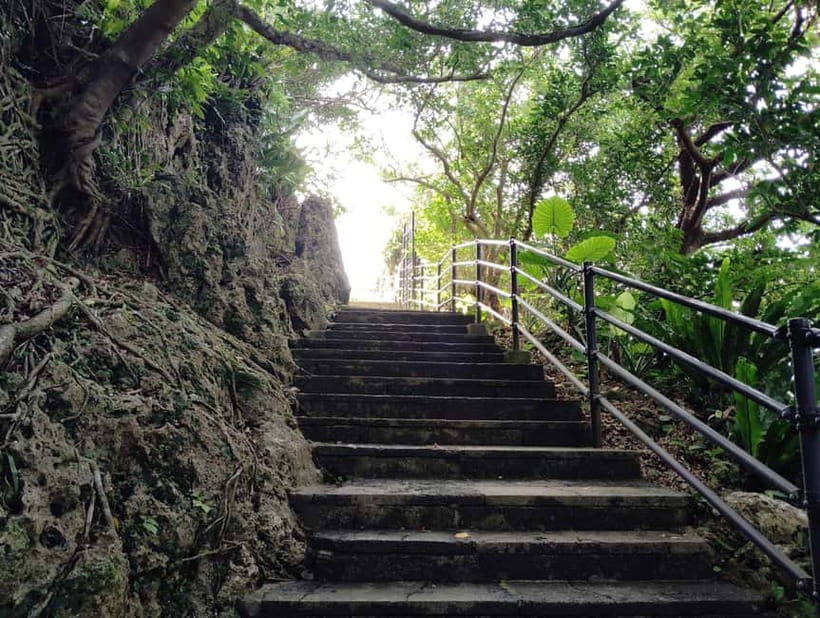
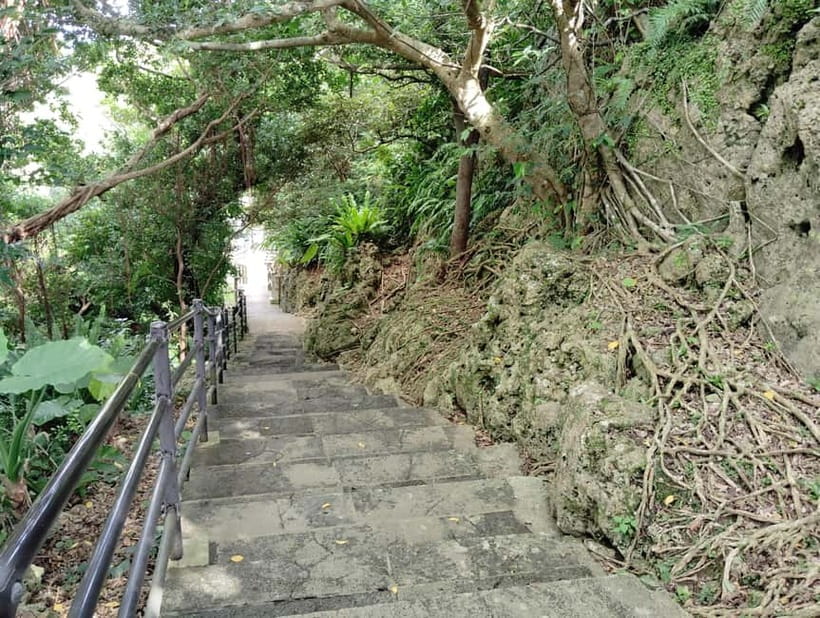
Your guide leads you along the ancient Futenma pilgrimage path, where the stone paving gives the first sense that you are leaving modern Okinawa behind. The route is not presented as a simple walk from point A to point B. It follows an old religious and cultural route, allowing you to see how people once moved through this part of the island.
I like this opening because it slows the pace before the heavier history begins. Rather than arriving at a ruin, reading a sign, and leaving, you approach the sites through a path with its own meaning. The stones and surrounding greenery help you understand that Urasoe’s importance was not limited to a single building.
Your guide fills in the background as you walk. The tour is conducted in English and is arranged as a private group, which gives you a better chance to ask about details that interest you. If you want to understand how the Ryukyu Kingdom differed from mainland Japanese political traditions, this is a useful place to begin asking questions.
The museum puts Urasoe Gusuku and Youdore in context
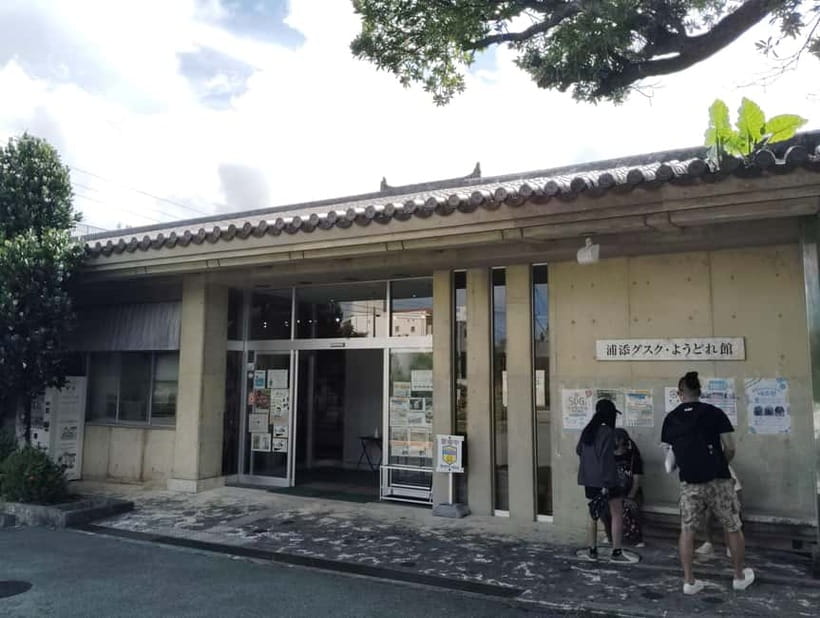
The Urasoe Gusuku and Youdore Museum is the first major stop and lasts about 30 minutes. It introduces the royal tomb complex and the castle ruins before you see them in person. That order helps. Without a basic explanation, the remains on the hillside can look like scattered walls and steps. The museum gives them a clear place in the story.
Urasoe Gusuku, or Urasoe Castle, was once a political and spiritual center of the Ryukyu Kingdom before the rise of Shuri. The museum visit helps you picture the castle as more than a military site. It was linked to royal authority, ceremony, and the wider development of the kingdom.
The tour also brings in King Shō Nei, the last monarch based in Urasoe. His story adds a human element to the political history. He tried to use diplomacy at a time when outside powers were pressing in, and later became a symbol of resilience and humility in Okinawan memory.
That is a valuable distinction. You are not only hearing about kings as distant names on a timeline. You are hearing about a ruler facing difficult choices when Okinawa’s independence and political position were under pressure. A good guide can make this part engaging, and the private setup gives you room to ask for clarification.
The museum is also a practical stop because it provides an introduction before the uphill portions. If you are short on time, do not skip it mentally. The displays help you recognize why the tomb and castle ruins matter when you reach them.
Youdore shows a quieter side of royal power
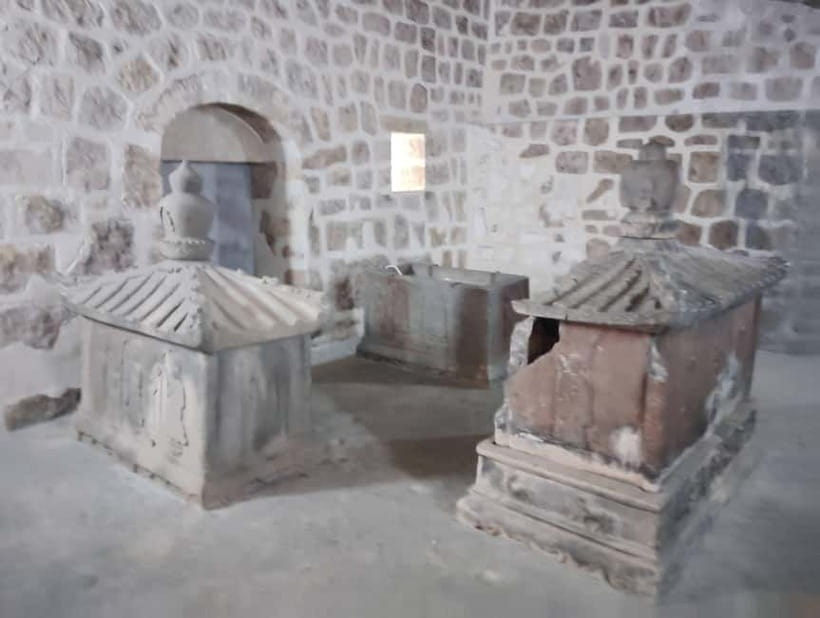
From the museum, the route continues through the Kurashin Gate to Youdore, the royal mausoleum. Early Ryukyu kings were laid to rest here in a cliffside setting that feels calm and contained.
I find the contrast with grand imperial tombs especially important. Youdore is not described through scale or display. Its power comes from its setting and restraint. The site reflects an Okinawan idea of reverence that stays connected to the earth rather than trying to dominate it.
This is a place for a slower pause. You may notice that the mood changes from museum learning to direct contact with a sacred site. Your guide explains the role of the mausoleum and the early kings associated with it, while the physical setting gives the information a stronger sense of place.
The stop takes about 30 minutes as part of the overall route. Since the site is sacred and solemn, you should follow your guide’s instructions about where to walk and how to behave. The description of the site emphasizes quiet respect, not a long list of dramatic monuments, so set your expectations accordingly.
Youdore will suit you if you value atmosphere and cultural context. If you only want large structures or an extensive archaeological complex, it may feel modest. Its appeal lies in the relationship between the royal burials, the cliff, and the surrounding setting.
Same stronghold, another way through the gate:
- Osaka Castle: Museum and Tower Entry Ticket
★ 4.5 · 2,380 reviews - Kyoto: Nijo-jo Castle and Ninomaru Palace Guided Tour
★ 4.7 · 1,020 reviews - Kyoto: Nijo Castle, Kiyomizu & Fushimi Inari Guided Tour
★ 4.7 · 700 reviews - Osaka Castle Walking Tour and Castle Tower Admission
★ 5.0 · 561 reviews
Urasoe Castle explains the kingdom before Shuri
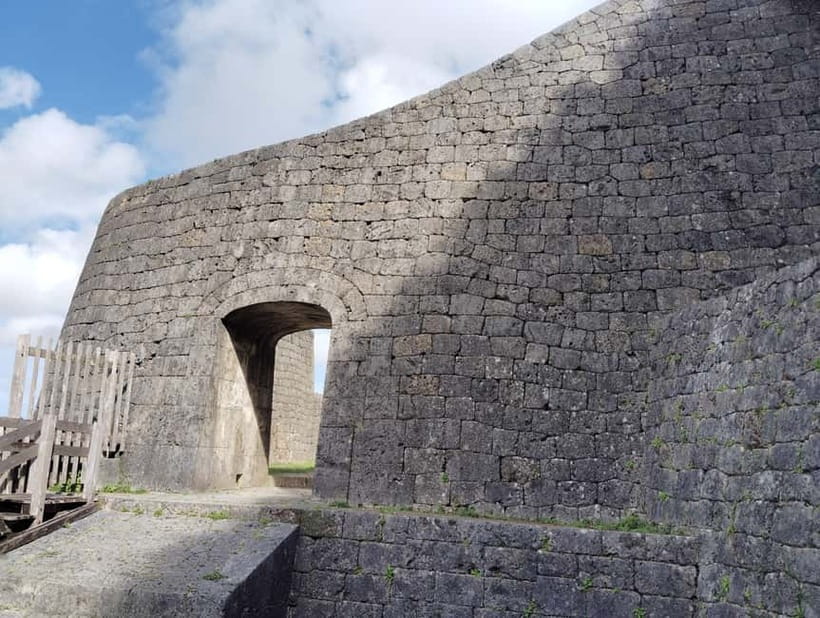
After the tomb, you climb toward the Urasoe Castle ruins. The route leads past the Maeda Escarpment and then up to the castle area, so this portion is where the physical demands become most noticeable.
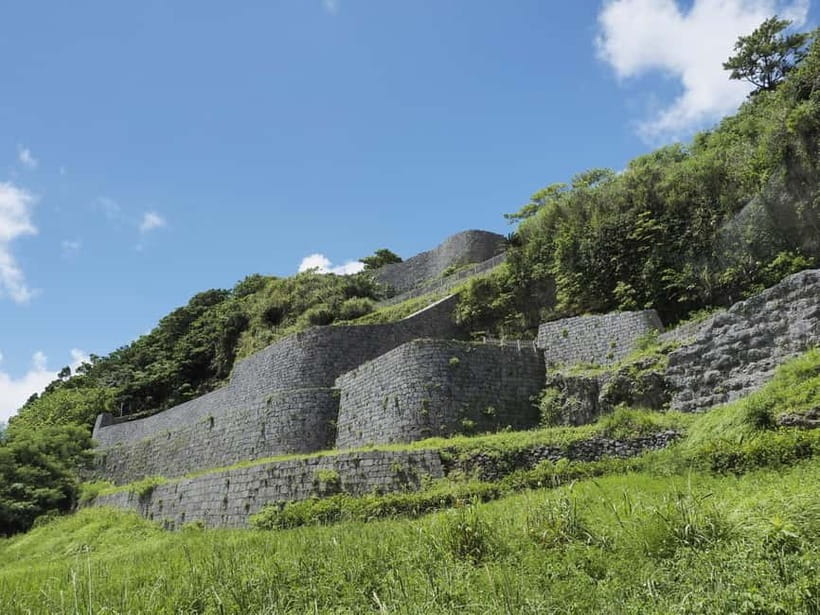
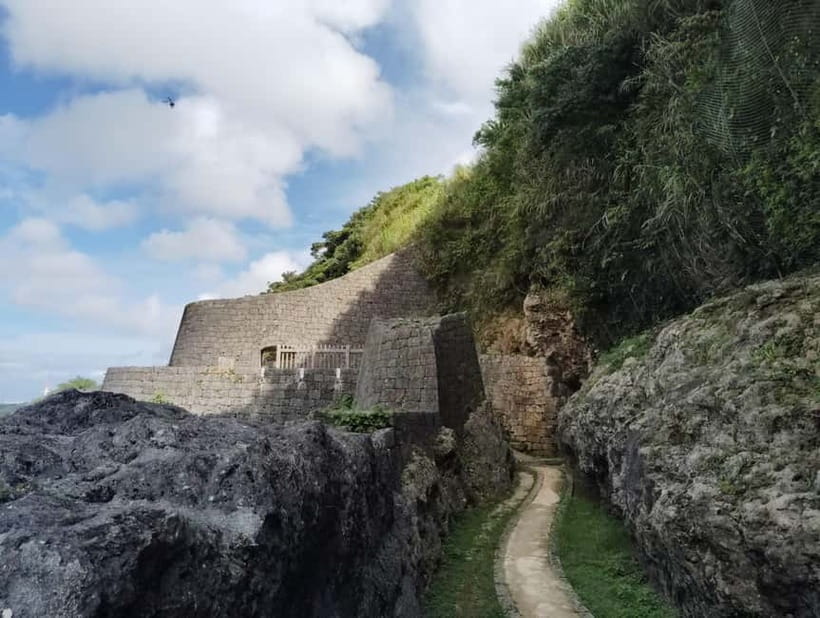
At the top, your guide explains the castle’s main hall, or seiden, and its symbolic role. Urasoe Castle once served as the spiritual and political capital of the Ryukyu Kingdom before Shuri took that position. That detail changes how you read the ruins. You are not looking at an isolated fortress. You are seeing the remains of an earlier center of royal life.
The ruins themselves require imagination. You should not expect a fully reconstructed palace or a long sequence of intact rooms. Instead, your guide helps you understand the layout, purpose, and meaning of what remains. The experience works best when you enjoy connecting fragments to a larger story.
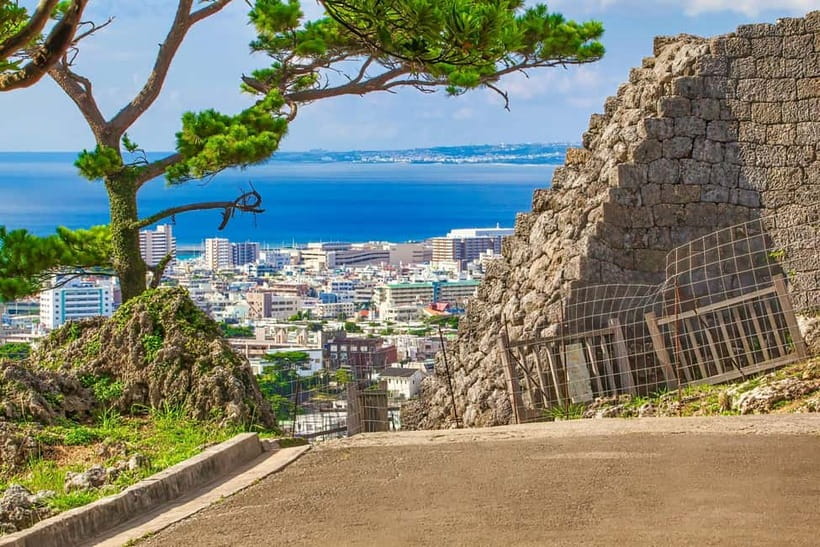
The views from the castle walls are one of the natural rewards for making the climb. You can look out toward the coast and the city below, gaining a sense of how the old center relates to modern Okinawa. This is a good moment to pause, take photographs, and consider how much the island has changed while retaining its cultural identity.
The climb is also the tour’s clearest limitation. Anyone who has trouble with uneven surfaces or ascending paths should not book this walk casually. The activity information specifically says it is not suitable for people with mobility impairments.
Hacksaw Ridge brings the Battle of Okinawa close
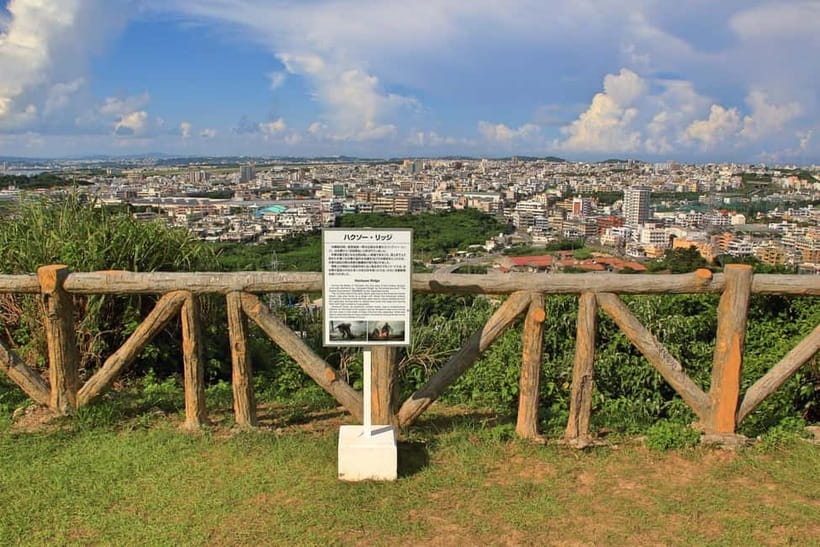
The Maeda Escarpment, or Maeda Kōchi, is known internationally as Hacksaw Ridge. It was one of the fiercest battlegrounds of the Battle of Okinawa. The peaceful setting can make the wartime story feel even more difficult to absorb.
As you pass through the area, your guide points out wartime scars such as tunnels and shelters. These are not distant battlefield statistics. They are physical traces in the same hillside where you have just heard about kings, royal burials, and the growth of the Ryukyu Kingdom.
Okinawa was the only civilian battlefield in Japan during World War II. That fact gives this part of the walk a serious weight. The route connects military conflict to the lives of ordinary people, rather than presenting the battle only through troop movements and dates.
You should be prepared for the subject to feel emotionally moving. The tour description is clear about that, and it is worth taking seriously. This is not a light sightseeing walk with a war reference added at the end. The battlefield history is one of the main reasons the experience has depth.
The transition from castle ruins to wartime sites also makes a useful point about place. The same ridge has carried different meanings over time: royal authority, sacred memory, military strategy, and civilian suffering. Your guide’s job is to connect those periods without making the walk feel rushed.
What the private guide adds
The guide is central to the value of this experience. A private group gives you a more personal format than a large bus tour, and the pace can feel less mechanical. You can stop to ask about a name, a royal tradition, a wartime feature, or a word in the local dialect.
Koutaro is the named guide associated with the strongest praise in the supplied feedback. He is an Okinawan local who explains the region’s history and culture and also talks about the Okinawan dialect he is helping bring back. That detail makes the experience more than a standard English-language history lesson. Language offers a direct link to local identity and the pressures that have shaped it.
The feedback also points to an easy, unhurried pace. That matters because the route includes several subjects that need time to absorb. A guide who avoids rushing can make the walk feel lighter, even when the content is serious.
English communication may not always be perfectly smooth. One piece of feedback described occasional translation trouble, with Google used to clarify a question. I would not treat that as a reason to reject the tour, but you should allow for a few moments when a historical term or explanation needs repeating.
Is $65 good value for this Okinawa experience?
The $65 price is reasonable if you want interpretation and a connected route rather than a self-guided visit. Admission to the Urasoe Gusuku and Youdore Museum is included, along with a private English-speaking guide and access to the castle ruins. Transportation from the Kokusai Street area is available with the relevant option.
The value is strongest for a first visit to Okinawa, especially if you want to understand more than beaches and city sights. You get royal history, religious culture, castle archaeology, wartime memory, and city views in a compact outing.
It is less compelling if you already know the sites well or mainly want an easy walk. The price does not remove the physical effort, and meals are not included. You should also check the meeting point carefully because it varies by booking option.
The reserve-now, pay-later arrangement and free cancellation up to 24 hours before the tour make planning easier. Those policies are useful, but they should not be the main reason to book. The real value is the guide’s ability to connect places that are easy to misunderstand when seen alone.
Who will enjoy this walk most?
I would recommend it to you if you like history that is tied to real places and prefer walking to sitting on a bus. It suits visitors who want to understand Okinawa’s separate Ryukyuan identity, not just see modern Naha.
It is also a good choice if you appreciate a private format. You can ask questions, move at a measured pace, and spend more time on the subjects that matter most to you. Families with older children may find the mix of royal stories and wartime history engaging, though the adult tone of the battlefield material should be considered.
You should think twice if you want a gentle, level route. Stone paving and uphill sections are part of the experience. The activity is specifically not suitable for people with mobility impairments.
Bring comfortable shoes, water, and a camera. Dress for walking rather than for a short museum visit. The tour lasts 90 minutes to two hours, but the uneven paths and serious subject matter mean you should not schedule it as a frantic gap between other commitments.
Should you book the Urasoe Castle and War History Walk?
Book it if you want a compact but serious introduction to Okinawa’s royal past and wartime experience, especially with a local English-speaking guide. The best reasons are the connected route, the private format, Youdore’s quiet setting, and the chance to see Hacksaw Ridge alongside the older castle ruins.
Skip it if stairs, slopes, or uneven stone paths will make the outing uncomfortable. Also skip it if you want a purely scenic walk. This experience asks you to think about diplomacy, royal memory, civilian suffering, and cultural survival.
For the right visitor, $65 buys more than sightseeing. It gives you a clearer understanding of how Okinawan history continues across the same hills, from early kings to modern city life.
FAQ
Where does the tour begin?
The tour has two possible starting points: Kencho-mae Station or Urasoe-Maeda Monorail Station. The meeting point depends on the option you book.
Where does the tour finish?
The tour finishes at Urasoe-Maeda Station.
How long does the walk take?
The experience lasts between 90 minutes and two hours, depending on the available starting time and the pace of the visit.
Is transportation from Naha included?
Transportation from the Kokusai Street area is available with the relevant booking option. Check the selected option because the meeting point may vary.
Is the tour offered in English?
Yes. The tour has a live English-speaking guide and is operated as a private group experience.
Is the route suitable for people with mobility impairments?
No. The route includes stone-paved roads and ascending paths, and the activity is not suitable for people with mobility impairments.
More history behind the walls around Japan
- 2.5 Hour Private History and Culture Tour in Himeji Castle
★ 5.0 · 185 reviews - Kyoto: Nijo Castle World Heritage Guided Tour with Admission
★ 5.0 · 128 reviews - Himeji: Himeji Castle Guided Tour – UNESCO Heritage
★ 4.7 · 115 reviews - Kyoto: Nijo Castle World Heritage Guided Tour with Admission
★ 4.9 · 37 reviews
New castle tours around Japan
- Peace Memorial Park, Hiroshima Castle, & Garden Private Tour★ 4.8 · 7 reviews
- From Osaka: Himeji Castle, Arima Onsen & Mt. Rokko Day Tour★ 4.6 · 339 reviews
- Osaka/kyoto: Himeji Castle, Kobe. Luxury Day Trip with Guide★ 5.0 · 2 reviews
- Osaka: Osaka Castle 3 hours Historical Walking Tour★ 4.6 · 14 reviews
- Osaka: Osaka Castle Guided Tour with Local Guide★ 4.7 · 78 reviews
- Osaka: Osaka Castle – Tsuruhashi – Tennoji (Spanish Guide)★ 4.7 · 10 reviews
- Osaka: Castle, Tea Ceremony, Calligraphy, and Samurai Armor!★ 5.0 · 4 reviews
- Osaka: Early Morning Osaka Castle Guided Tour, Avoid Crowds★ 4.9 · 12 reviews
Castle Walking Tours, compared.

Edinburgh Castle: Guided Walking Tour with Entry Ticket
Read our review →
Prague: 3-Hour Walking Tour of Old Town & Prague Castle
Read our review →
Edinburgh Castle Guided Walking Tour in English
Read our review →
Budapest: Buda Castle Walk with Saint Stephen’s Hall
Read our review →

Prague 3-hour Afternoon Walking Tour including Prague Castle
Read our review →
Royal Mile and Edinburgh Castle – Small Group Walking Tour
Read our review →
Browse the lists this tour appears in