
Review · THE UK
Newcastle Unveiled Tour: History, Bridges, and Secrets in Spanish
Newcastle’s best story is the change from medieval border town to industrial powerhouse, and this tour follows that story on foot. You’ll pass castle ruins, market halls, railway landmarks, and the famous Tyne bridges, with guide Dani explaining how mining and Victorian industry altered northern England.
I like the mix of old stone and modern Quayside, and I like that the tour connects famous sights with specific inventions, including early electric lighting, the steam locomotive, and the RMS Mauretania. The main drawback is physical: you’ll walk for two and a half hours and descend about 200 steps to the riverbank, so this is not a good choice if stairs or uneven walking are a problem.
Key points at a glance
- Spanish-led city walk: Guide Dani explains Newcastle’s past in Spanish, with some material presented in its original language.
- A clear historical route: The walk links the medieval wall and castle with coal, railways, electricity, and shipbuilding.
- Grainger Market included: You get time to look around one of Europe’s notable covered markets, not just a quick photo stop.
- Seven bridges in one view: The finish at the Tyne gives you a strong photo opportunity, including the Tyne Bridge and Millennium Bridge.
- Small-group format: The tour is designed to feel more personal and interactive than a large coach outing.
- Plan for stairs and weather: It runs rain or shine and includes a descent of about 200 steps toward the river.
Newcastle’s story begins above the River Tyne
I like city tours that explain why a place looks the way it does. This one does that by moving from Grey Street and the medieval center toward the river, where Newcastle’s bridges, shipyards, coal trade, and railway history come together.
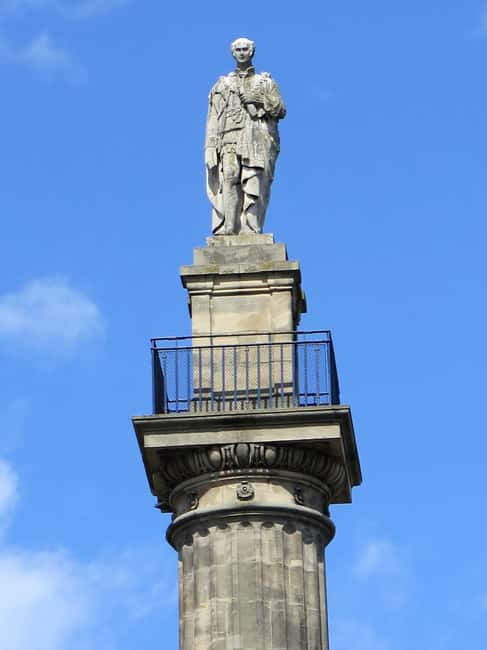
You meet in front of Grey’s Monument, the tall column honoring Charles Earl Grey. It is an easy central meeting point, but give yourself enough time to find the exact spot because the surrounding streets can be busy. From here, you begin with Newcastle’s grand Georgian face before moving into older and less polished parts of the city.
The opening section includes a 25-minute break, giving you time to get oriented. That is useful if you have just arrived in Newcastle, since the guide can help you understand how the central streets connect. It also means the tour does not feel like two and a half hours of nonstop marching.
Guide Dani leads the Spanish-language experience. A verified booking from Spain praised the way Dani explained Newcastle’s importance during mining and Victorian industrialization. That focus is important. You are not simply collecting landmark names. You are learning why coal wealth, factories, railways, and shipyards made this city matter far beyond the northeast of England.
More history behind the walls around the UK:
- Edinburgh: Edinburgh Castle Guided History Tour with Tickets
★ 4.8 · 9,933 reviews - Newcastle: History and Highlights Guided Walking Tour
★ 5.0 · 18 reviews - Charleston historical walking tour with a Professor of History at The Citadel
★ 5.0 · 1,284 reviews
Grey Street and Grainger Market: Newcastle’s polished and practical sides
Grey Street gives the tour a handsome opening. Its sweeping stone-fronted buildings show the confident civic style of Georgian Newcastle. The stop is a useful contrast to what follows: first the elegant commercial center, then the market, friary, wall, and castle that reveal much older layers.
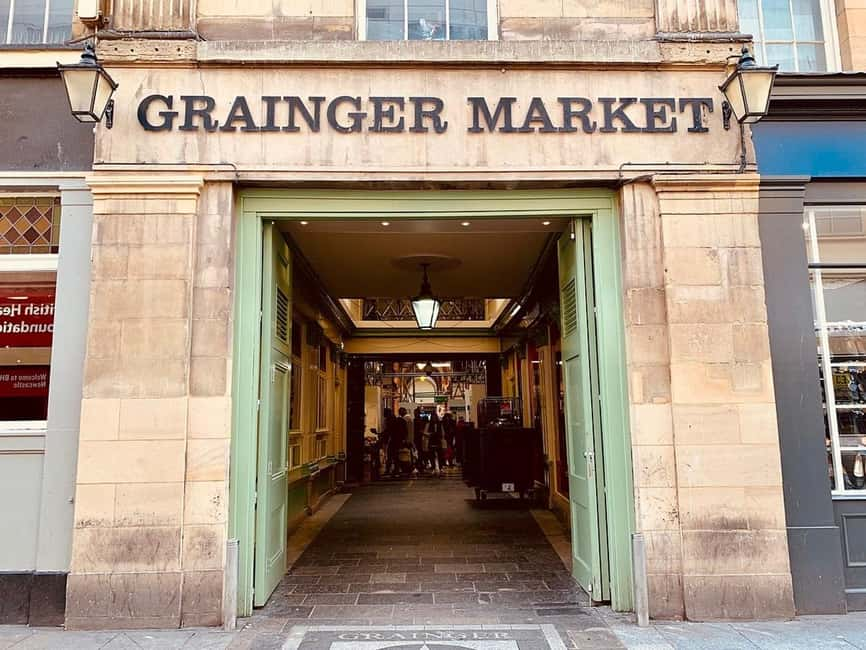
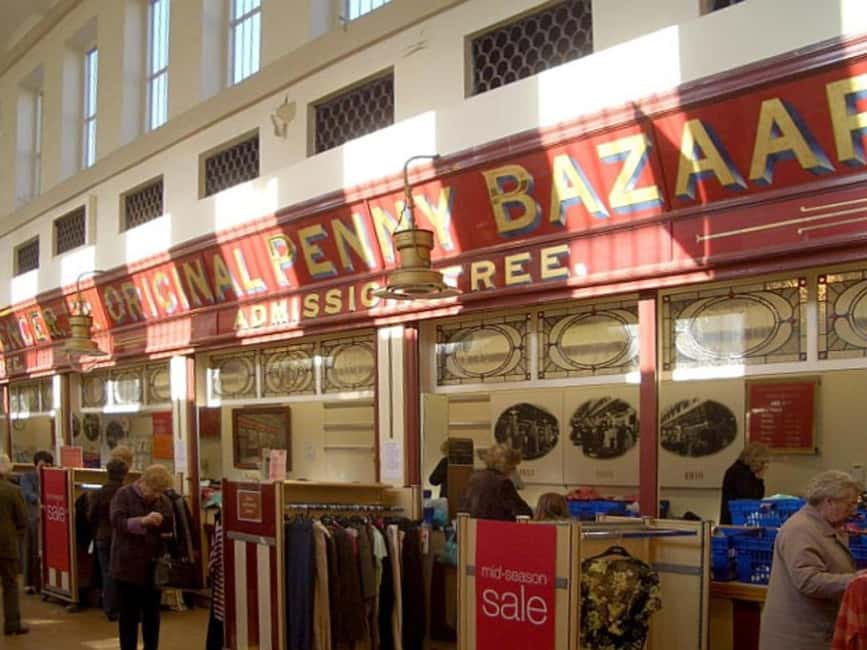
After a short walk, you reach Grainger Market for about 20 minutes. I consider this one of the tour’s strongest stops because a market lets you see a city in daily use. You are not only looking at a monument. You have time to notice the food stalls, shopfronts, and covered-market atmosphere.
The schedule gives you enough time for a look around, though not enough for a leisurely meal. Food and drinks are not included, so treat this as a chance to browse rather than a formal lunch stop. If you want to buy something, keep the timing in mind and do not wander too far from the group.
The market also helps explain Newcastle as a trading city. Its story is not only about kings, castles, and battles. It is also about selling goods, feeding workers, and serving a growing urban population.
Blackfriars and the medieval streets
A 10-minute walk takes you to Blackfriars Friary, where the tour pauses for about 15 minutes. This former Dominican priory is one of the more atmospheric parts of the route. Its surviving medieval setting offers a quieter counterpoint to Grey Street and the market.
I like this stop because it shows how Newcastle kept pieces of its earlier identity while the city around it changed. The tour uses Blackfriars to explain the medieval town, rather than treating the building as an isolated old object.
You then spend about 10 minutes in Chinatown before moving on toward St James’ Park. These pauses are brief, so you should think of them as orientation stops rather than full visits. Chinatown adds another modern layer to the city, while St James’ Park connects the walk with Newcastle’s strong football identity.
The sequence is practical. You move through several parts of central Newcastle without needing a bus or taxi, and the guide keeps linking each area to the city’s growth. Still, the frequent stops mean you should wear comfortable shoes and expect a steady amount of standing.
Following the medieval wall to Westgate and Newgate
One of the tour’s most unusual features is the attention paid to pavement symbols marking the old medieval wall. These markings help you trace a defensive line that is easy to miss if you are simply walking through the modern center.
Newcastle was a border city, and its walls were not decoration. They protected the settlement during periods of conflict and helped control access through gates such as Westgate and Newgate. The tour uses these locations to show how the city’s priorities once centered on defense, movement, and control.
This is where a guide adds real value. A wall that survives only in fragments can be hard to understand on your own. By pointing out the route and explaining the old gates, Dani helps you picture a city that no longer looks exactly as it did but still keeps traces of its medieval plan.
The walk then continues toward Newcastle Central Station. You get about 12 minutes there for a break and photos. The station matters for more than its grand architecture. It represents the railway age that made Newcastle easier to connect with the rest of Britain.
Same stronghold, another way through the gate:
- Stonehenge, Windsor Castle, and Bath from London
★ 4.5 · 18,662 reviews - Edinburgh Castle: Guided Walking Tour with Entry Ticket
★ 4.7 · 11,699 reviews - Stonehenge, Windsor Castle and Bath with Pub Lunch in Lacock
★ 4.5 · 7,402 reviews - Windsor Castle Admission Ticket
★ 4.7 · 7,032 reviews
Newcastle Central Station and the railway revolution
The tour’s industrial story becomes clearer around Central Station. Newcastle is tied to George Stephenson, often called the Father of the Railway, and to the development of the steam locomotive.
The point is not simply that a famous railway figure lived or worked in the area. The larger lesson is how coal and transport supported each other. Coal powered industry, railways moved people and materials, and improved transport helped Newcastle’s influence reach well beyond the Tyne.
The 10-minute walk from St James’ Park to the station gives you a chance to see how quickly the city changes from football and shopping streets to major transport infrastructure. Central Station is also a useful landmark for anyone planning to continue sightseeing after the tour.
The experience also covers Newcastle’s place in early electric lighting. The city was among the first places where electric lights were switched on, another reminder that its industrial importance involved more than mining alone.
These details give the tour its strongest sense of purpose. You see a medieval wall, then a railway station, and the guide explains the forces that connect them: trade, fuel, engineering, and urban growth.
Newcastle Castle and the beginning of the city
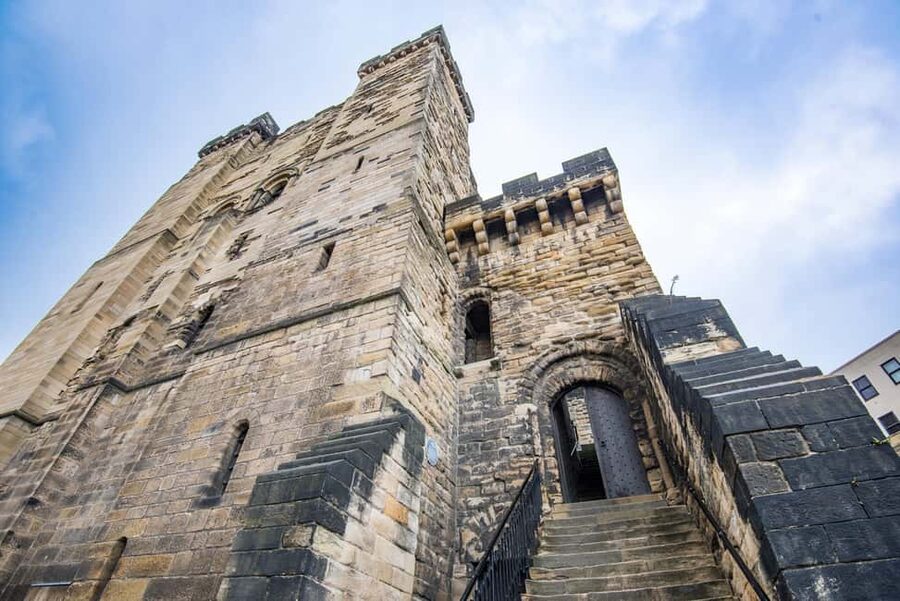
From Central Station, the route continues to Newcastle Castle, with about 10 minutes for a pause and photographs. The castle is the point where the city’s name and early power become especially clear.
The castle’s elevated position allowed control over the river and trade. It was also a place where political decisions affecting northern England took shape. Standing here, you can connect the medieval defensive story with the commercial importance of the Tyne below.
The tour also includes the Black Gate, the fortified entrance associated with the castle. This section gives you some of the clearest medieval context on the route. The city was not simply built beside the river by chance. Its position made it valuable, and that value made it worth defending.
The stop is relatively short, so you should not expect a full castle admission or an extended interior visit. Entry tickets to museums and attractions are not included. You can return later if you want a longer look, but the walking tour itself concentrates on the outside setting, the wider story, and the views.
The Tyne bridges and Newcastle’s industrial reach
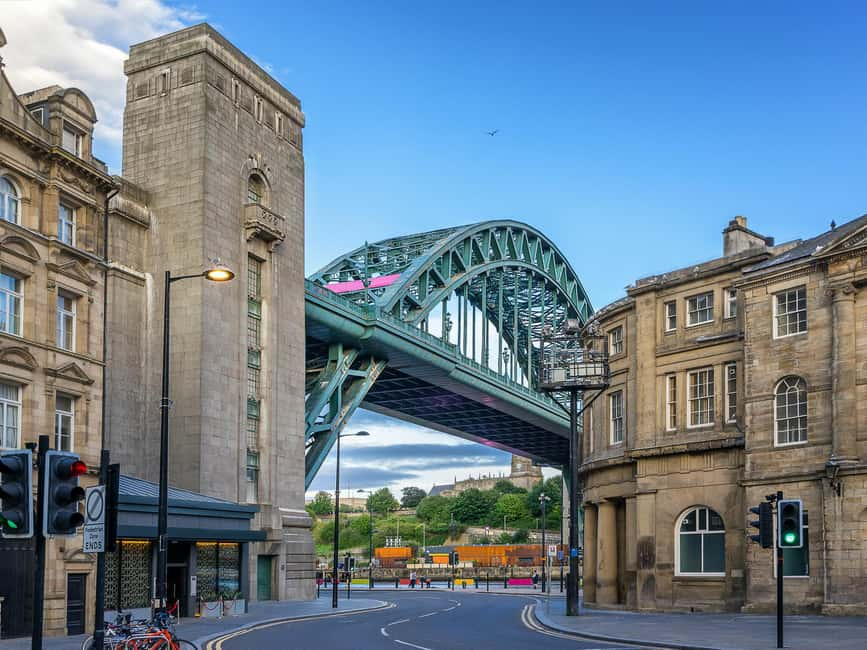
After another 10-minute walk, you reach the River Tyne. The tour finishes at Quayside after about 15 minutes of riverside time, and this is likely to be the most memorable photo stop.
From the river, you can see seven bridges linking Newcastle with Gateshead. The group includes the historic Tyne Bridge and the modern Millennium Bridge, each reflecting a different period in the city’s development. Together, they make the river feel like a working part of Newcastle’s identity, not just a scenic backdrop.
The Tyne also brings the shipbuilding story into focus. Newcastle’s shipyards produced the RMS Mauretania, a famous Cunard liner that held the North Atlantic speed record for more than 20 years. That fact gives the river scene a larger scale. The same industrial system that drew wealth from coal also supported advanced naval engineering and ocean travel.
I like ending at Quayside because it gathers the tour’s themes in one place. Medieval power began near the river. Coal and trade helped Newcastle grow. Shipbuilding used the river for work. The bridges now frame a city that continues to change.
You should be aware of the physical route down to the riverbank. The tour includes about 200 steps, and the information specifically warns that it is not suitable for people with mobility impairments. If you have knee, balance, or stamina concerns, ask before booking rather than assuming the descent will be easy.
What the $46 price gets you
At $46 per person, this is not the cheapest way to see Newcastle, but the value depends on what you want from a city walk. You are paying for about two and a half hours with a local Spanish-speaking guide, a planned route through several historic districts, and background that connects landmarks to industrial change.
The tour covers a lot without requiring public transport. You see Grey’s Monument, Grey Street, Grainger Market, Blackfriars, Chinatown, St James’ Park, Central Station, Newcastle Castle, the Black Gate, and the Tyne bridges. You also receive recommendations for cafes, museums, and other activities, which can help you plan the rest of your stay.
The small-group format matters here. Newcastle’s story includes many dates, names, and changes, and a smaller group gives you a better chance to hear the guide and ask questions. The tour is also more useful than a simple photo walk because it explains the links between coal, electricity, railways, and shipbuilding.
The price does not include food, drinks, transport to the meeting point, or admission to museums and attractions. Keep that in your budget. Grainger Market is a good place to buy food, but any purchase is your responsibility.
Free cancellation up to 24 hours before the start and reserve-now, pay-later booking add flexibility. The tour runs rain or shine, so those policies are helpful if the forecast looks uncertain.
Practical advice for a comfortable walk
Wear shoes with good support. The route is long enough for tired feet, and the steps to the river make sturdy footwear more important than fashion.
Bring rain gear. Newcastle weather can shift quickly, and the tour continues in wet conditions. There is no promise of shelter for every stop, so a waterproof layer is more useful than relying on an umbrella alone.
Arrive at the large Charles Earl Grey Monument for the meeting point. You do not need to arrange transport during the tour because the route is on foot, but you do need to reach Grey’s Monument independently.
The tour does not allow pets, except assistance dogs. Bikes, alcohol, drugs, speakers, littering, feeding animals, and attending while intoxicated are also prohibited. Babies under one year and people with mobility impairments are not considered suitable for this route.
The listed language is Spanish, with some content shown in its original language. If you need a fully English tour, this is not the right choice. The guide speaks both Spanish and English, but the experience is designed for Spanish-speaking visitors.
Who will get the most from this tour?
I would choose this tour if you want Newcastle explained as a connected story rather than as a list of sights. It suits first-time visitors, Spanish-speaking couples or families with older children, and anyone interested in medieval towns, industrial change, railways, engineering, or city architecture.
It is especially useful early in a Newcastle visit. The route gives you a map of the center and ends at Quayside, where you can continue walking, eat, or return to places that caught your attention.
I would not choose it for a slow museum day. The castle and other attractions are seen mainly from outside, and the timetable gives you short pauses rather than long visits. I would also avoid it if you want a completely flat walk or if poor weather would spoil your day.
Should you book the Newcastle Unveiled Tour?
Book it if you want a Spanish-speaking guide, a small-group walk, and a clear explanation of how Newcastle moved from fortified medieval town to coal-powered center of invention and shipbuilding. The strongest features are Dani’s focus on mining and Victorian industry, the wall route, and the final view of seven bridges over the Tyne.
Skip it if stairs, rain, or two and a half hours on foot would be a serious problem. For everyone else, $46 buys a well-shaped introduction to Newcastle, with enough practical time at Grainger Market and Quayside to help you plan what to do next.
FAQ
Where does the Newcastle Unveiled Tour begin?
The tour begins in front of the large Charles Earl Grey Monument, also known as Grey’s Monument.
How long does the tour last?
The walking tour lasts about two and a half hours.
What language is the tour in?
The live tour guide speaks Spanish. The guide also speaks English, and some content is presented in its original language.
Does the tour include entry to Newcastle Castle or museums?
No. Tickets to museums and attractions are not included. The tour includes stops and photo opportunities at places such as Newcastle Castle, but admission tickets must be purchased separately if you want to enter.
Is the tour suitable for people with mobility impairments?
No. The route includes a descent of about 200 steps to reach the riverbank, and the tour is not suitable for people with mobility impairments.
What should I bring?
Bring rain gear and wear comfortable shoes. The tour operates rain or shine and includes substantial walking and stairs.
New castle tours around the UK
- Poole: Old Harry Rocks and Corfé Castle Guided E-bike Tour★ 5.0 · 11 reviews
- Perth: The Black Watch Castle and Museum Entry Ticket★ 4.8 · 5 reviews
- Oxford Castle and Prison: Guided Tour★ 4.7 · 251 reviews
- North Highland Tour: Dunrobin Castle, Dornoch, & Much More★ 5.0 · 3 reviews
- NORTH HIGHLAND TOUR, DUNROBIN CASTLE & MORE FROM INVERGORDON★ 5.0 · 7 reviews
- Newcastle: True Crime Guided Tour★ 4.6 · 40 reviews
- Newcastle: Walking Custom Tour with a Local Guide★ 4.7 · 9 reviews
- Newcastle: Private Vera Half Day TV Locations Tour★ 4.6 · 41 reviews
UK Castle Tours, compared.
Stonehenge, Windsor Castle, and Bath from London
Read our review →
Edinburgh Castle: Guided Walking Tour with Entry Ticket
Read our review →
Edinburgh: Edinburgh Castle Guided History Tour with Tickets
Read our review →
Stonehenge, Windsor Castle and Bath with Pub Lunch in Lacock
Read our review →
Stonehenge, Windsor Castle and Bath Full Day Guided Tour
Read our review →
Windsor Castle, Stonehenge, and Oxford Day Trip from London
Read our review →
Edinburgh Castle Guided Walking Tour in English
Read our review →Browse the lists this tour appears in