
Review · JAPAN
Nagoya: Full-Day Tour of Castle& Toyota Commemorative Museum
Nagoya’s story comes into focus at two very different places: Nagoya Castle, with its samurai-era grandeur, and Toyota’s working museum, where craftsmanship turns into machines, engines, and modern industry. In six hours, you get a useful introduction to the city’s past and its manufacturing culture without having to plan the transport yourself.
I like the generous time at both main stops, especially the 120 minutes at the castle and another 120 minutes at Toyota. I also like having a guide such as Yama-San or Hiro to explain details that can be easy to miss. The main drawback is the pace: lunch is squeezed into about an hour, and the castle tower is currently closed for wooden reconstruction, so check its status before booking.
Key points to know before booking

- Two sides of Nagoya in one day: Compare samurai power at Nagoya Castle with Toyota’s industrial craftsmanship.
- Hommaru Palace is the castle highlight: Its richly decorated rooms give you more to see than a simple castle photo stop.
- Live Toyota demonstrations: The museum shows machinery in operation, not only labels and display cases.
- Transport is arranged: You meet at JR Nagoya Station, take the subway to the castle, then use taxis between the castle, museum, and station.
- Six hours with an English-speaking guide: The schedule runs from about 10:00 to 16:00 and works best if you like an organized day.
- Important access note: The tour is listed as wheelchair accessible, yet also says it may not suit people with mobility impairments. Confirm your needs before paying.
Why this pairing works for Nagoya
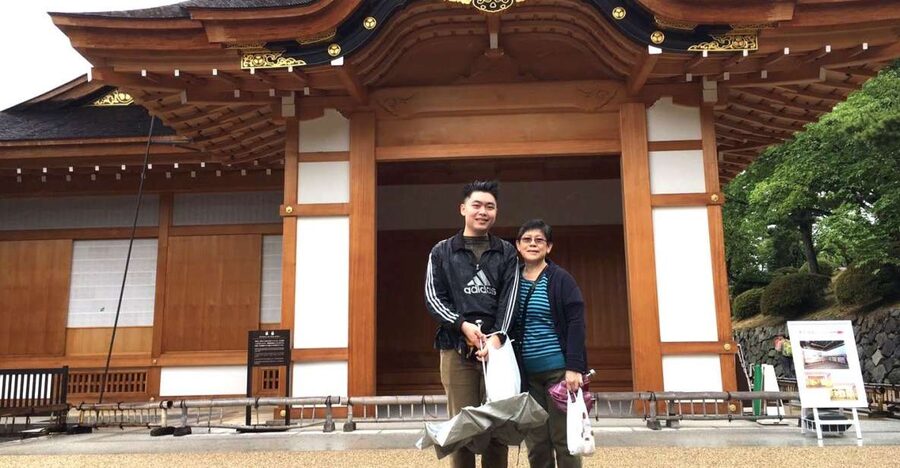
Nagoya can be hard to read at first. It is a major Japanese city, a transport center, and a manufacturing powerhouse, but its appeal is not always packed into one obvious old quarter. This tour gives you two strong anchors.
The castle presents Nagoya through samurai authority, ceremony, and architecture. Toyota presents it through monozukuri, the Japanese idea of making things with care, skill, and attention to process. One stop looks backward to feudal Japan. The other explains the industrial culture that still shapes the region.
That contrast gives the day a clear purpose. You are not simply visiting two unrelated attractions. You are looking at two forms of local pride: the warrior lord and the factory craftsman.
The tour costs $126 per person. That is not the cheapest way to see these attractions, since admission and public transport could cost less if you arranged everything yourself. The value comes from the guide, the private or small-group format, the included admissions, and the fact that you do not need to work out the subway and taxi connections.
For a first visit, that can be worthwhile. If you are already comfortable navigating Japanese cities and reading museum information on your own, the price may feel high. If you want context and a tidy plan, the cost is easier to justify.
More Castle Day Trips in Japan:
- From Osaka: Himeji Castle, Arima Onsen & Mt. Rokko Day Tour
★ 4.6 · 339 reviews - Full-Day Tour: Matsumoto Castle & Kamikochi Alpine Valley
★ 4.8 · 78 reviews - Golden Pavilion, Nijo Castle, & Nishiki Market Half day tour
★ 5.0 · 29 reviews
Meeting at JR Nagoya Station at 10:00
Your day begins at the Tourist Information Center inside the large station hallway that links the two main exits. Your guide waits in front of the center with a welcome board showing your name.
Give yourself time to find the correct hallway. JR Nagoya Station is large, and arriving early will make the meeting calmer. The starting point is practical because you finish back there, making it easy to continue sightseeing, catch a train, or return to your hotel.
The tour is offered with an English-speaking guide. Private and small-group options are available, although the minimum booking requirement is two people. Guides named in the tour feedback include Yama-San and Hiro. You should not assume a particular guide will be assigned, but those names suggest the experience can have a personal, guide-led feel rather than a simple escort between stops.
The first ride is by subway to Nagoya Castle. Transportation to and from the attractions is included, so you are not left to sort out each fare along the way.
Nagoya Castle and the Hommaru Palace
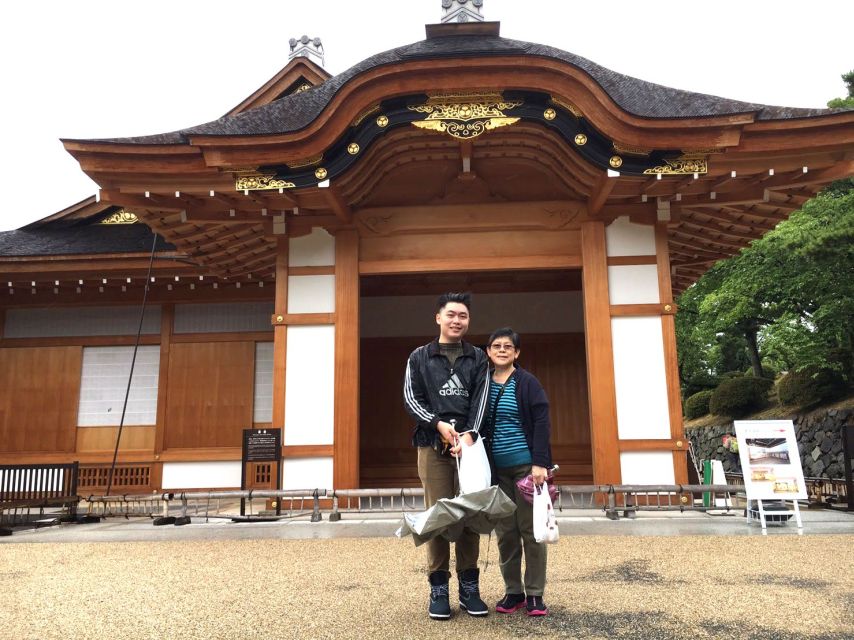
You spend about two hours exploring Nagoya Castle. That is enough time for a proper visit, but not enough to inspect every corner at a slow museum pace. Your guide helps you use the time well.
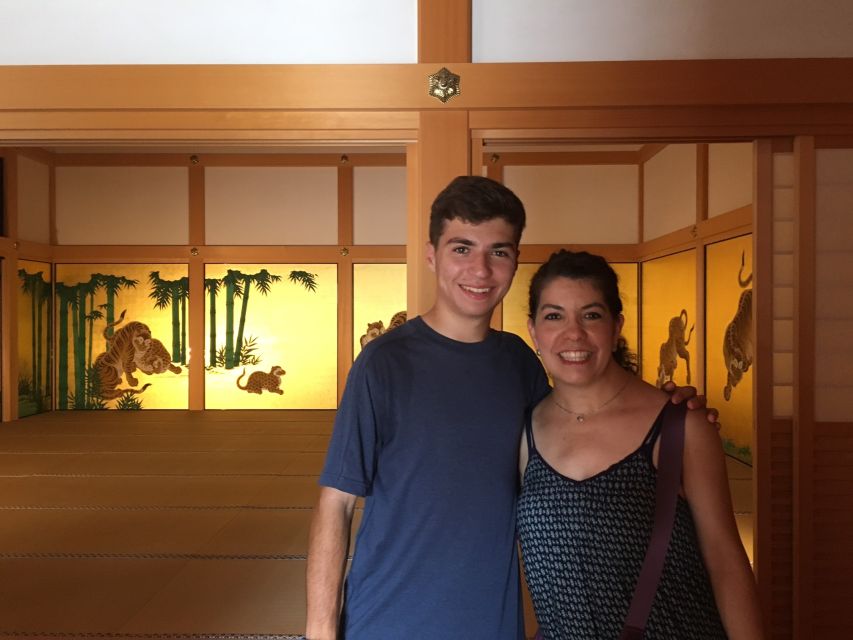
The most important interior sight is the Hommaru Palace, the reconstructed palace associated with the castle compound. Its decorated rooms offer a close look at formal Japanese architecture and courtly design. Pay attention to the painted surfaces, orderly room layouts, and the way the palace creates a sense of ceremony through space rather than size alone.
The castle grounds also connect you with the age of the samurai lords. Nagoya Castle was built as a seat of power, not just as a defensive structure. That distinction matters. You are looking at a place designed to impress visitors, signal authority, and support the administration of a domain.
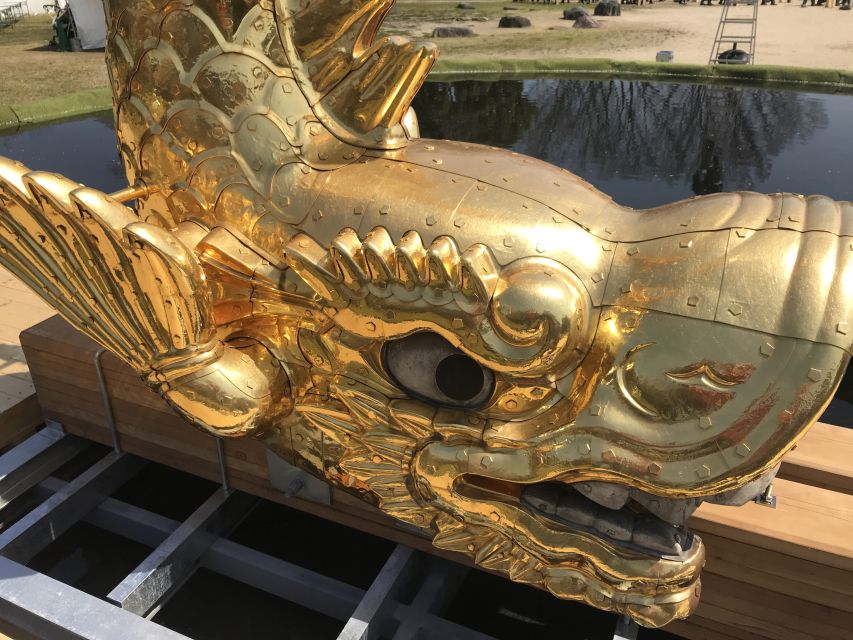
The famous roof ornaments are called kinshachi, golden shachi shaped like tiger-headed carp or dolphin-like fish. They are among the castle’s most recognizable symbols. The tour information notes that the ornaments had been taken down for restoration and were scheduled to return in July 2021. Because that date is past and conditions can change, check the current status before you go. Do not book solely on the assumption that you will see them in place.
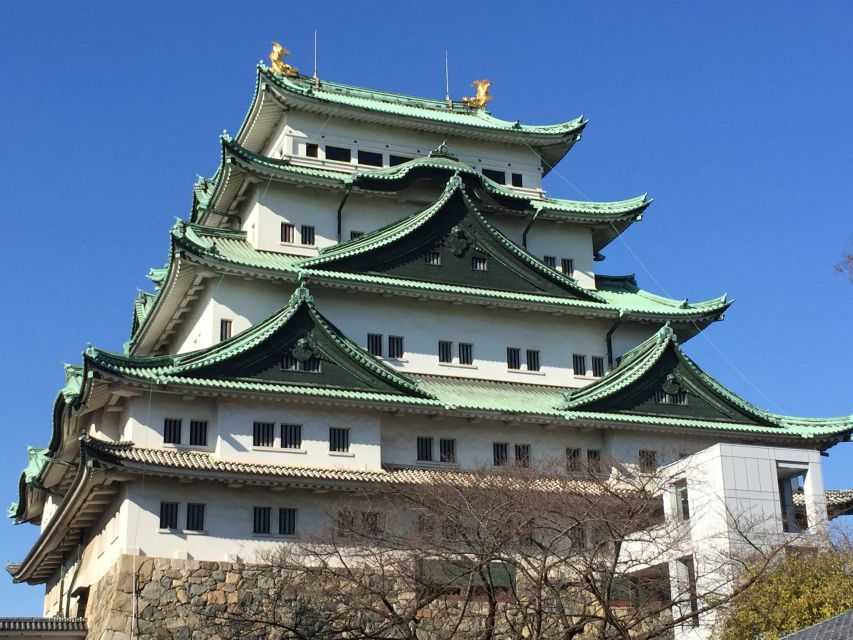
The main castle tower is also listed as closed for wooden reconstruction. That is a major point to consider. You can still see the grounds and Hommaru Palace, but the classic experience of climbing or entering the main tower is not part of the visit while the closure remains in effect.
This is where the guide adds real value. A castle can become a string of roofs, walls, and names if you visit without context. With an English explanation, you can better understand what you are seeing and why the palace matters.
Wear comfortable shoes. The castle visit involves walking around a large historic site, and the schedule does not leave much room for a slow, unhurried pace.
Your one-hour break for lunch
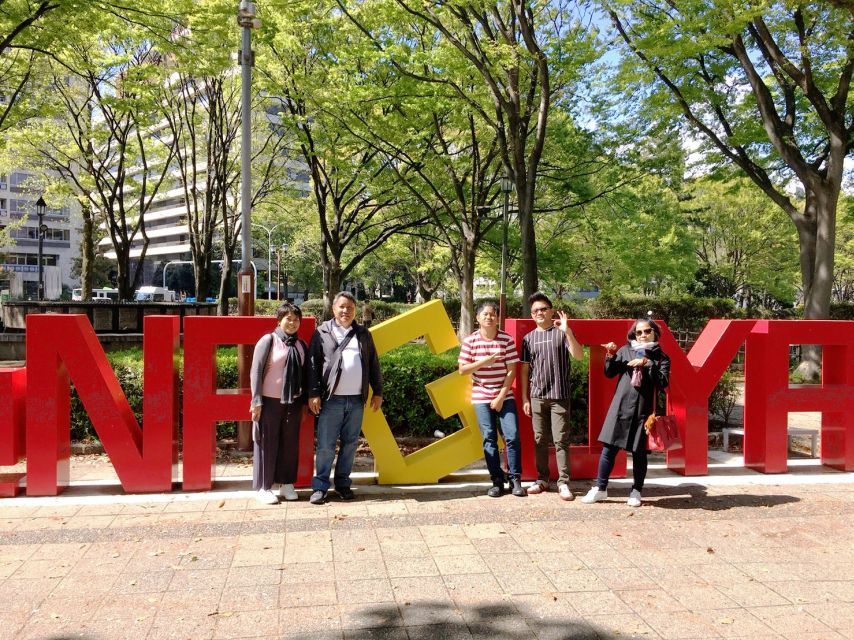
After the guided castle visit, you have about an hour to explore on your own or eat lunch at the castle. Food and drinks are not included, so budget separately.
This break is useful, but keep your expectations realistic. One hour is enough for a straightforward meal and a little extra wandering. It is not a long restaurant stop or an opportunity to explore every part of the grounds.
Because the tour moves on to Toyota by taxi, watch the time. If you spend too long choosing food or browsing, you may have to rush the final minutes at the castle. I would keep lunch simple and use any spare time for the areas you most want to see.
Dietary requirements should be given when booking. The supplied information specifically asks you to provide them in advance, which is sensible if you need special arrangements.
More castle museums around Japan:
- Osaka Castle: Museum and Tower Entry Ticket
★ 4.5 · 2,380 reviews - Hiroshima; Hiroshima Peace Memorial Museum and Castle Tour
★ 5.0 · 89 reviews - Osaka: Osaka Castle & Historical Museum Guided Tour
★ 4.8 · 28 reviews - Chapultepec Castle & Anthropology Museum Tour
★ 4.5 · 1,348 reviews
Toyota’s working museum of industry
The next stop is the Toyota Commemorative Museum of Industry and Technology. You take a taxi from the castle, and the museum visit lasts about two hours.
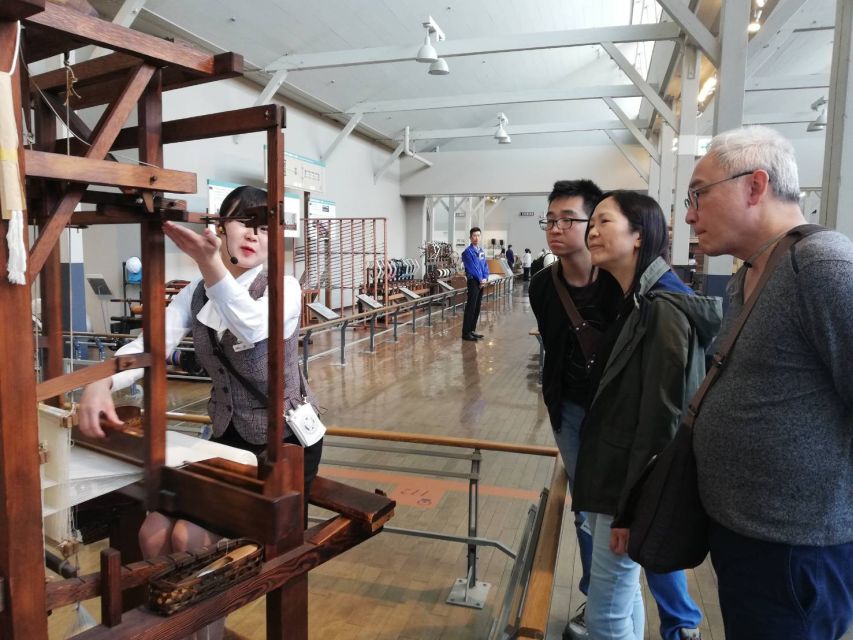
This stop shifts the focus from historic architecture to the practical side of making things. Toyota’s story is presented through monozukuri, or craftsmanship and manufacturing skill. The museum includes exhibitions and live demonstrations, giving you a chance to see machinery operating rather than only reading about finished products.
That live element is the reason to allow two hours. Demonstrations help you understand movement, timing, precision, and the human work behind industrial production. Your guide adds commentary in English, so you can follow the main ideas even if you do not have a technical background.
You do not need to be a car enthusiast to get something from this visit. The museum’s subject is broader than automobiles. It connects Toyota’s development with industrial technology and the way manufacturing methods change over time.
Still, this stop will appeal most to people who enjoy machines, design, engineering, or the story of how products are made. If your main interest is traditional Japanese culture, Nagoya Castle will probably be the emotional high point, while Toyota provides the modern counterpoint.
The museum also gives you a more grounded view of Nagoya. The city is not only about castles and famous food. Its identity is closely tied to production, technical skill, and large-scale industry. This visit shows that side directly.
Returning to Nagoya Station
After the museum, you take a taxi back to JR Nagoya Station. The tour ends at the same general meeting point around 16:00.
The return arrangement is helpful if you have evening plans or a train reservation. The six-hour schedule is long enough to cover both attractions, yet short enough to leave the rest of the day open.
Keep in mind that traffic can affect taxi timing. No exact travel times are provided for the taxi legs, so avoid booking a train immediately after the stated end time. A little buffer is wise, especially if you have luggage or a fixed departure.
What the $126 price includes
The fee includes:
- A professional English-speaking guide
- Transportation to and from the attractions
- Admission to Nagoya Castle
- Admission to the Toyota Commemorative Museum of Industry and Technology
Lunch, drinks, and shopping are extra.
The strongest value is convenience. You get a guide, two admissions, subway travel, and taxi transfers in one booking. You also avoid the small but tiring tasks of finding the station route, arranging the taxi connection, and deciding how long to spend at each stop.
The weaker value is for confident independent visitors. If you can manage public transport, buy tickets, and read enough English information on your own, you might spend less without the tour. You are paying for structure and explanation, not just entry.
For a couple or small group with limited time in Nagoya, I think the price is reasonable if you want both history and industry in one day. For a solo visitor, the minimum of two people per booking is an important limitation.
Pace, access, and practical comfort
The tour runs for about six hours, normally from 10:00 to 16:00. It is a full day, but not an exhausting dawn-to-night outing.
Comfortable shoes and clothes are essential. You will walk through the castle grounds and spend time inside a museum, with transport between the major stops. Flash photography is not allowed, so keep your camera settings respectful of the site rules.
The access information needs careful attention. The activity is described as wheelchair accessible, but it is also marked as not suitable for people with mobility impairments. Those statements do not fully match. If you use a wheelchair, walking aid, or need specific support, contact the provider before booking and ask exactly how the subway, castle grounds, palace, museum, and taxis will work for you.
Free cancellation is available up to 24 hours before the tour for a full refund. You can also reserve and pay later, which helps if your Nagoya plans are still shifting.
Who will enjoy this tour most
I would recommend this experience to you if you want a guided introduction to Nagoya and prefer not to piece together two major sights yourself.
It suits:
- First-time visitors with one open day in Nagoya
- Couples and small groups who want a private or small-group setting
- People interested in both Japanese history and modern industry
- Visitors who value English commentary at museums and historic sites
- Anyone who prefers included taxis after a busy morning of sightseeing
You may want to skip it if you want a slow castle visit, a long lunch, or a full day focused only on traditional Japan. The schedule is organized and fairly tight. The closed main tower also reduces the castle experience for anyone who came mainly to enter that building.
Should you book the Nagoya Castle and Toyota tour?
Book it if you want Nagoya explained through two very different strengths: samurai-era power and Toyota craftsmanship. The Hommaru Palace, live museum demonstrations, included transport, and English guide make this a practical choice for a first visit.
Before booking, check the current status of the main castle tower and golden shachi ornaments. Also confirm access arrangements if mobility is a concern. If those points work for you, the tour offers a well-shaped day, with enough time at each attraction to understand why both belong on a Nagoya itinerary.
FAQ
How long does the tour last?
The tour lasts about six hours, generally from 10:00 until around 16:00.
Where does the tour begin?
It begins at the Tourist Information Center inside the large hallway connecting the two main exits of JR Nagoya Station.
How will I recognize the guide?
The guide waits in front of the Tourist Information Center with a welcome board showing your name.
Is the tour conducted in English?
Yes. The listed tour language is English.
What transportation is included?
The itinerary includes subway travel to Nagoya Castle and taxi transportation between Nagoya Castle, the Toyota Commemorative Museum, and JR Nagoya Station.
Is lunch included?
No. Lunch and drinks are not included. You have about one hour to explore or eat at Nagoya Castle.
Is admission included?
Yes. Admission to Nagoya Castle and the Toyota Commemorative Museum of Industry and Technology is included.
Is Nagoya Castle’s main tower open?
The tour information states that the main castle tower is closed for wooden reconstruction. Check its current status before visiting.
Can I cancel the booking?
Yes. You can cancel up to 24 hours in advance for a full refund. The tour also offers a reserve-now, pay-later option.
More full days among the towers around Japan
- From Munich: Neuschwanstein & Linderhof Castle Full-Day Trip
★ 4.6 · 14,646 reviews - Stonehenge, Windsor Castle and Bath Full Day Guided Tour
★ 4.5 · 5,346 reviews - From Munich: Neuschwanstein Castle Full-Day Trip
★ 4.7 · 3,977 reviews - London: Windsor Castle, Stonehenge & Bath Full-Day Tour
★ 4.4 · 3,112 reviews
New castle tours around Japan
- Peace Memorial Park, Hiroshima Castle, & Garden Private Tour★ 4.8 · 7 reviews
- From Osaka: Himeji Castle, Arima Onsen & Mt. Rokko Day Tour★ 4.6 · 339 reviews
- Osaka/kyoto: Himeji Castle, Kobe. Luxury Day Trip with Guide★ 5.0 · 2 reviews
- Osaka: Osaka Castle – Tsuruhashi – Tennoji (Spanish Guide)★ 4.7 · 10 reviews
- Osaka: Osaka Castle 3 hours Historical Walking Tour★ 4.6 · 14 reviews
- Osaka: Osaka Castle Guided Tour with Local Guide★ 4.7 · 78 reviews
- Osaka: Castle, Tea Ceremony, Calligraphy, and Samurai Armor!★ 5.0 · 4 reviews
- Osaka: Early Morning Osaka Castle Guided Tour, Avoid Crowds★ 4.9 · 12 reviews
Castle Day Trips, compared.

From Munich: Neuschwanstein & Linderhof Castle Full-Day Trip
Read our review →
Neuschwanstein & Linderhof Castle-Fairytale Day Tour from Munich
Read our review →
Bucharest: Dracula’s Castle, Peleș Castle & Brașov Day Trip
Read our review →
Windsor Castle, Stonehenge, and Oxford Day Trip from London
Read our review →
Inverness: Isle of Skye and Eilean Donan Castle Day Trip
Read our review →
Loire Valley Castles Day Trip from Paris with Complementary Wine
Read our review →
London: Windsor Castle, Stonehenge & Bath Full-Day Tour
Read our review →
Oxford, Stratford-upon-Avon, Cotswolds & Warwick Castle Day Trip
Read our review →Browse the lists this tour appears in