
Review · KYOTO
Kyoto: Nijo-jo Castle and Ninomaru Palace Guided Tour
Nijo Castle is not just a pretty old building. It is where the Tokugawa shogun received officials, managed power, and displayed his rank. Inside Ninomaru Palace, carved panels, painted tigers, careful room layouts, and even squeaking floors turn a short walk into a lesson in how authority worked. I especially like the clear political context and the chance to see restricted palace areas that independent visitors may miss. The one drawback is simple: the tour lasts only one hour, and castle admission is not included.
I also like the small-group feel reported by several recent participants, with guides such as Ai, Kaoru, Miki, Ayu, and Don keeping explanations lively and easy to follow. Plan for extra cash at the gate, arrive early at the East Main Gate, and bring water in hot weather. The palace itself has no air-conditioning, and photography is not allowed inside.
Key points
- See the shogun’s working world: Ninomaru Palace was both a residence and political office, not merely a defensive fortress.
- Look for the nightingale floors: Their gentle squeak helped protect the shogun from unwanted visitors.
- Enter areas normally closed to the public: The guided visit may include two additional restricted sections.
- Hear the meaning behind the decoration: Guides explain the room paintings, dragons, tigers, court customs, and symbols of rank.
- Keep the rest of the day flexible: The tour lasts 60 minutes, leaving time to explore the gardens on your own.
- Budget for the gate separately: The $16 tour price does not include Nijo Castle admission, which must be paid in cash on site.
Why Nijo Castle tells a political story
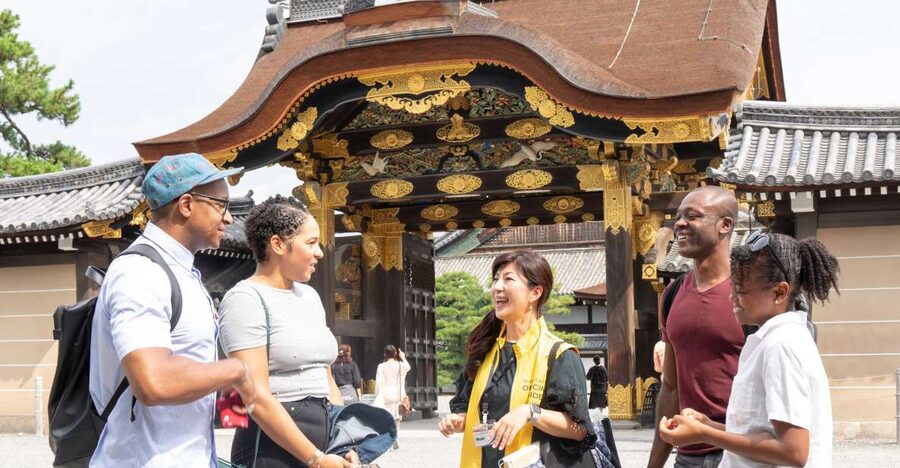
Nijo Castle was built in 1603 as the Kyoto residence of Tokugawa Ieyasu, the first shogun of the Edo Period. That date matters. The castle was not simply a military stronghold. It was a carefully staged seat of power in the imperial capital.
The Tokugawa shoguns ruled Japan from Edo, now Tokyo, but Kyoto remained the home of the emperor and the center of court culture. When the shogun came to Kyoto, Nijo Castle gave him a place to receive officials, conduct business, and make his authority visible.
That helps you read the buildings correctly. Thick walls, gates, and defensive rings are part of the story, but the grandest experience is inside Ninomaru Palace. The rooms were arranged according to rank. The artwork reinforced status. The route through the palace controlled who could approach the shogun and how far they could go.
After the Tokugawa Shogunate ended in 1867, the castle became an imperial palace. It later passed to Kyoto City and opened as a historic site. Today, it is a UNESCO World Heritage site and one of the best surviving examples of Japan’s feudal-era castle architecture.
A guide gives you the thread connecting these changes. Without one, you can admire the woodwork and gardens. With one, you understand why the rooms are arranged as they are and how a reception inside the palace could function as a political performance.
More Guided Castle Tours in Japan
- Kyoto: Nijo Castle, Kiyomizu & Fushimi Inari Guided Tour
★ 4.7 · 700 reviews - Kyoto: Imperial Palace & Nijo Castle Guided Walking Tour
★ 4.7 · 453 reviews - Osaka Castle Guided Tour
★ 4.7 · 249 reviews
Meeting the guide at the East Main Gate
Your meeting point is the Nijo Castle Tour Ticket Booth, at the reception area beside the General Reception. Enter through the East Main Gate, then look to the left after entering. You need to notify the staff that you have arrived.
This is one place where you should not cut things close. The tour begins at a fixed time, and you cannot join after it has started. I would arrive well before the scheduled departure, especially if you need to buy your castle admission at the same time.
The activity is conducted in English only. That is important for anyone comparing this tour with a general entry ticket. The guide is not simply leading you from gate to gate. The main value is the spoken explanation, so you should be comfortable following English at a steady pace.
The group size can be pleasantly small. Some recent departures had only four people, while other groups moved through crowded palace areas. Guides such as Kaoru, Ai, Miki, Ayu, and Don have been praised for clear English, humor, patience, and good crowd control. Your guide may be someone else, but the format gives you a chance to ask questions rather than just follow a flag.
From Higashi Ote-mon to the ornate Karamon Gate
The tour begins with the Higashi Ote-mon Gate, the main eastern entrance. This is a useful place to start because it puts the castle into physical perspective. Nijo Castle is divided into the Honmaru, or main circle of defense, the Ninomaru, or secondary circle, and the gardens around both areas.
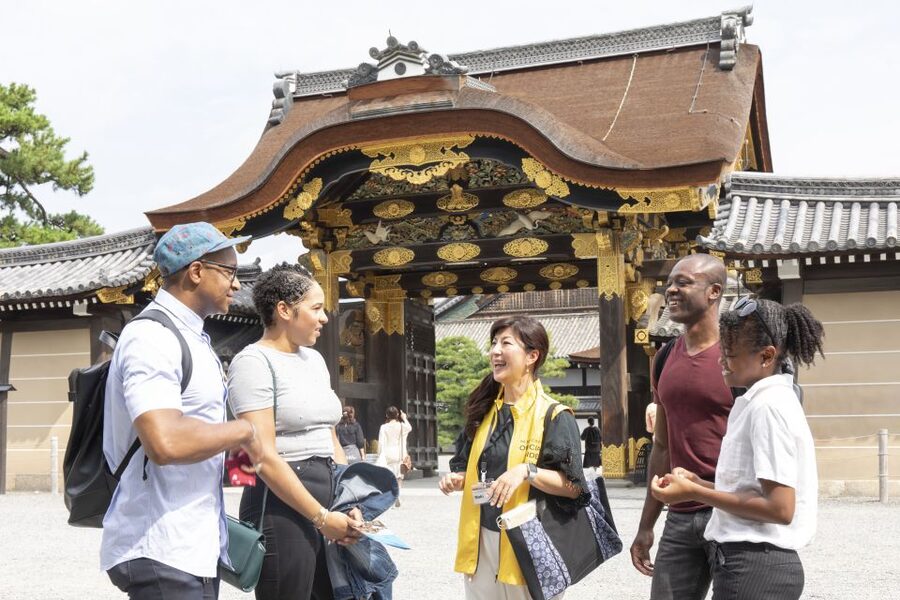
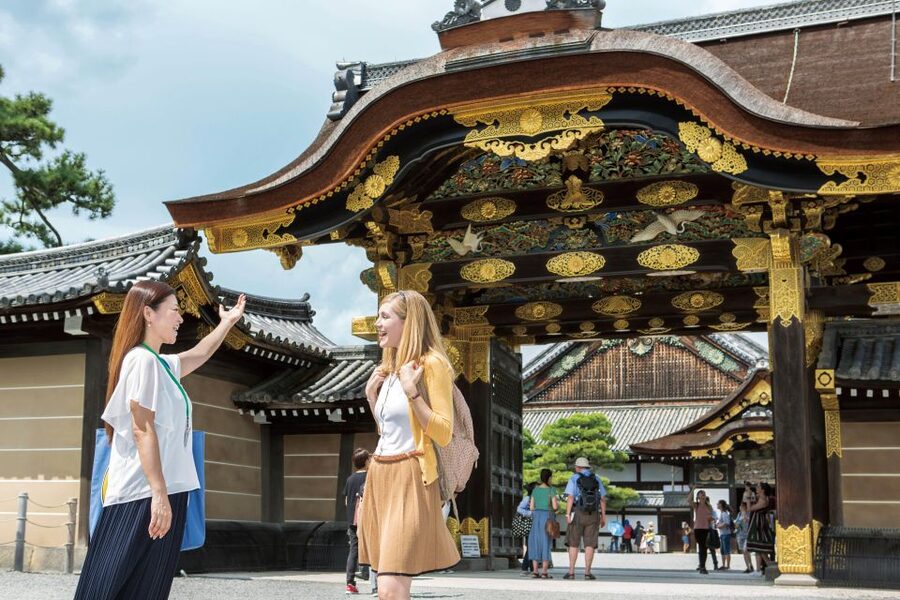
You then head toward the Karamon Gate, the formal entrance to Ninomaru. It is more decorative than the outer gate, and its carved details signal that you are moving from the defensive part of the castle into a ceremonial and political space.
Take a moment to look up and around before rushing through. A guide can point out the gate’s ornament and explain how architecture changed from practical defense to formal display. This is the sort of detail that is easy to overlook when you are focused on getting inside the palace.
The path is not long, but the meaning changes quickly. The castle’s outer defenses tell you to keep danger out. The Karamon Gate tells you that rank and ceremony now matter just as much as protection.
Ninomaru Palace, room by room
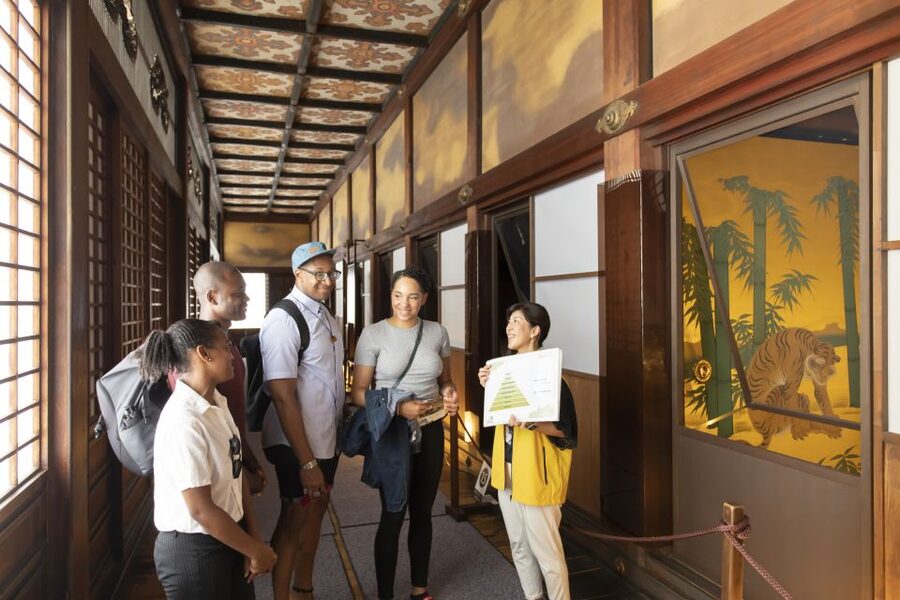
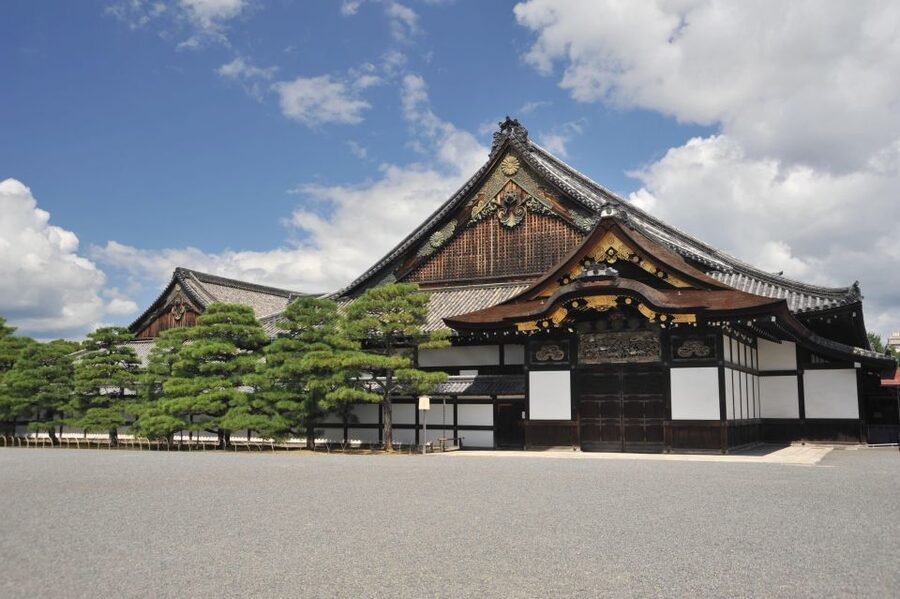
Ninomaru Palace is the centerpiece of the tour. It was the shogun’s residence and office during visits to Kyoto, and the interior survives in remarkably complete form.
You move through a series of rooms with painted panels, woodwork, and carefully controlled access. The guide explains what each room was used for and who was allowed to enter. That makes the palace easier to understand than a simple walk through a succession of beautiful spaces.
The decoration carries messages. Painted animals and plants were not placed at random. A guide may explain why certain subjects appeared in particular rooms and how the paintings supported the status of the person using that room. One guide has been praised for explaining the symbolism of murals and architectural details, including the famous tigers and dragon imagery that can remind modern visitors of Japanese popular culture.
The palace also reveals the daily risks of court life. Stories about meal preparation, fire, and the fear of poisoning help you imagine the practical pressures around the shogun. This is not a palace designed for relaxed domestic life. It was a controlled environment where food, movement, access, and ceremony all mattered.
The floors are another memorable feature. Their gentle squeaking sound earned them the nickname nightingale floors. The sound helped alert occupants to movement in the corridors. It is a small engineering detail, but it makes the palace feel active and watchful rather than frozen in the past.
Photography is not allowed inside Ninomaru Palace. That can disappoint anyone hoping to record the painted panels, but it also encourages you to pay attention while you are there. Keep your phone away, listen closely, and take notes afterward if you want to remember specific details.
The interior can also feel warm. There is no air-conditioning, and there is no water available inside the palace. In Kyoto’s summer heat, this matters. Bring a drink for the outdoor sections and take care not to assume that the historic interior will offer modern comfort.
More Japanese castle tours around Japan:
- Osaka Castle: Museum and Tower Entry Ticket
★ 4.5 · 2,380 reviews - Osaka Castle Walking Tour and Castle Tower Admission
★ 5.0 · 561 reviews - From Osaka: Himeji Castle, Arima Onsen & Mt. Rokko Day Tour
★ 4.6 · 339 reviews - Best of Himeji Castle: 3hr Tour with Licensed Guide
★ 5.0 · 186 reviews
The extra access that justifies the guide
The tour includes access to a part of the castle normally unavailable to the public. Several recent departures also included two additional areas connected with the shogun’s private quarters.
This is the strongest practical argument for booking the guided experience rather than simply buying entry and wandering alone. Independent exploration gives you the gardens and the main public route, but it may not give you the same access or explain why a restricted room matters.
The exact area available can depend on operating conditions, so you should not treat a specific room as guaranteed. Still, the tour is designed to take you beyond the standard visit. That makes the $16 guide fee easier to justify, especially if Nijo Castle is a priority rather than a quick stop between other Kyoto sights.
The access is not a dramatic secret passage. Its value is quieter. You see more of the shogun’s private and administrative world, and the guide explains how those spaces fit into the larger palace plan.
Ninomaru Garden after the indoor route
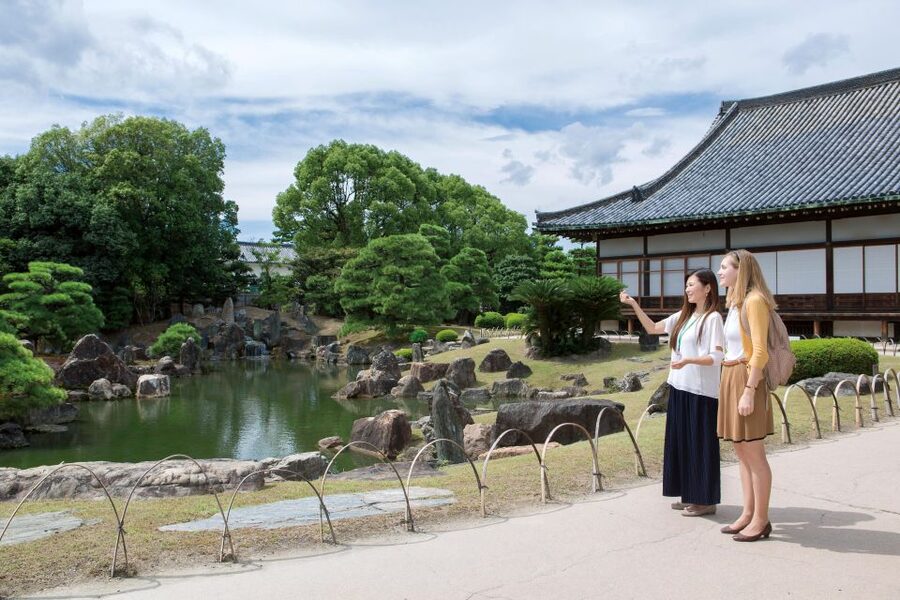
The final listed stop is Ninomaru Garden, which surrounds the palace area. After the dense detail of the interior, the garden gives you room to slow down and reset.
I like this order. You first learn how the castle worked, then step outside and see the setting around it. The gardens are not just decoration added for visitors. They form part of the experience of the palace, giving officials and residents a controlled view of nature within a carefully ordered compound.
The guided portion lasts about 60 minutes. That is enough time for the major gates, Ninomaru Palace, and the garden, but not enough to inspect every path or explore all of Nijo Castle at leisure. The advantage is that you can continue on your own afterward.
One recent participant especially liked having the main highlights explained and then wandering the gardens independently. That is the right way to think about the timing. The guide handles the parts where context matters most. You decide how much extra time to spend outside.
Price, admission, and what you really get
The tour costs $16 per person, but Nijo Castle admission is separate. The entry fee must be paid in cash at the site. One recent price reference lists admission at 1,300 yen, but fees can change, so confirm the current amount before you go.
At first glance, paying for a guide on top of admission may seem unnecessary. Nijo Castle is easy to reach and you can walk through the grounds without assistance. The question is what you want from the visit.
If you mainly want photographs of gates and gardens, independent entry may be enough. If you want to understand the shogun’s political structure, room functions, symbolism, and palace customs, the $16 fee is good value. You are also paying for English explanations and possible access to restricted areas.
The price is especially reasonable for first-time visitors to Japan who may not yet recognize the difference between a shogun’s residence, an imperial palace, and a defensive castle. The guide makes those distinctions plain.
Each paid participant can bring one child aged 0 to 12 free of charge. The child must stay with an adult. Only paid participants receive earphones, so a child who needs an earphone must have an adult ticket. If you bring more than one child, each additional child needs an adult ticket.
Heat, crowds, and the pace of the visit
Kyoto can be very hot in summer, and the palace has no air-conditioning. Guides have adjusted the pace and checked on participants during especially hot days, but you should still arrive prepared with water and suitable clothing.
Rain does not necessarily spoil the visit. The tour includes indoor palace space, gates, and gardens, so a little drizzle can be manageable. The outdoor portions are still exposed, and the stone and wooden surfaces may feel less comfortable in poor weather.
Crowds can build inside Ninomaru Palace. A strong guide helps keep the group together and positions explanations so you can hear. Kaoru, Ai, Miki, and other guides have been praised for speaking clearly and keeping the mood friendly without turning the tour into a lecture.
The pace is generally moderate rather than rushed. Guides stop to explain rooms and answer questions. That is good for anyone who wants context, but if you prefer to move silently and take your time with every painting, the fixed group route may feel limiting.
Who should book this experience
I would choose this tour if you are interested in samurai government, Japanese architecture, palace etiquette, or the transition from shogunal to imperial rule. It is also a strong choice if you are visiting Nijo Castle once and want to make sure the main rooms mean something beyond their appearance.
Families can benefit from the short format and the child policy, though younger children may need reminders to stay close and respect the quiet interior. The one-hour length is easier to manage than a long guided walk.
Solo visitors may also appreciate the structure. A guide can take photos for you, help you keep up in crowded rooms, and give you someone to ask about details that are not obvious.
I would skip the tour if you want complete freedom, need a language other than English, or are visiting mainly for the garden views. You should also check the closure dates before booking. Ninomaru Goten is closed every Tuesday in July, August, December, and January, as well as from December 26 through January 3.
Final verdict: a small fee for a much clearer visit
I recommend this tour for most first-time visitors who can follow English comfortably. Nijo Castle is impressive on its own, but the palace can otherwise become a quiet procession through rooms whose purpose is unclear.
The best parts are the explanation of rank and symbolism, the stories about palace life, and the possibility of entering areas closed to ordinary visitors. The limitations are also clear: admission costs extra, the schedule is fixed, the tour is brief, and summer heat can be tough indoors.
Book it if you want Nijo Castle to explain itself. Skip it only if you already know the history, prefer to explore silently, or care more about the grounds than the palace interior.
FAQ
How long does the Nijo Castle guided tour last?
The guided portion lasts 60 minutes.
What language is the tour conducted in?
The tour is conducted only in English and includes a live English-speaking guide.
Is Nijo Castle admission included in the $16 tour price?
No. Admission to Nijo Castle is separate and must be paid in cash on site.
Where do I meet the guide?
Enter through Nijo Castle’s East Main Gate and go to the reception area next to the General Reception, on the left after entering. The meeting point is the Nijo Castle Tour Ticket Booth area.
What parts of Nijo Castle are included?
The tour includes Higashi Ote-mon Gate, Karamon Gate, Ninomaru Palace, and Ninomaru Garden.
Can the tour enter areas closed to ordinary visitors?
The experience includes access to a part of the castle normally unavailable to the public. Some departures have included two additional areas connected with the shogun’s private quarters.
Can children join for free?
Each paid participant may bring one child aged 0 to 12 free of charge. The child must be accompanied by an adult.
Do children receive an earphone?
Earphones are provided only to paid participants. If a child needs an earphone, an adult ticket should be purchased for that child.
What happens if I arrive after the tour starts?
You cannot participate if you are not present when the tour begins. Arrive well before the scheduled start time.
When is Ninomaru Palace closed?
Ninomaru Goten is closed every Tuesday in July, August, December, and January. It is also closed from December 26 through January 3.
More Castle and Palace Tours in Japan
- Imperial Palace East Garden and Edo Castle Walking Tour in Tokyo
★ 5.0 · 510 reviews - Kyoto: Nijo Castle and Kyoto Imperial Palace Guided Tour
★ 4.6 · 98 reviews - Prague: Prague Castle and Lobkowicz Palace Entry Tickets
★ 4.4 · 5,066 reviews - Koblenz: Rhine Valley Castles and Palaces Boat Tour
★ 4.4 · 1,824 reviews
New castle tours around Japan
- Peace Memorial Park, Hiroshima Castle, & Garden Private Tour★ 4.8 · 7 reviews
- From Osaka: Himeji Castle, Arima Onsen & Mt. Rokko Day Tour★ 4.6 · 339 reviews
- Osaka/kyoto: Himeji Castle, Kobe. Luxury Day Trip with Guide★ 5.0 · 2 reviews
- Osaka: Osaka Castle 3 hours Historical Walking Tour★ 4.6 · 14 reviews
- Osaka: Osaka Castle Guided Tour with Local Guide★ 4.7 · 78 reviews
- Osaka: Osaka Castle – Tsuruhashi – Tennoji (Spanish Guide)★ 4.7 · 10 reviews
- Osaka: Castle, Tea Ceremony, Calligraphy, and Samurai Armor!★ 5.0 · 4 reviews
- Osaka: Early Morning Osaka Castle Guided Tour, Avoid Crowds★ 4.9 · 12 reviews
Castle and Palace Tours, compared.

Prague: Prague Castle and Lobkowicz Palace Entry Tickets
Read our review →
Koblenz: Rhine Valley Castles and Palaces Boat Tour
Read our review →
Neuschwanstein Castle and Linderhof Palace Day Trip from Munich
Read our review →
Prague Castle: Midday Classical Concert at Lobkowicz Palace
Read our review →
Seville: Alcázar Guided Palace Tour with Priority Access
Read our review →
Imperial Palace East Garden and Edo Castle Walking Tour in Tokyo
Read our review →
Kyoto: Imperial Palace & Nijo Castle Guided Walking Tour
Read our review →
Full-Day; Castle, Palace, Cathedral & Viking ships Tour
Read our review →Browse the lists this tour appears in