
Review · THE UK
Oxford Castle and Prison Guided Tour
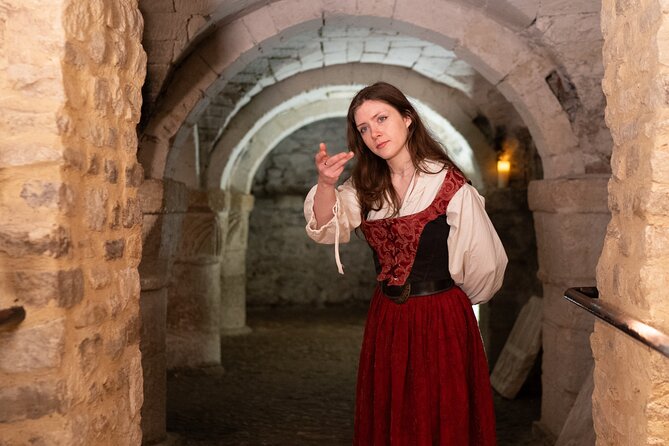
Oxford Castle’s best moments are tucked above and below ground. You climb St George’s Tower for wide views across Oxford, then descend into a 900-year-old crypt where the city’s early story feels close and physical. The guide performs the past in costume, with character and jokes rather than a dry lecture.
I like the short, well-packed route and the freedom to stay afterward for the prison displays. I also like the human touch of guides such as Joe, Emily, Natalia, and Anne, whose storytelling has made this tour especially memorable. The main drawback is its small scale: this is not one of England’s great surviving royal castles, and the guided section can feel brief or rushed near closing time.
Key points to know before you go
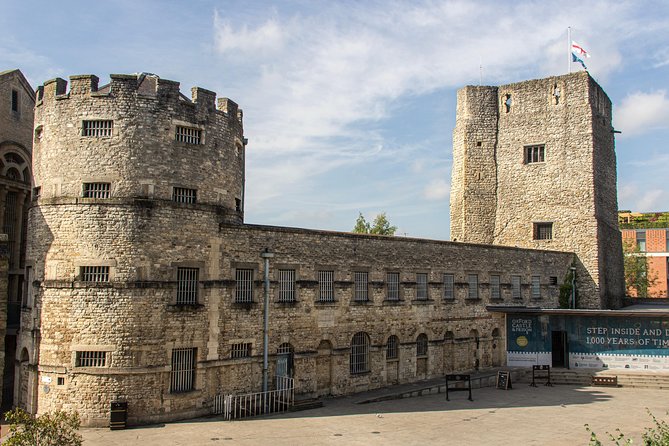
- Climb St George’s Tower: You go up about 30 feet, or 9 metres, for 360-degree views of Oxford’s famous spires.
- See the 900-year-old crypt: This is the only surviving part of St George’s Chapel, linked with the early story of Oxford education.
- Meet the past in costume: Your guide presents a character from the castle’s long history, with stories that make the stonework easier to understand.
- Continue through the prison afterward: The guided hour leads into displays covering the former prison, Debtors’ Tower, D-Wing, and the wider site.
- Plan around the tower steps: Children under five cannot enter St George’s Tower, and anyone unable to climb can wait below.
- Allow extra time after the tour: The castle and prison are best treated as a 60-minute guided visit followed by a self-guided exhibition.
Oxford Castle is more than a castle
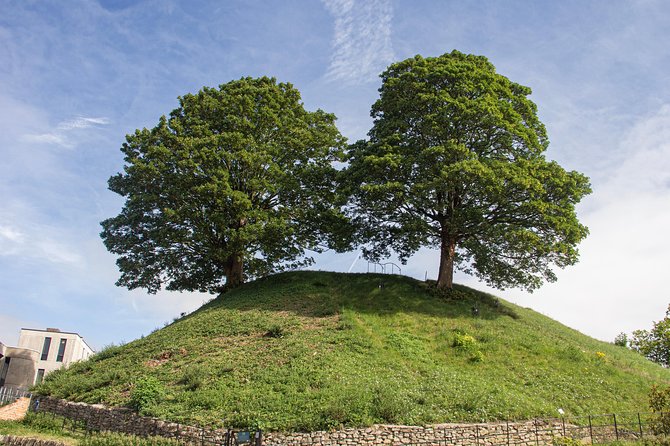
Oxford Castle began as a Norman motte-and-bailey fortress after William the Conqueror took England in 1066. That fact gives the site its first surprise: much of what you see is not a grand medieval palace, but a mound, a tower, a chapel crypt, and later prison buildings layered across one compact place.
I find the site interesting because it tells a less polished story of Oxford. The city is famous for colleges, scholars, and elegant stone courtyards, but this corner also deals with confinement, debt, punishment, and ordinary prison life. You get a useful counterweight to the university image.
The site covers nearly 1,000 years, though the surviving pieces are not all from the same period. The mound belongs to the 11th-century castle. St George’s Tower is Saxon and among Oxford’s oldest buildings. The crypt dates from about 900 years ago, while Debtors’ Tower belongs to the 18th century. The prison displays bring the story forward again.
That mixture is the point. You are not walking through one perfectly preserved medieval building. You are moving through changing uses of the same ground.
More Guided Castle Tours in the UK
- Edinburgh Castle: Guided Walking Tour with Entry Ticket
★ 4.7 · 11,699 reviews - Edinburgh Castle: Guided Walking Tour with Entry Ticket
★ 5.0 · 5,540 reviews - Stonehenge, Windsor Castle and Bath Full Day Guided Tour
★ 4.5 · 5,346 reviews
A costumed guide brings the stonework to life
The guided tour lasts about an hour and runs every 20 minutes from 10am to 4:20pm. You choose a time when booking, then meet at Oxford Castle Quarter at 45 Oxford Castle, Oxford OX1 1BY.
The guide appears in costume and speaks from the viewpoint of a historical character. This format will suit you if you prefer stories and performance to long panels of text. A strong guide can make a dark stairway or prison cell feel immediate, and the best-known names associated with recent tours include Joe, Emily, Natalia, Anne, Freya, and other members of the castle team.
Joe has been especially effective at mixing facts with humor. Natalia’s storytelling has helped connect the castle, prison, and later archaeological discoveries. Emily has presented the castle’s stories clearly, while Anne has been praised for an engaging approach. You may not get one particular guide, of course, but the format gives the tour energy.
There is a trade-off. A character guide may simplify complicated history to keep the pace moving. If you want a scholarly account of every building phase, you will need to read the displays after the guided portion. For most people, that is a fair bargain. The guide gets you interested, then the exhibition lets you follow up.
The tour has also worked well for small groups. The stated maximum is four people, which can make the visit feel personal, though you should confirm the current operating arrangement when booking because group rules can change.
St George’s Tower earns its place
The first major physical challenge is the climb up St George’s Tower. You ascend around 30 feet, or 9 metres, by stairs. At the top, you get 360-degree views over Oxford, including the city’s familiar spires.
This is the clearest reason to bring a camera. Oxford can seem like a maze of colleges and lanes from street level. From the tower, the city’s shape makes more sense, and the view gives you a better sense of how the castle fits into the centre.
The tower is not simply a lookout added for modern visitors. It is one of the oldest buildings in Oxford, so the climb has real historical weight. You are standing inside a surviving piece of early Oxford rather than on a newly built viewing platform.
The stairs also shape the experience. Children under five are not permitted into St George’s Tower for health and safety reasons. If you cannot manage the climb, you can wait at the bottom with a guardian and watch a Story of Oxford Castle video. You can then rejoin the group when it returns and continue with the rest of the tour.
The attraction is described as wheelchair accessible, but the tower section still depends on stairs. If step-free access matters to you, contact the site before arrival and ask exactly which parts of the route you can use. This is one of those places where accessible does not mean every historic feature has a lift.
Underground in the crypt
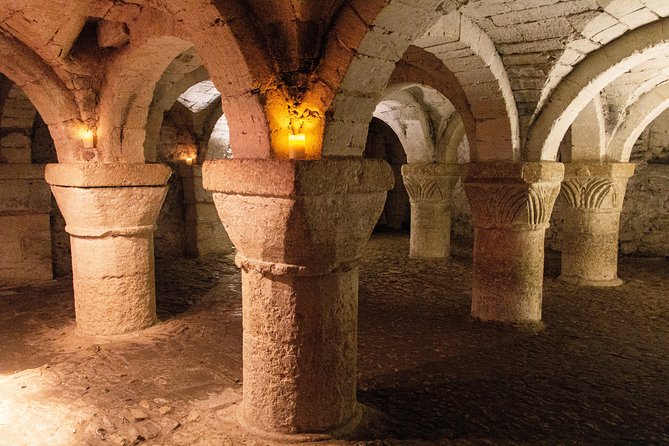
After the tower, the route heads down into the 900-year-old crypt. This is the only surviving part of St George’s Chapel, and it is the most atmospheric stop on the tour.
The chapel has a strong connection to Oxford’s intellectual story. Tradition links it with the beginning of the education for which Oxford is famous, and Geoffrey of Monmouth is said to have written the Legends of King Arthur here. Those links add drama, but the room itself does most of the work. Old masonry, low light, and the sense of being below the modern city make the crypt memorable.
I like this part because it brings together the castle’s two sides. Oxford’s academic identity is not separate from its medieval religious buildings. The crypt helps you picture a much older city, before the familiar university architecture took shape.
The atmosphere can feel eerie, and stories of ghosts are part of the site’s appeal. You do not need to be interested in hauntings to enjoy the crypt. Think of the ghost stories as a way the guide draws your attention to the room’s age and isolation.
There is also a practical limit. You will not spend an entire afternoon underground. The guided route keeps moving, so listen closely while you are there. If the crypt is the part you most want to study, ask whether you can take photographs and use the later free time to revisit any permitted areas.
Same stronghold, another way through the gate:
- Stonehenge, Windsor Castle, and Bath from London
★ 4.5 · 18,662 reviews - Edinburgh: Edinburgh Castle Guided History Tour with Tickets
★ 4.8 · 9,933 reviews - Stonehenge, Windsor Castle and Bath with Pub Lunch in Lacock
★ 4.5 · 7,402 reviews - Windsor Castle Admission Ticket
★ 4.7 · 7,032 reviews
Debtors’ Tower and D-Wing show the prison’s harder side
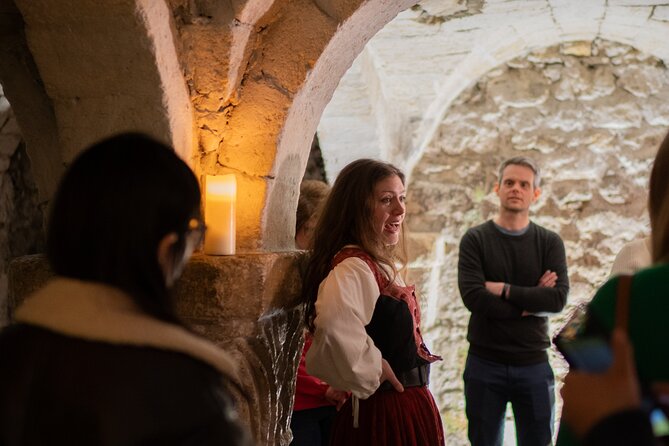
The visit then shifts from medieval fortification to punishment and imprisonment. You see the 18th-century Debtors’ Tower and the prison’s D-Wing, austere spaces that help explain how the site changed over time.
This is where the tour becomes less about knights and more about daily life. A debt could once put a person behind bars, and the prison’s story reflects older ideas about punishment, poverty, and social order. The displays continue that theme after the guided hour, with information about how prisoners lived and how the institution operated.
The prison section may be more interesting to adults than the castle mound because it deals with systems and people rather than a single dramatic event. You begin to understand that the building was not simply a picturesque ruin. It was a working prison with routines, rules, and human consequences.
The site’s later exhibition also covers archaeological finds and the castle’s change into a prison. It is well worth allowing time for the panels and displays instead of leaving as soon as the guide finishes. One hour is enough for the main tour, but it is not enough if you want to read everything carefully.
A fair criticism is that the prison presentation may feel basic if you have already visited larger prison museums. The buildings are compact, and some people may find the guided hour less eventful than expected. The value improves when you treat the displays as part of the visit rather than an optional extra.
The mound gives you the castle in one look

The 11th-century motte is one of the simplest features on site, but it explains the castle better than a long description. The mound was the raised earthwork of the Norman motte-and-bailey design, a practical form of fortress built quickly after conquest.
From here, you can connect the main pieces: the mound, the tower, the chapel remains, and the later prison. The view is not grand in the way of a complete stone castle, but it gives you a clear sense of the original layout.
This is also a good place to adjust your expectations. Oxford Castle is not a vast fortress with intact walls and a series of grand halls. It is an urban historic site where fragments and later buildings share the same footprint. If you enjoy archaeology and changing layers of use, that is a strength. If you want a dramatic medieval castle interior, you may find the visit modest.
Stay after the guided hour

The ticket includes the guided tour and access to the wider castle and prison site. After the group portion, you are inducted into the prison and can explore at your own pace.
I strongly recommend using this extra time. The displays explain the prison’s history in more detail, including the daily experience of confinement. You can also take additional photographs and revisit areas that passed quickly during the tour.
The self-guided portion is where the experience gains depth. The guide gives you a framework, but the exhibition supplies the dates, objects, and background. One hour may satisfy someone with a tight Oxford schedule, while history enthusiasts should plan longer.
There is also a café and gift shop on the wider site. The café has been noted for its chai latte, a useful detail if you want a short break after the stairs and underground rooms. Souvenir photographs are available to buy, but they are not included.
Timing matters more than the clock suggests
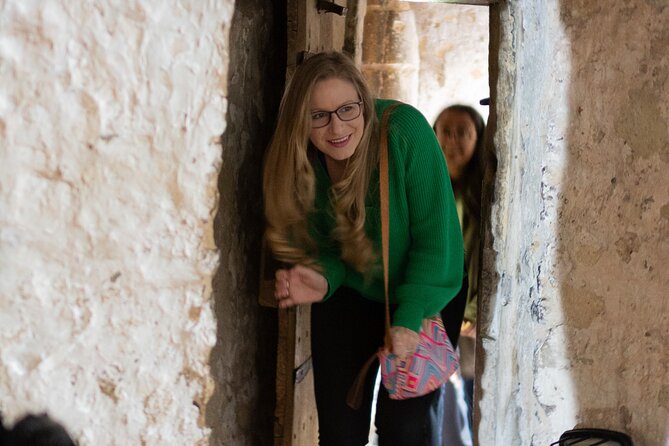
A one-hour tour sounds easy to fit into an Oxford day, and usually it is. Tours run every 20 minutes, giving you several time choices between 10am and 4:20pm. Still, do not choose the last available slot without checking the current closing arrangements.
A late visit can feel rushed if the prison is about to close. Staff may begin shutting areas as the group moves through, leaving less time for quiet looking and photography. An earlier slot gives you more freedom to explore afterward and reduces pressure.
The meeting point is Oxford Castle Quarter, at 45 Oxford Castle. The site is near public transportation, so it works well as part of a central Oxford walking day. Bring your paper or electronic voucher, and arrive with enough time to find the entrance rather than treating the 20-minute schedule as a reason to cut things close.
The cancellation policy is forgiving if your plans change: cancel at least 24 hours before the start time for a full refund. Changes or cancellations within 24 hours are not accepted for a refund.
Prams and pushchairs do not fit through the historic doors. They must be left in the reception area, where staff look after them. Dogs are not allowed inside, on the mound, in the café, or in the gift shop, except guide dogs.
Is the tour good value?
No ticket price is provided here, so I cannot judge the value against a specific amount. I can judge what you receive. The admission covers a costumed guided route, the tower climb, the crypt, the prison areas, and time to continue independently. That is a solid package if you want one focused historical stop in central Oxford.
The value is strongest for first-time visitors who want orientation without spending half a day in a museum. The guide supplies context quickly, and the tower gives you a view you cannot get from the street.
The value is less certain if you have already seen many small English castles or want a long, detailed tour. The castle itself is compact, and the guided portion lasts only about an hour. You are paying for the combination of performance, access, and several different historical layers, not for a huge number of rooms.
The 4.8 rating from 1,402 reviews and recommendation rate of 96 percent suggest that the experience usually delivers what it promises. Still, the praise is mainly directed at the guides and the unusual mix of stories, not at the scale of the castle. That distinction matters when you decide.
Who should book Oxford Castle and Prison?
I would choose this tour for families with older children, couples who want something beyond college architecture, and anyone interested in prisons, medieval Oxford, or local legends. The costumed format should hold a child’s attention better than a standard audio guide, though young children cannot use the tower if they are under five.
It also suits you if you have only a few hours in Oxford. The fixed one-hour route is easy to place between other sights, and the self-guided prison visit lets you stop when your schedule demands.
I would be more cautious if stairs are difficult for you, if you need every room to be step-free, or if you are looking for a large castle with intact royal apartments. Ask about access before booking, particularly because the tower requires a climb even though the attraction is wheelchair accessible overall.
FAQ
How long does the Oxford Castle and Prison tour last?
The guided portion lasts approximately one hour. Afterward, you can explore the prison and wider site at your own leisure.
When do the tours run?
Tours run every 20 minutes between 10am and 4:20pm. You select your tour time when booking.
Where does the tour start?
The tour starts at Oxford Castle Quarter, 45 Oxford Castle, Oxford OX1 1BY, United Kingdom. It ends back at the meeting point.
Is the tour wheelchair accessible?
The attraction is wheelchair accessible, but St George’s Tower requires a climb of about 30 feet, or 9 metres, by stairs. Anyone unable to climb can wait at the bottom with a guardian, watch the Story of Oxford Castle video, and rejoin the group afterward.
Can children under five climb St George’s Tower?
No. Children under five are not permitted to enter St George’s Tower because of health and safety regulations.
Can I cancel for a full refund?
Yes, if you cancel at least 24 hours before the experience start time. Cancellations or changes made less than 24 hours before the start time are not refunded or accepted.
Should you book it?
Book it if you want a lively introduction to an overlooked part of Oxford. The tower view and crypt are the strongest reasons to go, while the prison exhibition adds useful detail after the guide leaves you to explore.
Skip it if you want a grand, fully preserved fortress or a long specialist lecture. Oxford Castle is a compact site with uneven historical layers, but that is also what makes it unusual. Give it an early or mid-day time slot, stay for the prison displays, and you will get far more from the visit than the one-hour headline suggests.
New castle tours around the UK
- Poole: Old Harry Rocks and Corfé Castle Guided E-bike Tour★ 5.0 · 11 reviews
- Perth: The Black Watch Castle and Museum Entry Ticket★ 4.8 · 5 reviews
- Oxford Castle and Prison: Guided Tour★ 4.7 · 251 reviews
- North Highland Tour: Dunrobin Castle, Dornoch, & Much More★ 5.0 · 3 reviews
- NORTH HIGHLAND TOUR, DUNROBIN CASTLE & MORE FROM INVERGORDON★ 5.0 · 7 reviews
- Newcastle: True Crime Guided Tour★ 4.6 · 40 reviews
- Newcastle: Walking Custom Tour with a Local Guide★ 4.7 · 9 reviews
- Newcastle Unveiled Tour: History, Bridges, and Secrets in Spanish★ 5.0 · 2 reviews
Guided Castle Tours, compared.

Edinburgh Castle: Guided Walking Tour with Entry Ticket
Read our review →
Seville: Cathedral, Giralda & Alcazar Entry With Guided Tour
Read our review →
Stonehenge, Windsor Castle and Bath Full Day Guided Tour
Read our review →
Edinburgh Castle Guided Walking Tour in English
Read our review →
Seville: Alcázar and Cathedral Entry Ticket and Guided Tour
Read our review →
Alcázar of Seville Skip-the-Line Tickets and Guided Tour
Read our review →
Dublin Book of Kells, Castle and Molly Malone Statue Guided Tour
Read our review →
Browse the lists this tour appears in