
Review · KRAKOW
Krakow’s Essential Tour of the Old Town and Wawel Castle
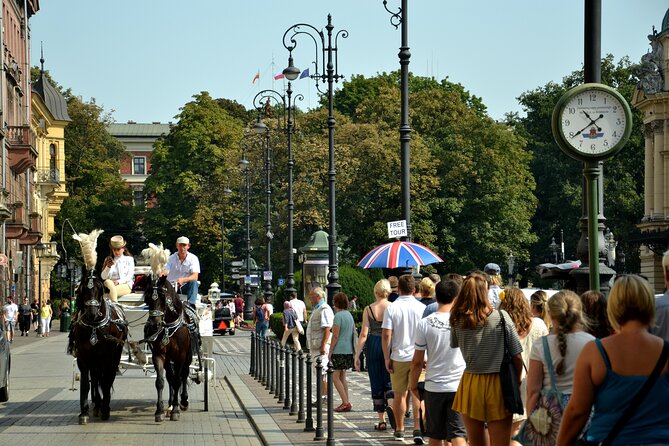
Krakow’s best introduction may be a walk that starts with a trumpet call and ends at a royal castle. This tour links St. Mary’s Basilica, the Main Market Square, and Wawel Hill in one steady route, with stories that help the stones make sense.
I like the clear route and the guide’s role in handling the turns. I also like the mix of big sights and human stories, from the hourly trumpeter to World War II and Pope John Paul II. The catch is that the advertised $3 is only a booking fee, and you should plan to give a donation at the end. Museum entrance fees are extra, too.
Key points to know before you book
- The route connects Krakow’s essential sights: You walk from the Main Market Square to Wawel Castle, ending about 10 minutes from the square.
- Stories give the monuments meaning: Expect legends, royal history, World War II, and Poland under communism.
- The $3 price is not the full cost: It reserves your place, but the tour operates on donations.
- Guides vary by departure: Bart, Slav or Slavek, Fran, and Chris are among the guides praised for humor and clear explanations.
- You will cover plenty of ground: The walk lasts about two and a half hours, with many short stops.
- Paid entries are separate: Admission to the basilica, museums, cathedral, and castle areas is not included.
A smart first walk through Krakow
This is the kind of tour I would choose early in a Krakow visit. It gives you a map in your head before you start exploring on your own, and it joins the city’s main sights in a sensible order.
You begin at Rynek Główny 4, on or close to Krakow’s enormous Main Market Square. From there, the route moves through the Old Town and heads south to Wawel Castle. It is a walking tour, not a museum tour with long interior visits, so you get a broad first look rather than a detailed examination of every collection.
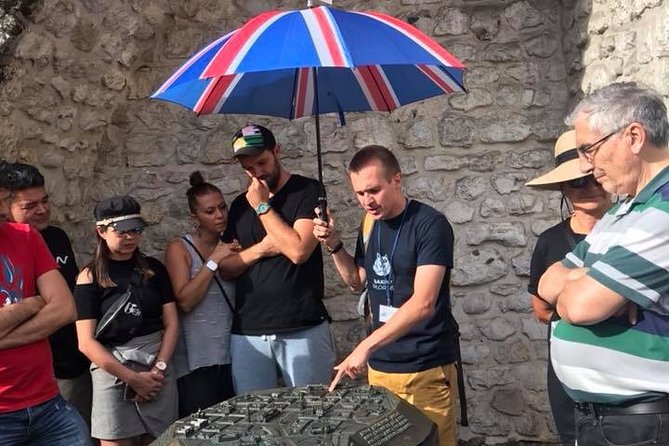
The guide matters here. A strong storyteller can turn a tower, university courtyard, or palace window into a reason to pause. Past departures have featured Bart, Slav or Slavek, Fran, and Chris, though your guide may be different. The most praised qualities are easy to spot: clear speech, humor, patience, and a real interest in Polish history and archaeology.
The group can reach up to 30 people. That is small enough to remain manageable, but it is not a private walk in the usual sense. The tour is described as private in the headline, yet the stated maximum makes it wise to expect a shared group experience.
More Medieval Old Town Tours in Poland
- Old Town Krakow & Wawel Castle Walking Tour
★ 5.0 · 1,508 reviews - Kraków: Old Town & Wawel Castle Walking Tour in English
★ 4.8 · 532 reviews - Historic Krakow : Old Town & Wawel Castle Walking tour
★ 5.0 · 318 reviews
St. Mary’s Basilica and the trumpet call
The first stop is St. Mary’s Basilica, the red-brick church facing the Main Market Square. The guide explains why its two towers are not the same height and identifies the musician who plays the hourly tune from the higher tower.
That trumpet signal, called the hejnał, is one of Krakow’s familiar sounds. The point of the stop is not simply to take a photograph of the church. You learn why the tune is interrupted and how the tower has become part of daily life in the square.
The stop lasts about 15 minutes. Admission is not included, so the focus is likely on the exterior and the story rather than a paid interior visit. If you want to see the basilica inside, treat that as a separate plan and check its opening arrangements on the day.
Rynek Główny, Krakow’s huge medieval stage
You then spend about 30 minutes around Krakow’s Main Market Square. This is the tour’s largest single stop, and rightly so. The square brings together the Cloth Hall, St. Mary’s Basilica, the Town Hall Tower, restaurants, cafés, and a steady flow of people.
The guide helps you read the square as more than a pretty open space. You hear about its scale, its role in trade, and the buildings that frame it. This is useful early in your visit because you can return later and recognize what you saw instead of wandering through a collection of impressive facades.
Do not expect a quiet square. It is the center of Krakow’s Old Town, and the group may need to stay close to the guide. The short pauses are practical. You get a story, a look, and a chance to take photographs without spending too long in one place.
The theatre, the Barbican, and the old city gate
The route continues to the Slowacki Theatre for about 10 minutes. Here the guide explains why the theatre was not built in Poland and why the city once treated it as more urgent than clean water.
That odd comparison is exactly the sort of detail that makes a walking tour useful. You learn how civic pride, culture, and city planning competed for attention. It also breaks up the usual parade of royal and religious monuments.
Next comes the Barbican, one of the most striking remnants of Krakow’s medieval defenses. The guide presents it as a masterpiece of fifteenth-century military design and explains how it protected access to the city.
You also pass through a roughly 500-year-old main entrance to medieval Krakow. The itinerary does not give this stop a separate time estimate, so expect it to be part of the route rather than a long visit. These defensive structures are best understood in relation to the streets around them, and the guide supplies that connection.
More Medieval Old Town Tours in Krakow:
- Krakow: Old Town and Wawel Castle Guided Golf Cart Tour
★ 4.4 · 13 reviews - Segway Tour Krakow: Grand Tour (Old Town + Wawel Castle)
★ 5.0 · 10 reviews - Krakow: Wawel Castle & Cathedral, Old Town & City Basilica
★ 5.0 · 5 reviews - Bucharest: Dracula’s Castle, Peles Castle, & Brasov Old Town
★ 4.5 · 17,858 reviews
The Cloth Hall and what lies below
The Sukiennice, or Cloth Hall, sits at the heart of the square. In the Middle Ages, merchants sold goods here. Today, it remains one of Krakow’s most recognizable buildings, with stalls and attractions inside.
The guide explains the building’s secrets and what lies underneath it. That reference points to the underground museum beneath the square, though entrance is not included in the tour price. If you decide to visit, plan for a separate ticket and a longer visit than the 10-minute walking-tour stop allows.
I like this part because it shows how Krakow works on several levels. The modern square is busy and open, but below it are traces of earlier streets and market life. You get the idea without having to commit to a museum visit during the group walk.
Town Hall Tower and the vanished building
Only part of Krakow’s old Town Hall remains, and the Town Hall Tower is the visible piece. The guide explains why the larger building disappeared and what took place there in earlier times.
This is a short, 10-minute stop. That is enough for context, a look at the tower, and a few photographs. It is not enough for an in-depth architectural study, but that is not the aim of this tour. You are building a framework for later visits.
The tower also helps you understand the square’s former civic function. The market was not just a place to shop. It was also where the city conducted public business and displayed its authority.
Jagiellonian University and Collegium Novum
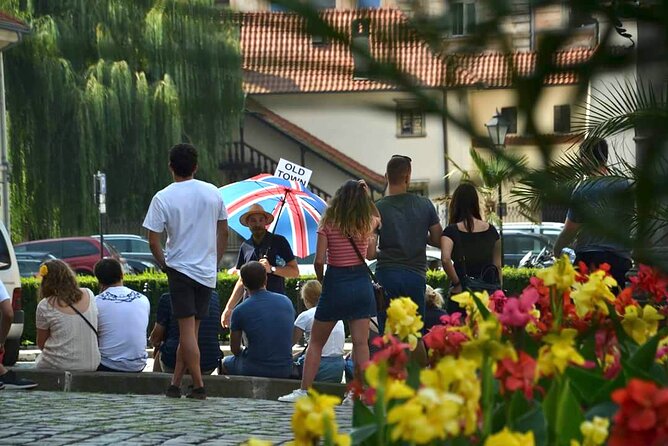
The walk then turns toward the Jagiellonian University, one of the oldest universities in the world and Poland’s most prestigious. At Collegium Iuridicum, you are taken inside, according to the tour plan, and hear about the institution’s place in Polish life.
The stop lasts about 10 minutes, so do not expect a full campus tour. Still, it is a welcome change from churches, walls, and royal buildings. A university gives you another way to see Krakow, as a place shaped by students, scholars, law, and public debate.
At Collegium Novum, the guide discusses what happened to professors in Krakow at the beginning of World War II and asks whether the city was destroyed. This is one of the tour’s strongest historical turns. The subject is serious, but it helps explain the city’s twentieth-century story without separating the war from the streets you are walking through.
The commentary is particularly valuable here because Krakow’s preserved center can give a misleading impression. Beautiful buildings do not mean the city escaped the upheavals that affected Poland. The guide adds the missing human context.
Bishop’s Palace and the famous window
At Bishop’s Palace, you stop for about 15 minutes and see the window associated with Pope John Paul II. The guide also discusses Poland during communism, a period that can feel distant if you only look at medieval churches and royal residences.
This is one of the most personal stops on the route. The window is not just an architectural feature. It recalls the connection between Karol Wojtyła, Krakow, and the people who gathered to see or hear him.
The stop is free, which makes it an easy addition to the route. The guide’s explanation is the main reason to pause. One past departure was especially praised for choosing this site as a strong, well-organized point in the walk.
Wawel Cathedral and the royal hill
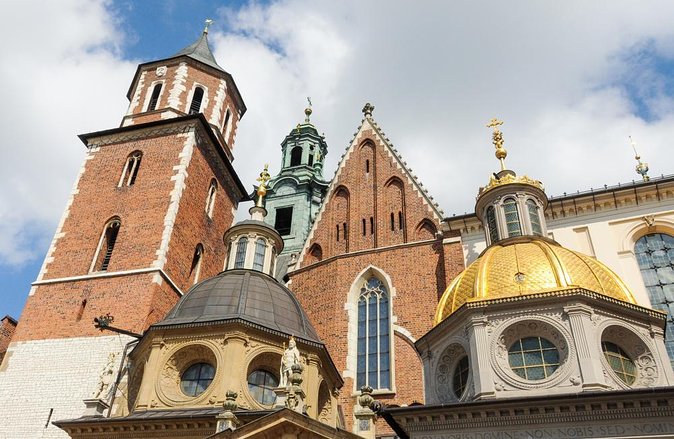
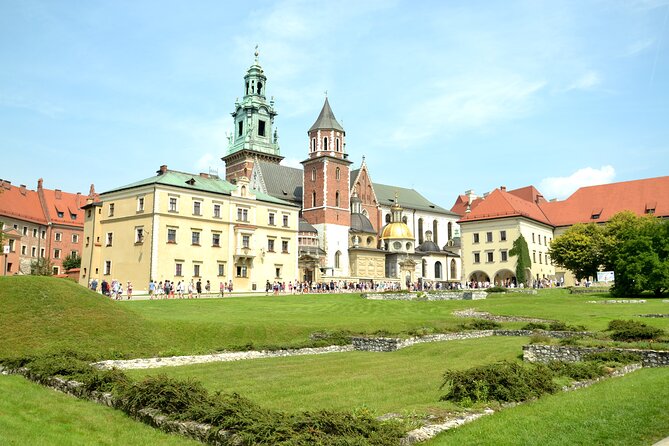
The final section takes you uphill toward Wawel. You visit Wawel Cathedral, described as Poland’s national pantheon and the place where Polish rulers were crowned and buried.
The cathedral stop lasts about 15 minutes. Admission is not included, so confirm what you can enter with the group and what requires a separate ticket. The tour gives you the setting and the importance of the cathedral, while a paid visit would let you spend more time with the interiors and burial sites.
Afterward, the guide explains where Polish rulers lived and why one part of the castle differs from the rest. Wawel is not a single-period palace. Its buildings reflect changes in royal taste, politics, and the long use of the hill.
The tour ends at Wawel Royal Castle, on Wawel 5. From the Main Market Square, the castle is about a 10-minute walk, so the finish is convenient if you want to return to the center. It also puts you in a good position for a separate castle visit, though castle admission is not part of this experience.
What the two and a half hours feel like
The planned duration is about two hours and 30 minutes. The route contains many stops, but most are short, usually 10 to 15 minutes, with the Main Market Square receiving about half an hour.
You will walk a lot, but the frequent pauses make the pace manageable. One family with teenagers found the steady pace and mix of stops worked well, and that matches my reading of the schedule. You are not walking continuously for two and a half hours without a break.
Wear comfortable shoes. The tour moves through streets, squares, and the approach to Wawel, and you will spend much of the time standing while the guide talks. The maximum group size of 30 means you should stay close, especially in the square.
Most people can take part, and service animals are allowed. The route is near public transportation, which helps if you are arriving from elsewhere in Krakow. Food and drinks are not included, so handle those before or after the walk.
The real price: $3 plus a donation
The advertised $3 price is unusually low because it is only a booking fee. The actual tour runs on donations, and you are asked to pay what you want at the end. You can donate in any currency, according to the tour information.
That model can offer excellent value, especially if you want a guided introduction without paying for a costly private tour. It also means you should budget for a fair donation rather than treating the $3 as the complete price. Your guide is providing two and a half hours of route planning, explanation, and local interpretation.
The value depends on what you want. If you need detailed access to Wawel Castle, Wawel Cathedral, or the underground museum, this tour will not replace those paid visits. If you want a strong orientation with the option to choose museums later, the low booking fee and flexible donation make good sense.
Guide style and what to expect
The strongest praise goes to the guides’ delivery. Bart is described as clear, funny, and deeply interested in history and archaeology. Slav or Slavek is praised for being engaging, informed, and good fun. Fran is noted for patience and attention to the group, while Chris, also called Krzysztof, is praised for clear speech and amusing stories.
Names and guiding styles can change by departure, so do not book solely for one person. The common thread is an emphasis on stories rather than a dry list of dates. You should expect information about social history, war, religion, architecture, and Polish political life.
There has been at least one serious service failure in the supplied feedback, with a guide not arriving and no quick response afterward. Another departure had confusion over whether the start time was 10:00 or 10:30, leading to a 40-minute wait. These appear to be exceptions against a very high overall rating, but they are worth keeping in mind. Check your confirmation carefully and arrive at the stated meeting point with time to spare.
Who should book this walk?
I would recommend it to a first-time visitor who wants to get oriented quickly. It is also a good fit for families and mixed-age groups because the route changes subject often, and the guide adds humor to serious history.
History fans will appreciate the range, from medieval defenses to World War II and communism. You will not get a specialist lecture on any one building, but you will see how the parts connect.
This is less suitable if you dislike group walks, need a fully private experience, or want extensive interior access. The $3 fee does not include museum admissions, food, or drinks, and the route is built around exterior stops and short explanations.
Should you book Krakow’s Essential Tour?
Book it if you want a lively first look at Krakow, a sensible route, and stories that go beyond postcard views. The walk covers the city’s essential core, ends at Wawel, and gives you useful ideas for what to revisit on your own.
I would set aside money for the donation, wear good shoes, and treat paid museum visits as separate plans. If you can accept the shared group format and the occasional risk of timing or guide confusion, this is a practical, low-cost way to begin your Krakow stay.
FAQ
How long does the tour last?
The tour lasts approximately two hours and 30 minutes.
Where does the tour start?
It starts at Rynek Główny 4 in Krakow, Poland.
Where does the tour end?
It ends at Wawel Royal Castle, Wawel 5. The castle is about 10 minutes from the Main Market Square.
Is the $3 price the full tour cost?
No. The $3 price is a booking fee. The tour operates on donations, and you can pay what you want at the end.
Are museum entrance fees included?
No. Museum, cathedral, basilica, and other entrance fees are not included.
What sights does the tour visit?
The route includes St. Mary’s Basilica, the Main Market Square, Slowacki Theatre, the Barbican, the Cloth Hall, Town Hall Tower, Jagiellonian University, Collegium Novum, Bishop’s Palace, Wawel Cathedral, and Wawel Castle.
Can service animals join the tour?
Yes. Service animals are allowed.
New castle tours around Krakow
- Krakow: Wawel Guided Tour – Cathedral and/or Castle★ 4.5 · 249 reviews
- Krakow: Wawel Castle, Cathedral, Salt Mine, and Lunch★ 5.0 · 2 reviews
- Krakow: Wawel Castle Guided Tour★ 4.7 · 14 reviews
- Krakow: Wawel Castle, Cathedral, Salt Mine, and Lunch★ 4.9 · 4 reviews
- Krakow: Wawel Castle, Cathedral, Salt Mine, and Lunch★ 4.9 · 6 reviews
- Krakow: Wawel Castle & Cathedral, Old Town & City Basilica★ 5.0 · 5 reviews
- Krakow: Wawel Castle, Cathedral, Rynek Underground & Lunch★ 4.4 · 12 reviews
- Krakow: Wawel Castle & Cathedral Guided Tour★ 4.5 · 20 reviews
Medieval Old Town Tours, compared.
Bucharest: Dracula’s Castle, Peles Castle, & Brasov Old Town
Read our review →
Prague: 3-Hour Walking Tour of Old Town & Prague Castle
Read our review →
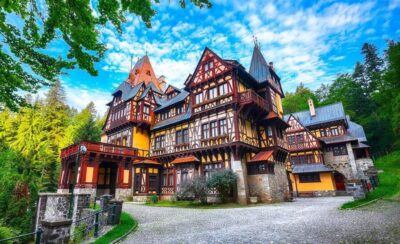
Bucharest: Peles Castle, Bran Castle, & Brasov Old Town Tour
Read our review →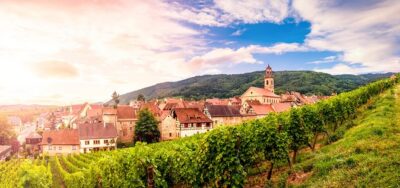
Colmar, Medieval Village & Castle Small Group from Strasbourg
Read our review →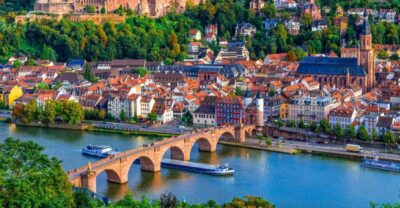
From Frankfurt: Heidelberg, Castle and Old City Guided Tour
Read our review →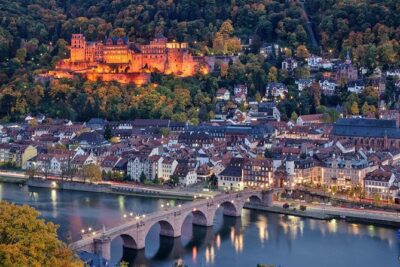
Heidelberg Castle and Old Town Tour from Frankfurt
Read our review →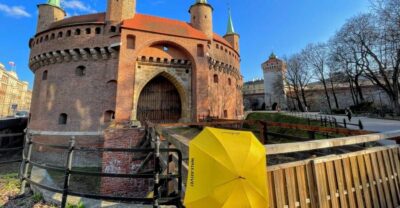
Kraków: Old Town & Wawel Castle Walking Tour in English
Read our review →Browse the lists this tour appears in