
Review · VIETNAM
Hue: Hue Walking Tour to Imperial Citadel with Tour Guide
Hue’s Imperial Citadel is too large and layered for a quick look at pretty gates. This 2.5-hour walking tour gives you the people and stories behind the stone, especially the 13 Nguyen emperors, royal ceremonies, palace life, and the private world of the harem.
I like two things here. First, you get an English-speaking guide who can explain details an audio guide cannot and answer questions as you go. Second, the route covers the major royal buildings, gardens, theater, tomb-like memorial urns, and restored palaces without asking you to spend a full day inside the complex.
The main thing to watch is the price structure. The tour costs $15 per person, but entrance tickets are not included, and the walk takes place outdoors. Hue can be hot, so bring sun protection and comfortable shoes.
Key points before you book
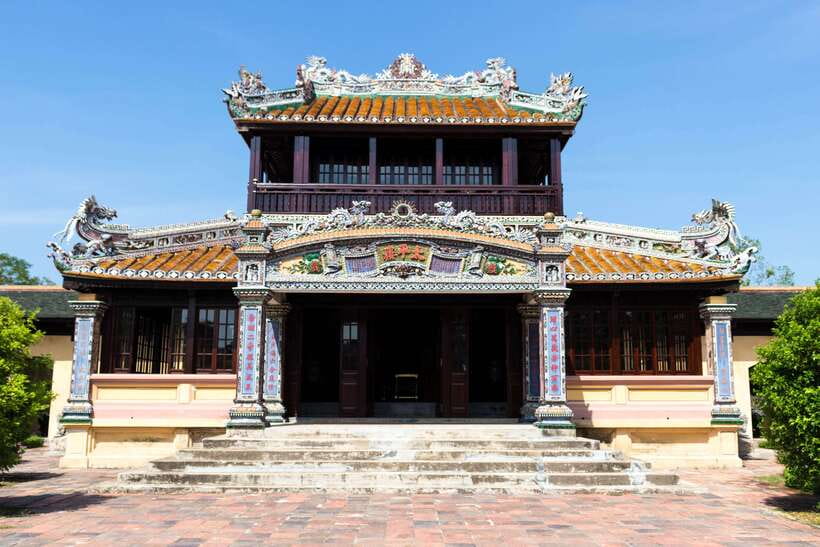
- The route covers the imperial core: You visit Ngo Mon Gate, Thai Hoa Palace, the Forbidden Purple City area, royal temples, gardens, and former residences.
- The stories are the main value: Your guide explains the 13 Nguyen kings, royal ceremonies, family life, and the secrets of the harem.
- A private group is available: This suits you if you want to ask many questions or move at your own pace.
- Guides receive strong praise for personal service: Austin, Anna, Tam, Nhi Tran, Duyen, Ryan, and Ha are named in customer feedback for clear explanations and friendly help.
- The tour lasts 150 minutes: You can choose a morning or afternoon departure.
- Bring money for admission: The guide helps with ticket purchase, but the entry fee itself is extra.
Why a guide helps inside Hue’s Imperial Citadel

Hue’s Imperial Citadel can look easy to understand at first. You see a gate, a courtyard, a palace, and a line of old walls. But the meaning changes from building to building, and a guide helps you see how the complex worked as a royal city rather than as a collection of monuments.
The Nguyen Dynasty ruled Vietnam from 1802 to 1945. The citadel was the political and ceremonial center of that period, with spaces for the emperor, court officials, royal women, religious rites, and formal celebrations.
I like the way this tour connects those functions. Thai Hoa Palace was not simply an impressive hall. It was the place where the 13 Nguyen kings were crowned. Dien Tho Palace was tied to the Queen Mother. The Forbidden Purple City was reserved for the emperor and royal family, with ordinary people and off-duty officials kept out.
That kind of explanation is useful because the architecture alone does not always tell you who could enter, what ceremonies took place, or why one building mattered more than another. Guides such as Austin, Tam, Anna, and Nhi Tran are specifically praised for answering questions, adding anecdotes, and adjusting the pace for a private group.
The tour is also a practical choice if you have limited time in Hue. In 150 minutes, you get a clear introduction to the main imperial sights. You will not study every corner of the citadel, but you will leave with a workable map of the royal city and enough context to revisit the places you liked best.
More fortresses and citadels around the world:
- Carcassonne: Castle and Ramparts Entry Ticket
★ 4.6 · 2,884 reviews - Salzburg: Hohensalzburg Fortress Admission Ticket
★ 4.6 · 2,236 reviews - Salzburg: Best of Mozart Fortress Concert and Dinner
★ 4.5 · 1,424 reviews
Starting at the Nine Holy Cannons
The meeting point is Cuu Than Cong in Cua Ngan, also called the Nine Holy Cannons. Your guide is meant to wait there with a welcome sign showing your name.
This point matters because a large historic complex can make a first meeting confusing. Check the exact meeting instructions before setting out, and look for the guide’s sign. Optional hotel pickup and drop-off are available when selected, with the driver meeting you at the hotel reception lobby.
The guide helps with ticket purchase before the walking tour begins. That is useful, but remember that the admission fee is separate from the $15 tour price. Bottled water and local insurance are included.
You can choose a morning or afternoon time. The supplied timing lists the activity as 150 minutes, while the tour description gives a range of two to two and a half hours. Allow the longer amount so you do not schedule another activity too tightly.
Flag Tower and Ngo Mon Gate
The first major stop is Hue’s Flag Tower, or Ky Dai. It was built as part of the Nam Chanh Fortress and served as the place where the royal flag was flown.
This is a good opening stop because it introduces the scale and defensive character of the citadel. You get about 10 minutes here for a visit, explanation, and photographs. Do not expect a long stop, but the guide can explain how the tower related to the royal compound and the court’s public identity.
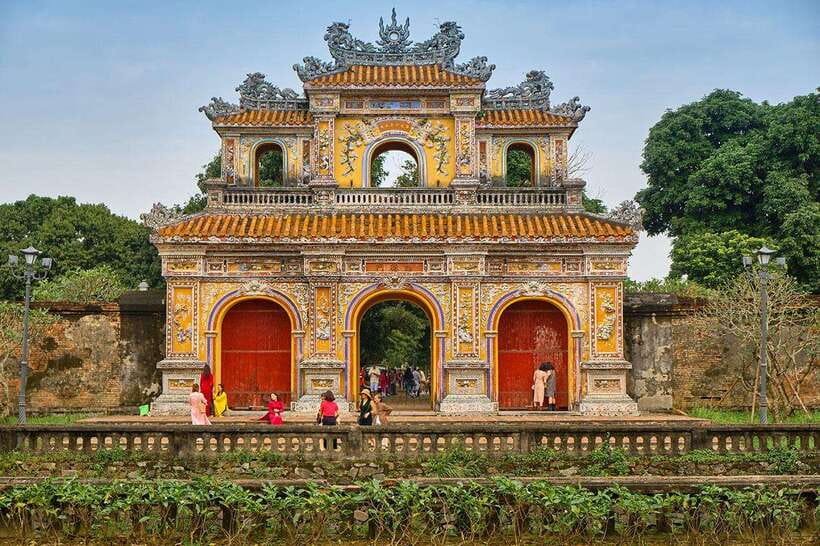
Next comes Ngo Mon Gate, the grand entrance to the Royal Palace. Built in 1833 during the reign of Emperor Minh Mang, it served both as an architectural gateway and as a ceremonial platform for important Nguyen Dynasty events.
The guide’s interpretation is especially useful here. The gate was not just a passageway for people coming and going. It helped stage royal power, with formal events taking place around it. You get another short stop of about 10 minutes, enough for photographs and an introduction to the imperial layout.
This is one place where crowds, sun, and photo stops may compete for your attention. The tour keeps moving, so if you want detailed architectural study, you may need to return later on your own.
Thai Hoa Palace and the heart of royal ceremony
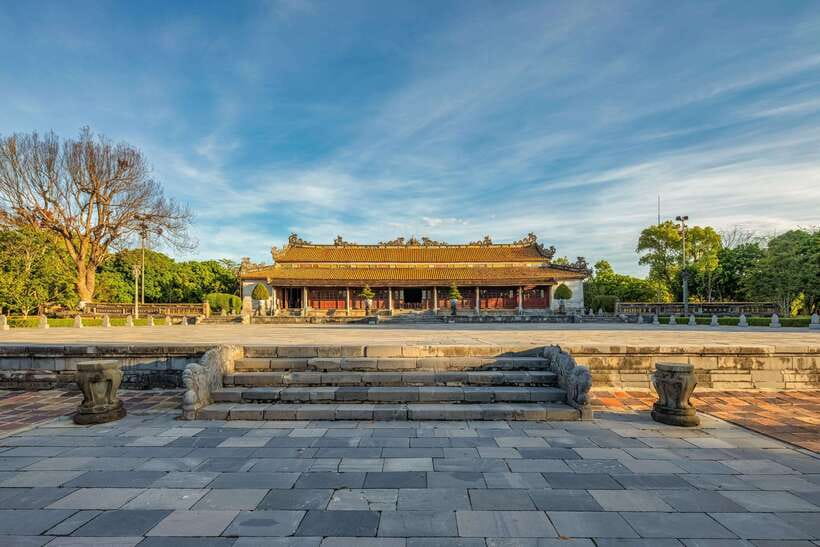
Thai Hoa Palace is one of the most important buildings on the route. It was the coronation site of all 13 Nguyen emperors, giving it a central place in the dynasty’s political story.
You get about 15 minutes here, including guided explanation and time for photographs. The value is not only the building itself. Your guide can connect the hall to the long line of emperors who ruled from Hue and explain why ceremonies mattered so much in the imperial system.
The visit also helps you separate formal court life from private palace life. Thai Hoa Palace belonged to public ceremony and imperial authority. Later stops bring you closer to the royal family’s residences and secluded spaces.
The broader historic citadel receives another short visit of about 10 minutes. This portion gives you a chance to understand the walls, courtyards, and surviving layout before the route moves deeper into the royal compound.
More Castle Walking Tours in the world:
- Edinburgh Castle: Guided Walking Tour with Entry Ticket
★ 4.7 · 11,699 reviews - Prague: 3-Hour Walking Tour of Old Town & Prague Castle
★ 4.7 · 5,696 reviews - Edinburgh Castle: Guided Walking Tour with Entry Ticket
★ 5.0 · 5,540 reviews - Edinburgh Castle Guided Walking Tour in English
★ 5.0 · 5,214 reviews
Duyet Thi Duong, the royal theater
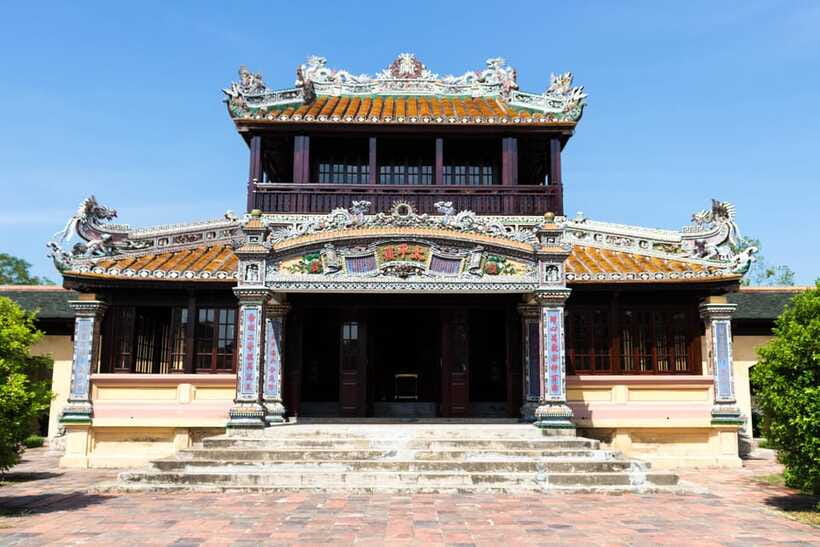
Duyet Thi Duong Royal Theater is one of the more unusual stops. It was one of four theaters built during the Nguyen period and is the oldest preserved theater from that era.
You have around 15 minutes here. The theater adds a cultural side to the tour, showing that court life was not limited to ceremonies, politics, and family rules. Performances formed part of palace life, and the building’s survival gives you a more rounded picture of the court.
I appreciate this stop because it breaks up the succession of gates, halls, and memorial structures. It also gives your guide a chance to explain the difference between a royal entertainment space and a public theater.
Thiệu Phương Garden and Thai Binh Pavilion
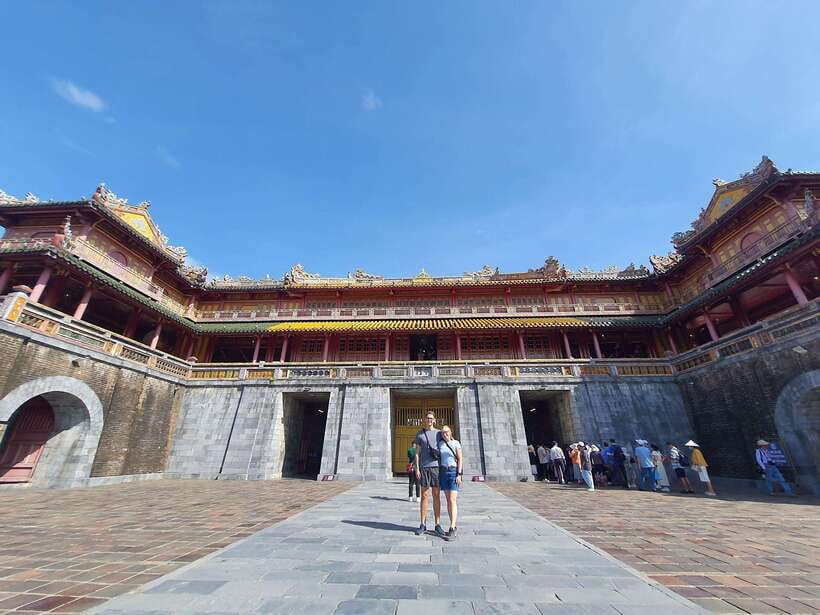
The route then turns toward Thiệu Phương Garden, with about 10 minutes for a guided visit and sightseeing. Gardens in an imperial complex were not merely decorative. They offered controlled spaces for rest, reflection, and court life.
Thai Binh Pavilion follows, with another 10-minute visit and photo stop. The pavilion adds a smaller-scale element to the route after the larger palace buildings. It is a useful reminder that the citadel included intimate architectural settings as well as grand ceremonial halls.
These two stops may appeal most to you if you enjoy the relationship between buildings and designed outdoor spaces. They are shorter visits, so your guide will likely focus on the main purpose and key details rather than every feature of the garden layout.
Kien Trung Palace and changing royal design

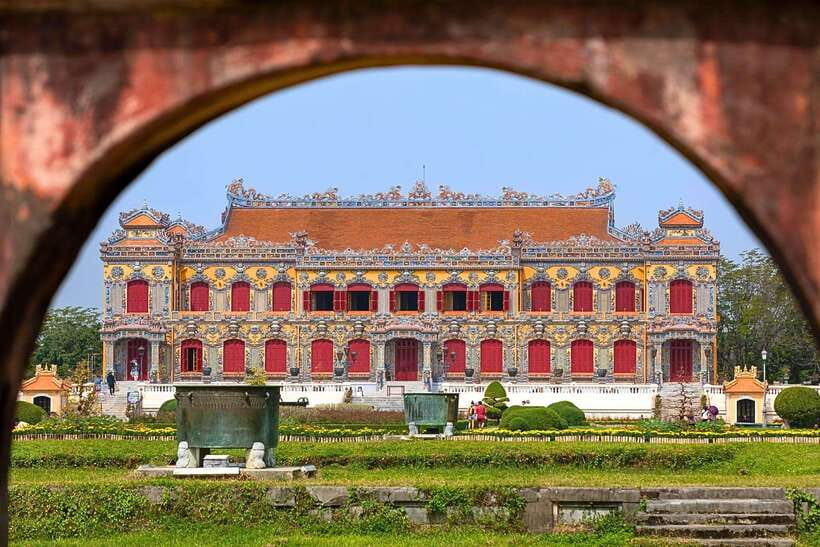
Kien Trung Palace offers one of the clearest examples of changing architectural taste inside the citadel. Emperor Khai Dinh built it in 1923, and its design mixed Italian Renaissance and French classicism with the traditional Vietnamese structures around it.
You get about 15 minutes here. The palace is a useful counterpoint to Thai Hoa Palace because it shows that the Nguyen court was not architecturally frozen in an earlier era. By the 20th century, European influence was visible in royal design.
This stop also gives your guide an opportunity to discuss the final period of the Nguyen Dynasty. Kien Trung Palace belongs to the later imperial story, while the earlier buildings reflect different political and ceremonial priorities.
Restoration is an important part of your experience. Some buildings have been repaired or reconstructed, while others remain incomplete or weathered. That means the citadel does not look like a perfectly preserved palace town. Instead, you see a historic site still being brought back piece by piece.
Dien Tho Palace and the private royal world
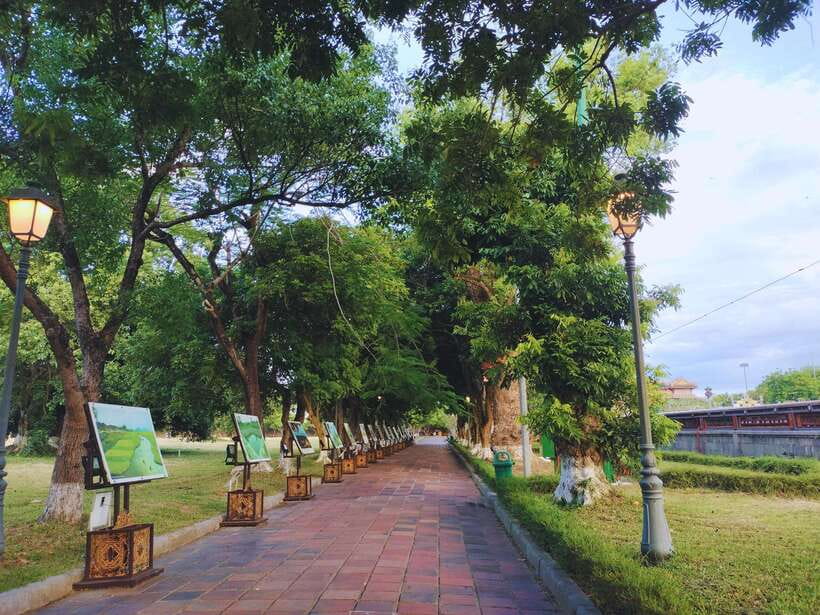
Dien Tho Palace was the residence of the Queen Mother. The main hall is noted for its large scale, carved detail, and elegant style, and you spend about 10 minutes walking through this part of the compound.
This is where the tour’s promise to explain royal family life becomes most useful. Dien Tho Palace helps you picture the court beyond the emperor’s public duties. It also gives context for the women’s quarters and the strict divisions within the royal household.
The tour description highlights the secrets behind the harem. Expect interpretation about the private side of the Nguyen court rather than a theatrical or sensational treatment. The details matter because the citadel was organized around status, access, and separation.
Dien Tho Palace appears twice in the supplied route description, but it is one stop rather than two separate visits. Plan on a short guided visit in this area, with walking between the palace and the next monuments.
The Forbidden Purple City
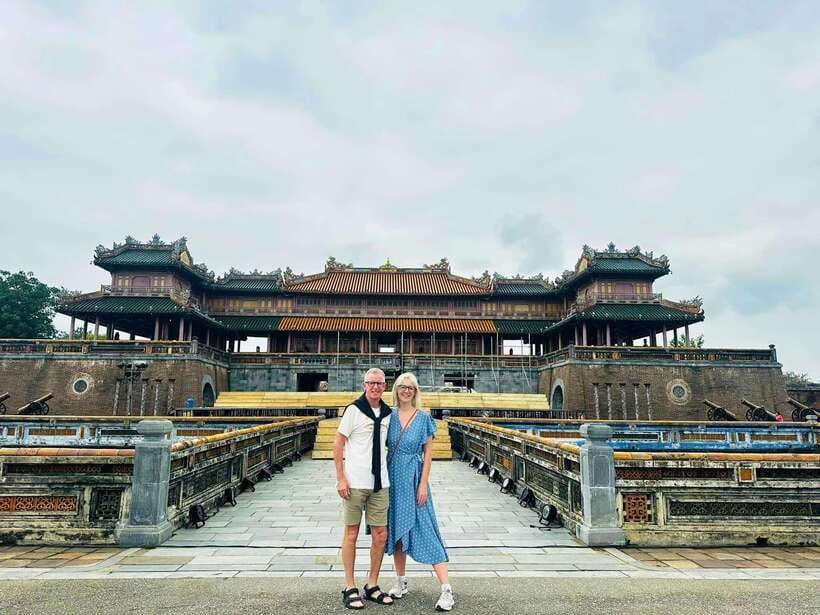
The Forbidden Purple City was reserved for the emperor and royal family. Officials and civilians could not enter unless their duties required it.
The route places this area within the historic citadel experience, rather than assigning a long separate stop. Your guide’s explanation is the key part. You learn how access worked, why the inner compound was protected, and how the royal family lived behind layers of walls and gates.
Much of Hue’s imperial center has been damaged over time, so do not expect every part of the Forbidden Purple City to appear as a complete palace complex. The surviving structures, restored sections, open spaces, and missing buildings all form part of what you see.
If you are interested in the human side of dynastic history, this may be one of the most useful sections. The emperor’s public authority and private household were connected, but they were not the same thing. A guide helps you follow that distinction.
Nine Dynastic Urns and Hien Lam Pavilion
The Nine Dynastic Urns, or Cửu Đỉnh, were commissioned by Emperor Minh Mang in 1835 and placed in front of The Mieu. They are among the route’s most striking ceremonial objects.
You get about 10 minutes for the urns, with time to see and photograph them. Their importance is tied to the Nguyen Dynasty as a whole, rather than one emperor’s personal residence. Your guide can explain how they relate to the dynasty’s ancestral worship and royal identity.
The Mieu is dedicated to 10 Nguyen kings. Although the itinerary gives the main timed stop to the urns, the guide explains the nearby temple complex as part of the same royal memorial area.
Hien Lam Pavilion is the final guided sight, with another 10-minute stop. Its position near the dynastic memorial structures makes it a fitting end to the historical sequence. By this point, you have moved from the dynasty’s public gates and coronation hall to its family residences, private compound, ancestral temple, and memorial objects.
The tour then returns to Hue. Since the route is a walking program, expect regular movement between sites rather than long periods sitting in one place.
How the guides shape the experience
The strongest part of this tour is the human explanation. Austin is praised for answering questions, sharing stories about the emperors, and letting a private group set its own pace. Anna is described as especially well informed about the Imperial Citadel, while Tam receives praise for her friendly manner and detailed knowledge of the emperors and their families.
Nhi Tran is noted for covering the key sights during two and a half hours, helping with photographs as well as explanations. Duyen is described as patient and careful, and Ha is credited with giving a very personal visit to a small group. Ryan is praised for adding wider context, including a moving war museum visit, although that museum is not part of the listed route, so you should not assume it is included.
Guide quality can vary by departure date, and you cannot necessarily request a specific person unless the operator confirms it. Still, the repeated pattern is clear: this works best when you use the guide actively. Ask about the emperors, the harem, restoration, ceremonies, and the difference between public and private spaces.
Is $15 a good value?
At $15 per person, this is a modestly priced way to put the citadel into context. The tour includes an English-speaking guide, bottled water, and local insurance. A private group option gives the price more value if you are traveling with family or friends and want to stop for questions or photographs.
The important catch is the entrance ticket. You pay that separately, so the final cost is higher than the headline tour price. Even so, two to two and a half hours of guided interpretation across the main imperial buildings can be worthwhile, especially if this is your first visit to Hue.
I would not book it if you want a slow, highly detailed architectural study of every surviving structure. The schedule gives each stop roughly 10 to 15 minutes, and the route covers a lot of ground. I would book it if you want a well-organized introduction, useful historical context, and a chance to ask questions while you walk.
Practical tips for a smoother walk
Wear shoes you can comfortably use for two and a half hours. Bring water beyond the included bottle if you prefer to drink often, and carry sun protection because many stops are outdoors.
Choose your morning or afternoon slot according to your energy and the weather. Keep some flexibility after the tour if you want to return to the buildings that caught your attention.
Confirm the meeting point carefully. The guide waits at Cuu Than Cong in Cua Ngan with your name on a sign, while hotel pickup is an optional arrangement rather than an automatic part of every booking.
The tour allows cancellation up to 24 hours before departure for a full refund, and you can reserve now and pay later. Those terms are useful if your Hue schedule is still shifting.
Who should book this Hue walking tour?
I recommend it for first-time visitors to Hue, history lovers, couples, families, and anyone who prefers a real person to an audio recording. The private option is especially appealing if you want to ask many questions or move at a comfortable pace.
It is also a good fit for a short stay. You see the key imperial sights without giving the entire day to the citadel.
I would choose another format if you dislike walking, need a very slow pace, or want extensive time for photography at every stop. The route is brisk and includes many short visits.
Should you book it?
Book this tour if you want the Imperial Citadel to make sense, not just look impressive. The guide adds the essential links between the 13 kings, coronations, royal women, court theaters, memorial urns, and restricted palace spaces.
The $15 price is good value once you account for the separate entrance ticket, especially with a private group. Choose the tour for clear storytelling and efficient coverage, then leave extra time to explore your favorite corners of Hue on your own.
FAQ
How long does the Hue Imperial Citadel walking tour last?
The activity lasts 150 minutes. The tour description also gives a duration of two to two and a half hours, depending on the selected start time and pace.
Is the tour offered in English?
Yes. The tour includes a live English-speaking guide.
Where does the tour meet?
The guide meets you at Cuu Than Cong in Cua Ngan, also identified as the Nine Holy Cannons. The guide waits with a welcome sign showing your name.
Is hotel pickup available?
Yes, pickup and drop-off can be selected as an optional service. The driver meets you at the hotel reception lobby.
Is the entrance ticket included?
No. The entrance ticket is not included in the $15 tour price. The guide assists with purchasing tickets before the walk begins.
Can I book a private group?
Yes. A private group option is available. This can give you more freedom to ask questions and set the pace within the tour time.
What is included in the tour price?
The price includes an English-speaking guide, bottled water, and local insurance. Tips and the entrance ticket are not included.
New castle tours around the world
- From Prague: Karlštejn Castle & Koněprusy Caves Tour★ 4.9 · 183 reviews
- Prague: 2.5-Hour Vyšehrad Castle with Gorlice & Tickets★ 4.5 · 118 reviews
- Prague: Alchemy & Mysteries Bridge and Castle Evening Tour★ 5.0 · 8 reviews
- Prague Castle: 1-Hour Introduction Tour with Entry Ticket★ 4.2 · 41 reviews
- Prague: River & Park Bike Tour to Troja Chateau★ 5.0 · 8 reviews
- Potsdam: The evening Wannsee tour. Castles, parks, and villas.★ 4.7 · 63 reviews
- Prague: Stunning Viewpoints, Castle, City & Park Bike Tour★ 4.6 · 38 reviews
- Ljubljana: Postojna cave & Predjama castle small group tour★ 4.9 · 29 reviews
Fortress & Citadel Tours, compared.

Carcassonne: Castle and Ramparts Entry Ticket
Read our review →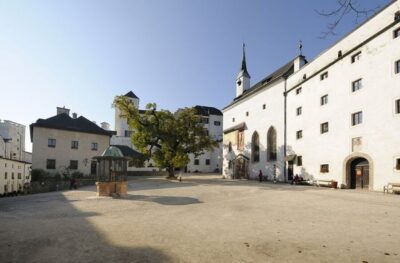
Salzburg: Hohensalzburg Fortress Admission Ticket
Read our review →
Salzburg: Best of Mozart Fortress Concert and Dinner
Read our review →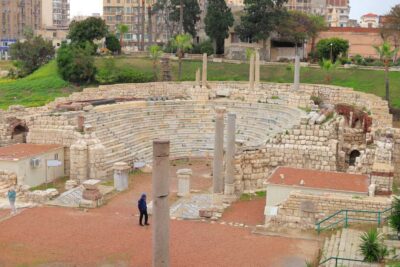
From Cairo Alexandria Catacombs, Citadel Day Trip with Lunch
Read our review →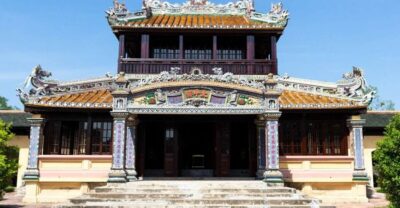
Hue Customizable Tour with Imperial Citadel & Forbidden City
Read our review →
Desert Safari: Luxury Fortress Dinner, Camel Ride & Dune Bashing
Read our review →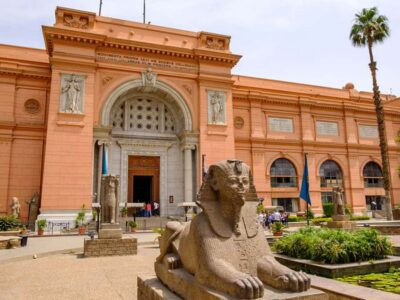
Cairo: Egyptian Museum, Citadel, and Old Cairo Guided Tour
Read our review →
Cairo Citadel, Old Cairo and Khan El Khalili: Private Tour
Read our review →Browse the lists this tour appears in