
Review · GREECE
From Nafplio: pyramid, castles, major attractions of Argolis
The oldest bridge in Europe may be the least famous stop on this four-hour trip. That is part of the fun. You walk across the Mycenaean Kazarma bridge, still in use after more than 3,000 years, then connect it with castles, a disputed pyramid, and the marsh where Hercules fought the Hydra.
I like the tour’s small, personal scale and its focus on places most visitors miss. I also like the human touch: one guide, Yannis or John in guest accounts, has family ties to the area and can add local color beyond dates and names.
The main drawback is physical. Uneven paths, exposed sun, and uphill walking make this a poor choice if you have mobility limits or struggle in summer heat. The pyramid’s date and purpose are uncertain too, so you need to enjoy a good archaeological question rather than expect a tidy answer.
Five reasons this Argolis trip is different
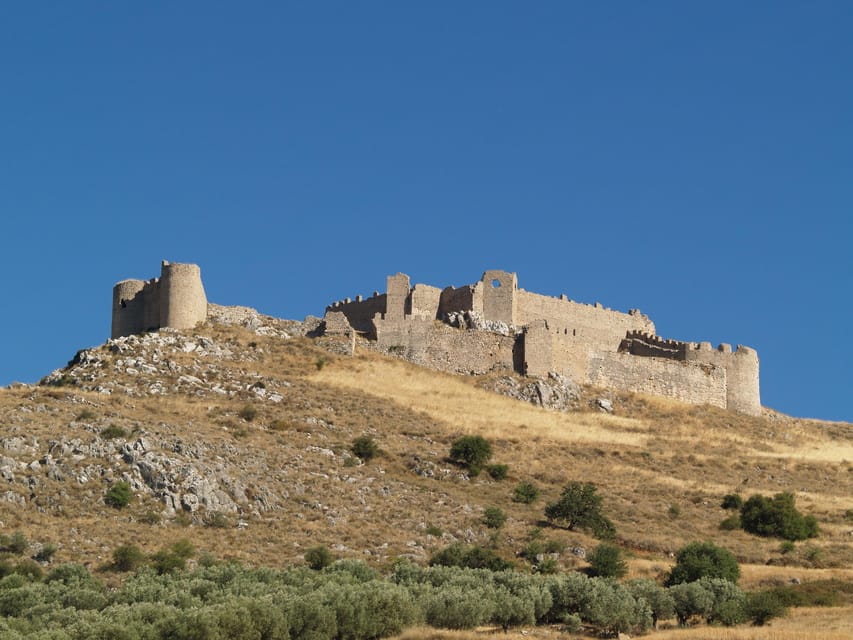
- Argos castle combines several eras: Mycenaean and ancient masonry appears beneath later medieval fortifications.
- Elliniko’s pyramid remains disputed: Its age and purpose are still debated, which makes the stop more intriguing than a simple monument visit.
- Lerna links myth with modern history: You see the marsh and river mouth tied to Hercules and the Hydra, along with a German World War II military facility.
- The Tiryns tholos tomb sits in an orange grove: This royal-style vaulted tomb was robbed long ago, leaving its occupant unknown.
- Kazarma bridge remains functional: The Mycenaean bridge once carried the road between Mycenae and Epidaurus and can still be crossed today.
Why these overlooked Argolis sites matter
Most visitors to the Nafplio area head straight for the major archaeological sites at Mycenae, Epidaurus, and Tiryns. Those places deserve their fame. But Argolis also has smaller remains scattered beside village roads, orange groves, marshland, and mountain passes.
This tour gives you a way to connect those fragments. You are not just ticking off five unrelated stops. You are following old routes and old stories through one of Greece’s most layered regions.
I especially like the contrast between the sites. Argos castle is a hilltop structure shaped by many periods. Elliniko offers an open view toward the sea and the Argolic plain. Lerna brings in myth and wartime history. The Tiryns tomb shows the scale of Mycenaean burial customs. Kazarma brings the past down to road level, where you can see how ancient engineering served an ordinary practical purpose.
The tour costs $106 per person. That is not bargain transport, but it covers a private car, an English-speaking guide, pickup at the meeting point in Nafplio, sightseeing, return to town, water, and visits to attractions with no entrance ticket. The value depends on your interests. If you want only the headline ruins, you can spend less by visiting major sites on your own. If you want access to scattered places that are awkward to connect, the private format makes more sense.
More castles to explore around the world:
- Stonehenge, Windsor Castle, and Bath from London
★ 4.5 · 18,662 reviews - Bucharest: Dracula’s Castle, Peles Castle, & Brasov Old Town
★ 4.5 · 17,858 reviews - From Munich: Neuschwanstein & Linderhof Castle Full-Day Trip
★ 4.6 · 14,646 reviews
Starting in Nafplio and climbing to Argos castle
You meet outside Droges pharmacy on Mpoumpoulinas Street in Nafplio. From there, the guide drives you toward Argos in a private car. The drive lets you cover several sites without piecing together local transport or arranging taxis between rural stops.
The first visit lasts about 45 minutes and takes you to the castle above Argos. The road up is narrow, and the final approach involves walking uphill. Wear shoes with a firm sole, since the ground is uneven and this is not a polished, flat-site visit.
Argos is one of Europe’s oldest cities, and the castle gives you a clear sense of repeated settlement. Fortifications were built and rebuilt here, with parts connected to Mycenaean and ancient periods before later medieval work changed the hilltop again.
That layering is the real attraction. You are not seeing one neatly preserved building from one neat period. You are seeing how people kept using a valuable defensive position over centuries. The views also help explain the site’s importance. From high ground, you can read the routes across the Argolic plain and toward the mountains.
The castle is likely the most demanding stop physically. The time listed is 45 minutes, but the experience is not a formal indoor museum visit. Expect open ground, sun, and a climb. If you have knee problems or limited balance, take the mobility warning seriously.
Elliniko’s pyramid and the question with no final answer
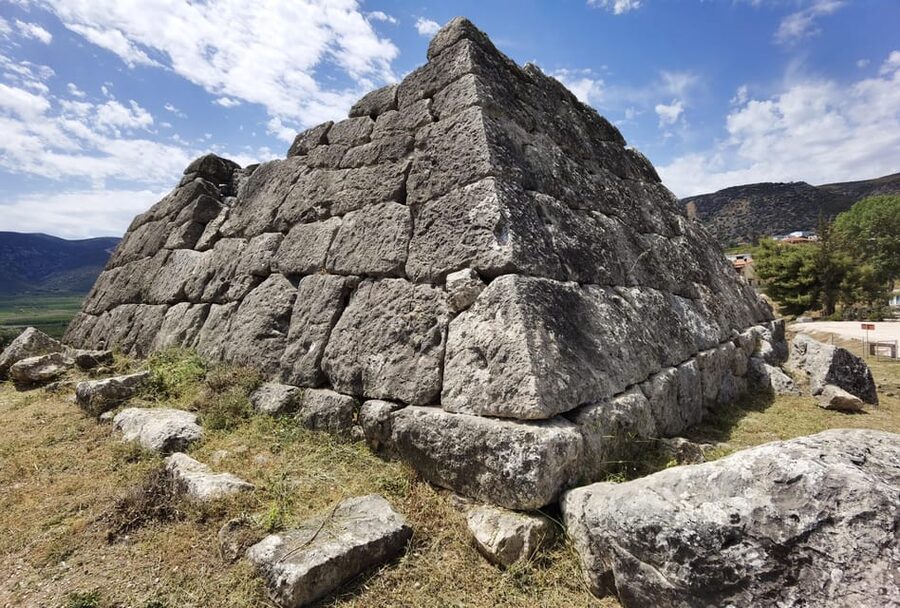
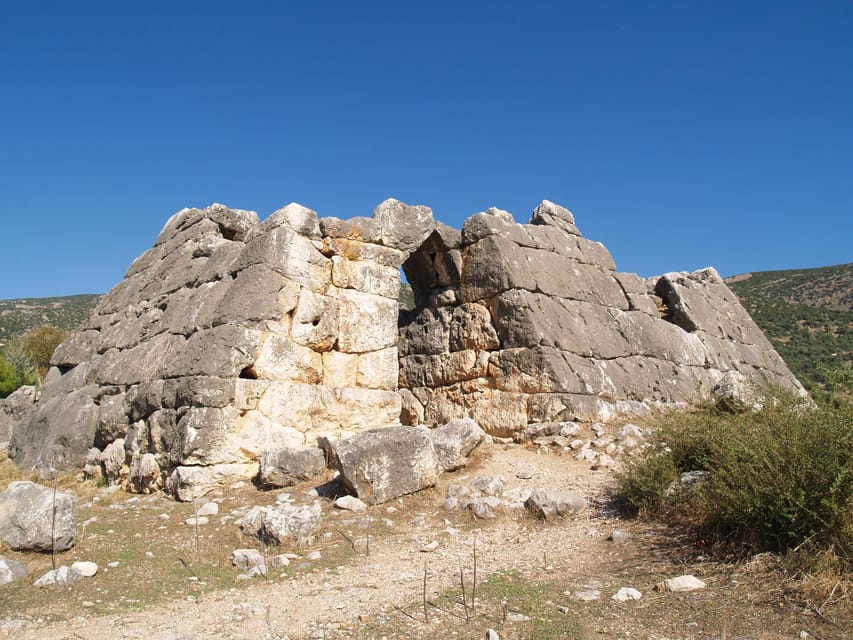
The next stop lasts about 20 minutes and takes you to the pyramid near Elliniko. It is often described as the only ancient pyramid in Europe, though the wording needs care. The structure is far smaller and less monumental than Egypt’s famous pyramids, and its exact date and purpose remain disputed.
That uncertainty is what makes it interesting. You are looking at a stone structure placed at a strategic point, where mountain passes from Arcadia open onto the Argolic plain and the sea is visible beyond. The position invites questions about whether it served a defensive, funerary, or practical purpose, but the evidence does not provide a simple answer.
I like this stop because it rewards curiosity. You are not handed a final explanation and sent on. Instead, the site asks you to think about how much, or how little, can be known from an old stone building after centuries of reuse and loss.
The visit is brief. That is useful if you want variety, but it also means you should not expect a large archaeological complex. The pyramid is an atmospheric stop and a good place for photographs, not a full morning of ruins. Bring sunglasses, a hat, and sunscreen. There is little reason to count on shade.
Lerna, the Hydra, and a German wartime remnant
The tour then heads toward the Argolic Gulf and the village of Myloi. The stop takes about 25 minutes and focuses on the area identified with ancient Lerna.
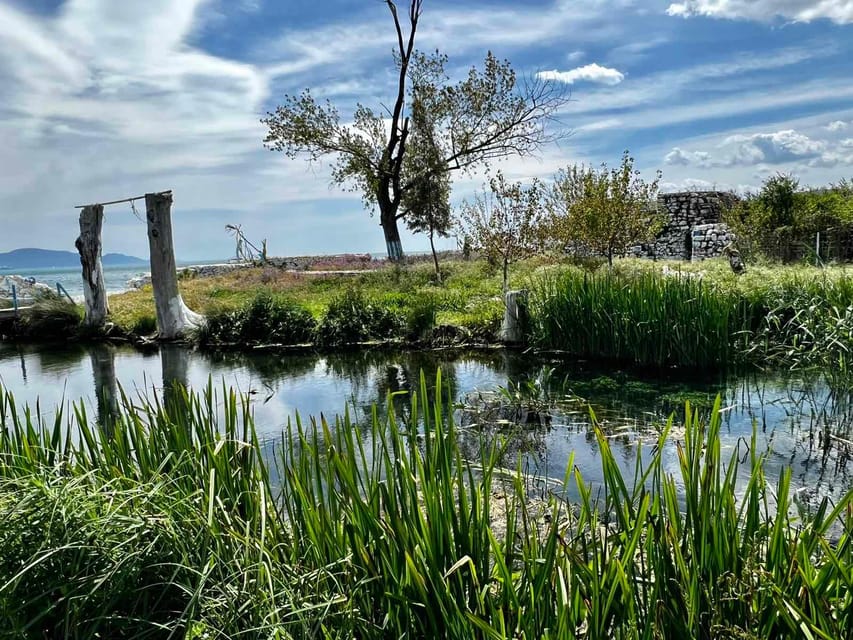
In Greek mythology, Lerna was home to the Lernean Hydra, the many-headed monster killed by Hercules during his second labor. Hercules needed help from Iolaus, who burned the necks after the heads were cut off so they could not grow back. The story is familiar, but seeing the marshy setting gives it a physical location.
You see the marsh and the mouth of the river, rather than a reconstructed mythological attraction. That distinction matters. This is a place where natural features and ancient stories overlap, not a theme park stop with theatrical displays.
The location also carries more recent history. A German military facility from the Second World War remains in the area. Its presence adds a sharp contrast to the ancient tale. In a short distance, you move from heroic legend to twentieth-century military history, with the water and surrounding countryside tying the different periods together.
This is another stop where the guide’s local knowledge matters. A guide with family connections in the region can explain how the area fits into present-day life, rather than treating it as an isolated archaeological label. One account especially valued meeting orange farmers nearby, who offered freshly picked oranges and talked about their farm. That kind of encounter cannot be guaranteed, but it shows the sort of local contact that can happen on a small private outing.
The Lerna stop is short, so you should not expect a long nature walk or a full archaeological excavation visit. Think of it as a compact setting for mythology, geography, and wartime remains.
Same stronghold, another way through the gate:
- Edinburgh Castle: Guided Walking Tour with Entry Ticket
★ 4.7 · 11,699 reviews - Prague: Skip-the-line Castle Ticket and Optional AudioGuide
★ 4.3 · 11,121 reviews - Bucharest: Dracula Castle, Peles Castle & Brasov Old Town
★ 4.6 · 10,891 reviews - Prague: Castle Tour with Local Guide and Entry Ticket
★ 4.6 · 10,422 reviews
The vaulted tomb hidden among orange trees
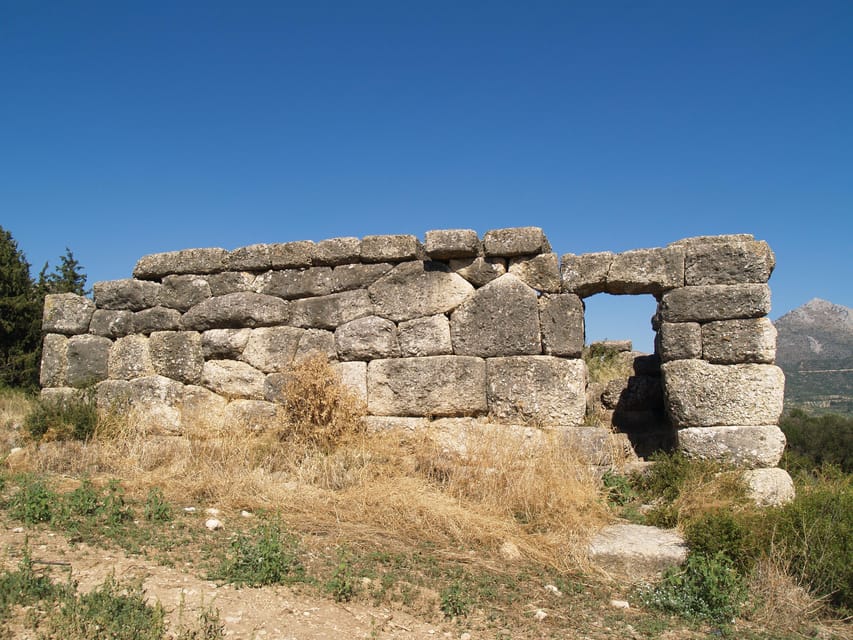
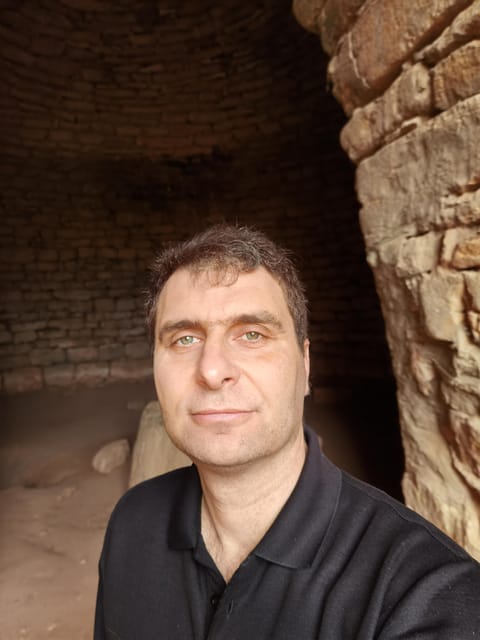
At ancient Tiryns, you spend about 15 minutes seeing a royal tholos tomb in an orange grove. The setting is wonderfully ordinary: fruit trees and working countryside around a structure linked to the powerful Mycenaean world.
A tholos tomb is a circular burial chamber with a beehive-shaped vault. The design required careful stonework, and its size and construction point to the status of the people who commissioned such burials. This particular tomb was looted in ancient times, so there is no firm information about who was buried there.
That missing identity is worth keeping in mind. You are not visiting a named king’s tomb with a complete story. You are looking at a surviving burial monument whose original contents and personal history have largely disappeared.
The short visit works well as part of the larger route. It gives you a close look at Mycenaean burial architecture without asking you to spend hours at another major ruin. Still, 15 minutes is not long. If you are fascinated by Bronze Age construction, you may wish the stop were more extensive.
The orange grove setting also makes this feel different from a fenced archaeological park. You should stay aware of the ground underfoot and follow the guide’s instructions around the site. Comfortable shoes are more useful here than sandals, despite sandals appearing on the suggested packing list.
Kazarma bridge, a 3,000-year-old road still in use
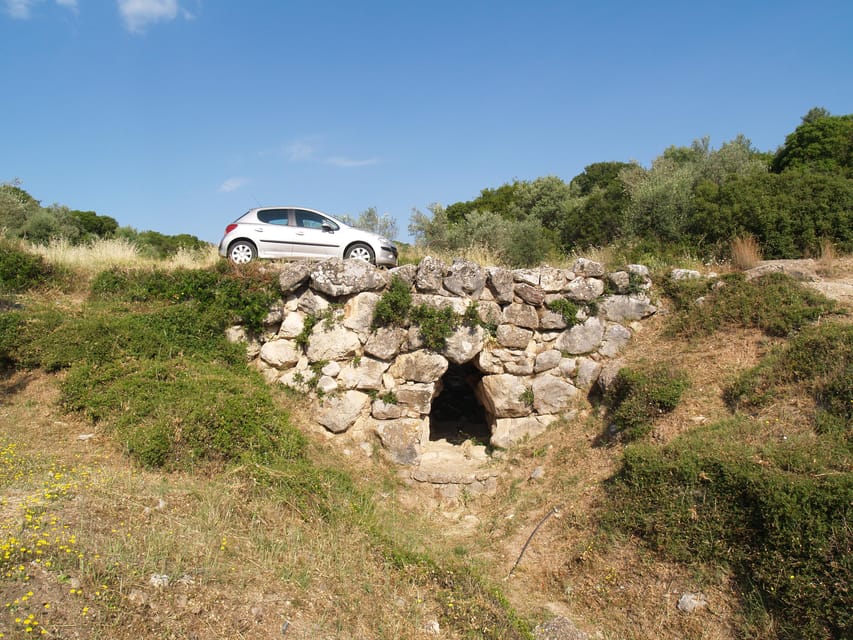
The final major stop lasts about 20 minutes and is the tour’s strongest practical surprise. The Kazarma bridge is a Mycenaean structure dating to the 13th century BC. It once formed part of the route between Mycenae and Epidaurus and was the largest bridge on that road.
It remains untouched by time in the sense that its original stone structure is still there, and it is still functional. You can see how the builders created a crossing for an ancient road rather than a ceremonial monument. The bridge was made to help people and goods move through the region.
That is why I consider it the best finale. Temples and tombs can feel separate from everyday life. A bridge explains everyday life immediately. Ancient communities needed routes, crossings, and ways to move between important centers. Kazarma gives you a direct connection to that practical side of the Mycenaean world.
The bridge is also a reminder that the surviving monument is only part of the old network. Other bridges once served the same route, but many are inaccessible. Seeing one accessible example helps you picture the wider road system without pretending that every part can be visited.
Take care on the stones and wear shoes with good grip. This is not a modern pedestrian bridge with rails and smooth paving. The same uneven-surface warning applies here as at the castle, pyramid, and tomb.
What the private format adds
This is a private group experience, so the pace can feel more personal than a large coach excursion. You travel in the guide’s private car, stop at smaller sites, and return to Nafplio after four hours.
The guide speaks English. Guest accounts identify the guide as Yannis in one case and John in another, so you may want to confirm the name when booking. The important practical point is that you have a live guide rather than an audio recording or a fixed bus commentary.
The local angle is one of the strongest parts of the experience. The guide can connect ancient places with family stories and the working countryside around them. The orange-farmer encounter described by one guest is a good example of the tour’s character, but it should be treated as a pleasant possibility, not a promised part of the schedule.
A private car also saves time between scattered stops. These attractions are not arranged as one easy archaeological park. Without a car, reaching all five would be inconvenient. The tradeoff is that the experience is not designed for a large group atmosphere or a leisurely meal. Lunch is not included, and the four-hour schedule is focused on sightseeing.
Heat, walking, and what to bring
Plan for sun. A hat, sunglasses, sunscreen, and water will make a real difference, even though water is provided. Spring and fall are the most comfortable seasons for walking around exposed ruins, based on the practical advice given by a recent participant. Summer heat can make the climbs and uneven paths harder to enjoy.
Bring a camera for the views from Argos castle, the open setting around Elliniko, and the bridge. Wear comfortable closed shoes rather than relying on loose sandals. Food and drinks are restricted at some sites, so do not plan to snack freely during every stop.
The tour is specifically not suitable for people with mobility impairments. That warning is important. The narrow road to the castle, uphill approach, rough surfaces, and short rural-site visits can all create problems. If you need step-free access or frequent seating, choose a gentler activity.
Smoking and consuming food or drinks are restricted at certain locations. Keep this in mind when planning your morning or afternoon. Since the tour lasts four hours and does not include lunch, eat beforehand if you know you will need a proper meal.
Who gets the best value from this tour?
I would choose this for someone staying in Nafplio who has already seen, or does not want to spend the day at, the region’s headline attractions. It suits you if you enjoy uncertain archaeology, local stories, ancient engineering, and places that still sit within working countryside.
It is also a good fit if you do not have a rental car. The private transfer connects sites that would otherwise be difficult to combine. The guide’s local background adds something beyond simply being driven from one monument to another.
I would not choose it if your priority is a long, detailed visit to one major site. The stops are short, with only 15 minutes at the Tiryns tomb and 20 minutes at the pyramid and bridge. You also should not book it expecting every archaeological question to have a settled answer.
At $106 per person, the price is easiest to justify for solo visitors, couples, or small private groups who value convenience and access. The entrance fees are not an extra concern because the attractions do not require tickets. Lunch is not included, so account for that separately.
Should you book the Argolis pyramid and castle tour?
Book it if you want an unusual half-day from Nafplio and prefer overlooked places to famous crowds. The best reasons are the Mycenaean Kazarma bridge, the layered Argos castle, and the chance to connect Lerna’s myth with an actual marsh and river mouth.
Skip it if you have limited mobility, dislike uneven ground, or want a relaxed outing with plenty of shade and long stops. For the right person, this is a smart use of four hours: compact, personal, and full of small surprises that the major ruins cannot provide on their own.
FAQ
Where does the tour begin?
The meeting point is outside Droges pharmacy at Mpoumpoulinas 37 in Nafplio.
How long does the tour last?
The experience lasts four hours, including the drive from Nafplio, sightseeing, and the return to town.
Is transportation included?
Yes. You travel by private car from the meeting point in Nafplio and return there after the tour.
What language does the guide speak?
The live tour guide speaks English.
Is this a private tour?
Yes. The activity is offered for a private group.
Does the tour include entrance tickets?
The attractions visited do not have an entrance ticket, so there are no attraction admission fees included or required for these stops.
Is lunch included?
No. Lunch is not included.
Is the tour suitable for people with mobility impairments?
No. The tour is not suitable for people with mobility impairments because it includes walking on uneven surfaces and an uphill approach at Argos castle.
What should I bring?
Bring comfortable shoes, sunglasses, a sun hat, sunscreen, water, and a camera. Water is included, and food and drinks are restricted at certain sites.
New castle tours around the world
- From Prague: Karlštejn Castle & Koněprusy Caves Tour★ 4.9 · 183 reviews
- Prague: 2.5-Hour Vyšehrad Castle with Gorlice & Tickets★ 4.5 · 118 reviews
- Prague: Alchemy & Mysteries Bridge and Castle Evening Tour★ 5.0 · 8 reviews
- Prague Castle: 1-Hour Introduction Tour with Entry Ticket★ 4.2 · 41 reviews
- Potsdam: The evening Wannsee tour. Castles, parks, and villas.★ 4.7 · 63 reviews
- Prague: Stunning Viewpoints, Castle, City & Park Bike Tour★ 4.6 · 38 reviews
- Prague: River & Park Bike Tour to Troja Chateau★ 5.0 · 8 reviews
- Ljubljana: Postojna cave & Predjama castle small group tour★ 4.9 · 29 reviews
Greece Castle Tours, compared.

Santorini Highlights and Venetian Castles Small-Group Day Tour
Read our review →
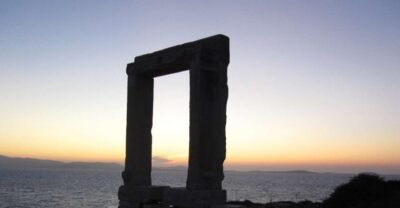
Naxos Castle Walking Tour and Sunset at the Portara
Read our review →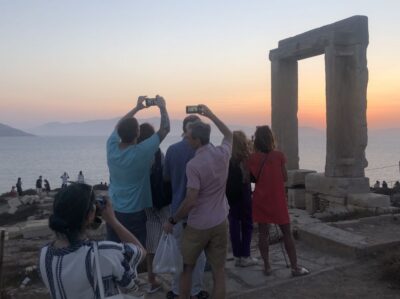
Naxos: Old Town, Castle & Portara Guided Sunset Tour
Read our review →

Monolithos: Small Group Hike and Sunset at Monolithos Castle
Read our review →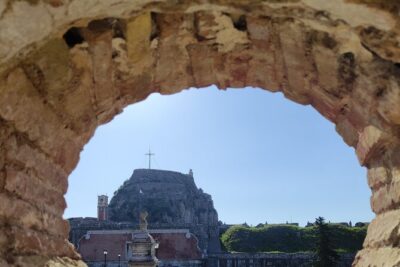
Old fortress and Corfu Old Town: History and culture
Read our review →
Ancient Corinth, acrocorinth castle and Thermal Spa Day
Read our review →Browse the lists this tour appears in