
Review · LISBON
Discover Alfama with the Exterior View of São Jorge Castle
Alfama is Lisbon at its most atmospheric: steep lanes, tiled walls, old churches, terracotta roofs, and the Tagus opening below you. This walk also explains why the neighborhood escaped much of the 1755 earthquake, giving you a clearer sense of how old Lisbon survived. I especially like the stop at Miradouro Portas do Sol and the way Fado is tied to the streets around you, not treated as a separate concert experience.
I also like the low-cost format and the guides’ personal touch. Andy has been praised for adding humor and answering questions beyond the set route, while Valeria is described as warm and well informed. The main consideration is the very low advertised price: Andy asked participants to place what they felt the tour was worth in a hat, so you should be prepared for a tip-based finish rather than assuming the listed amount is the full payment.
Key points at a glance
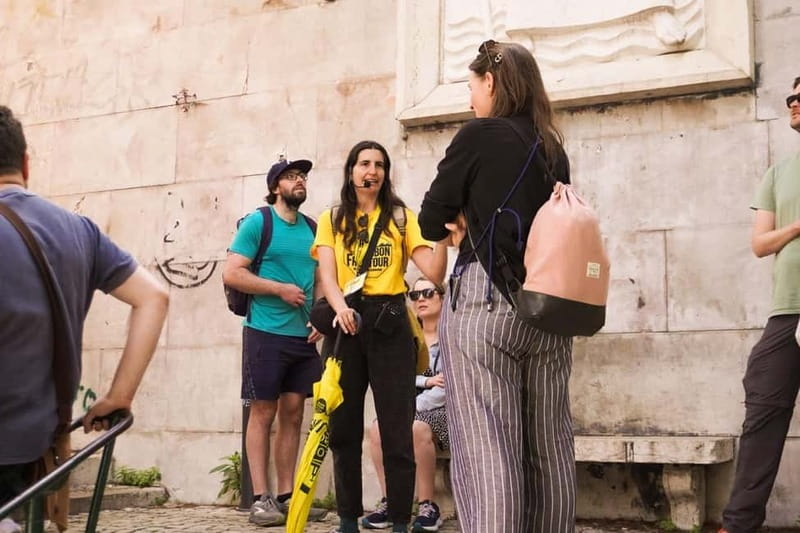
- Rossio starting point: Meet by the statue in the middle of Rossio Square, looking for the yellow umbrella and yellow shirt or hoodie.
- A neighborhood spared much of the 1755 earthquake: Alfama’s winding form and old character make more sense once you hear what happened elsewhere in Lisbon.
- Miradouro Portas do Sol: Expect a clear pause for views over terracotta rooftops and the Tagus River.
- Fado in its home setting: The tour connects this UNESCO-listed musical tradition with Alfama’s streets and local life.
- A cathedral finish: The walk ends at Lisbon Cathedral, but entry to monuments is not included.
- Bring sensible footwear: Two and a half hours on steep, uneven lanes calls for comfortable shoes and water.
From Rossio Square into old Lisbon
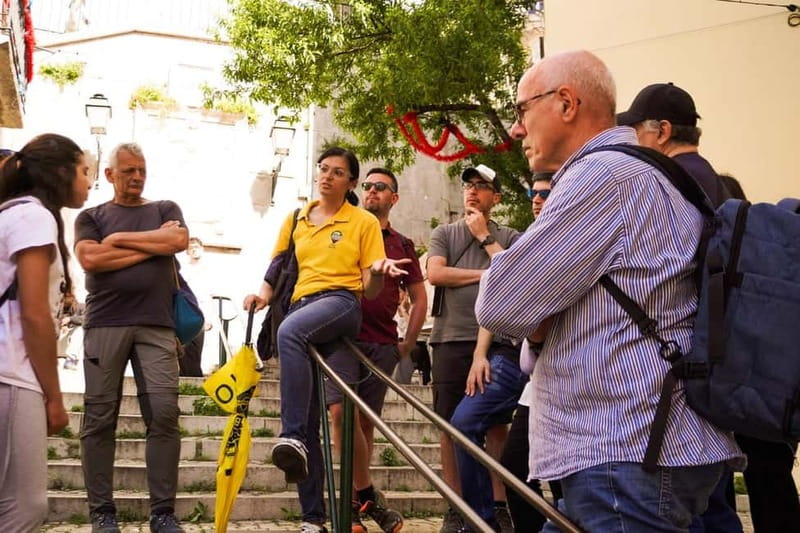
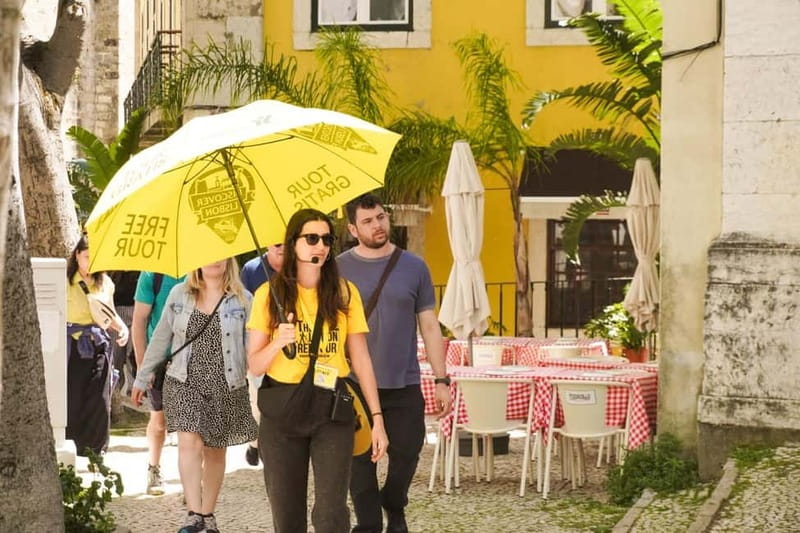
The tour begins in Rossio Square, one of the easiest places in central Lisbon to find. Your meeting point is near the statue in the middle of the square. Look for the team with a yellow umbrella and yellow hoodie or shirt.
Starting here gives the walk a useful opening chapter. You are not dropped straight into Alfama without context. Instead, the route passes through key areas before moving toward the oldest part of the city. That helps you understand Alfama as part of Lisbon’s wider story, rather than as an isolated quarter made only for photographs.
The route lasts 150 minutes. That is long enough to cover several subjects without turning the outing into a full-day march. You should still expect a fair amount of uphill and downhill walking. Alfama is famous for its narrow, steep lanes, and the route’s character comes from moving through them on foot.
I would wear shoes with a firm sole and bring water. The advice is simple, but it matters here. Sandals with little support or stiff new shoes could make the second half less pleasant.
More castles to explore around Lisbon:
- Lisbon: São Jorge Castle E-Ticket and Audio Guide
★ 4.3 · 2,182 reviews - Lisbon: Sao Jorge Castle Skip-the-Line Ticket with Guide
★ 4.6 · 1,191 reviews - Templar Tour Convent of Christ & Almourol Castle from Lisbon
★ 5.0 · 704 reviews
Why Alfama looks older than much of Lisbon
Alfama was one of the few Lisbon neighborhoods not destroyed by the 1755 earthquake. That does not mean every building escaped damage, or that the area has remained unchanged. It means the district retained more of its old street pattern and small-scale character than many other parts of the city.
You will see this in the narrow lanes and irregular turns. Alfama was not laid out as a neat grid. Its streets rise and bend, sometimes opening suddenly toward the river or a small church. The route uses these details to explain how Lisbon’s older neighborhoods worked before the earthquake reshaped much of the city.
The name Alfama comes from the Arabic Al-hamma, meaning hot fountains or baths. That detail adds another layer to the walk. The neighborhood is not simply old in a vague sense. Its story includes Arabic influence, later Portuguese life, religious buildings, music, and the physical marks of disaster.
I find this kind of background more useful than a long list of dates. Once you understand why Alfama survived, its crooked lanes stop looking random. You begin to read the district as a record of Lisbon’s past.
Tiles, churches, and the feel of daily Alfama
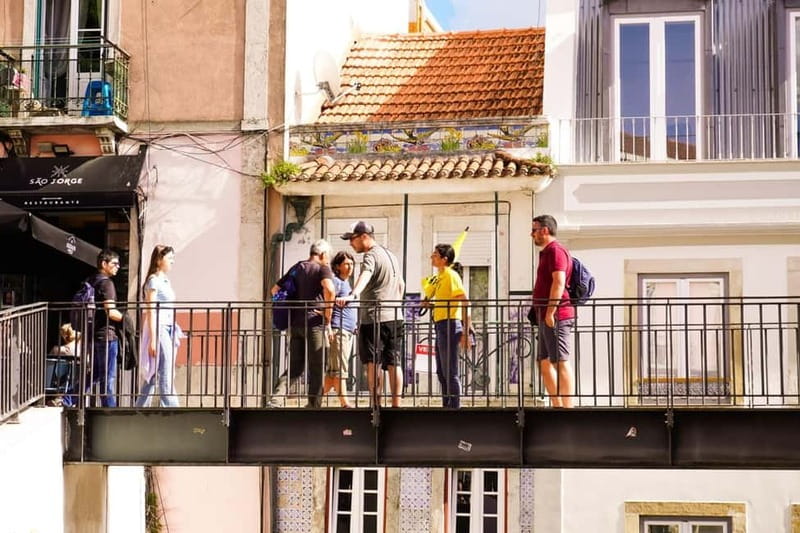
Azulejos, the painted ceramic tiles found across Portugal, are one of the visual pleasures of this walk. In Alfama, tiled façades and decorative details appear beside worn walls, stairways, and small streets. The result is not polished in a museum-like way. It feels lived in.
The tour includes visits to old churches and explanations of famous monuments. Entry fees are not included, so the emphasis is on seeing the buildings from the route and understanding their place in the city. If a church or monument catches your eye, you can decide later if you want to return on your own.
That arrangement keeps the walk moving. You are not tied to long indoor visits or extra admission costs, but you also should not book this expecting a series of full monument tours. The value is in the guide’s explanation, the outdoor setting, and the way the buildings connect to the neighborhood around them.
You will also pass through streets where the atmosphere matters as much as the architecture. Traditional Portuguese food aromas, local conversation, and the sound of Fado help make the area feel like a real residential district rather than a collection of old façades.
There is an important balance here. Alfama is picturesque, but it is also home to people. I like that the route presents the neighborhood through everyday details instead of reducing it to a photo stop.
Understanding Fado beyond a music label
Fado is one of the central themes of the walk. The music is on UNESCO’s world heritage list, and Alfama is closely linked with its Portuguese identity.
You will not be attending a Fado performance as part of this experience. Instead, the guide explains the tradition and places it within the streets you are walking through. That is useful if you plan to attend a Fado show later, because you will have some cultural context before the music begins.
The subject also gives the tour an emotional thread. Alfama’s lanes, old homes, churches, and river views make more sense when you understand why music became such an important expression of Portuguese life. Your guide can connect Fado with the mood of the neighborhood rather than presenting it as a detached cultural fact.
Because the tour is in English, ask questions as you go. Andy, one of the guides, has been praised for answering questions about parts of Lisbon beyond the planned route. That can be especially helpful if you are deciding where to eat, what to see next, or which part of the city deserves more time.
Same stronghold, another way through the gate:
- From Lisbon: Tomar, Convent of Christ & Almourol Castle
★ 4.8 · 663 reviews - São Jorge Castle Skip-the-line Entry Ticket
★ 4.5 · 440 reviews - Lisbon: Pena Palace, Moorish Castle, Qta. Regaleira & Sintra
★ 5.0 · 325 reviews - Sintra Cascais Private Tour with Pena Palace and Mouros Castle
★ 4.5 · 280 reviews
The reward at Miradouro Portas do Sol
The stop at Miradouro Portas do Sol is likely to be one of the clearest highlights. A miradouro is a viewpoint, and this one gives you a broad look across Alfama’s terracotta roofs toward the Tagus River.
The view is valuable because it shows the neighborhood as a whole. Down in the lanes, Alfama can feel like a maze of steps and corners. From above, you can see how the roofs, slopes, and river fit together.
Give yourself a moment here instead of treating the stop as a quick photograph. This is where the earlier explanation of the neighborhood’s survival becomes visual. The dense old quarter below has a different pattern from the more planned areas of Lisbon.
The viewpoint may also be the easiest part of the route for catching your breath. The walk is not described as difficult in a technical sense, but Alfama’s slopes can be tiring. A short pause helps you enjoy the view instead of worrying about the next climb.
You should expect other people at a popular Lisbon lookout. The tour’s value is not privacy. It is having a guide explain what you are looking at and how the view connects to the city’s past.
Finishing at Lisbon Cathedral

The walk ends at the cathedral. This gives the route a clear final point and places you near one of Lisbon’s best-known religious monuments.
Since monument entry is not included, you should treat the cathedral as an exterior finish unless you choose to pay for admission separately. That is not a flaw, but it is important to know before booking. You are paying for the guided walk and cultural explanation, not a package of entrance tickets.
Ending here also makes practical sense. The cathedral is in the lower part of Alfama, after the route has taken you through the district’s slopes and viewpoints. You can stop for photographs, continue exploring nearby streets, or use the end of the tour as a point for planning the rest of your day.
A guide may explain the cathedral’s role and history, but the exact amount of time spent there can vary with the group and the questions asked. If you want a long interior visit, plan to return separately.
Guides who add humor and local help
The human side of this experience matters. Andy has been described as funny, friendly, and able to make the walk interesting with light comic touches. He also handled questions about Lisbon outside the formal route, which is useful when you want practical ideas rather than only prepared commentary.
Valeria has also been praised for her warmth and strong grasp of the subject. Her approach was described as friendly and informative, with the walk becoming an enjoyable way to learn some of Lisbon’s history.
That does not mean every departure will feel identical. A walking tour depends on the guide, the group, the pace, and the questions people ask. Still, the available guide feedback points to a relaxed style rather than a stiff lecture.
You should feel free to ask about the earthquake, Fado, churches, monuments, or places elsewhere in the city. The strongest use of a local walking guide is not just listening. It is getting answers while you are standing in the setting being discussed.
Is the low price really the full cost?
At about $1.77 per person, this is priced far below most guided city walks. That makes it tempting for budget visitors, students, and anyone who wants a quick introduction before exploring Lisbon alone.
There is a catch worth handling plainly. One account describes the listed price as about 1.50 euros and says Andy asked people to put what they thought the tour was worth into a hat at the end. That sounds like a tip-based model, at least for that departure.
You should not assume the tiny booking price is the complete amount you will be expected to contribute. Bring some cash if possible and decide in advance what a 150-minute guided walk is worth to you. This also helps avoid the awkwardness that can come when some people leave without paying anything.
From a value point of view, the tour can still be excellent. You receive an English-language guide, historical and cultural context, a route through Alfama, a viewpoint stop, and a cathedral finish. You are not paying for transport or monument admission, but those omissions keep the outing simple and flexible.
Who will enjoy this walk most?
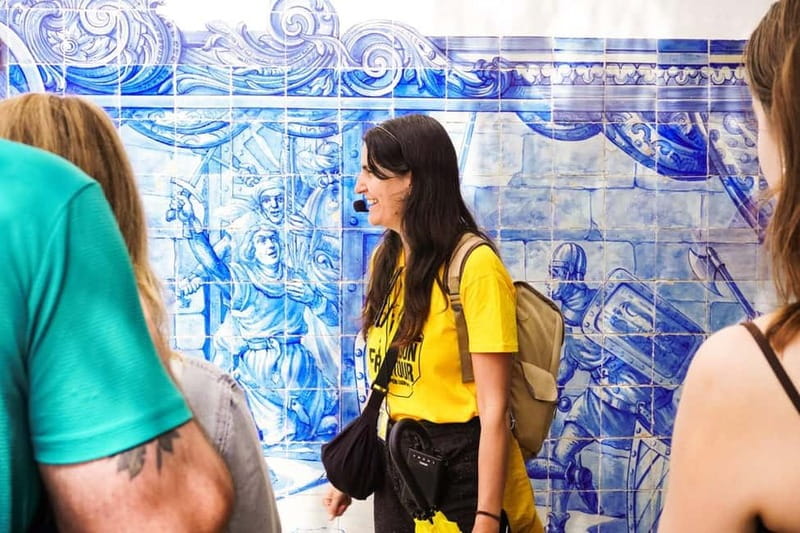
I would choose this tour if you want an introduction to Alfama before exploring alone. It suits first-time visitors who need the neighborhood’s basic story, people interested in Fado, and anyone who prefers streets and viewpoints to a long indoor museum visit.
It is also a good fit if you like asking questions. The accounts of Andy and Valeria suggest that the guide can add value beyond the prepared route, especially when you want help understanding Lisbon more broadly.
The walk may be less suitable if you have difficulty with steep streets or want a slow, fully accessible route. No accessibility details are provided, but the description of Alfama’s winding lanes and slopes is enough reason to plan carefully.
It is not the right choice if you want entry to every monument, a Fado concert, or transportation from your hotel. Those are separate arrangements. This is a guided neighborhood walk with cultural and historical commentary.
Practical details before you go
The tour is conducted in English, with a live guide. Transport to and from Rossio is not included, so you need to make your own way to the meeting point.
Wear comfortable shoes and carry water. A small bag is easier than bulky luggage on narrow streets, although no baggage policy is provided.
The instruction to bring your best costume appears in the activity information. It may refer to a playful theme or guide-led element, but no further detail is given, so I would not buy anything special for it. Comfortable clothing remains the sensible choice.
You can cancel up to 24 hours before the start for a full refund, and the reserve-now, pay-later option lets you hold a place without paying immediately. Starting times vary, so check availability for your date.
The overall rating is 4.4 from 21 reviews, with recent five-star feedback praising the guides’ friendliness, humor, and ability to explain Lisbon. That supports the tour’s strongest point: the experience depends less on paid attractions and more on the quality of the person leading you through Alfama.
Should you book Discover Alfama?
Book it if you want a low-cost, English-language introduction to one of Lisbon’s oldest districts, with Fado, earthquake history, old churches, tiled lanes, and a good viewpoint built into the route.
Go in with the right expectations. This is not a monument-entry package or a Fado show. The price may also be only the starting point if the walk uses a tip-based format.
For a first look at Alfama, I think the balance is favorable. You get the neighborhood’s story while standing in its streets, and the route ends at the cathedral with plenty of Lisbon still ahead of you. Bring good shoes, water, and a fair tip, then use the walk to decide which parts of Alfama deserve a slower second visit.
FAQ
Where does the Alfama tour begin?
It begins at Rossio Square, near the statue in the middle of the square. Look for the team with a yellow umbrella and yellow hoodie or shirt.
How long does the experience last?
The walk lasts 150 minutes, or two and a half hours.
What language is the tour conducted in?
The live tour guide speaks English.
Does the tour include entry to monuments?
No. Entry to monuments is not included.
Does transportation to Rossio Square come with the booking?
No. Transportation to and from the meeting point is not included.
What should I bring?
Bring comfortable shoes and water. The route includes Alfama’s steep, winding lanes.
Can I cancel and receive a refund?
Yes. You can cancel up to 24 hours in advance for a full refund.
New castle tours around Lisbon
- Lisbon: Tower of Saint George’s Castle Church Ticket & Drink★ 3.7 · 37 reviews
- Lisbon: Sintra, Pena, Moorish Castle, Regaleira & Cascais★ 4.8 · 136 reviews
- Lisbon Tour: Cristo Rei, Belem, São Jorge Castle, 360°View.★ 4.9 · 18 reviews
- Lisbon: Saint George’s Castle Entry Ticket and Guided Visit★ 4.6 · 127 reviews
- Lisbon: Saint George’s Castle Entry & City Self-Guided Tours★ 3.6 · 16 reviews
- Lisbon: Arrábida & Sesimbra w/ Palmela Castle & Wine Tasting★ 4.7 · 20 reviews
- Lisbon: Alfama and São Jorge Castle Quarters Walking Tour★ 4.8 · 136 reviews
- Lisbon: 1.5 Hour Private Segway Tour of the Castle★ 5.0 · 6 reviews
Lisbon Castle Tours, compared.

Lisbon: São Jorge Castle E-Ticket and Audio Guide
Read our review →
Lisbon: Sao Jorge Castle Skip-the-Line Ticket with Guide
Read our review →
Templar Tour Convent of Christ & Almourol Castle from Lisbon
Read our review →
From Lisbon: Tomar, Convent of Christ & Almourol Castle
Read our review →
Lisbon: Pena Palace, Moorish Castle, Qta. Regaleira & Sintra
Read our review →
Sintra Cascais Private Tour with Pena Palace and Mouros Castle
Read our review →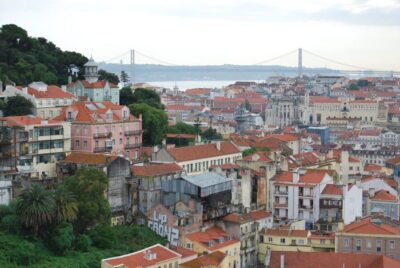
Lisbon: Alfama and São Jorge Castle Quarters Walking Tour
Read our review →Browse the lists this tour appears in