
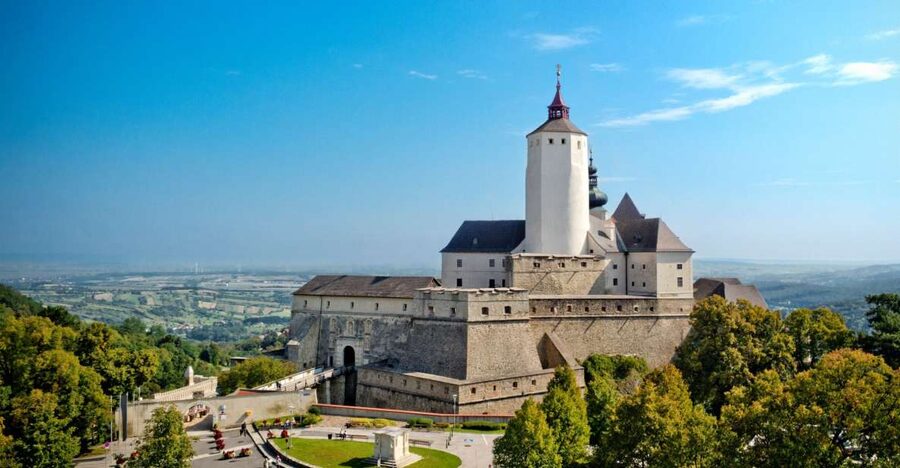
Review · AUSTRIA
Forchtenstein Castle Admission Ticket & Optional Guided Tour
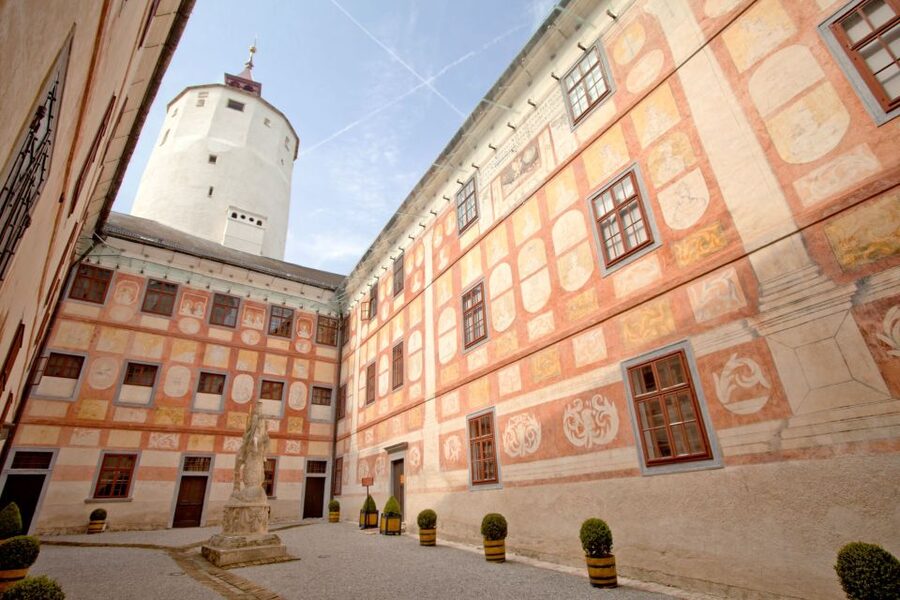
Forchtenstein Castle keeps its best surprise overhead and behind thick walls: the inner courtyard holds the largest display of secco wall paintings north of the Alps. Inside, the Esterházy collections add rare weapons, royal flags, Ottoman treasures, and a full-length portrait of Vlad the Impaler.
I like the way the visit joins the building with the objects inside it. I also like the old coronation flags and the unusual portraits of supposed ancestors such as Attila the Hun. These are not just pretty rooms. They show how a powerful family shaped its own story.
The main caution is access. This activity is not suitable for people with mobility impairments, and one recent visit found the first level closed. The castle is worth the trip, but confirm which rooms are open if a particular exhibit matters to you.
Key points
- The courtyard murals: See the largest display of secco wall paintings north of the Alps before entering the castle rooms.
- The Esterházy armory: View one of Europe’s largest private collections of weapons.
- Rare royal objects: See a 400-year-old Ottoman tent and three 17th-century coronation flags.
- Vlad the Impaler portrait: Find the only known full-length portrait of Vlad the Impaler in the Gallery of Ancestors.
- One-hour visit: The standard experience is compact and works well as part of a day in Burgenland.
- German audio information: A German audio guide is listed, though the details also mention a €2 fee, so check the current arrangement.
Why Forchtenstein Castle feels different
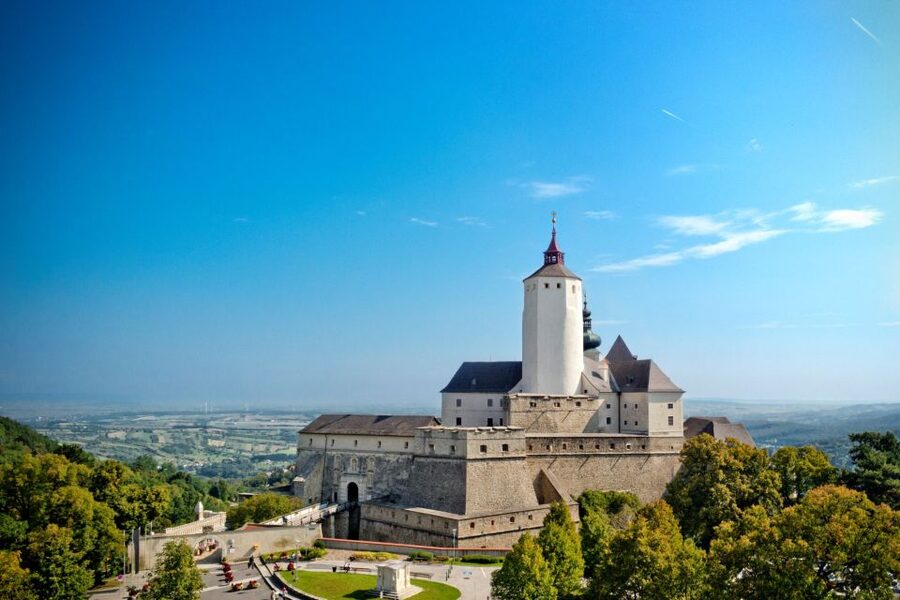
Forchtenstein is not simply an empty fortress with a few rooms dressed for display. The building and its contents belong together. The castle preserves the collecting habits, political ambitions, family legends, and military concerns of the Esterházy family.
That makes the visit more rewarding than a quick walk through bare stone halls. You see the setting, then the objects that gave the setting meaning. A weapon collection makes sense inside a fortified castle. Family portraits carry more weight when you encounter them in a place built to protect the family’s power.
The visit lasts about one hour, so you will not need a full day to see the main displays. I find that useful. You can give the castle your full attention without committing half a day, then continue exploring Burgenland afterward.
The ticket costs about $22 per person. That is not bargain-basement pricing for a one-hour activity, but the value depends on what you want from a castle visit. If you only want a viewpoint and a few photographs, it may feel expensive. If you care about original collections, military objects, dynastic portraits, and unusual artifacts, the price is easier to justify.
More Castle Entry Tickets in the world:
- Edinburgh Castle: Guided Walking Tour with Entry Ticket
★ 4.7 · 11,699 reviews - Prague: Castle Tour with Local Guide and Entry Ticket
★ 4.6 · 10,422 reviews - Prague Castle 2.5-Hour Tour Including Admission Ticket
★ 4.7 · 8,927 reviews
Begin in the painted inner courtyard
Start in the inner courtyard, where the castle’s secco wall paintings provide the first major visual reward. Secco painting is applied to dry plaster rather than wet plaster, and here the scale of the display gives the courtyard unusual weight.
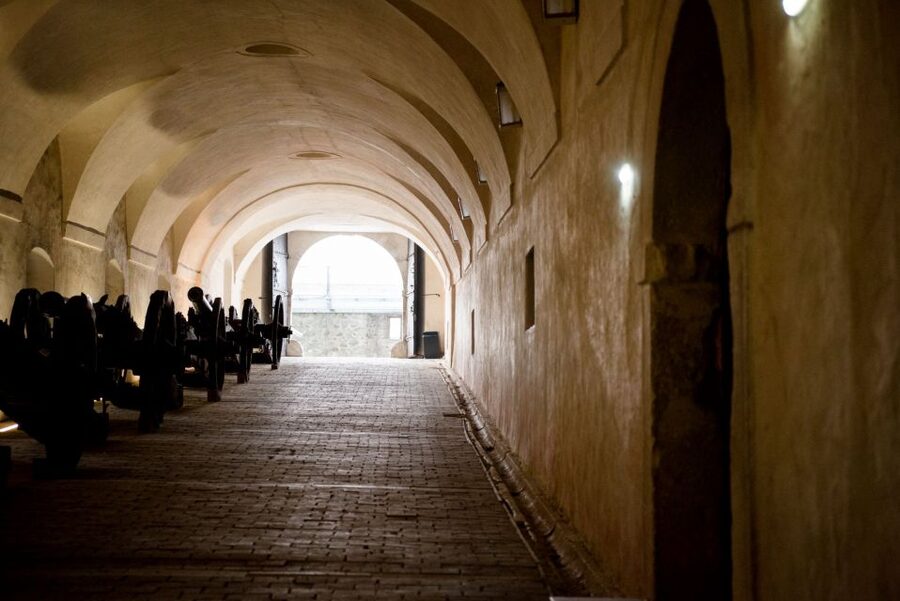
Take a moment before moving on. This is not a space to rush through on the way to the armory. Look up and around you. The courtyard gives you a sense of the castle as a lived and defended place, not just a container for museum cases.
The murals are one of the strongest reasons to visit in person. A photograph can show color and pattern, but the enclosed courtyard helps you understand their size and placement. The display is described as the largest of its kind north of the Alps, which gives this opening stop real importance.
You should arrive about 15 minutes before your scheduled start. That leaves time to find the entrance and begin without cutting into the one-hour visit. The supplied details do not give a transfer plan or public transport information, so you should arrange your route to the castle separately.
See the oratory, chapel, and private armory
The route continues to the first floor, including the oratory and chapel. These rooms shift the mood from open courtyard to more personal and ceremonial spaces connected with the family.
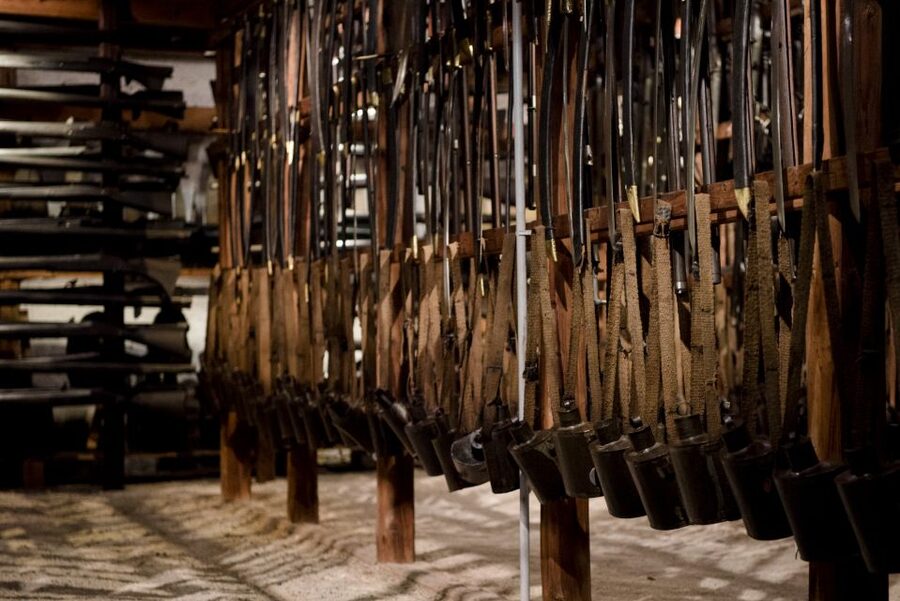
The armory is the major attraction on this level. Forchtenstein preserves one of Europe’s largest private collections of weapons. I would give this section more time than you might expect, especially if you are interested in armor, military equipment, or the practical side of aristocratic life.
The importance of the collection is not only its size. A private armory tells you what the family chose to preserve and display. It points to status, defense, ceremony, and the public image of a noble house. You are looking at objects that once carried practical use, symbolic force, or both.
Access can change. One recent visit noted that the first level was not open, so do not assume every advertised room will be available on every date. If the armory is the main reason you are booking, check current conditions before you pay.
Meet the Ottoman tent and coronation flags
On the second floor, the displays move beyond weapons and family portraits. One of the most memorable objects is an ornate Ottoman tent said to be about 400 years old. It offers a direct link to the political and military world that shaped Central Europe.
A tent may sound less dramatic than a suit of armor, but it can tell a more unusual story. It suggests movement, command, ceremony, and life beyond palace walls. Its survival is remarkable, and its presence adds variety to the collection.
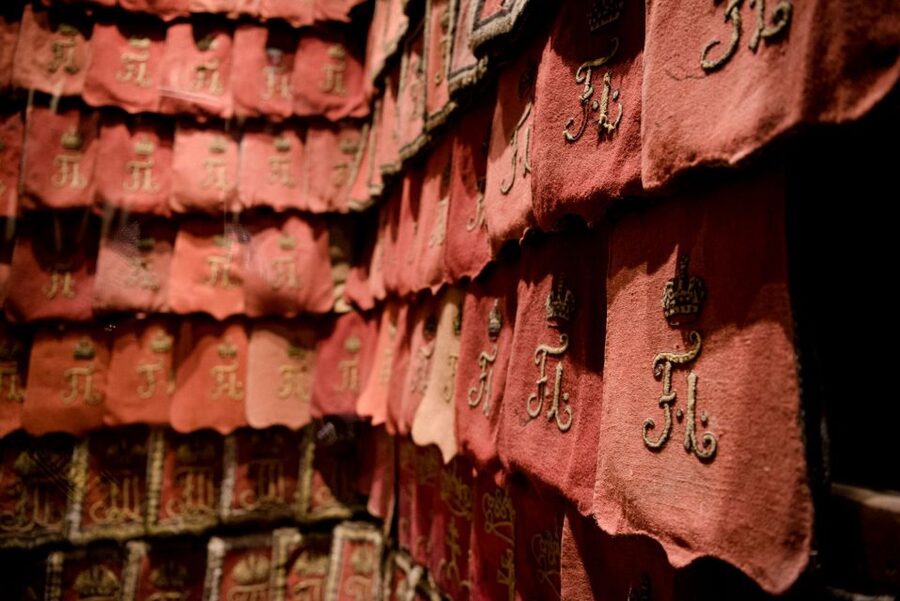
The three coronation flags are another major highlight. They date from the 17th century and represent Hungary, Croatia, and Serbia. They are described as the oldest known coronation flags from those countries, making them far more than decorative textiles.
Flags are compact objects with a large public role. They mark authority, ceremony, and national identity. Seeing three together gives you a useful reminder that dynastic power crossed borders and involved several political traditions.
I would pay attention to the labels in this area, especially if you do not already know the regional history. The objects are visually striking, but their full value comes from understanding why a flag, tent, or weapon mattered to the people who kept it.
More Guided Castle Tours in the world:
- Edinburgh Castle: Guided Walking Tour with Entry Ticket
★ 5.0 · 5,540 reviews - Stonehenge, Windsor Castle and Bath Full Day Guided Tour
★ 4.5 · 5,346 reviews - Edinburgh Castle Guided Walking Tour in English
★ 5.0 · 5,214 reviews - Seville: Alcázar and Cathedral Entry Ticket and Guided Tour
★ 4.6 · 5,056 reviews
Look closely at the Gallery of Ancestors
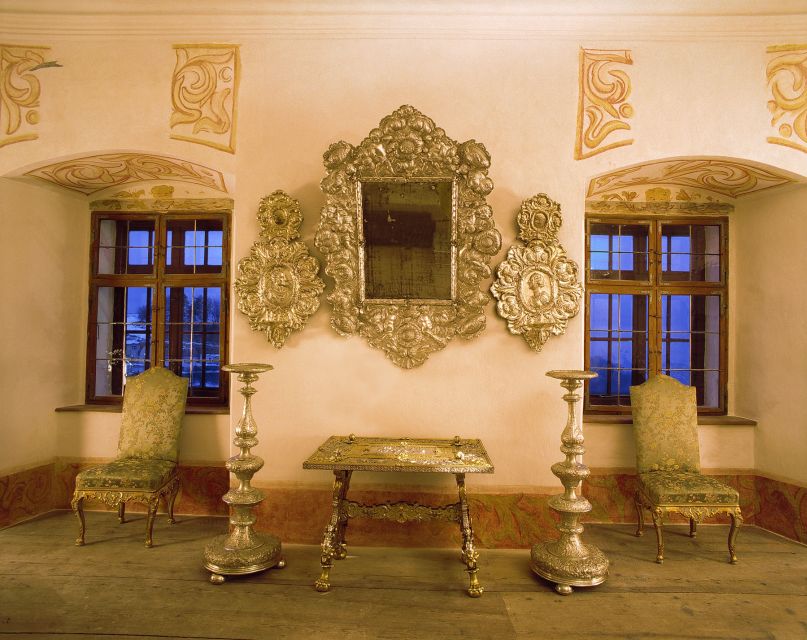
The Gallery of Ancestors presents a long line of Esterházy portraits, but the family’s idea of ancestry was not limited to people who could be verified. The display includes fictional ancestors such as Attila the Hun and Vlad the Impaler.
That is where the collection becomes especially revealing. Portrait galleries often present family power as a continuous story. By including legendary or invented connections, this one shows how noble families used art to construct an impressive past.
The most unusual portrait is the only known full-length portrait of Vlad the Impaler. The name is familiar from the Dracula tradition, but the painting belongs to a different world: dynastic image-making, status, and historical memory.
I like this section because it gives you something to think about beyond visual beauty. Ask yourself why a family would want to claim links to famous, feared, or legendary figures. The answer says as much about the Esterházy family’s ambitions as the genuine portraits do.
Enter the Kunstkammer and the Esterházy collections
The Kunstkammer, or cabinet of curiosities, dates from the late 16th to the early 18th century. It reflects Prince Paul Esterházy’s passion for collecting and gives the visit a more personal angle.
A cabinet of curiosities is not arranged like a modern specialist museum. It gathers objects valued for rarity, beauty, wonder, status, or a connection to a wider world. That makes this part especially useful for understanding how a wealthy European prince viewed knowledge and ownership.
The collections also include Europe’s largest and earliest collection of silver furniture. Silver furniture is exactly the sort of display that can be easy to skim past if you focus only on paintings or armor. Slow down. Its value lies in the material itself, the craftsmanship, and the statement it made about wealth.
This is where I would resist trying to see everything at the same speed. The visit is short, but a one-hour route still gives you time to choose a few objects for closer attention. The Ottoman tent, coronation flags, silver furniture, and Vlad portrait are good anchors.
Guided tour or audio guide?
The activity is presented with an optional guided tour, but the supplied details do not name the guide or explain the group size, tour schedule, or extra cost. If a live guide is important to you, confirm those points when booking.
A guide can be useful here because many objects need context. The fictional ancestors, coronation flags, private armory, and Kunstkammer all gain meaning from explanation. A strong guide can connect them without turning the visit into a list of dates.
The details also say a German audio guide is included, while another section lists an audio guide at €2. That is a clear point to verify before arrival. If you do not speak German, do not assume another language is available, since only German is specified.
You receive admission with the basic ticket. The audio guide and optional live tour should be treated as separate details until the current booking conditions confirm otherwise.
Who will get the most from this visit?
I would recommend Forchtenstein Castle to you if you enjoy original objects more than reconstructed scenes. The appeal is strongest for people interested in aristocratic collections, arms and armor, Central European politics, portrait galleries, or unusual museum displays.
It also works well for a short stop. One hour is enough to see the core exhibits, and the visit has clear highlights rather than one enormous museum that demands a full day. Families with older children may find the weapons, flags, tent, and Vlad portrait more engaging than a standard art collection.
History-minded visitors should come ready to read and listen. The objects are visually strong, but the family legends and political connections reward context. A German audio guide or live guide may help if you want more than a self-directed look.
The castle is less suitable if you have limited mobility. The activity specifically says it is not suitable for people with mobility impairments, and room access may vary. Contact the provider before booking if you need reliable access to each level.
Practical value, timing, and flexibility
Plan for a one-hour visit and arrive 15 minutes early. The short duration makes this easy to add to a Burgenland day, but it also means you should not arrive late and expect to see everything at leisure.
The activity allows cancellation up to 24 hours before the start for a full refund. You can also reserve now and pay later, which helps if your schedule is still taking shape. These terms are useful, but they do not remove the need to check opening conditions for the date you choose.
The experience provider is Esterhazy Betriebe AG. The current rating is 4.7 from 16 ratings, with strong praise for the authentic original pieces, the castle itself, the armory, and the quality of historical explanation when a guide is present. One German-language assessment also described the castle as a fine knightly fortress to see, while another praised the antique collection but gave a more moderate score. That mix fits the experience: it is memorable and distinctive, but access and presentation may not be perfect every time.
Should you book Forchtenstein Castle?
Book it if you want a compact castle visit with serious collections behind it. The Vlad the Impaler portrait, coronation flags, Ottoman tent, silver furniture, and armory give Forchtenstein a sharper identity than a generic fortress stop.
I would especially choose it if you are already exploring Burgenland and can spare an hour. The $22 ticket makes sense when you plan to look closely and use the displays to understand Esterházy power, collecting, and family image-making.
Skip it if you need step-free access, expect every room to be open, or want a long guided tour with fully specified language options. For everyone else, confirm the first-floor access and audio guide fee, arrive early, and give the courtyard murals and second-floor collections the attention they deserve.
FAQ
How long does the Forchtenstein Castle visit last?
The stated duration is one hour. You should arrive 15 minutes before the activity begins.
What is included in the ticket?
Admission to Forchtenstein Castle is included. The activity details also mention an optional guided tour.
Is an audio guide available?
A German audio guide is listed, but another part of the activity information states that the audio guide costs €2. Confirm the current arrangement before booking or arrival.
What language is specified for the experience?
German is the only language specified in the activity details.
What are the main collections inside the castle?
You can see the inner courtyard murals, an extensive private armory, silver furniture, the Kunstkammer, Esterházy family portraits, an Ottoman tent, and coronation flags.
Is the castle suitable for people with mobility impairments?
No. The activity is specifically marked as unsuitable for people with mobility impairments.
Can I cancel the booking?
Yes. You can cancel up to 24 hours in advance for a full refund. Reserve now and pay later is also available.
New castle tours around the world
- From Prague: Karlštejn Castle & Koněprusy Caves Tour★ 4.9 · 183 reviews
- Prague: 2.5-Hour Vyšehrad Castle with Gorlice & Tickets★ 4.5 · 118 reviews
- Prague: Alchemy & Mysteries Bridge and Castle Evening Tour★ 5.0 · 8 reviews
- Prague Castle: 1-Hour Introduction Tour with Entry Ticket★ 4.2 · 41 reviews
- Potsdam: The evening Wannsee tour. Castles, parks, and villas.★ 4.7 · 63 reviews
- Prague: Stunning Viewpoints, Castle, City & Park Bike Tour★ 4.6 · 38 reviews
- Prague: River & Park Bike Tour to Troja Chateau★ 5.0 · 8 reviews
- Ljubljana: Postojna cave & Predjama castle small group tour★ 4.9 · 29 reviews
Castle Entry Tickets, compared.

Edinburgh Castle: Guided Walking Tour with Entry Ticket
Read our review →
Prague: Castle Tour with Local Guide and Entry Ticket
Read our review →
Prague Castle 2.5-Hour Tour Including Admission Ticket
Read our review →
Prague: Prague Castle and Lobkowicz Palace Entry Tickets
Read our review →
Seville: Alcázar and Cathedral Entry Ticket and Guided Tour
Read our review →
Carcassonne: Castle and Ramparts Entry Ticket
Read our review →Browse the lists this tour appears in