
Review · KHIVA
Transfer: Bukhara – Khiva via Ancient Fortresses
The most unusual part of this Bukhara to Khiva transfer is that the road becomes the main event. Instead of spending nine hours simply crossing Uzbekistan, you stop at three lonely desert fortresses in the old Khorezm Oasis, including Toprakkala, once the region’s first capital. I like the efficient design: one necessary transfer becomes a serious archaeological outing. I also like the private car, hotel pickup, and the chance to travel at a calmer pace with drivers such as Pavlik, Jasur, or Ulugbek, all praised for safe driving and useful explanations.
The catch is simple: this is a long day on the road, not a relaxed sightseeing tour with hours at each site. The fortresses are exposed, the desert can be hot or bitterly cold, entrance tickets cost extra, and communication before pickup may not always be smooth. Pack water, wear sturdy shoes, and treat the ride as part of the experience.
What makes this transfer worth considering
- Three desert fortresses on one practical route: Visit Toprakkala, Kizilkala, and Ayazkala while moving from Bukhara to Khiva.
- Toprakkala was a capital, not just a ruin: Its remains include early city planning, written Khorezm sources, a calendar, and plaster figures of singers.
- Ayazkala gives you the biggest sense of scale: Its three sections once helped guard the oasis from raids coming from the north.
- The driver matters: Pavlik, Jasur, and Ulugbek are among the drivers praised for English or Russian, safe driving, and explanations along the way.
- Lunch can add local character: The route includes an estimated lunch stop, and one group stopped at a yurt camp.
- Good value for a small private party: At $160 for up to three people, the cost covers the vehicle, driver, hotel pickup, drop-off, site visits, and taxes, but not entrance fees.
Turning a long transfer into a full day
Bukhara and Khiva are major stops on an Uzbekistan itinerary, but the journey between them is long enough to feel like a travel chore. This route fixes that problem in a useful way. You leave your Bukhara hotel, cross toward the Khorezm region, stop at three fortress sites, and arrive at your Khiva hotel at the end of the day.
The advertised duration is nine hours. That includes driving, sightseeing, and the lunch stop, so you should not expect a slow archaeological study at every ruin. The appeal is the combination of transport and sightseeing. You are already going to Khiva, and this gives the road a clear purpose.
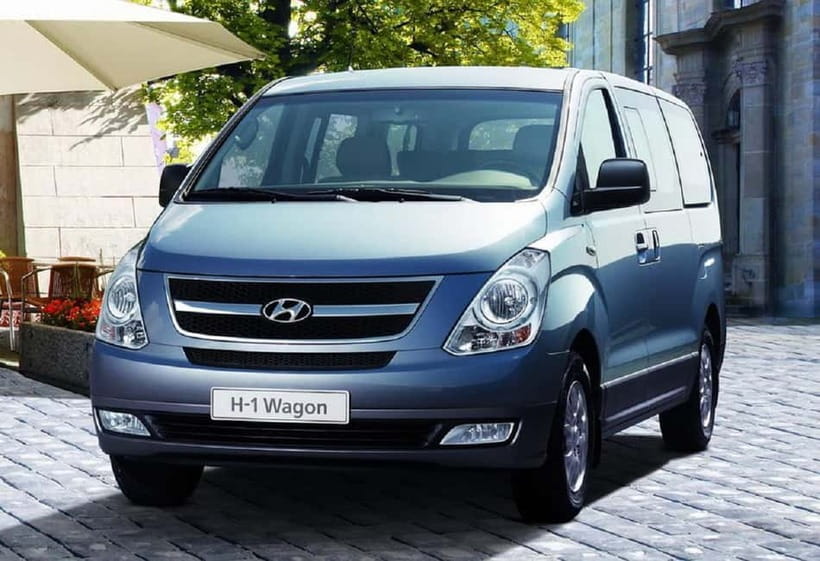
The vehicle has air conditioning, an important detail for a desert crossing. The booking is private, with pickup and drop-off included. The advertised price is $160 for a group of up to three people, not $160 per person. For three people, that is about $53 each before entrance tickets and personal costs. For one or two people, the price is less of a bargain, but it can still make sense if you value a direct hotel-to-hotel journey and do not want to arrange separate transport.
One point needs care. A party of six used a comfortable, spacious minivan, but the stated price applies to up to three people. If your group is larger, confirm the vehicle and total cost before paying. Do not assume the small-group price automatically covers everyone.
More fortresses and citadels around the world:
- Carcassonne: Castle and Ramparts Entry Ticket
★ 4.6 · 2,884 reviews - Salzburg: Hohensalzburg Fortress Admission Ticket
★ 4.6 · 2,236 reviews - Salzburg: Best of Mozart Fortress Concert and Dinner
★ 4.5 · 1,424 reviews
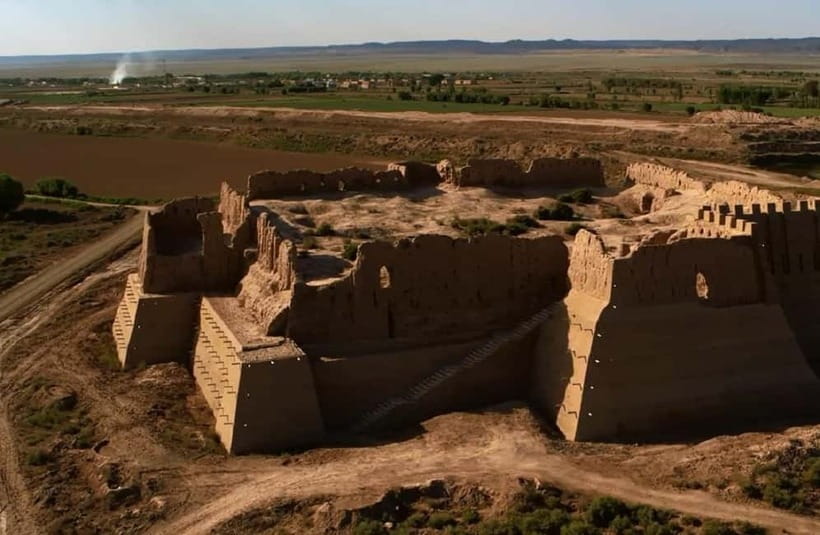
Toprakkala, the old capital in the clay
Toprakkala is the intellectual anchor of the day. Its name means Clay Fortress, and it was once the first capital of Khorezm. The remains are important because archaeologists found an early city plan here, evidence of organized state life dating to the fourth century BC.
That makes the site more than a photogenic mound. You can look across the old settlement and think about streets, buildings, administration, and the people who made this place a capital. Written sources from Khorezm were found here, along with a calendar and plaster statuettes of singers. Those discoveries give the ruins a human touch. This was not only a defensive outpost. It was a place where government, record keeping, and culture had a home.
The site is exposed and open. Bring sunglasses, water, and a hat if you use one. Comfortable shoes matter because your visit involves walking over uneven ground. A driver who explains the basic story makes a real difference here, especially since the remains do not come with the same dense layer of signs and services you might find at a major European archaeological site.
Do not judge Toprakkala by the amount of standing architecture. Much of its value comes from its plan, its setting, and what was found beneath the surface. You are seeing the outline of a former center of power in a dry, spare setting.
Kizilkala, the red garrison fortress
Kizilkala is a shorter and more focused stop. The name means Red Fortress, a reference to the color of the clay. It functioned as one of the oasis garrison fortresses, part of the defensive system that protected settlements and routes across Khorezm.
This stop helps you understand the larger pattern. The ruins are not isolated castles built for decoration. They belonged to a chain of fortified positions placed around the oasis. The dry surroundings make the defensive purpose easy to picture. From a distance, the fortress looks like part of the earth, but its form points to planning and military use.
Kizilkala may appeal most to you if you enjoy atmosphere and wide views more than polished restoration. The site is brief enough to keep the nine-hour schedule moving, but it adds variety after Toprakkala. Your driver can also point out features along the route, which matters when the physical remains are easier to feel than to read.
The red clay is particularly useful for photography, but the light and temperature can change sharply across the day. Wear clothes that work for sun and wind. In winter, warm clothing is essential. The name Severe Frost belongs to Ayazkala, but the open steppe can make any winter stop feel serious.
Ayazkala and the edge of the oasis
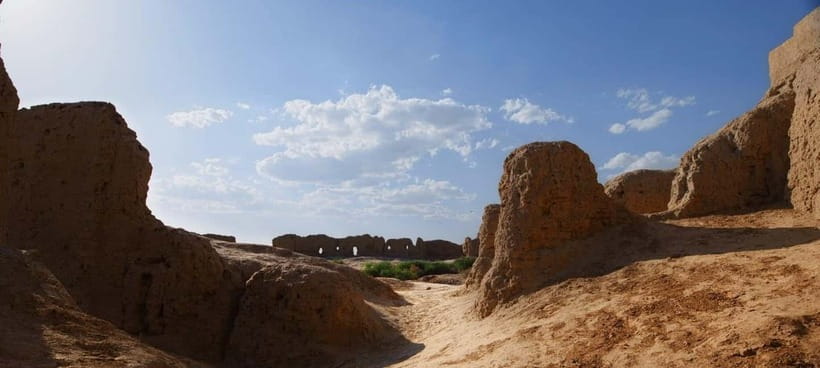
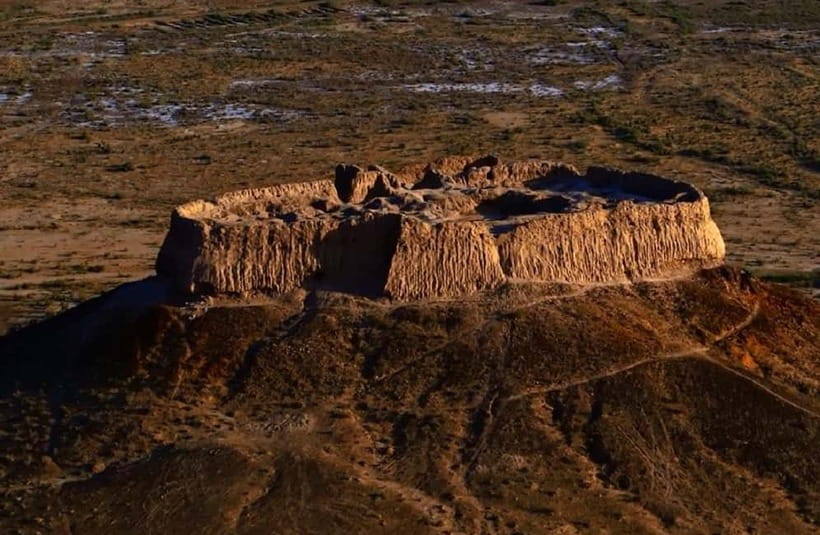
Ayazkala is the grandest stop on the route in terms of scale and position. It consists of three parts and was built around the edge of the oasis. Its defensive role was to help protect settled communities from raids by nomads coming from the north.
The name is translated as Severe Frost Fortress. You understand that name best in winter, when the steppe cold can be harsh. In warmer months, the open setting gives you a different impression: wind, distance, and a strong sense that this was a frontier zone.
Ayazkala was one of the more remote and well-organized fortresses. That remoteness is part of its power, but it is also a practical warning. You will not get a city break between this stop and the next part of the drive. Bring your own water, and do not rely on finding refreshments at each monument.
The three-part layout gives the site more depth than a single ruined wall. You can see how defense worked across the edge of the oasis, with the fortresses connected to a wider system rather than operating alone. Take time to look outward, not only at the masonry. The empty distance explains why these positions mattered.
More castles to explore around the world:
- Stonehenge, Windsor Castle, and Bath from London
★ 4.5 · 18,662 reviews - Bucharest: Dracula’s Castle, Peles Castle, & Brasov Old Town
★ 4.5 · 17,858 reviews - From Munich: Neuschwanstein & Linderhof Castle Full-Day Trip
★ 4.6 · 14,646 reviews - Edinburgh Castle: Guided Walking Tour with Entry Ticket
★ 4.7 · 11,699 reviews
The Kyzylkum Desert between stops
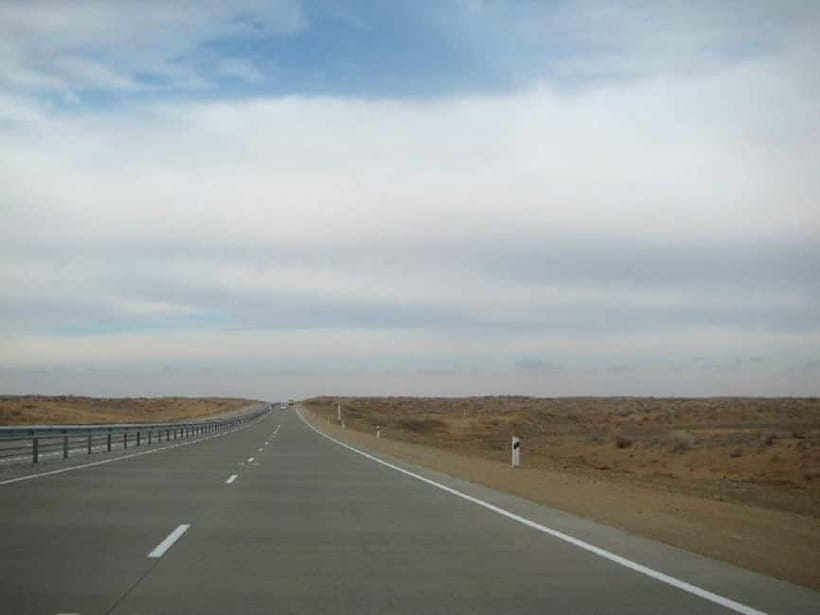
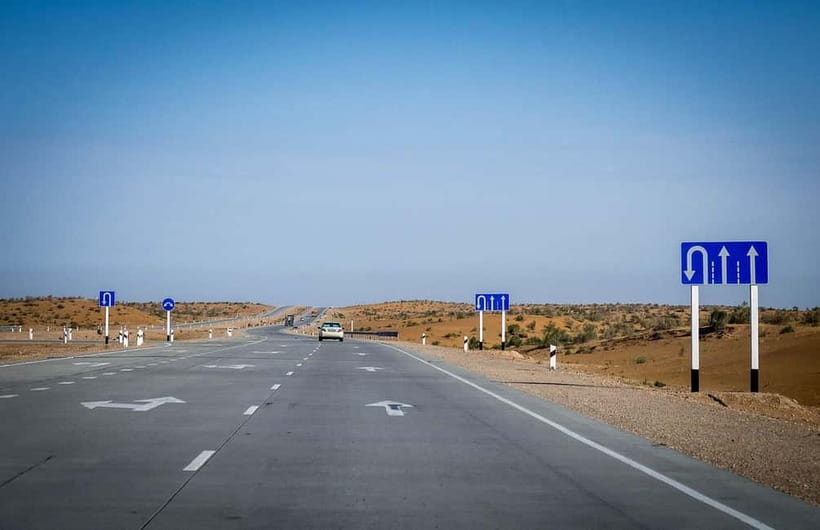
The desert crossing is not filler. It is the setting that ties the fortresses together. You move through the Kyzylkum Desert, where the dry ground and broad views make the old oasis system easier to understand.
I would not describe this as a scenic drive in the polished, roadside-attraction sense. Much of the pleasure comes from space and contrast. Bukhara and Khiva are historic cities with defined streets and buildings. The fortress route gives you open country, low ruins, and long stretches of road between them.
That also means you need to manage your energy. Nine hours in a vehicle is a substantial day. The air conditioning helps in hot weather, and a careful driver matters even more on a demanding road. One group praised Ulugbek for moderate, safe driving in difficult traffic conditions. Other strong experiences were linked to Pavlik, Jasur, and Ali. Driver quality can shape the whole day, so it is worth confirming the language and pickup details in advance.
The available driver languages are English and Russian. English ability can vary, but the strongest experiences came from drivers who explained the sites and answered questions rather than simply handling the wheel. If your history knowledge is limited, ask questions as you go. The route becomes much more rewarding when each fortress is tied to its role in the oasis.
Lunch, timing, and the practical rhythm
Lunch is planned somewhere along the route, but the exact stop is not fixed in the supplied details. One group stopped at a yurt camp, which can add a memorable local touch to a day otherwise built around ruins and road time.
Bring water with you. The instructions ask you to stay hydrated, and that is sound advice for desert conditions. Food and drinks are not allowed in the vehicle, so you should plan to consume them during the designated stop rather than treating the car as a picnic room.
The schedule is tight enough that you should be ready in the hotel lobby five minutes before pickup. Delays at the start can reduce your time at the fortresses or push back your arrival in Khiva. The stated plan is Bukhara, Toprakkala, Kizilkala, Ayazkala, then Khiva, with an estimated lunch stop along the way.
You should arrive in Khiva after the sightseeing portion, with drop-off at your hotel. That hotel-to-hotel finish is one of the strongest practical features. You do not have to find a second ride after reaching the city.
What the $160 price really buys
The $160 group price includes an air-conditioned vehicle, pickup and drop-off, visits to all three fortresses, and taxes. It does not include monument entrance tickets, which are listed at roughly $1 to $2 per monument per person. Personal expenses and other unspecified costs are also separate.
For three people, the price is attractive because it turns a necessary intercity journey into a private sightseeing day. You get control of the vehicle rather than sharing a standard bus, and you can ask the driver to explain what you are seeing. The value is weaker for a solo visitor, since the full cost falls on one person, but the direct transport and three archaeological stops still save you from arranging separate travel.
The price is especially sensible if you had already planned to go from Bukhara to Khiva by road. You are adding the fortresses to a route you need to cover anyway. If your only goal is to reach Khiva as quickly and cheaply as possible, a sightseeing transfer may feel too slow.
Entrance fees are small, but carry cash in suitable Uzbek currency if possible. The listed estimate is low, yet you should still budget for three site entries, lunch, water, and any personal purchases.
Comfort, communication, and safety
The strongest practical praise centers on the drivers. Pavlik was described as friendly, helpful, and good at pointing out the sites. Jasur was praised for safe driving and good English. Ulugbek, or a very similar name, was noted for being sociable, careful, and informative in Russian. Ali was also described as kind and helpful.
These details matter because the driver is not a separate guide in the usual museum-tour sense. Your driver controls the pace, explains the stops, and makes a long road day pleasant or tiring. The experience works best when you treat the drive as a guided transfer and speak up about questions, comfort, or timing.
The vehicle is air-conditioned, and a group of six found its minivan comfortable and spacious enough. Still, vehicle size may depend on your party and booking. Confirm this if you need extra room or are traveling with a larger group.
There was also one warning about poor communication as the travel date approached, including unanswered questions. That does not cancel out the good driver experiences, but it is a fair reason to reconfirm the pickup time, hotel address, group size, and language before departure.
Wheelchair access is listed, but the fortresses themselves are ancient open-air sites with uneven ground. If you use a wheelchair, ask the provider exactly what assistance and access are available at each monument. The vehicle may be accessible even where the ruins are difficult to reach.
Who should book this route
I would choose this transfer if you want to see more of Uzbekistan beyond Bukhara, Samarkand, and Khiva, and if you prefer a private road day to a simple point-to-point ride. It suits people who enjoy archaeology, big open views, and places that are not heavily polished for tourism.
It also works well for couples or a small group of friends. At up to three people, the cost divides neatly, and a private vehicle gives you a more personal day. Families may appreciate the hotel pickup and drop-off, though the nine-hour schedule and exposed sites may be tiring for young children.
You should think twice if you dislike long drives, need frequent indoor breaks, or want a detailed guided tour at every ruin. This is a transfer with substantial sightseeing, not a full archaeological lecture. Summer heat, winter cold, uneven surfaces, and limited information at the sites require a little independence.
Free cancellation up to 24 hours before departure and reserve-now, pay-later terms make planning easier. Those policies do not change the nature of the day, however. You still need comfortable shoes, sunglasses, warm layers in winter, a camera, and your own water.
Should you book the Bukhara to Khiva fortress transfer?
Book it if you are already traveling by road from Bukhara to Khiva and want the journey to carry real historical weight. Toprakkala gives you the old capital, Kizilkala shows the garrison system, and Ayazkala puts the entire oasis defense into a broad desert setting.
Skip it if your priority is the fastest possible arrival in Khiva or if a nine-hour day in a car sounds unpleasant. Before booking, confirm the pickup details, driver language, vehicle size, and final price for groups larger than three. For a small party that values archaeology and an efficient itinerary, $160 is a fair way to turn a long transfer into one of the more distinctive days of an Uzbekistan trip.
FAQ
How long does the Bukhara to Khiva fortress transfer take?
The scheduled duration is nine hours, including the drive, fortress visits, and an estimated lunch stop.
Which fortresses are visited?
The route visits Toprakkala, Kizilkala, and Ayazkala before continuing to Khiva.
Is the transfer private?
Yes. It is offered as a private group experience with hotel pickup and drop-off.
What is included in the price?
The price includes an air-conditioned vehicle, pickup and drop-off, visits to the three fortresses, and all listed fees and taxes. Monument entrance tickets are separate.
How much does the transfer cost?
The listed price is $160 for a group of up to three people. Entrance tickets are estimated at $1 to $2 per monument per person.
Which languages are available?
The available driver languages are English and Russian.
New castle tours around the world
- From Prague: Karlštejn Castle & Koněprusy Caves Tour★ 4.9 · 183 reviews
- Prague: 2.5-Hour Vyšehrad Castle with Gorlice & Tickets★ 4.5 · 118 reviews
- Prague: Alchemy & Mysteries Bridge and Castle Evening Tour★ 5.0 · 8 reviews
- Prague Castle: 1-Hour Introduction Tour with Entry Ticket★ 4.2 · 41 reviews
- Potsdam: The evening Wannsee tour. Castles, parks, and villas.★ 4.7 · 63 reviews
- Prague: Stunning Viewpoints, Castle, City & Park Bike Tour★ 4.6 · 38 reviews
- Prague: River & Park Bike Tour to Troja Chateau★ 5.0 · 8 reviews
- Ljubljana: Postojna cave & Predjama castle small group tour★ 4.9 · 29 reviews
Fortress & Citadel Tours, compared.
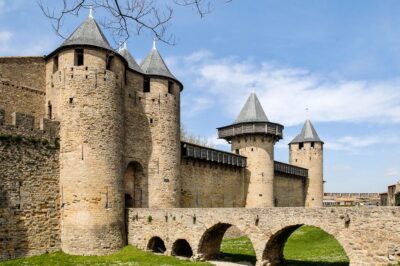
Carcassonne: Castle and Ramparts Entry Ticket
Read our review →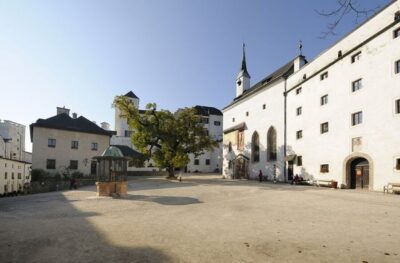
Salzburg: Hohensalzburg Fortress Admission Ticket
Read our review →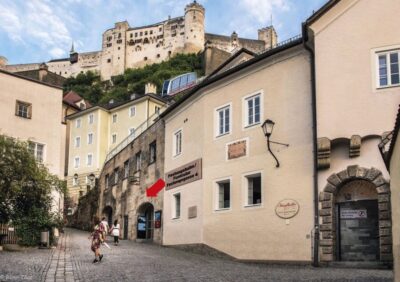
Salzburg: Best of Mozart Fortress Concert and Dinner
Read our review →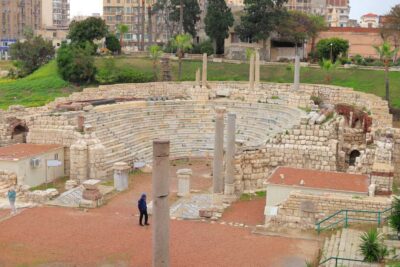
From Cairo Alexandria Catacombs, Citadel Day Trip with Lunch
Read our review →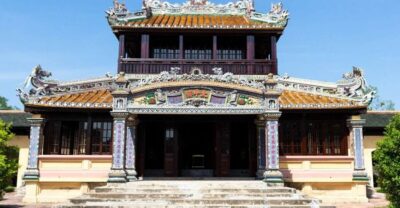
Hue Customizable Tour with Imperial Citadel & Forbidden City
Read our review →
Desert Safari: Luxury Fortress Dinner, Camel Ride & Dune Bashing
Read our review →
Cairo: Egyptian Museum, Citadel, and Old Cairo Guided Tour
Read our review →
Cairo Citadel, Old Cairo and Khan El Khalili: Private Tour
Read our review →Browse the lists this tour appears in