
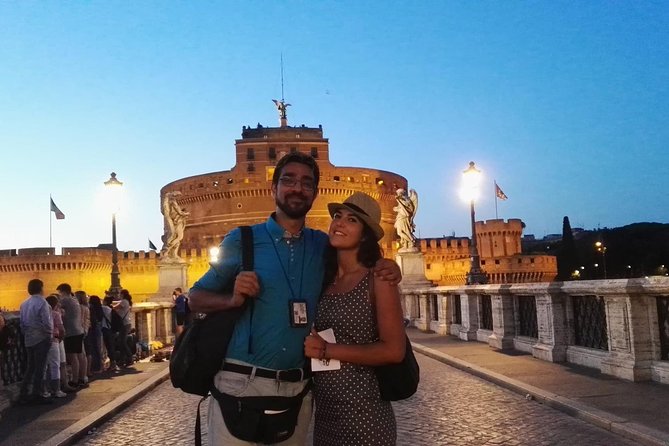
Review · ROME
Private Tour – St. Angel’s Castle
Castel Sant’Angelo is one of Rome’s best buildings for seeing the city’s past stacked in layers. It began as Emperor Hadrian’s mausoleum, became a Vatican defense post, then a garrison, prison, treasury, and archive. A private guide helps connect those changes instead of leaving you to stare at a succession of grand rooms.
I like the private format, which gives you time to ask questions without keeping pace with a large group. I also like the combination of frescoed halls and terrace views, since you get both art inside and a fine look across Rome outside. The main consideration is price: at $138.17 per person, this makes the most sense for a small group that values personal attention.
Key points at a glance
- Hadrian’s mausoleum became a fortress: The building’s changing purpose is the central story of the visit.
- A private English tour: Only your group takes part, with room for questions and a flexible conversation.
- Vincent may be your guide: He is praised for clear English, lively storytelling, and bringing the castle’s past to life.
- Several morning and afternoon choices: You can fit the visit around other Rome plans.
- More than a rooftop view: The route includes frescoed halls, prisons, arms, paintings, marble, ceramics, and sculpture.
- Moderate physical fitness is needed: Expect a substantial historic building visit rather than a quick photo stop.
Why Castel Sant’Angelo rewards a guided visit
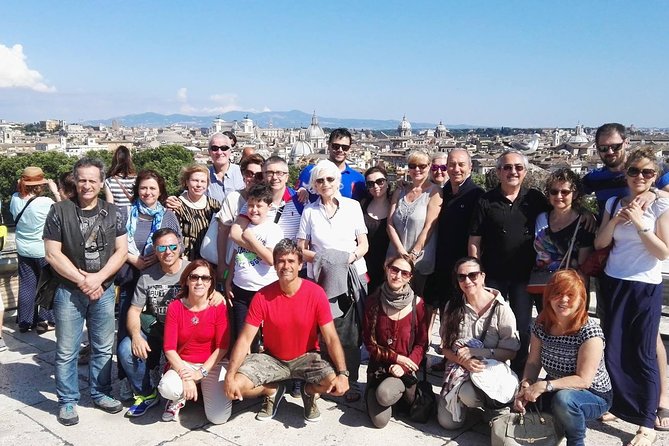
From the outside, Castel Sant’Angelo looks like a massive round fortress beside the Tiber. Its shape makes more sense once you know it was built between 117 and 138 AD as the mausoleum of Emperor Hadrian and later emperors. The Aelius Bridge, now the approach across the river, was built with it.
That first purpose can be easy to miss if you arrive only for the famous statue of the angel on top. Inside, the building tells a longer story. Rome reused it again and again, turning a tomb into a defensive wall for Vatican City, a military post, a prison, and a place connected with the Vatican Treasury and Archive.
I find that kind of layered site especially suited to a private guide. You are not just looking at a fortress. You are seeing how power in Rome changed hands and how buildings were altered to meet new needs. Vincent, one of the guides associated with this experience, is praised for lively storytelling and strong English. That matters here, because the castle can feel like a series of disconnected chambers without a clear thread.
The experience is offered in English and lasts about two hours and 15 minutes overall. The castle portion is listed as two hours, so leave a little breathing room around the scheduled start and end. You return to the meeting point at Castel Sant’Angelo.
More Private Castle Tours in Italy
- Milan Private Tour – Duomo, Sforza Castle & Gelato Tasting
★ 5.0 · 40 reviews - Milan: Duomo, Scala, Sforza Castle and Last Supper Private Tour
★ 5.0 · 38 reviews - Milan: Private Tour – Duomo, Sforza Castle & Gelato Tasting
★ 4.8 · 36 reviews
Meeting at Lungotevere Castello
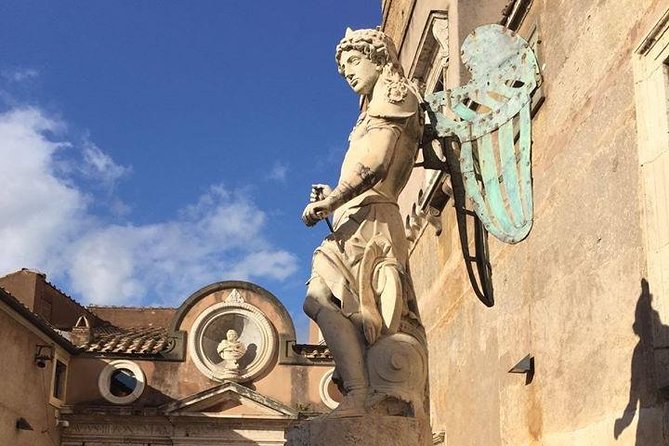
You meet at Castel Sant’Angelo, Lungotevere Castello 50, 00193 Rome. The activity begins and ends there, so you need to arrange your own way to the site and your next destination.
The location is near public transportation, but private hotel pickup, drop-off, and private transport are not included. That is a useful distinction when planning a busy Rome day. The tour itself is private, but the journey to and from the castle is your responsibility.
If you are building a day around the Vatican area, the meeting point can fit neatly into your plans. Still, do not treat the castle as a quick add-on between tightly timed bookings. Confirmation arrives at booking, and the experience is often reserved well in advance, with an average booking lead time of 93 days. That suggests you should plan early if your Rome dates are fixed.
Morning and afternoon options give you some control. A morning start can leave the rest of the day open, while an afternoon visit may work better after another central Rome sight. Since no hotel transport is provided, check your route and allow enough time to reach the meeting point.
From imperial tomb to Vatican stronghold
The first major idea to keep in mind is change. Hadrian’s original mausoleum was not designed as the fortress you see today. It was a grand burial monument for the emperor and his successors, linked to the city by the Aelius Bridge.
Centuries later, the building’s position made it valuable as a defensive rampart for Vatican City. Thick walls and a commanding place beside the river gave it a military role. It also housed a garrison, held prisoners, and served practical Vatican functions connected with money and records.
A private visit lets you ask the questions that make this sequence clearer. You can ask how a tomb became a defense post, why the building needed prison spaces, or how the Vatican used it beyond military purposes. The value is not just in hearing dates. It is in understanding why the same building kept surviving because each era found a new use for it.
The tour’s storytelling is one of its strongest features. Vincent is singled out for making the past feel immediate and for interacting with the group. That personal delivery can be especially useful in a place where the architecture is impressive but not always self-explanatory.
Frescoes in the Hall of Apollo and Hall of Paolina
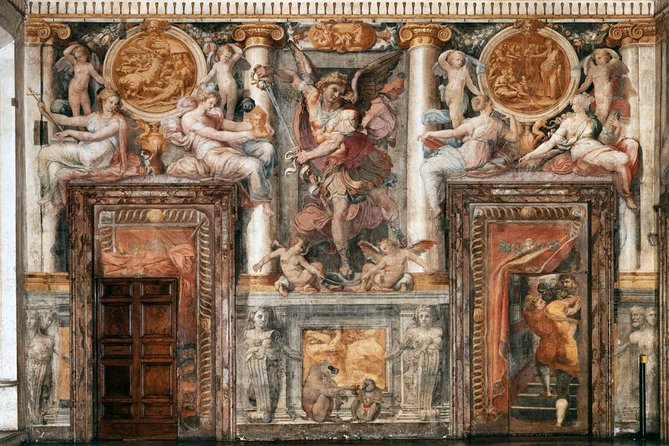
The castle’s decorated rooms give the visit a different mood from the heavy outer walls. The Hall of Apollo, the Hall of Paolina, the Hall of Perseus, and the Room of Amore and Psiche show the building’s later courtly side.
The Hall of Paolina is decorated with stories of Alexander the Great. The Hall of Perseus presents episodes from the myth of the Greek hero. The Room of Amore and Psiche draws on the familiar tale of Cupid and Psyche, while the Hall of Apollo brings another classical reference into the castle’s decorated interior.
These rooms help you see that Castel Sant’Angelo was not only a place of war and confinement. It also contained formal rooms made for display and ceremony. The contrast is striking: one part of the building suggests imperial and papal power, while another points to military defense or imprisonment.
I would pay close attention to the guide’s explanation in these halls rather than trying to identify every figure in the frescoes alone. The private setting means you can stop to ask who appears in a scene or why a classical story was chosen. The tour does not promise a specialist art lecture, but it does give you a way to place the decoration within the building’s wider purpose.
Same stronghold, another way through the gate:
- Milan: Sforza Castle Entry Ticket with Digital Audio Guide
★ 4.0 · 2,675 reviews - Milan: Sforza Castle and Michelangelo’s Pietà Rondanini Tour
★ 4.7 · 1,119 reviews - Small-Group Barolo Wine Tasting, Alba & UNESCO Piedmont Hills
★ 5.0 · 689 reviews - From Siena: Chianti and Castles Tour with Wine Tastings
★ 4.6 · 631 reviews
Prisons, arms, and evidence of daily power
The prisons add a sobering counterpoint to the grand rooms. They show the less polished side of the castle’s role. Castel Sant’Angelo was not simply a ceremonial monument or a scenic lookout. It was also a place where people were confined.
The collection of antique arms reinforces the fortress story. Weapons make the defensive role easier to picture, particularly after you have learned that the building protected the Vatican area. Together, the prison spaces and arms collection give the visit physical evidence of authority, control, and military readiness.
The route also includes a painting gallery with works by Carlo Crivelli, Luca Signorelli, and Dosso Dossi. There are collections of ancient marbles, ceramics, and sculptures as well. This range may appeal to you if you like museums that combine architecture with objects rather than presenting only one kind of collection.
Do not expect every room to receive equal time in a two-hour visit. A private guide can adjust the conversation, but the castle contains more material than anyone can examine closely in one short tour. If one area matters most to you, say so early. That is one of the real benefits of taking the tour with only your own group.
The terrace view over Rome
The terrace is the natural payoff at the top of the visit. It offers one of the best panoramic views of Rome’s historic center, giving you a chance to step back from the enclosed rooms and see how the castle fits into the city.
From this high position, the Tiber, bridge, domes, rooftops, and central monuments form a broader picture of Rome. The view also explains the building’s defensive value. A fortress beside the river is easier to understand when you can see how much ground it commands.
I like that the terrace is not the entire point of the tour. Many sightseeing stops promise a view and provide little else. Here, the rooftop comes after the mausoleum, decorated chambers, prison areas, collections, and military story. You earn the view by understanding the building below.
Bring your questions to the terrace. A guide can help you connect visible landmarks with the castle’s place in Rome. Since the experience is private, you do not have to compete with a large group for a moment at the edge or rush away before you are ready, though the overall schedule still applies.
What the private format changes
This is not a shared walking tour with a large, fixed group. Only your party takes part. That changes the pace and the tone more than it changes the route itself.
You can ask for clarification when a name, date, or room is unfamiliar. You can also spend more time on the subjects that interest you most, within the guide’s schedule. The private arrangement is especially useful for families, couples, or friends who prefer conversation over a one-way lecture.
The strongest praise for the guiding centers on Vincent’s storytelling, clear English, and ability to make the subject fun. Those are practical strengths, not just nice extras. In a building with many periods and functions, a guide who can keep the story moving helps you remember what you saw.
There is a tradeoff. A private tour costs more than joining a larger group or visiting independently. At $138.17 per person, the price is easier to justify when several people share the experience and make use of the personal attention. If you are comfortable reading signs and exploring at your own pace, you may prefer a standard admission visit instead.
Group discounts are available, but the exact savings are not provided. Check the price for your party before booking rather than assuming the discount will apply automatically.
Timing, walking, and practical planning
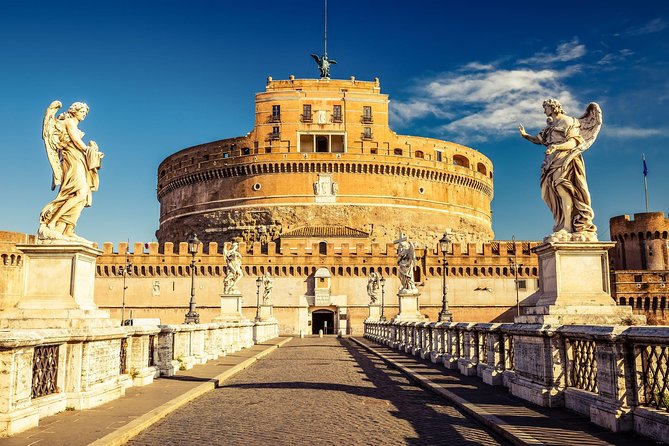
The stated duration is approximately two hours and 15 minutes, with two hours assigned to Castel Sant’Angelo. That is long enough for a proper introduction to the building, but not so long that it takes over an entire day in Rome.
You should have a moderate level of physical fitness. The experience takes place inside a large historic fortress, and the visit includes multiple rooms and a terrace. The supplied details do not specify the number of stairs, lifts, or the exact route, so ask the provider if mobility is a concern before reserving.
Plan around the fixed meeting point. There is no hotel pickup, hotel drop-off, or private transportation. The activity finishes where it begins, which makes it simple to continue with your own Rome plans, but it also means you need to arrange both legs of the journey.
Admission tickets and a professional local guide are included. That makes the cost easier to judge, since you are paying for entry as well as a private explanation of the site. The booking page also describes admission at the castle as free in the itinerary details, so confirm the current ticket arrangement when you book. The key point is that you are not expected to buy a separate admission ticket on the spot.
Free cancellation is available up to 24 hours before the local start time for a full refund. Cancellations or changes made less than 24 hours ahead are not accepted for a refund.
Who should book this Castel Sant’Angelo tour
I would choose this experience if you want more than a quick exterior look and prefer to ask questions as you go. It suits first-time visitors who want a clear introduction to the castle, as well as repeat visitors who missed the interior on an earlier Rome trip.
It is a good match for a small group that values a private guide and for anyone who enjoys stories about how buildings change purpose over time. Art lovers will appreciate the frescoed halls and works by Crivelli, Signorelli, and Dossi. History fans will get the mausoleum, fortress, garrison, prison, and Vatican connections in one compact visit.
I would hesitate if your main goal is simply to reach the terrace for photographs. You would be paying for a full guided visit when a shorter stop may suit you better. I would also compare the price carefully if you are traveling alone, since $138.17 per person is a serious outlay for two hours.
Should you book it?
Book this private Castel Sant’Angelo tour if you want the building’s many lives explained in plain English, with time for your own questions. The combination of Hadrian’s mausoleum, Vatican defense rooms, frescoes, prisons, collections, and terrace views gives the visit real range.
The decision comes down to value. You are paying for personal attention, included admission, and a guide such as Vincent who can make the stories easier to follow. If that matters more to you than finding the lowest-cost entry, this is a strong choice. If you prefer to explore alone or only want the view, save the money and visit independently.
FAQ
Where does the tour start?
It starts at Castel Sant’Angelo, Lungotevere Castello 50, 00193 Rome, Italy.
Where does the tour end?
The activity ends back at the meeting point at Castel Sant’Angelo.
How long does the experience last?
The approximate duration is two hours and 15 minutes. The castle visit itself is listed as two hours.
Is this a private tour?
Yes. Only your group participates in the activity.
Is the tour offered in English?
Yes. The tour is offered in English.
Is a guide included?
Yes. A local professional guide is included. Vincent is one of the guides associated with the experience.
Are admission tickets included?
Yes. Tickets are included.
Is hotel pickup provided?
No. Hotel pickup and drop-off are not included.
Is private transportation included?
No. You must arrange your own transportation to and from the meeting point.
Can I cancel for a full refund?
Yes, if you cancel at least 24 hours before the experience’s local start time. Cancellations or changes made less than 24 hours ahead are not refunded.
New castle tours around Italy
- Pastrengo: e-bike tour and wine tasting in the Castle★ 4.8 · 9 reviews
- Naples Express Tour: Castles, Legends & the Gulf★ 5.0 · 9 reviews
- Naples: San Martino and Sant’Elmo Castle Guided Tour★ 4.9 · 48 reviews
- Montone: Medieval Dinner in Cardaneto Castle★ 5.0 · 2 reviews
- Montone: Pasta Making and Dinner at Cardaneto Castle★ 5.0 · 4 reviews
- Montalcino: Brunello Wine Tasting & Lunch in a Tuscan Castle★ 4.6 · 324 reviews
- Montalcino: Castle and Vineyards Tour with Tasting★ 4.2 · 55 reviews
- Miramare: The most romantic, beautiful and sad castle.★ 4.2 · 6 reviews
Private Castle Tours, compared.
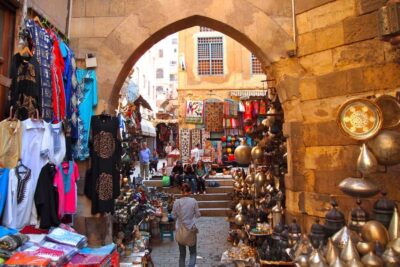
Cairo Citadel, Old Cairo and Khan El Khalili: Private Tour
Read our review →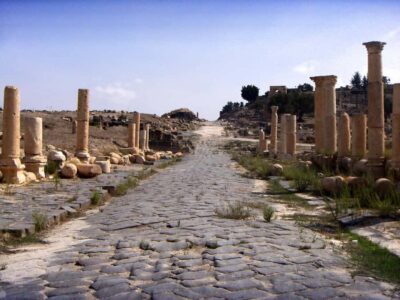
From Amman: Jerash, Ajloun Castle or Umm Qais Private Tour
Read our review →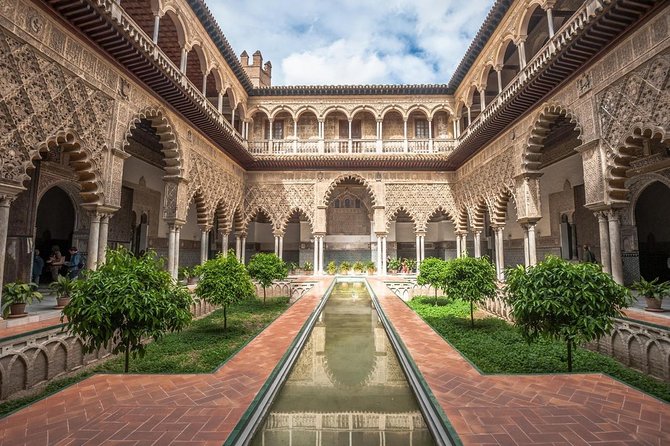
Seville Private Walking Tour with Alcazar & Cathedral Tickets
Read our review →
Sintra Cascais Private Tour with Pena Palace and Mouros Castle
Read our review →
Skip-the-Line Wawel Castle Chambers Private Tour
Read our review →
Castles of Transylvania: Private Day Trip from Bucharest
Read our review →
Dracula’s Castle, Peles Castle and Brasov – Private Day Trip from Bucharest
Read our review →
Private Walking Tour Alcazar and Cathedral in Sevilla
Read our review →Browse the lists this tour appears in