

Review · ROME
City walk through Spanish steps, Trevi fountain, Pantheon, Navona, Angel Castle
Rome reveals itself best on foot, and this route links several of its most famous sights in one tidy three-hour walk. You begin at the Spanish Steps and finish outside Castel Sant’Angelo, passing fountains, churches, ancient ruins, grand squares, and the Tiber along the way. The tour has a private format, so your group can ask questions without competing with a crowd.
I like the route for two reasons: the guide supplies the historical links that turn separate sights into one story, and the pace leaves time to look rather than simply collect photographs. Guides named Chris and Gigi have been praised for clear explanations, strong attention, and personal touches. The main consideration is the price: $524.97 covers up to three people, making it far more sensible for a full small group than for one person.
Key points at a glance
- A private Rome walk for up to three people: You get your own guide rather than joining a large group.
- A useful north-to-south route: The walk begins at Babington’s Tea Room by the Spanish Steps and ends outside Castel Sant’Angelo.
- Eight major stops in about three hours: Expect a brisk overview of central Rome, not a slow museum tour.
- Caravaggio inside Saint Louis of the French: This church adds a serious art stop to the outdoor sightseeing.
- The Pantheon is covered from outside and inside: That gives the tour more substance than a quick exterior photograph.
- Strong guide-focused feedback: Chris and Gigi are specifically praised for explanations, attention, and help making Rome’s history easier to follow.
What this private walk does well
Rome can feel like a pile of famous names at first: Spanish Steps, Trevi Fountain, Pantheon, Navona, Castel Sant’Angelo. The clever part of this route is the order. It moves through central Rome in a mostly logical line, showing how ancient buildings, papal power, civic government, Baroque design, and daily city life overlap.
You are not simply being taken from one photo stop to the next. The guide explains the architecture and historical setting at each place. That matters in Rome, where a worn stone wall may be older than the country itself and a grand square may hide an ancient stadium below its shape.
The private setup also changes the feel of the walk. With only your party participating, you can ask for clarification, linger over a subject, or move along when a square is especially crowded. The itinerary is planned, but the experience is less rigid than a large group outing.
The tradeoff is that the tour covers a lot of ground in three hours. You will get a strong introduction, but not a long visit at every stop. If you want extended time inside the Pantheon, a full Castel Sant’Angelo visit, or a detailed art tour, you will need separate time later.
More Castle Walking Tours in Italy:
- Edinburgh Castle: Guided Walking Tour with Entry Ticket
★ 4.7 · 11,699 reviews - Prague: 3-Hour Walking Tour of Old Town & Prague Castle
★ 4.7 · 5,696 reviews - Edinburgh Castle: Guided Walking Tour with Entry Ticket
★ 5.0 · 5,540 reviews
Starting at the Spanish Steps
Meet at Babington’s Tea Room, Piazza di Spagna 23. The opening stop gives you a classic Roman setting and a useful introduction to the area’s architecture and history.
The Spanish Steps are more than a grand staircase for photographs. The surrounding square, streets, and buildings show how Rome developed as a destination for artists, visitors, and powerful families. Your guide uses the setting to explain the area rather than rushing straight to the next fountain.
Allow about 30 minutes here. That is enough time for an explanation and a look at the square, though you should not expect a long architectural lecture. The tour does not list an admission charge for this stop, and the focus is on the public space and nearby area.
This is a good opening because the Spanish Steps are easy to recognize, yet their meaning is less obvious than their appearance. A guide helps you notice the relationship between the staircase, the piazza, and the surrounding streets.
Trevi Fountain and the civic heart at Piazza Colonna
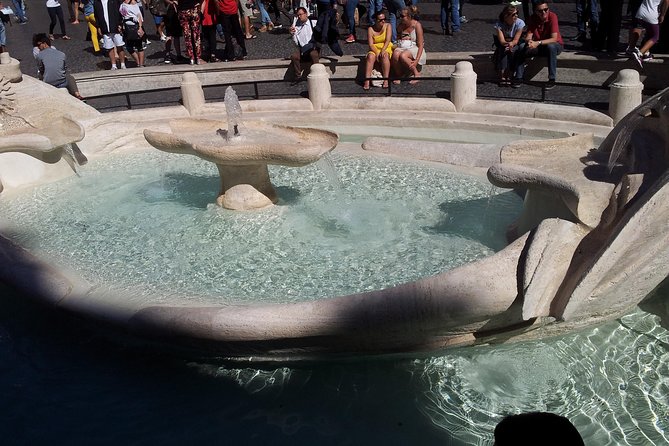
The next stop is the Fontana di Trevi, with about 25 minutes devoted to its design and history. The fountain is one of Rome’s most crowded sights, so the value here lies in having someone explain what you are seeing while you take in the monumental setting.
You should expect a busy public space, not a quiet viewing platform. Your guide can help you focus on the fountain’s architecture and story instead of treating it as a quick coin-toss photograph. The tour lists the stop as free of an admission ticket.
From there, the route continues to Piazza Colonna for roughly 20 minutes. This square offers a change of mood. Instead of focusing only on a famous monument, the guide explains its role as a modern political center of the city.
That contrast is useful. Rome is not an archaeological park preserved behind glass. Government, tourism, commerce, and ancient monuments all share the same streets. Piazza Colonna helps you see the city as a living capital rather than only a collection of old buildings.
Inside the Pantheon
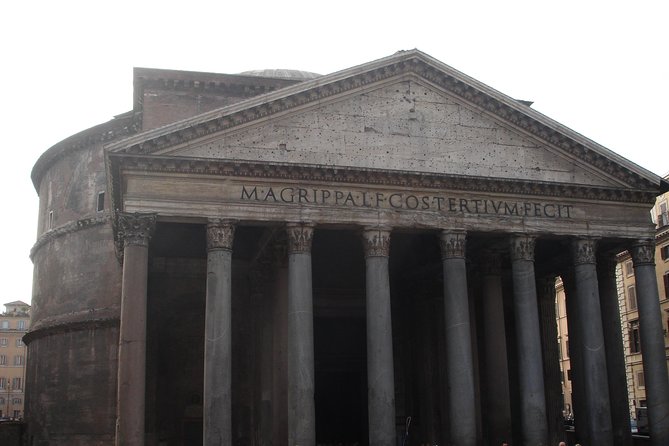
The Pantheon receives about 30 minutes, with the architecture explained from outside and inside. This is one of the strongest parts of the walk because the building rewards both a quick glance and a careful explanation.
From the outside, you can study the classical entrance and the way the building presents itself to the piazza. Inside, the scale and design become easier to understand when a guide points out the major features and explains how the space has endured through the centuries.
The Pantheon is also a useful place to connect engineering, religious use, and Roman public life. Your guide’s role is especially helpful here because the building’s most important details are not always obvious from a casual visit.
The listed time is 30 minutes, so keep your expectations in check. You will see the interior and hear the main points, but this is not a specialist architectural seminar. If the Pantheon is your personal priority, plan to return on your own for more time.
More castles to explore around Italy:
- Milan: Sforza Castle Entry Ticket with Digital Audio Guide
★ 4.0 · 2,675 reviews - Milan: Sforza Castle and Michelangelo’s Pietà Rondanini Tour
★ 4.7 · 1,119 reviews - From Siena: Chianti and Castles Tour with Wine Tastings
★ 4.6 · 631 reviews - Milan: The Last Supper & Sforza Castle Guided Tour
★ 4.6 · 610 reviews
Caravaggio at Saint Louis of the French
The Church of St. Louis of the French adds one of the walk’s best surprises. The stop lasts about 20 minutes and includes the Chapel of Saint Matthew, known for its Caravaggio paintings.
This is a valuable change from outdoor sightseeing. After fountains and public squares, you step into a church where the guide can direct your attention to the paintings and explain their importance. You do not have to search through a large museum to find the work.
The brief stop means you should treat it as a focused introduction. You will see the chapel and its paintings, but the tour is not built around a long art-history discussion. Still, including Caravaggio gives the route a stronger artistic range.
I especially like this part for people who want more than Rome’s biggest monuments. The church shows how art, faith, patronage, and public display meet in the historic center.
Piazza Navona and Rome’s ancient layers
Piazza Navona receives about 25 minutes. The guide explains its central fountain and the square’s transformation from an ancient stadium into a Baroque public space.
This is exactly the kind of place where a guide adds value. The piazza looks unified today, but its long shape reflects what came before. The square’s form makes more sense once you learn about the stadium beneath its development.
The central fountain supplies the visual focus, while the wider piazza lets the guide explain Rome’s Baroque ambitions. You get a sense of how rulers and church leaders used architecture to shape public life and display power.
Twenty-five minutes is enough for the main story and a good look around. It is not enough to study every building or sit for a long break. If you want refreshments, shopping, or people-watching here, you may need to return after the tour.
Following the Tiber to Castel Sant’Angelo
The route then reaches the Fiume Tevere, the Tiber River, for about 10 minutes. This is the shortest stop, but it gives the walk a needed change of scale.
The guide discusses river life in the city and the bridges. You see Rome from a different angle, with the water helping explain movement, neighborhoods, and connections between the city’s banks.
Do not expect a long riverside walk. Ten minutes is a compact introduction, and the Tiber functions as a connecting point on the route rather than a major sightseeing session. Still, it prevents the tour from becoming a string of inland squares.
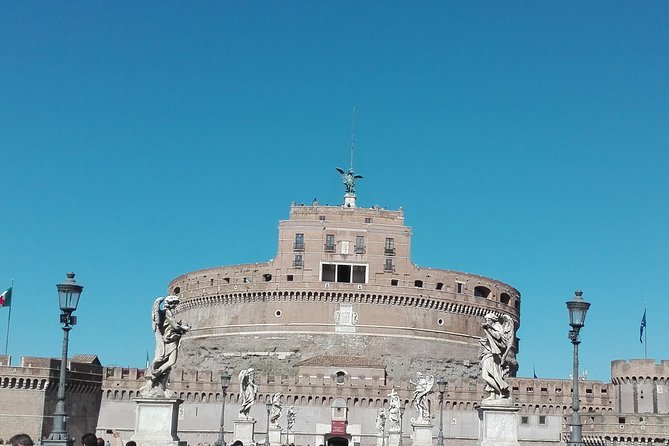
The final stop is the Museo Nazionale di Castel Sant’Angelo, covered from the outside for about 20 minutes. The tour explains the building’s changing role through the centuries, then ends in front of Saint Angel Castle.
This ending works well because Castel Sant’Angelo has a very different presence from the earlier fountains and churches. Its fortified exterior gives the guide a chance to explain Rome through power, defense, and changing political needs.
One important detail: this tour views Castel Sant’Angelo from outside. Admission to the museum is not included as part of the walk, and the itinerary does not promise an interior visit. If you want the museum rooms and upper-level views, plan a separate visit.
The guides make the difference
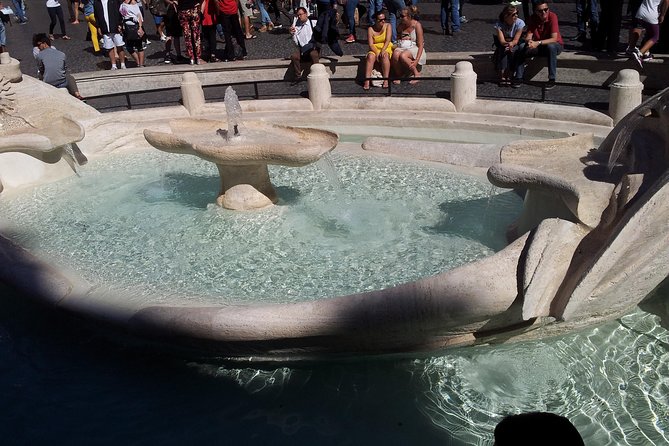
The clearest strength of this experience is the guide’s role. Chris is praised for explaining the city and the meaning behind what you see, including important figures and Rome’s long story. Gigi is praised for keeping attention through the full tour and adding personal touches.
Those points matter because a route this packed can easily become a list of dates and names. A good guide turns the details into a sequence you can remember. You want someone who can explain why the Pantheon feels different from Saint Louis of the French, or how Piazza Navona’s present form connects to its ancient past.
Cristina Giannicchi is named as the provider, and the experience is offered in English. The rating is 5 out of 5 from 55 ratings, with 100 percent recommending it. That is a strong record, especially for a tour whose success depends so heavily on the individual guide.
Guide quality can never be separated completely from the particular person assigned on your date. Still, the repeated praise for clear explanations and sustained attention points to the right reason to book this walk: you want help making sense of Rome, not just transportation between landmarks.
Is $524.97 good value?
The price is $524.97 per group of up to three people. That means the cost works out to about $175 per person for three, or about $262.49 each for two. For one person, the full group price is much harder to justify.
The value comes from the private format and the concentration of major sights. You are paying for a guide dedicated to your party for about three hours, with a route that includes the Spanish Steps, Trevi Fountain, Pantheon, Saint Louis of the French, Piazza Navona, the Tiber, and Castel Sant’Angelo.
The tour does not include tips. The listed stops do not require an admission ticket within the walk, but the Castel Sant’Angelo visit is exterior only. The Pantheon and church portions are described as including interior access, while the experience does not list separate entry charges.
I would consider it good value for three people who want a private introduction on their first day in Rome. I would be more cautious if you are traveling alone, staying on a tight budget, or mainly want to enter museums. In those cases, a shared walk or self-guided route may cost less, though it will not offer the same personal attention.
Who should book this walk?
This experience suits first-time Rome visitors who want to get oriented quickly. It also works well for families, couples, or friends who prefer asking questions freely and setting a relaxed group pace.
You should be comfortable walking through central Rome for three hours. The tour is near public transportation, and most people can participate. Service animals are allowed, but the supplied details do not specify the route’s surface conditions or seating arrangements, so contact the provider if you have particular mobility needs.
The morning or afternoon start makes it easier to fit into a wider schedule. I would choose the time that gives you the most energy for walking and the best room around fixed plans. The tour is not built around meals, shopping, or long breaks, so plan those separately.
You receive confirmation when booking, unless you book within nine days of the date. In that case, confirmation arrives within 48 hours if space is available. Free cancellation is offered up to 24 hours before the local start time, which gives you some useful flexibility.
Should you book it?
Book this walk if you want a private, guide-led introduction to central Rome and value clear explanations more than long visits inside individual monuments. The route covers an impressive range in three hours, and the guide’s help gives the city’s layers a sensible order.
I would choose it for a group of three, especially if this is your first visit and you want to understand what you are seeing before exploring further on your own. I would skip it if you prefer a slow museum day, need extensive rest stops, or mainly want to tour Castel Sant’Angelo inside.
For the right small group, this is a practical way to meet Rome’s famous sights without reducing them to a checklist. You finish with a clear sense of how fountains, churches, ancient buildings, public squares, the river, and the fortress fit together.
FAQ
How long does the walking tour last?
The tour lasts approximately three hours.
How many people can join the private tour?
The price covers one private group of up to three people.
Where does the tour begin?
It begins at Babington’s Tea Room, Piazza di Spagna 23, Rome.
Where does the tour end?
It ends in front of Castel Sant’Angelo, at Piazza Pia.
Is Castel Sant’Angelo visited inside?
No. The tour discusses Castel Sant’Angelo from the outside and ends in front of the castle.
Is the tour offered in English?
Yes. The experience is offered in English and includes a guide.
New castle tours around Italy
- Pastrengo: e-bike tour and wine tasting in the Castle★ 4.8 · 9 reviews
- Naples Express Tour: Castles, Legends & the Gulf★ 5.0 · 9 reviews
- Naples: San Martino and Sant’Elmo Castle Guided Tour★ 4.9 · 48 reviews
- Montone: Medieval Dinner in Cardaneto Castle★ 5.0 · 2 reviews
- Montone: Pasta Making and Dinner at Cardaneto Castle★ 5.0 · 4 reviews
- Montalcino: Castle and Vineyards Tour with Tasting★ 4.2 · 55 reviews
- Montalcino: Brunello Wine Tasting & Lunch in a Tuscan Castle★ 4.6 · 324 reviews
- Miramare: The most romantic, beautiful and sad castle.★ 4.2 · 6 reviews
Castle Walking Tours, compared.

Edinburgh Castle: Guided Walking Tour with Entry Ticket
Read our review →
Prague: 3-Hour Walking Tour of Old Town & Prague Castle
Read our review →
Edinburgh Castle Guided Walking Tour in English
Read our review →
Budapest: Buda Castle Walk with Saint Stephen’s Hall
Read our review →

Prague 3-hour Afternoon Walking Tour including Prague Castle
Read our review →
Royal Mile and Edinburgh Castle – Small Group Walking Tour
Read our review →
Browse the lists this tour appears in