
Review · FRANCE
Château Balestard La Tonnelle : The “Origins” tour
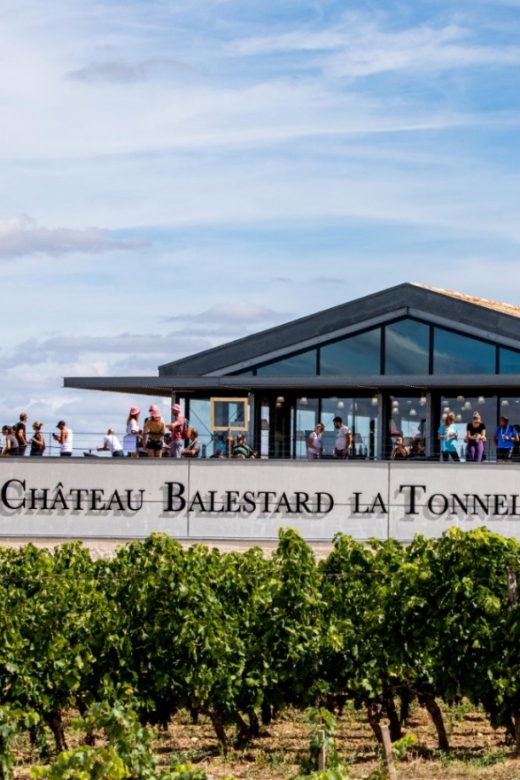
Château Balestard La Tonnelle gives you an unusual Saint-Emilion pairing: a 15th-century watchtower beside a sleek, architect-designed cellar from 2019. The contrast makes the visit more than a wine tasting. You see how an old estate is working with modern wine-making ideas without losing its sense of place.
I like the 400-square-meter panoramic terrace, where the three-wine tasting comes with a broad view toward Saint-Emilion and the surrounding appellations. I also like the small group limit of eight, which gives the guide room to explain the vineyard, vat room, and barrel cellar without turning the hour into a speech aimed at a crowd.
The main limitation is time. One hour is enough for a focused introduction, but not for a slow, sprawling château visit. You also get wine but no food, so plan this as a compact stop rather than a full afternoon outing.
Key points at a glance
- A medieval watchtower and 2019 bioclimatic cellar share the same estate, giving the tour a strong old-meets-new character.
- The 400-square-meter terrace provides a 360-degree view of Saint-Emilion and nearby appellations during the tasting.
- Three red wines are included, with at least one Grand Cru Classé in the lineup.
- The family connection reaches back to 1647, giving the estate a long local story to explain.
- Groups are limited to eight people, with tours offered in French or English.
- The price is $23 per person, a fair rate for a guided visit and three-wine tasting in Saint-Emilion.
Why the watchtower is the right place to begin
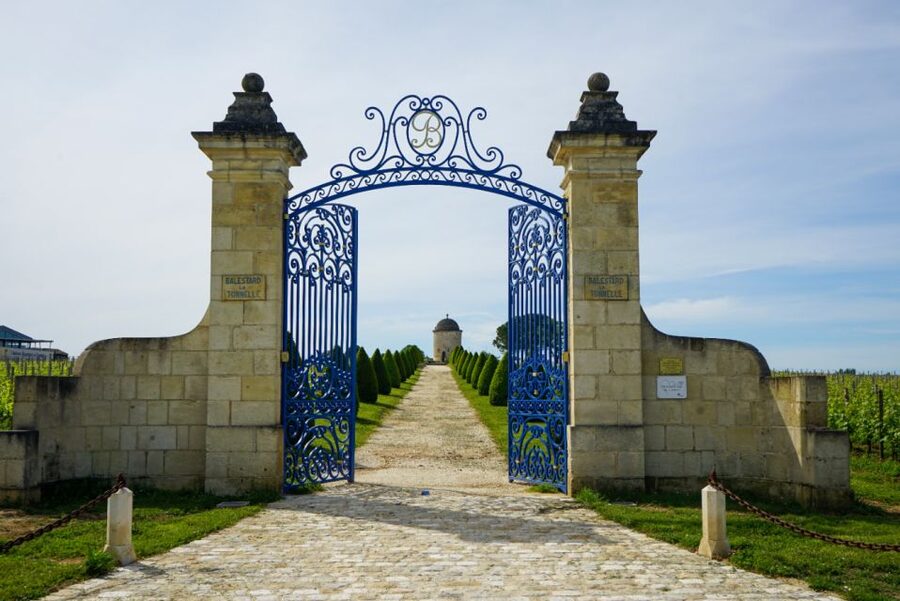
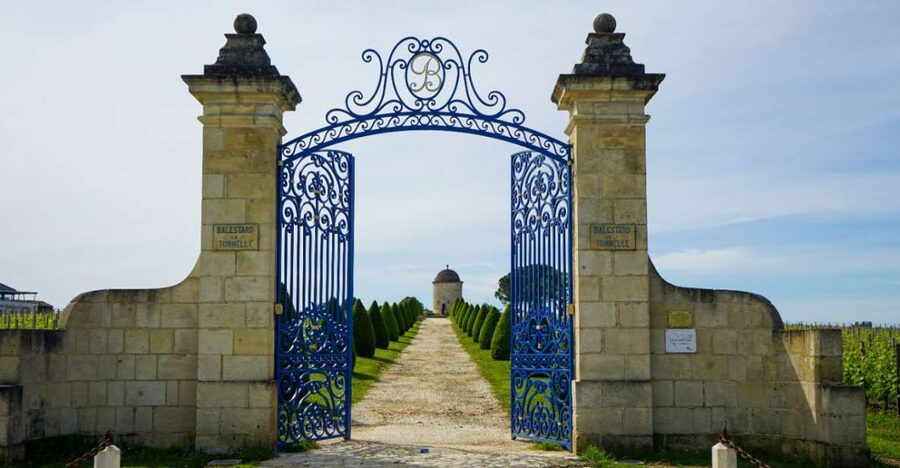
The first thing that gives Château Balestard La Tonnelle its personality is the watchtower. It dates from the 15th century and is also the parking reference point, so it is not just an old feature pointed out from a distance. Once you park by the tower, follow the path to the shop, arriving about five minutes before your scheduled start.
That small arrival detail matters. The property asks you to be at the boutique five minutes early, and a delay of more than 20 minutes may lead to cancellation. This is an organized tour with a fixed sequence, not a drop-in tasting where you can wander in whenever you like.
The tower also sets up the central idea of the visit. You are looking at a family wine estate with roots in Saint-Emilion going back to 1647, yet the working side of the property includes a modern building designed for current wine production. The past is not treated as a museum display. It is part of a living vineyard.
More castles to explore around France:
- Loire Valley Castles Day Trip from Paris with Complementary Wine
★ 4.5 · 3,907 reviews - Carcassonne: Castle and Ramparts Entry Ticket
★ 4.6 · 2,884 reviews - Chambord: Entry Ticket to the Castle
★ 4.6 · 1,841 reviews
The Saint-Emilion limestone plateau
The tour introduces you to the limestone plateau of Saint-Emilion, an important part of the estate’s setting and wine identity. You will not simply hear about bottles in the tasting room. The route connects the vineyard, the ground beneath it, and the work that follows after harvest.
That connection is useful for first-time visitors. Saint-Emilion can sometimes feel like a place where grand names and classifications do all the talking. Here, the visit gives you a clearer line from the soil and vines to the cellar and finally to the glass.
The supplied details do not specify how much time is spent outdoors in the vineyard, so you should expect an introduction rather than a long agricultural walk. The full experience lasts only an hour, and the schedule also includes the production areas and tasting. Still, the limestone plateau gives the guide a concrete way to explain why this part of Bordeaux is valued.
Inside the 2019 bioclimatic cellar
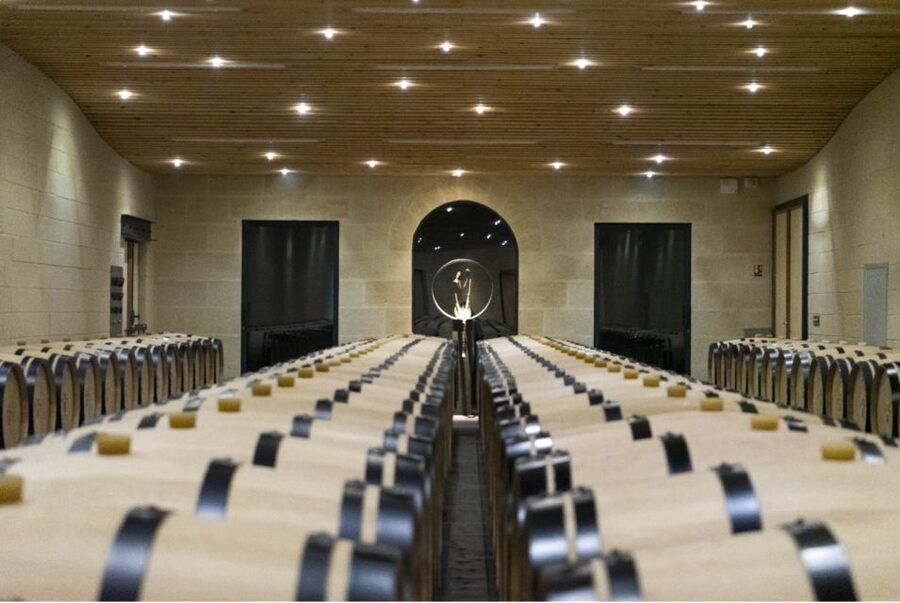
The modern cellar is the sharpest contrast with the old tower. Built in 2019 and designed with bioclimatic principles, it shows the property looking at temperature, building design, and working conditions in a more current way.
For you, the value is visual as much as technical. A traditional château visit can focus almost entirely on old barrels and polished stories. This one lets you compare a historic estate with a newer production building that was created for present-day wine-making.
You will visit the vat room and barrel cellar as part of the route. The vat room is where the wine’s early production stages can be explained, while the barrel cellar helps you understand what happens after the initial fermentation work. The tour promises an explanation of the process from the roots to the tasting glass, so you get the basic sequence rather than only a look at finished bottles.
The tour does not provide a full technical lesson on every tank, barrel, or grape variety. That is not a fault at this price and length. Think of it as a well-shaped introduction that helps you understand what you are seeing before you taste the results.
A family estate with a 1647 starting point
The estate traces its wine-making family to 1647. That date gives the guide plenty of historical ground to cover, but the useful part is how it frames the property today. You are not visiting a newly assembled tasting venue with an old building added for atmosphere. The family connection has been tied to Saint-Emilion for centuries.
A long family presence does not automatically guarantee a better wine, of course. What it does provide is context. The château’s story is tied to a particular place, and the tour helps you see the estate as a working part of the Saint-Emilion appellation rather than just another stop on a Bordeaux tasting list.
I would pay attention to how the guide links the old and new parts of the property. That relationship is more interesting than a simple chronology of owners. The tower tells you where the estate has been, while the 2019 cellar shows how it is adapting.
Same stronghold, another way through the gate:
- From Paris: Loire Valley Castles Day Trip With Wine Tasting
★ 4.6 · 1,727 reviews - Chenonceau Castle Admission Ticket
★ 4.7 · 1,515 reviews - Medoc or Saint Emilion Wine Tasting and Chateau from Bordeaux
★ 5.0 · 1,415 reviews - ★ Walking Tour of Old Nice and Castle Hill
★ 5.0 · 1,318 reviews
The one-hour route, stop by stop
The visit begins at Château Balestard La Tonnelle, after you park near the watchtower and walk along the path to the boutique. The meeting point is easy to understand, but do not skip the early arrival instruction. Five minutes gives you time to find the shop without rushing.
From there, the guided portion covers the vineyard, the vat room, and the barrel cellar. The route is designed to explain wine production in order, moving from the vineyard and limestone ground toward the finished wine. That sequence makes the visit accessible even if you do not know much about Bordeaux wine.
The modern bioclimatic cellar adds a clear point of interest. It is not just another room on the way to the tasting. Its 2019 construction gives you something specific to compare with the estate’s older features.
The final stop is the panoramic terrace, where you taste three red wines. The tasting includes a Grand Cru Classé, which makes the $23 price easier to assess. You are paying for a guided visit, access to the production areas, and a tasting with a classified wine, not just three pours at a counter.
The experience returns to the château after the terrace tasting, with the property shop available for bottles or other purchases. No food or extra drinks are included, so eat beforehand or plan a separate meal afterward.
The terrace is the payoff
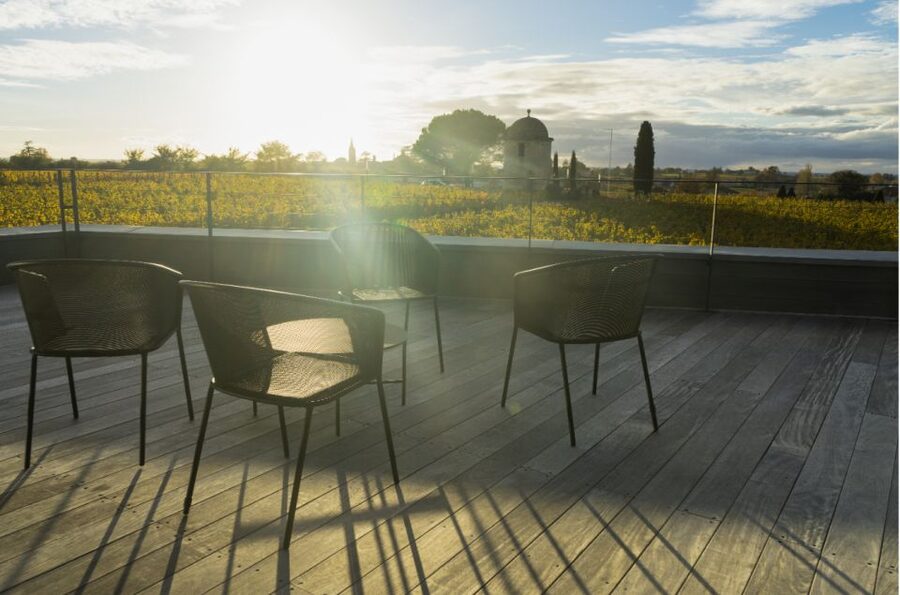
The 400-square-meter terrace is more than a pleasant place to sit. Its 360-degree view helps you connect the wine in front of you with Saint-Emilion and the nearby appellations around it. In a region where location matters so much, that broad view adds real value to the final tasting.
I like the order of this experience. You first see the estate and its production spaces, then taste while looking outward across the area. By the time you reach the terrace, the glass has a little more context.
The information provided does not promise a particular weather backup or indoor tasting arrangement. If the view is important to you, check conditions on the day and understand that the terrace is a central feature of the experience. The tasting itself includes three red wines, but the exact labels and vintages are not specified.
Three wines, including a Grand Cru Classé
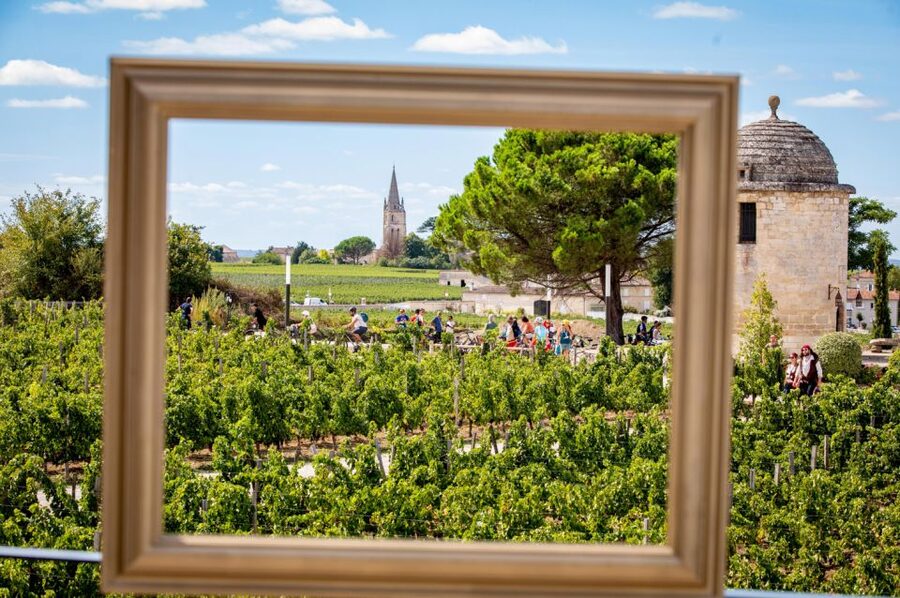
The tasting includes three red wines, one of them a Grand Cru Classé. That is the key value point for anyone comparing this tour with a basic château stop.
A three-wine tasting is enough to notice differences, though it is not a large flight. You can expect a compact introduction to the estate’s wines rather than a broad survey of Bordeaux. The guide’s explanation is likely to matter as much as the number of glasses, especially if you want help understanding how the wines relate to the property and appellation.
One practical point: no food is included. Wine tastings can feel more generous when paired with bread, cheese, or local products, but this experience does not promise any of those. Have something to eat before you arrive, particularly if you are visiting several wineries in a day.
The shop gives you the option to buy wine after the tasting. Since the exact bottles and prices are not provided, you can ask the staff what is available rather than assume the tasting wines are all for sale.
Guide language and group size
Tours are available in French and English. A guide named Audre has also led the experience in Spanish, according to the supplied information, but Spanish is not listed among the standard languages. If Spanish guidance matters to you, confirm it when booking rather than relying on that single example.
English appears to be a practical choice. One guest specifically noted that the guide spoke very good English and gave clear explanations. Another described Audre as kind and courteous and said the tour was conducted in Spanish. Those details point to a warm, personal style rather than a rushed presentation.
The group limit is eight people. That is a strong feature for a one-hour visit because the guide can keep the group together and answer a few questions without losing the schedule. It also makes the terrace tasting feel less like a crowded public bar.
The tour is wheelchair accessible. Since the meeting point involves parking by the watchtower and following a path to the boutique, you may still want to confirm the exact route with the château if you need specific mobility information. The available details confirm accessibility but do not describe every surface or transition.
Is $23 a fair price?
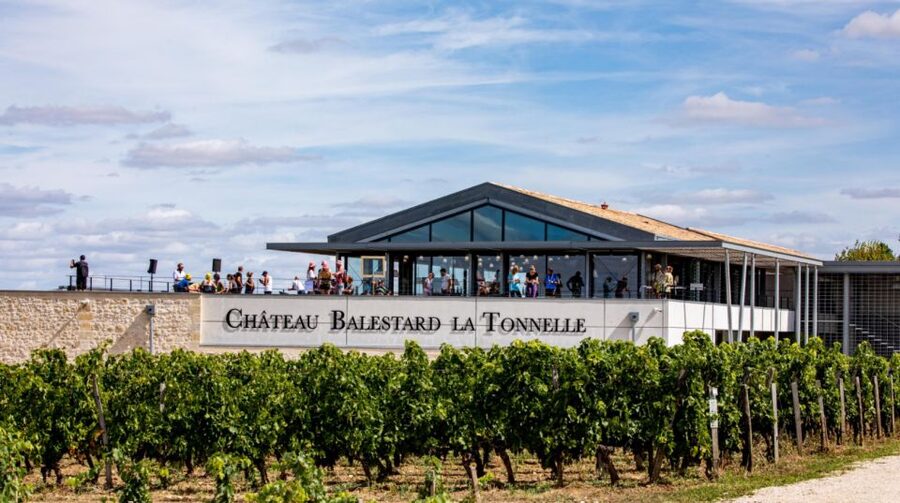
At $23 per person, this is a good-value introduction to Saint-Emilion wine. You receive a one-hour guided tour, a visit to the vineyard and production areas, three red wines, a Grand Cru Classé tasting, and access to the panoramic terrace.
The price is especially reasonable if you want more than a quick pour. The 15th-century tower and the 2019 cellar provide two distinct points of interest, while the family story reaches back to 1647. You are getting history, production, and scenery in one short appointment.
The value drops if you want a long estate walk, a meal, or a large technical tasting. None of those are included. The smart way to use this tour is as a focused one-hour stop within a wider day in Saint-Emilion.
Free parking also helps. You do not need to build a separate parking cost into the visit, and the property returns you to the same place at the end. You can also reserve now and pay later, keeping the booking flexible, and cancel up to 24 hours ahead for a full refund.
Who should book this experience?
I would recommend it to first-time wine visitors who want a clear introduction without committing half a day. The route covers the main stages of production, and the tasting gives you three wines to compare.
It also suits architecture and history fans. The watchtower and long family connection provide a strong sense of age, while the 2019 bioclimatic cellar keeps the visit from feeling stuck in the past.
Couples, small groups, and independent visitors will likely appreciate the eight-person limit. The experience is also a sensible choice if you want a good view during your tasting rather than a generic indoor room.
You may want something else if your priority is food pairing, extensive cellar access, or a long vineyard hike. The supplied details do not include lunch, snacks, or a larger wine flight. This is a concise château visit, and its strength is that it fits several worthwhile elements into one hour.
Should you book Château Balestard La Tonnelle?
Book it if you want a compact, well-rounded introduction to Saint-Emilion at a moderate price. The mix of the limestone plateau, 15th-century watchtower, 2019 cellar, family story, and terrace tasting gives the hour real substance.
I would choose it for the view and the old-new contrast, then treat the Grand Cru Classé as a welcome bonus. Just arrive five minutes early, do not expect food, and leave room in your schedule for the shop and the view. For a focused first taste of the estate, this is an easy choice.
FAQ
How long does the Château Balestard La Tonnelle tour last?
The guided experience lasts one hour, including the tasting of three wines.
How much does the tour cost?
The listed price is $23 per person.
How many wines are included?
You taste three red wines, including a Grand Cru Classé.
Where does the tasting take place?
The tasting takes place on the château’s panoramic terrace, which covers 400 square meters and offers a 360-degree view toward Saint-Emilion and surrounding appellations.
What parts of the property will I see?
The visit includes the vineyard, vat room, barrel cellar, and the architect-designed bioclimatic cellar from 2019. The property also includes a 15th-century watchtower.
Which languages are available?
The tour is offered in French and English. Spanish guidance may be available with Audre, but Spanish is not listed among the standard languages, so confirm before booking if needed.
How large is the tour group?
The experience is limited to eight participants.
Is the tour wheelchair accessible?
Yes, the experience is listed as wheelchair accessible.
What should I know about arrival and cancellation?
Park by the watchtower, then follow the path to the shop and arrive five minutes before the start time. A delay of more than 20 minutes may result in cancellation. You can cancel up to 24 hours in advance for a full refund, and reserve now while paying later.
New castle tours around France
- Pierrefonds: Château de Pierrefonds Entrance Ticket★ 4.7 · 152 reviews
- Paris: Loire Valley Castles Tour with Wine Tasting★ 4.9 · 22 reviews
- PARIS: Private transfer Château Versailles van 7 people 4H★ 3.0 · 4 reviews
- Paris to Loire Valley Castles Chambord & Chenonceau -DayTrip★ 4.7 · 2 reviews
- Paris: Loire Valley Castles Tour with Chambord & Chenonceau★ 4.8 · 51 reviews
- Paris: Château de Vincennes Entry Ticket★ 4.5 · 342 reviews
- Avignon: Full-Day Wine Tour around Châteauneuf-du-Pape★ 4.9 · 83 reviews
- Paris: O Chateau’s Wine Tasting Dinner★ 4.2 · 30 reviews
France Castle Tours, compared.
Loire Valley Castles Day Trip from Paris with Complementary Wine
Read our review →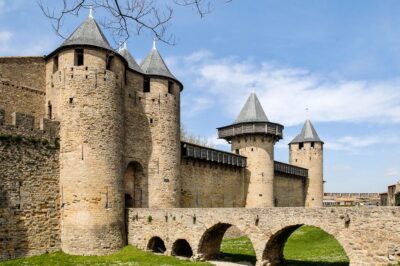
Carcassonne: Castle and Ramparts Entry Ticket
Read our review →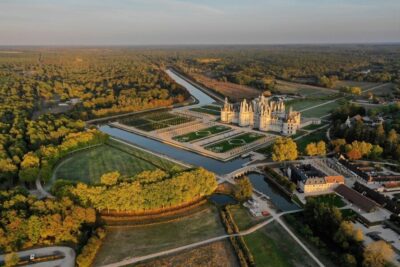
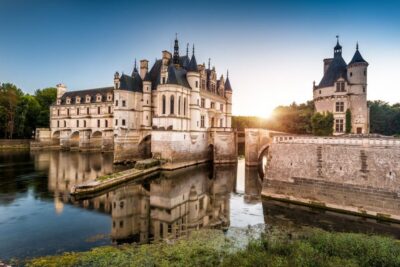
From Paris: Full-Day Loire Valley Chateaux Tour
Read our review →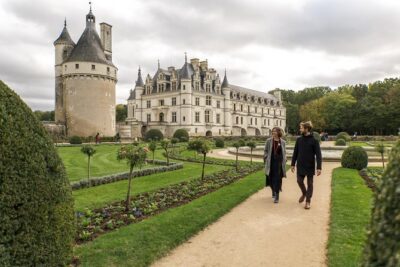
Loire Valley Castles Trip with Chenonceau and Chambord from Paris
Read our review →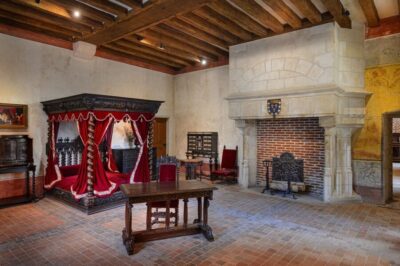
Amboise: Clos Lucé Castle, Da Vinci Park and Museum Ticket
Read our review →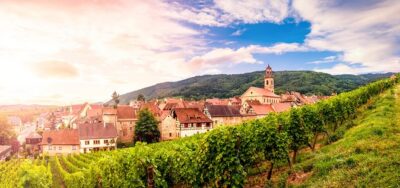
Colmar, Medieval Village & Castle Small Group from Strasbourg
Read our review →Browse the lists this tour appears in