
Review · FRANCE
Carcassonne: Castle and Ramparts Entry Ticket
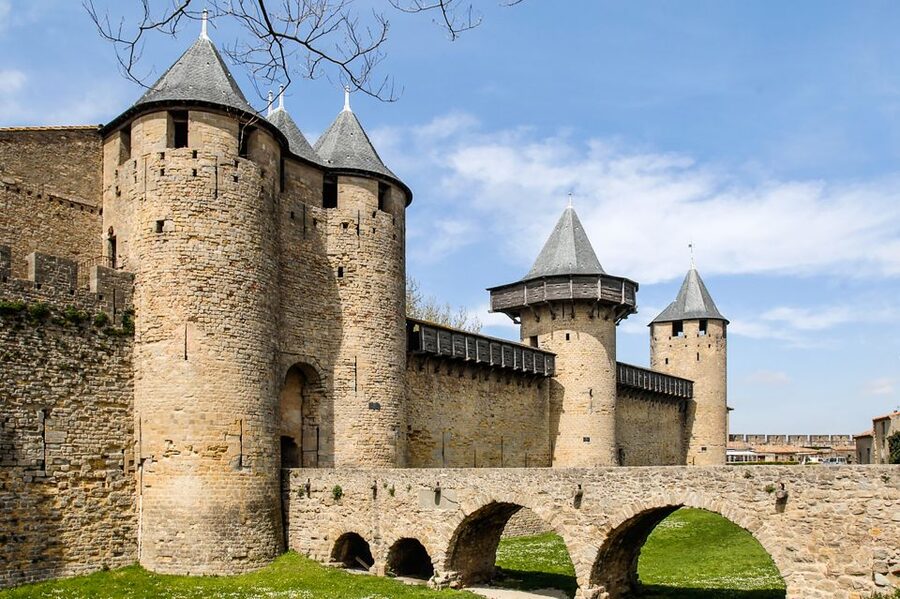
Carcassonne’s double-walled fortress is the real reason to visit the medieval city. Inside the Château Comtal, you’ll see courtyards, towers, museum displays, and traces of a military stronghold shaped over many centuries. Then you can walk the western ramparts for broad views over the city and surrounding countryside.
I like the freedom of a self-guided ticket, especially because you can pause for photos or wander at your own pace. I also like the small details, from the square Bishop’s Tower crossing both walls to the early 15th-century alabaster figures in the Salle Pierre Embry. The main drawback is the uneven footing and high steps, which can make parts of the ramparts hard work for anyone with limited mobility.
Key points to know before you go
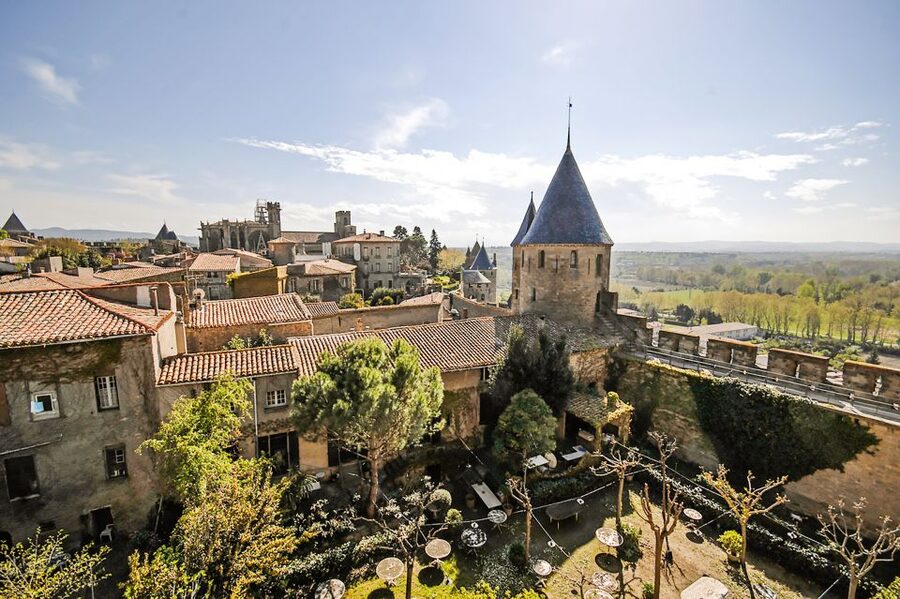
- The western ramparts offer the best open views: Allow about 30 minutes for the wall walk, longer if you stop often for photographs.
- The Château Comtal comes first: It closes before the outer medieval city, so visit the castle before browsing shops and cafés.
- The €3 audio guide adds useful context: Basic signs are available, but the audio commentary helps explain the buildings and military design.
- Bishop’s Tower is a rare architectural feature: It is the only tower construction that crosses both sets of walls.
- The ticket covers more than the castle rooms: Your entry includes the courtyards, archaeological museum, castle, and ramparts.
- Pre-booking saves time in busy months: The online ticket can help you avoid the slower ticket queue at the entrance.
Why Carcassonne’s castle and walls matter

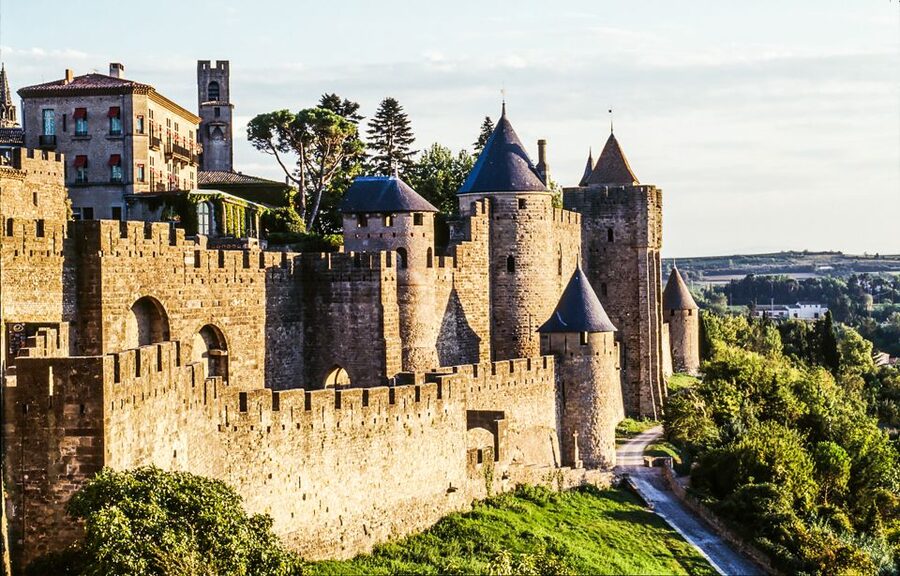
Carcassonne is not just a pretty cluster of towers. The site was settled as early as the 6th century BC, became an important Roman town, and was fortified in the 4th century. Its location made it useful as a defensive position through the Middle Ages.
The city took its familiar form in the 13th century, after the French king ordered major work on the fortifications. The result was a fortified town with two lines of walls, towers, gates, and an enlarged castle. That double ring of defenses is what gives Carcassonne its storybook appearance, though the history behind it was far less gentle than the view suggests.
The city suffered after the Cathar Crusade of 1209 to 1229, the Inquisition, and the exile of the Trencavel family. Later, much of the fortress fell into ruin. French architect Eugène Viollet-le-Duc began restoration work in 1844, and the project was completed in 1911 under his pupil Paul Boeswillwald.
That restoration is part of the experience. You are seeing a medieval fortress repaired in the 19th and early 20th centuries, not an untouched ruin. Some visitors come expecting every stone to be original. It is better to think of Carcassonne as a carefully rebuilt vision of a medieval fortified city, based on surviving evidence and period ideas.
The site was added to the UNESCO World Heritage list in 1997. You do not need to know all of that before entering, but the background helps you understand why the castle is more than a photogenic stop. It brings together about 2,500 years of settlement and roughly 1,000 years of military architecture.
More Castle Entry Tickets in France
- Chambord: Entry Ticket to the Castle
★ 4.6 · 1,841 reviews - Chenonceau Castle Admission Ticket
★ 4.7 · 1,515 reviews - Loire Valley: Château Royal d’Amboise Entrance Ticket
★ 4.6 · 476 reviews
Entering the Château Comtal
Your visit begins at the Château Comtal, the central castle within the fortified city. The meeting point is at 1, rue Viollet-le-Duc, at the Château et Remparts de la Cité de Carcassonne. Once inside, follow the route through the castle courtyards and associated rooms.
The courtyards give you a good first sense of scale. Carcassonne’s walls may look compact from a distance, but the castle and fortifications form a substantial complex. Look up as you move through the site. Towers, wall walks, gateways, and changes in stonework help explain how the castle operated as a defensive center.
This is a self-guided visit, not a scheduled tour with a live guide. That suits you if you prefer to set your own pace, but it also means you need to take responsibility for building the story as you go. Signs and information boards provide basic explanations, with material available in several languages.
The ticket includes a leaflet in French, English, German, Italian, Spanish, Portuguese, Dutch, Japanese, Chinese, Russian, or Polish. That makes the visit easier to follow, especially if you do not want to rent an audio device.
The castle is best visited early in your day. The medieval city around it has restaurants, cafés, and souvenir shops, but those can wait. The castle and ramparts are the reason to buy this ticket, and the castle closes first. Going in around 10:30 can also help you avoid the heavier queues that may form later.
Bishop’s Tower and the defensive design
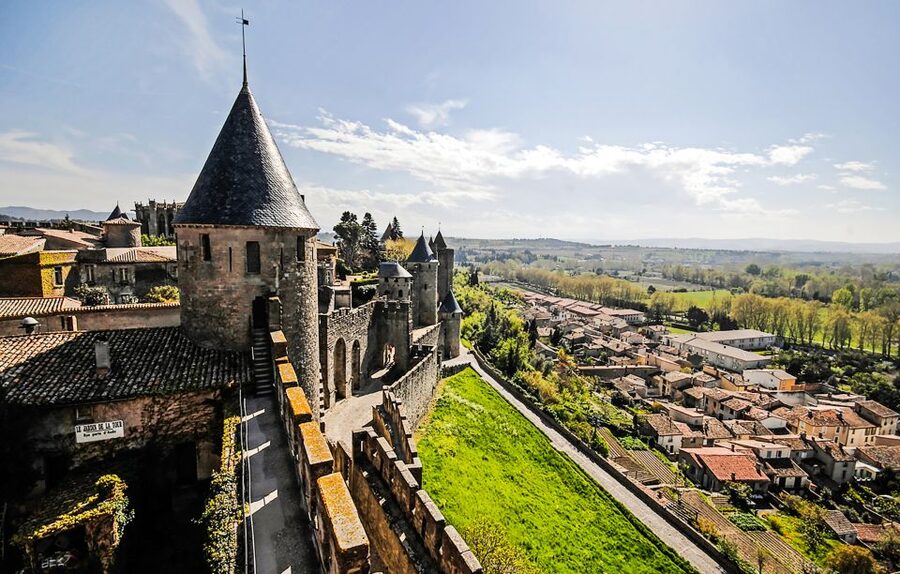
One of the most interesting features is the square Bishop’s Tower. It is the only construction in Carcassonne that straddles both city walls, making it a useful place to understand the fortress’s layered defenses.
The double walls were not simply decorative. They created an outer and inner defensive line, with space between them for movement and protection. From the wall routes and towers, you can see how defenders controlled access and watched the approaches to the city.
The architecture becomes easier to understand when you stop treating the towers as separate sights. The castle, walls, gates, and towers work as one defensive system. The Bishop’s Tower makes that connection especially clear because it physically links the two lines of fortification.
Some of the route includes narrow passages, steps, and uneven surfaces. You may need to slow down when other people are walking in the opposite direction. The walls are not a smooth promenade, so comfortable shoes are a sensible choice.
The Salle Pierre Embry and the archaeological museum
The archaeological museum adds a quieter indoor part to the visit. It helps place the fortress in a longer timeline and gives you a break from the stairs and exposed walls.
Look for the Salle Pierre Embry, where a window includes three polychrome alabaster statues from the early 15th century. This is the sort of detail that can be missed if you rush through the main courtyards. The statues offer a more personal and decorative side of medieval life, in contrast with the heavy defensive stonework outside.
The museum is particularly useful if you want more than photographs. The castle itself can feel visually overwhelming, with towers and walls competing for attention. Museum displays and explanatory boards give you a chance to pause and connect the architecture with the people, objects, and religious culture of the period.
You do not need an audio guide to understand the basic layout. The signs provide enough information for a straightforward visit. Still, if you enjoy historical detail, the audio option is a sensible extra at €3. It adds more explanation as you move through the site and is often the better choice for a first visit.
One practical point: the audio guide may need to be rented on site, and you should bring identification because an ID may be required when borrowing the device. Bring cash as well, since the instructions specifically recommend it.
More fortresses and citadels around France:
- Carcassonne: Private Guided Tour of the Medieval Fortress
★ 4.5 · 64 reviews - Carcassonne: Fortress Walking Tour
★ 5.0 · 24 reviews - Marseille: Historical Tour of the Citadelle of Marseille
★ 4.3 · 3 reviews - Salzburg: Hohensalzburg Fortress Admission Ticket
★ 4.6 · 2,236 reviews
Walking the western ramparts
The newer addition to the visit is access to the medieval western ramparts. This is where the ticket earns its keep for many people. The wall walk takes roughly 30 minutes at a steady pace, though you will likely spend longer if you stop at the viewing points.
From the ramparts, you get a different view of Carcassonne than you do from the streets. You can look across the fortified city, beyond the walls, and over the surrounding countryside. The height makes the construction easier to grasp, especially the way the towers punctuate the wall and the way the fortress sits above the modern city.
The views are also the most weather-dependent part of the visit. Wind can be sharp, even in summer, and exposed sections offer little shelter. Bring an extra layer if the forecast looks mild but breezy. On a cold or wet day, the stone surfaces may feel less welcoming, and you will want to take care on the steps.
The ramparts are narrow in places. If you arrive when the site is busy, two-way traffic can slow the walk. Early morning is the safest choice if you want a calmer route. Late morning can be noticeably busier, especially in the main season.
High steps appear along parts of the walls. You can leave the ramparts at several points if you find the route too demanding, but this is not a fully step-free attraction. The Barbican and main courtyard are accessible to people with limited mobility, while the full wall walk may present difficulties.
Scooters, bicycles, helmets, non-folding strollers, and large luggage are not allowed inside the Château Comtal or on the ramparts. Animals are also not permitted inside the monument. If you are carrying bulky bags, plan to leave them elsewhere before entering.
Audio guide or leaflet?
The included leaflet and signs are enough for a visitor who mainly wants to see the architecture and understand the basic history. You can move quickly, stop where you like, and avoid being tied to a recorded commentary.
The €3 audio guide is worthwhile if you want a fuller explanation of the ramparts and castle. It can help you notice details you would otherwise pass, and it gives more shape to the story of the fortress. Several people especially appreciate using it during the wall walk, where the views can distract you from the historical information.
There is one possible annoyance with any timed audio system. If you move into another room before the current section ends, the recording may stop and jump to the next segment. To avoid missing information, pause near the numbered point and let each section finish before moving on.
I would choose the audio guide for a first visit if you have at least two hours. If you are short on time or mainly want the views, use the leaflet and signs instead.
How much time should you allow?
The ticket is valid for one day, but the castle and ramparts are not an all-day guided program. Your exact visit length depends on how closely you read the displays and how often you stop for photos.
Allow at least 90 minutes for a meaningful visit. That gives you time for the castle route, the museum, and a reasonably paced wall walk. Two hours is more comfortable, especially if you choose the audio guide.
You can spend the rest of the day exploring the medieval city outside the paid monument. Cafés, restaurants, and souvenir shops fill many of the streets. That area is convenient for a meal or a drink, but it is also more commercial. The castle and ramparts provide the strongest sense of Carcassonne’s past.
If you arrive by train, the walk from Carcassonne station takes about 30 minutes according to the practical experience shared by visitors. The approach can be pleasant, but allow extra time to find the correct entrance. Navigation apps may bring you close to the meeting point without leading you directly to the ticket gate.
Price, entry, and the best time to visit
At about $15 per person, the ticket offers good value if you plan to enter both the castle and ramparts. You are paying for access to several parts of the complex rather than a short look at one room.
The price becomes even more reasonable if you use the full route, including the western ramparts and museum. It is less useful if you only want to stroll through the medieval streets, because much of the outer city can be explored without this ticket.
Buying ahead can save time. The on-site ticket queue may be long and slow, while pre-booked visitors can often proceed more quickly. This matters most in summer and around busy holiday periods.
Children under 18 enter free, as do European Union citizens under 26 with valid identification. A time slot still needs to be booked in advance through the official booking website. The first Sunday of January, February, March, November, and December is also free, along with European Heritage Days on the third weekend of September.
The monument closes on January 1, May 1, and December 25. It closes at 4:00 PM on December 24 and December 31. The ramparts close on July 14 because of the fireworks, so check the date carefully if you are planning a summer visit.
Who will enjoy this ticket most?
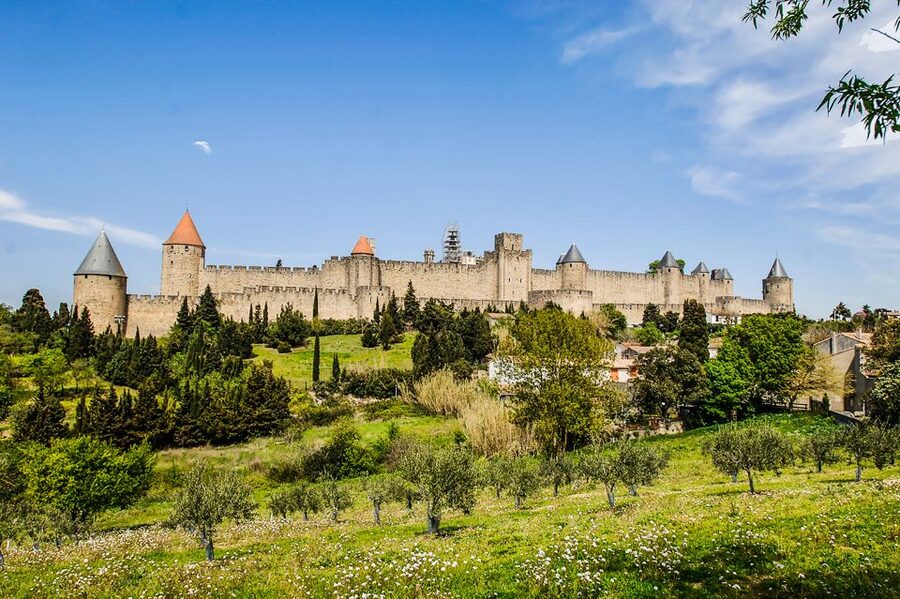
I recommend it to anyone who wants the substance behind Carcassonne’s famous silhouette. Families can enjoy the towers and walls, though younger children may need help on the steps. History fans will get the most from the museum, defensive layout, and audio guide.
It is also a good choice for independent visitors. You are not locked into a live tour schedule, and a small group limit of up to 10 participants helps keep the activity from becoming a large organized crowd, although the attraction itself can still be busy.
You should think twice if you dislike stairs, uneven stone, or exposed heights. The main courtyard and Barbican are accessible, but the full rampart route is more demanding. If mobility is a concern, focus on the accessible sections and ask on site which parts are suitable.
Should you book the Carcassonne castle ticket?
Yes, if you are already visiting Carcassonne and want to understand what makes the city special. The paid entry gives you the best architectural views, access to the castle interior, a small museum, and the western ramparts. Pre-booking is especially sensible during the high season.
I would skip it only if you have very little time, cannot manage steps, or plan to spend your visit solely in the cafés and streets of the medieval city. For most people, the castle and ramparts turn a pretty stop into a real historical visit. Buy the ticket, arrive early, and add the €3 audio guide if you want the walls to tell you more than a photograph can.
FAQ
Where is the Carcassonne castle and ramparts entrance?
The meeting point is Château et Remparts de la Cité de Carcassonne, 1 rue Viollet-le-Duc, 11000 Carcassonne.
What does the ticket include?
It includes a self-guided visit to the castle courtyards, Château Comtal, archaeological museum, and ramparts.
Is an audio guide included?
No. An audio guide can be rented on site for €3.
Which languages are available for the leaflet?
The leaflet is available in French, English, German, Italian, Spanish, Portuguese, Dutch, Japanese, Chinese, Russian, and Polish.
How long is the ticket valid?
The ticket is valid for one day.
Is the visit suitable for people with limited mobility?
The Barbican and main courtyard are accessible to people with limited mobility. Parts of the ramparts include high steps and uneven surfaces, so the full wall walk may be difficult.
Are children admitted free?
Yes. Entrance is free for people under 18, and for European Union citizens under 26 who present valid identification. A time slot must still be pre-booked.
When is the monument closed?
It is closed on January 1, May 1, and December 25. It closes at 4:00 PM on December 24 and December 31. The ramparts are closed on July 14 because of fireworks.
What cannot be brought inside?
Scooters, bicycles, helmets, non-folding strollers, large luggage, and animals are not allowed inside the Château Comtal or on the ramparts.
New castle tours around France
- Pierrefonds: Château de Pierrefonds Entrance Ticket★ 4.7 · 152 reviews
- Paris: Loire Valley Castles Tour with Wine Tasting★ 4.9 · 22 reviews
- PARIS: Private transfer Château Versailles van 7 people 4H★ 3.0 · 4 reviews
- Paris: Château de Vincennes Entry Ticket★ 4.5 · 342 reviews
- Paris to Loire Valley Castles Chambord & Chenonceau -DayTrip★ 4.7 · 2 reviews
- Paris: Loire Valley Castles Tour with Chambord & Chenonceau★ 4.8 · 51 reviews
- Avignon: Full-Day Wine Tour around Châteauneuf-du-Pape★ 4.9 · 83 reviews
- Paris: O Chateau’s Wine Tasting Dinner★ 4.2 · 30 reviews
Fortress & Citadel Tours, compared.
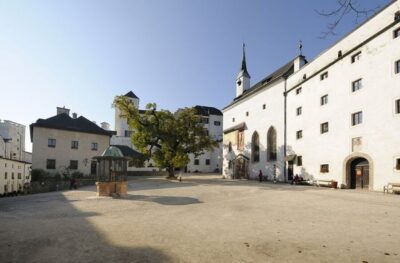
Salzburg: Hohensalzburg Fortress Admission Ticket
Read our review →
Salzburg: Best of Mozart Fortress Concert and Dinner
Read our review →
From Cairo Alexandria Catacombs, Citadel Day Trip with Lunch
Read our review →
Hue Customizable Tour with Imperial Citadel & Forbidden City
Read our review →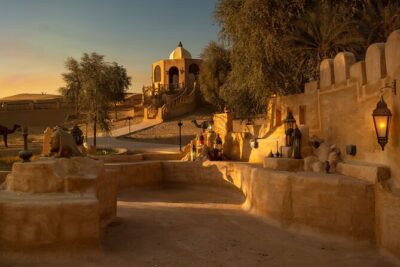
Desert Safari: Luxury Fortress Dinner, Camel Ride & Dune Bashing
Read our review →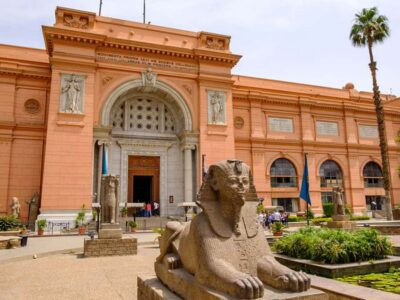
Cairo: Egyptian Museum, Citadel, and Old Cairo Guided Tour
Read our review →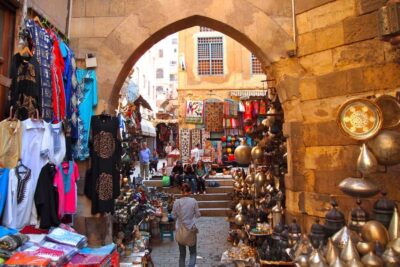
Cairo Citadel, Old Cairo and Khan El Khalili: Private Tour
Read our review →Split: Sunset at Klis Fortress with Sightseeing Bus
Read our review →Browse the lists this tour appears in