
Review · Castles worldwide
10 Days Trip to Cape Coast and Elmina Castles from Accra
The most powerful part of this Ghana tour is its clear connection between present-day life and the places that shaped the African diaspora. You move from Accra’s Jamestown fishing community to Ashanti royal museums, then to Elmina Castle, Cape Coast, and Assin Manso, where the past feels close and difficult to ignore. Elmina Castle and the memorial ceremony by the sea are the emotional center.
I like the small maximum group of 10, which gives your guide room to answer questions and adjust the pace. I also like the mix of museums, craft villages, forest walks, traditional ceremonies, and free time for shopping. The main drawback is the pace: long road journeys and several serious historical sites make this a demanding trip, not a restful beach holiday.
Key points to know before you book
- Jamestown brings Accra’s history to street level, with its fishing harbor, lighthouse, Brazil House, and contrast between old neighborhoods and modern city life.
- Kumasi adds Ashanti culture, including Manhyia Palace Museum, Prempeh II Museum, Kente weaving, Adinkra cloth, and woodcarving.
- Elmina Castle and Assin Manso create a powerful historical sequence, connecting the castles with the river site where captured Africans were held before shipment.
- Kakum offers a choice of activity, from a 1,000-foot canopy walkway more than 150 feet above the forest floor to a two-kilometer nature walk.
- PANAFEST and Emancipation Day are important schedule features, but the exact events depend on what is taking place during your dates.
- The $4,695 price includes substantial services, including nine nights of accommodation, private transport, guide services, breakfast, dinner, bottled water, and airport transfers.
Why this Ghana journey carries real weight
This is not simply a castle tour with a few sightseeing stops added on. The route gives you several ways to understand Ghana: through Ga life in Accra, Ashanti traditions in Kumasi, coastal fishing communities, forest ecology, and the history of the Atlantic slave trade.
I find the sequence useful because each place adds something different. Accra gives you a modern starting point. Kumasi shifts the focus to an African kingdom with its own political and artistic traditions. Elmina and Cape Coast then show how European forts operated along the coast. Assin Manso connects those coastal sites to an inland transit point.
The tour is especially meaningful if you are tracing family history or exploring the wider story of the African diaspora. The memorial ceremony at Elmina includes bread cast into the water, a wreath, a candle, and a moment of silence for those who died during the Middle Passage. It is a solemn act, not a photo opportunity.
The schedule also includes PANAFEST activities and an Emancipation Day celebration. These events can add music, ceremony, traditional leadership, and public remembrance to the museum visits. Since festival programming changes, you should confirm which events are scheduled for your dates before booking.
More Cape Coast and Elmina castle tours around the world:
- Cape Coast ,Elmina Castle and Kakum Full-Day Tour
★ 5.0 · 62 reviews - Cape Coast and Elmina Castles Tour
★ 5.0 · 31 reviews - Assin Manso Slaves River and Cape Coast Castle Tour
★ 5.0 · 24 reviews
Accra begins with Ga life and independence
After arriving at Kotoka International Airport, you are met by your guide and transferred to your hotel. The first evening is deliberately light, with time to check in, recover from the flight, and receive a briefing about the days ahead.
That introduction matters. You receive information about Ghanaian customs, health, and safety before the main touring begins. A private guide and driver also mean you do not have to work out airport transport or intercity travel on your own.
The first full sightseeing day begins with a look at Ghana’s independence story. You visit the W.E.B. Du Bois Centre, which honors the Pan-African thinker who spent his final years in Ghana. You then continue to Independence Square and see the flame of African liberation lit by Kwame Nkrumah in 1961.
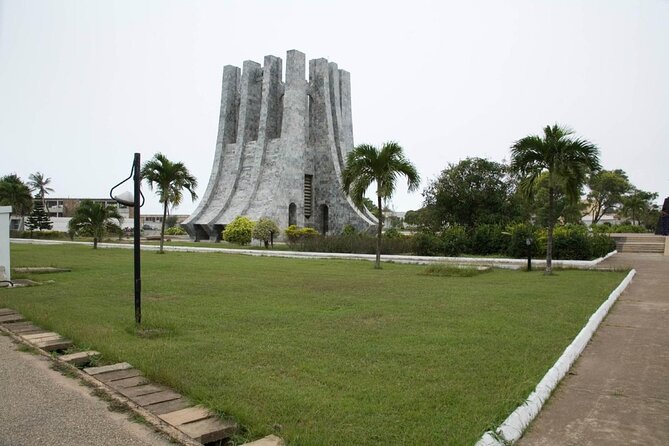
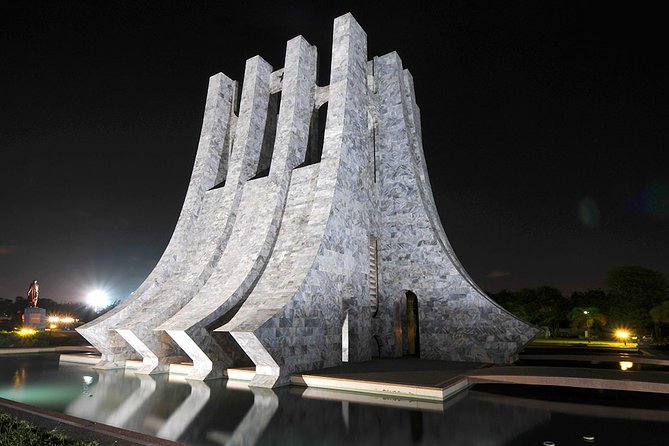
At the Kwame Nkrumah Memorial Park, you learn about Ghana’s first president and see his final resting place. This is a good early stop because it explains Ghana’s role in African independence and Pan-African thought before you move into more local settings.
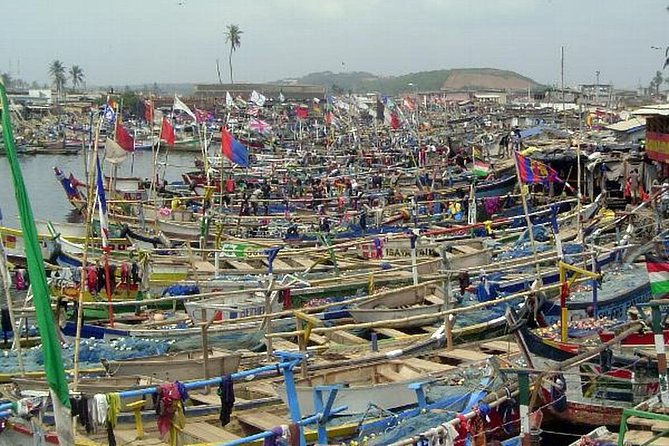
Jamestown changes the mood. The fishing community, lighthouse, and Brazil House show an older side of Accra, with daily life taking place around the harbor. I like this part because you are not only looking at monuments. You are seeing a working neighborhood and the contrast between historic coastal Accra and the city’s newer districts.
Allow yourself to be observant and respectful in Jamestown. Your guide’s role is important here, especially in helping you understand the community rather than treating it as a backdrop.
Kumasi reveals Ashanti art and royal tradition
On Day 3, you leave Accra for Kumasi, the historic seat of the Ashanti Empire. The drive takes much of the day, so you should expect time on the road. The reward is a change in both setting and subject.
The National Centre for Culture includes the Prempeh II Jubilee Museum and workshops for brass makers, potters, and batik artisans. The museum is named for a former Asantehene, or Ashanti ruler, and gives you a starting point for understanding royal authority and Ashanti society.
The following day focuses on craft villages. At Ahwiaa, you see woodcarvers making royal stools, walking sticks, and fertility dolls. You can buy carved objects, but remember that shopping is part of the visit rather than the whole point. Ask questions about the work and take time to look at how the pieces are made.
Ntonso is associated with Adinkra textiles, where artisans hand-stamp patterns onto cotton cloth. These symbols carry meaning, so this stop is more rewarding when you ask your guide or the artisans to explain the designs rather than choosing cloth only by color.
At Bonwire, you watch Kente cloth being made on traditional looms. The weaving is a central cultural experience on this route, and the small-scale setting gives you a better sense of the labor behind a finished textile than a shop display can provide.
Manhyia Palace Museum adds the royal dimension. Together, the palace, museum, and craft villages show that Ashanti culture is not frozen in the past. It is expressed through authority, clothing, symbols, design, and skilled work.
One practical point: this is a strong shopping section of the trip. If you want custom-made clothing or textiles, tell your guide early. The final day includes time in Accra for collecting custom-made outfits, but you should not leave all decisions until the airport transfer day.
Elmina connects fishing life with coastal history
After completing the Kumasi visits, you drive toward Cape Coast and Elmina. The journey includes a drive through Kumasi, passing colonial buildings, monuments connected to the Ashanti people, and the Kejetia Market, described as one of West Africa’s largest and most active marketplaces.
The Elmina township walk offers a useful counterpoint to the castle. At the harbor, colorful fishing canoes prepare for another night at sea. You see a living fishing town before entering sites tied to a far more painful chapter of coastal history.
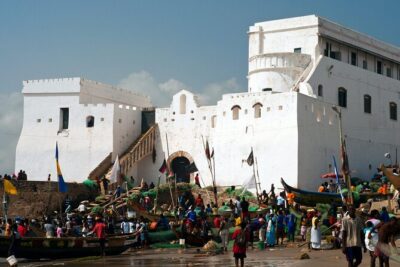
Elmina Castle, originally called St. George’s Castle, was the first European structure built in sub-Saharan Africa. Its rooms and grounds explain the operation of the castle and the confinement of enslaved Africans. The visit can be emotionally heavy, especially when you move through spaces associated with imprisonment and departure.
The memorial ceremony by the beach follows the castle visit. Bread is thrown into the water, a wreath and candle are sent out to sea, and the group observes silence. I consider this one of the most important parts of the program because it gives you time to reflect instead of rushing from one historical site to the next.
Cape Coast Castle is also listed as a central feature of the journey, although the daily schedule provided gives the clearest detail for Elmina Castle. Confirm the exact timing of your Cape Coast Castle visit with the operator before departure, particularly if seeing both castles is a priority.
More castles to explore around the world:
- Stonehenge, Windsor Castle, and Bath from London
★ 4.5 · 18,662 reviews - Bucharest: Dracula’s Castle, Peles Castle, & Brasov Old Town
★ 4.5 · 17,858 reviews - From Munich: Neuschwanstein & Linderhof Castle Full-Day Trip
★ 4.6 · 14,646 reviews - Edinburgh Castle: Guided Walking Tour with Entry Ticket
★ 4.7 · 11,699 reviews
Kakum gives the itinerary a change of pace
Kakum National Park offers the trip’s main break from museums and historical sites. It is one of Ghana’s surviving tropical rain forests, with birds, butterflies, unusual plant life, and more than 40 species of mammals recorded in the park, including monkeys and the reclusive forest elephant.
You have two choices. The first is a walk on the canopy walkway, a 1,000-foot route across seven bridges with platforms more than 150 feet above the ground. This is the more dramatic option and gives you views across the treetops.
The second is a two-kilometer walk on the forest floor. It is better if heights are not your thing or if you want to focus on plants, insects, birds, and the medicinal uses of forest species.
There is also the option to stay at the hotel pool or take a swim in the ocean. I appreciate that choice because the overall program is busy, and not every day needs to be another full excursion. Still, Kakum is one of the stops I would prioritize. It gives the tour a different rhythm and helps you understand the natural setting around the coastal towns.
Wear comfortable shoes and expect the canopy bridges to test your nerves if you are uneasy with heights. The provided information does not specify the exact footwear or clothing requirements, so confirm current park guidance before you leave.
Assin Manso adds the inland link
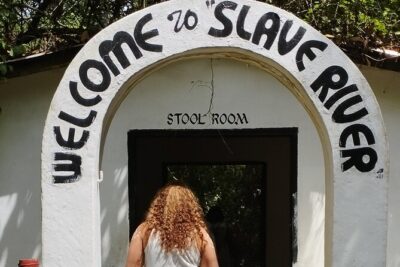
Assin Manso is one of the most important historical stops because it shows what happened before people reached the coastal castles. The Slave River Site was described as a place where captured Africans were washed before being confined in the castles and sent across the Atlantic.
You also visit the burial site of two formerly enslaved people from the United States and Jamaica. Their remains were reinterred during Ghana’s first Emancipation Day celebration in 1998.
This stop can be difficult, but it completes the story begun at Elmina Castle. Instead of seeing the castles as isolated buildings, you understand them as part of a larger system that reached inland, through transit points such as Assin Manso, and then across the ocean.
The itinerary includes Assin Manso on two days. The first visit focuses on the river site and burial grounds. The second is tied to the opening of Emancipation Day, with a Grand Durbar of traditional chiefs and people from the Central Region.
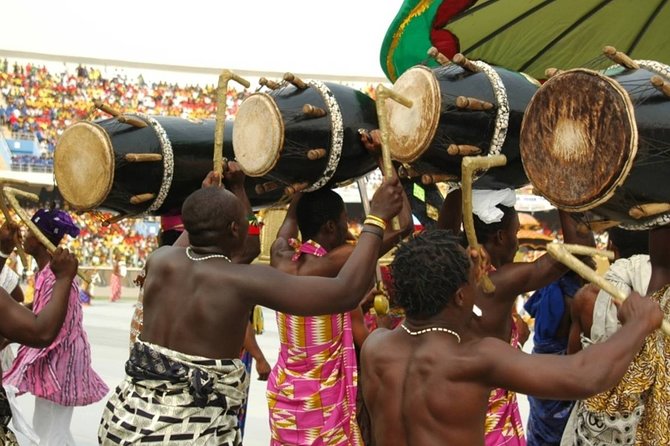
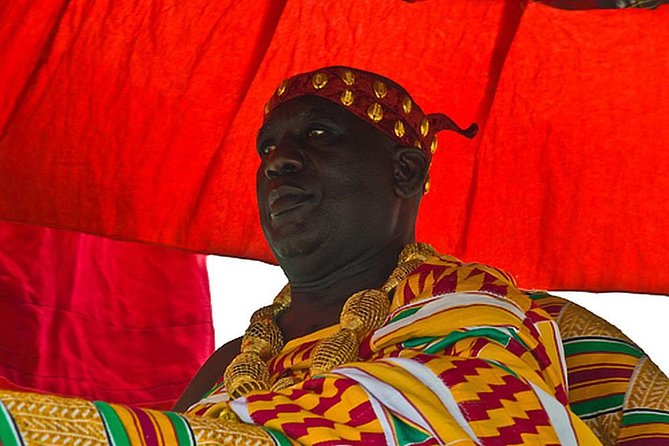
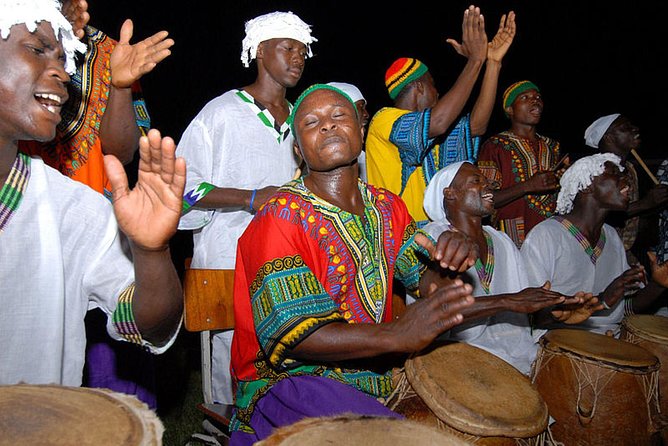
That ceremony brings a very different atmosphere. Chiefs appear in ceremonial clothing with gold jewelry and beads, while fontomfrom drums provide the rhythm. You may see dancing and public celebration alongside the serious historical meaning of the day. The contrast is worth noting: this tour does not present Ghana only through sorrow. It also shows continuity, ceremony, authority, and cultural pride.
PANAFEST can make the dates especially worthwhile
PANAFEST is included at several points in the schedule. You attend available activities with your guide, so the exact experience depends on the festival calendar during your visit.
This is a major reason to consider the tour if your dates line up well. Festival events can add performances and public cultural programming to the castle visits and memorial ceremonies. They may also make the schedule feel less predictable, since event times can shape the day.
Do not book solely on the assumption that every possible PANAFEST event will be available. Ask for the current program, and confirm which activities are included during your stay. The same applies to Emancipation Day, which is tied to a particular calendar period.
Guides, driving, meals, and the pace
The tour uses a private vehicle and a guide for the duration of the trip. The small group limit of 10 is a real advantage. You can ask questions without competing with a large crowd, and the guide can help with customs, shopping, timing, and local context.
Past departures have been led by guides including Joshua, George, Kwaku, Elvis, Solomon, and others. Joshua received especially strong praise for helping people settle in, handling requests, and explaining Ghanaian culture. George was also singled out for his command of Ghanaian history. These names are not a guarantee of who will lead your departure, so ask whether a particular guide is available if that matters to you.
The drivers are also important. You spend substantial time on the road between Accra, Kumasi, Elmina, Cape Coast, and Assin Manso. A careful driver and a comfortable private vehicle make a big difference.
Breakfast is included daily, along with nine dinners and bottled water each day. Food is one area where you should set realistic expectations. The included dinners may repeat similar dishes, and some meals can be spicy. If you prefer mild food or want more vegetables, tell the guide and hotel staff early. Meals not listed are extra, as are personal expenses and gratuities.
Is the $4,695 price good value?
At $4,695 per person, this is an expensive trip. The price makes more sense when you count what is bundled: airport assistance, round-trip airport and hotel transfers, hotel accommodation, private transport, a dedicated guide, daily breakfast, nine dinners, bottled water, and admission to the scheduled attractions.
You are paying for a 10-day program that covers Accra, Kumasi, Elmina, Cape Coast, Kakum, and Assin Manso rather than one short coastal excursion. The private transport and small group also cost more than joining a large bus tour.
The value is strongest if you want a structured cultural trip and do not want to arrange hotels, road transport, castle visits, or festival activities yourself. It is weaker if you prefer slow mornings, independent meals, or long stretches of free time.
International flights, visas, insurance, gratuities, unlisted meals, and personal purchases are not included. Build those costs into your budget before deciding.
Who should book this experience?
I would recommend it to you if you want a serious introduction to Ghana and prefer having local support throughout the trip. It suits people interested in African independence, Pan-African history, Ashanti culture, family heritage, traditional crafts, and the history of the Atlantic slave trade.
It also works well for first-time visitors who want airport transfers, private driving, hotel arrangements, and a guide who can explain local customs. The 97 percent recommendation rate and 4.8 rating indicate a very strong overall response, with guide service and cultural learning receiving the most attention.
I would hesitate if you want a relaxed coastal escape. The itinerary is full, the drives can be long, and several visits are emotionally demanding. The program itself acknowledges this by offering a pool or ocean break on the Kakum day.
Free cancellation is available when you cancel at least 24 hours before the start time. Changes or cancellations inside that window are not accepted for a refund.
Should you book the 10-day Ghana tour?
Book it if you want the full connection between Accra, Kumasi, the coastal castles, Assin Manso, and Ghana’s living cultural traditions. The combination of Jamestown, Ashanti craft villages, Elmina Castle, Kakum, PANAFEST, and Emancipation Day gives you far more context than a quick castle visit.
Before paying, confirm three things: which guide will lead your departure, which PANAFEST and Emancipation Day events fall within your dates, and how the schedule handles Cape Coast Castle. If you are comfortable with a full program and serious subject matter, this is a well-supported way to experience Ghana with substance.
FAQ
How long is the tour?
The experience lasts approximately 10 days, beginning and ending with airport arrangements connected to Kotoka International Airport in Accra.
Where does the tour begin and end?
It begins at Kotoka International Airport in Accra and ends back at the meeting point after your return to Accra and transfer for your flight.
What meals are included?
Breakfast is included daily, along with nine dinners. Bottled water is provided at one bottle per person per day. Meals not listed are not included.
Is transportation private?
Yes. Transportation is provided in a private vehicle, with an experienced guide accompanying the group during the tour.
How large is the group?
The tour has a maximum of 10 participants.
Can I cancel for a full refund?
Yes, if you cancel at least 24 hours before the experience start time. Cancellations or changes made less than 24 hours before the start time are not accepted for a refund.
New castle tours around the world
- From Prague: Karlštejn Castle & Koněprusy Caves Tour★ 4.9 · 183 reviews
- Prague: 2.5-Hour Vyšehrad Castle with Gorlice & Tickets★ 4.5 · 118 reviews
- Prague: Alchemy & Mysteries Bridge and Castle Evening Tour★ 5.0 · 8 reviews
- Prague Castle: 1-Hour Introduction Tour with Entry Ticket★ 4.2 · 41 reviews
- Potsdam: The evening Wannsee tour. Castles, parks, and villas.★ 4.7 · 63 reviews
- Prague: Stunning Viewpoints, Castle, City & Park Bike Tour★ 4.6 · 38 reviews
- Prague: River & Park Bike Tour to Troja Chateau★ 5.0 · 8 reviews
- Ljubljana: Postojna cave & Predjama castle small group tour★ 4.9 · 29 reviews
Cape Coast & Elmina Castle Tours, compared.
Cape Coast ,Elmina Castle and Kakum Full-Day Tour
Read our review →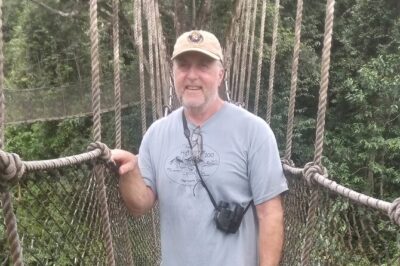
Assin Manso Slaves River and Cape Coast Castle Tour
Read our review →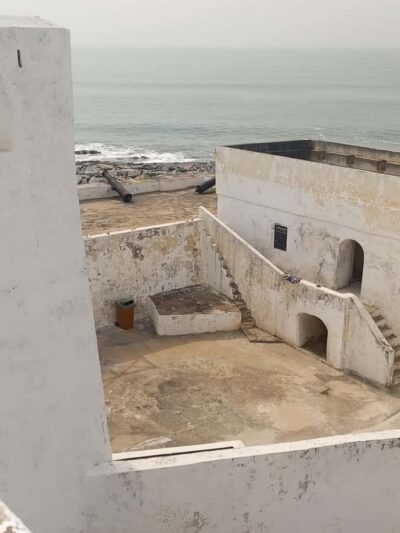
From Accra: Cape Coast and Elmina Castles Day Trip
Read our review →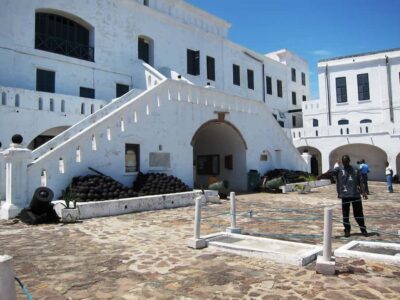
Cape Coast: Kakum National Park, Castles, & Hans Cottage
Read our review →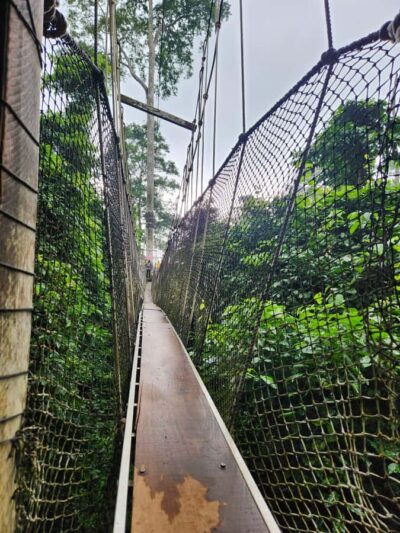
Discover Cape Coast and Elmina Castle with Kakum
Read our review →Browse the lists this tour appears in