
Review · SEOUL
Seoul: Suwon Hwaseong Fortress & Korean Folk Village Tour
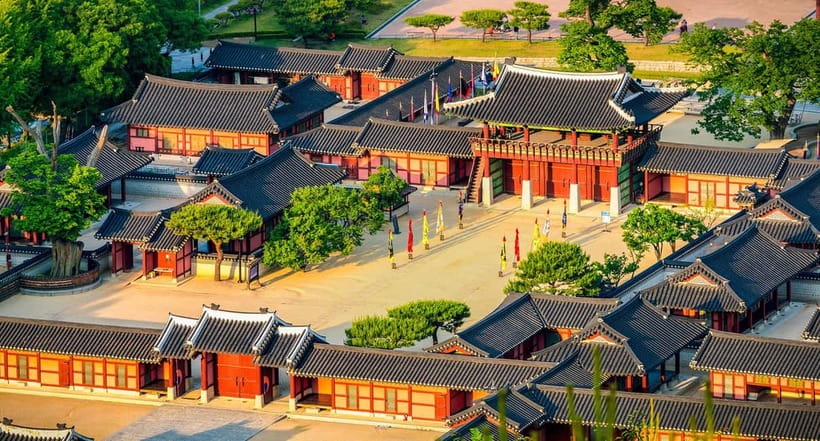
Suwon Hwaseong Fortress and the Korean Folk Village give you two very different views of Korea in one long day. At the village, old-style homes, music, dance, clothing, and daily customs make the late Joseon period easier to picture. At the fortress, you walk through an actual historic city setting, with walls, gates, towers, and wide views across Suwon.
I like the three-hour village visit, which gives you time for performances, photographs, food, and a little wandering instead of a rushed museum stop. I also like the finish at Nammun Market, where hotteok, snacks, and ordinary shopping streets bring you back to present-day Korea.
The trade-off is simple: this is a full 10 to 11 hours, with roughly 80 minutes on the way out and more than two hours returning to Seoul, depending on traffic. You will walk a lot, especially at the fortress, so comfortable shoes and a power bank matter.
Key points to know before you book

- The Korean Folk Village takes about three hours: You can see traditional performances, reconstructed homes, costume photo spots, and even an amusement park area.
- Hwaseong Fortress is an active walking stop: Expect about 90 minutes of guided sightseeing around walls, gates, and towers.
- Nammun Market adds local life: You get an hour for street food, small purchases, and a look at how people shop in Suwon.
- The guides make a real difference: Joon, Laura, Jonathan, Jamie, Sunny, Gina, and others have been praised for clear explanations, humor, patience, and help with photographs.
- The $74 price covers the useful basics: Round-trip transport and entrance fees are included, so you mainly budget for meals, snacks, and personal purchases.
- Heat and weather can change the experience: Summer conditions have reached 40 to 43 degrees Celsius, while rain has also affected some departures.
Why this day trip works beyond Seoul’s palace circuit
Seoul has superb palaces and museums, but this outing gives you a broader picture of Korean culture. The Folk Village shows how an old community might have looked and functioned. Hwaseong then shows you the ambitions of late Joseon rulers through military planning and city design. Nammun Market provides the everyday present-day counterpoint.
That progression is the best reason to book. You are not looking at three unrelated attractions. You move from reconstructed rural life, to royal-era engineering, to an operating market in Suwon. The contrast helps the history stick.
The tour also takes care of the awkward part of visiting Suwon: getting there and moving between scattered sights. You leave from a central Seoul pickup point and return to central drop-offs, including areas near Lotte Department Store Main Store, Dongdaemun History and Culture Park Station Exit 10, and Hongik University Station Exit 4. The exact meeting point depends on the option you select, so check it carefully before the day.
More fortresses and citadels around the world:
- Carcassonne: Castle and Ramparts Entry Ticket
★ 4.6 · 2,884 reviews - Salzburg: Hohensalzburg Fortress Admission Ticket
★ 4.6 · 2,236 reviews - Salzburg: Best of Mozart Fortress Concert and Dinner
★ 4.5 · 1,424 reviews
The Korean Folk Village: three hours of Joseon-era atmosphere
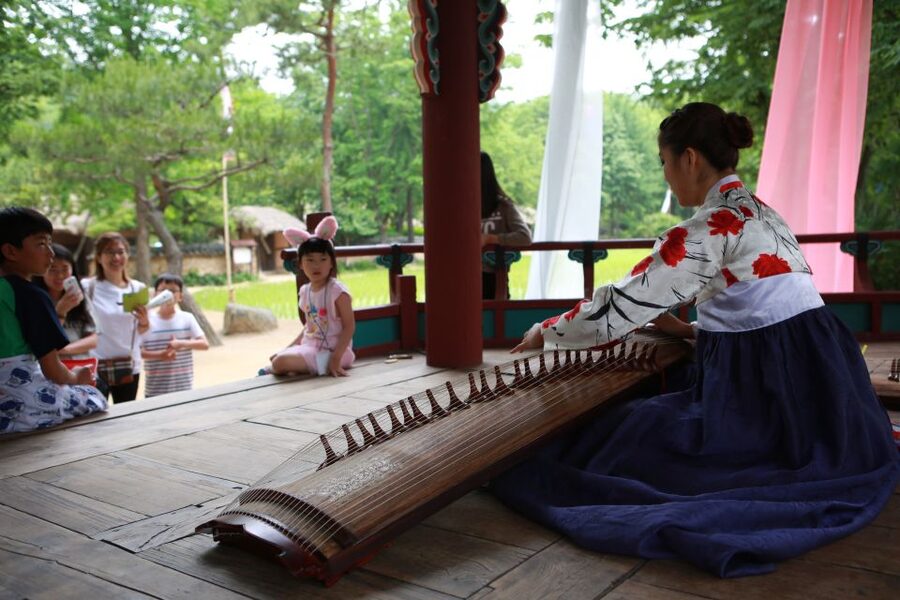
The first major stop is the Korean Folk Village, an open-air museum built as a recreation of a late Joseon-era community. It is not just one traditional house behind glass. You walk among reconstructed homes and public spaces arranged to suggest how people lived, worked, and moved through a settlement.
I find this kind of setting useful if Korean history is new to you. A guide can explain dates and social structure, but a village gives those facts a physical shape. You see the rooflines, courtyards, tools, pathways, and building styles that make a period feel less remote.
Three hours is a sensible amount of time here. It gives you room to follow the guide, watch a traditional music or dance performance, stop for food, and take photographs without sprinting from one corner to another. One useful warning: the grounds are large. If you want to see every section, watch performances, eat, and browse carefully, the time can pass quickly.
The village is also more family-friendly than its history-focused description might suggest. One family found an amusement park area there, which was an unexpected bonus for a child. That does not turn the tour into a theme-park day, but it can help keep younger children interested during a long cultural visit.
Expect strong photo opportunities. Traditional clothing photographs are available, and several guides, including Gina, have been happy to take pictures for the group. If you enjoy visual storytelling, this is likely to be the most rewarding stop.
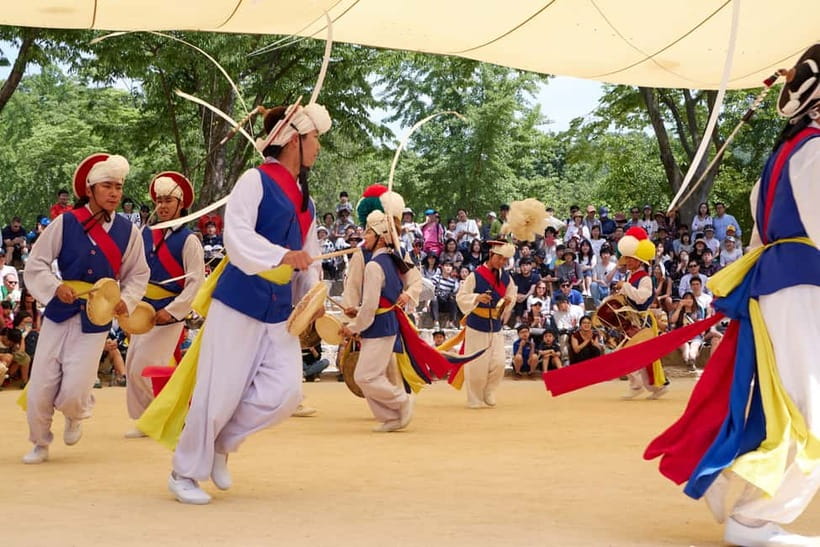
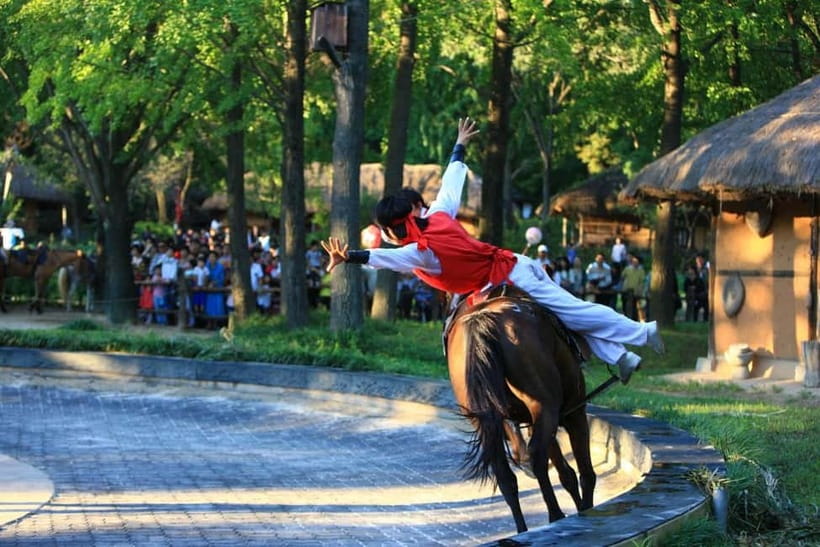
Performances are another highlight. Traditional music and dance add movement and sound to what could otherwise be a quiet walk through buildings. Check the timing with your guide, since the exact order of activities can shift.
Lunch timing deserves attention. The break may come around 11 a.m. to noon, near the end of the village visit. That is early for some people, and there may be a long stretch before the market stop. I would carry a small snack, especially if you are traveling with children.
What the guide adds at the village
This tour depends heavily on the person leading it. Guides named in the feedback include Joon, Laura, Jonathan, Jamie, Sunny, Gina, Sally, Cecilia, Julia, Jon, and Nammin. The strongest pattern is clear explanation mixed with humor and practical help.
Joon is repeatedly praised for making history easy to follow and answering questions. Laura is described as organized, warm, and especially good at explaining details while leaving people enough free time. Jonathan is noted for patience, humor, and a professional manner. Jamie received similar praise for answering questions carefully and explaining Korean culture with feeling.
That variety matters because the sites are large and the subject can become dry if it is presented as a list of dates. A good guide helps you understand why the village was built, what you are looking at, and how the old customs fit together. The guide also helps keep the group moving without taking away all your independent time.
If your main goal is deep specialist study, this is not a private academic tour. It is a broad cultural introduction. You get useful context, stories, and answers, but the schedule must serve a mixed group.
Hwaseong Fortress: walls, gates, and a proper walk
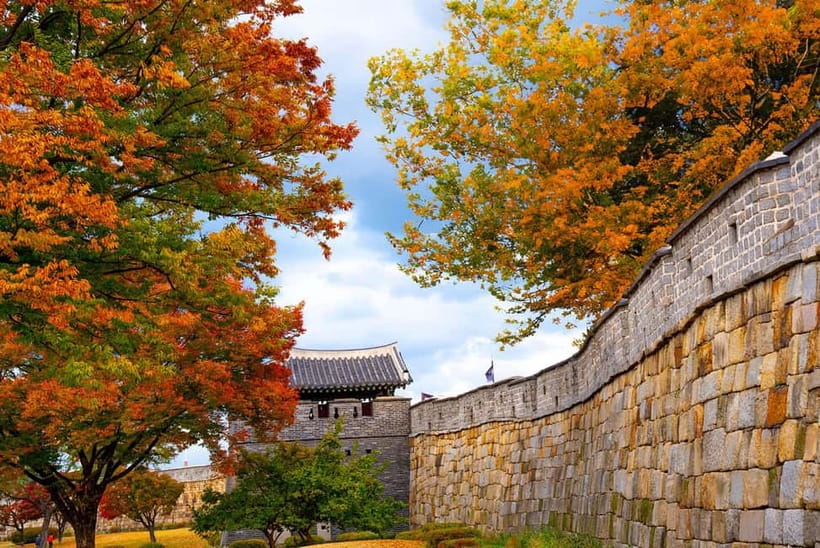
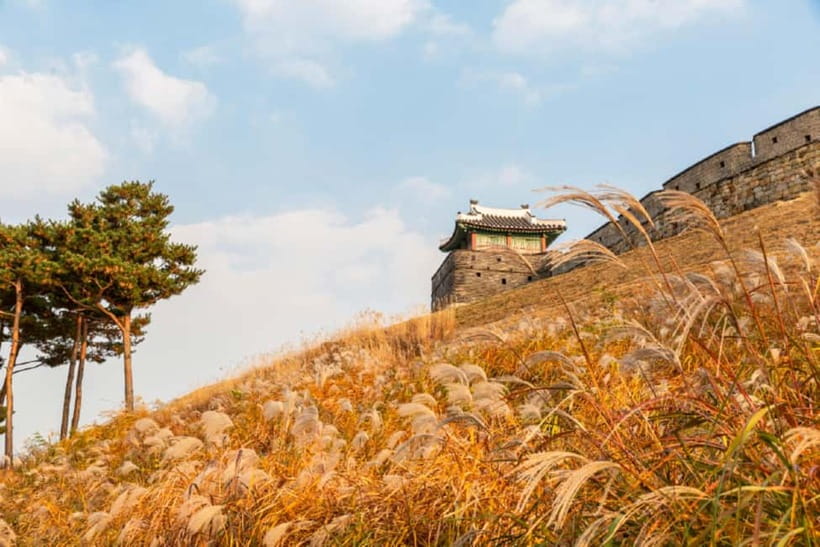
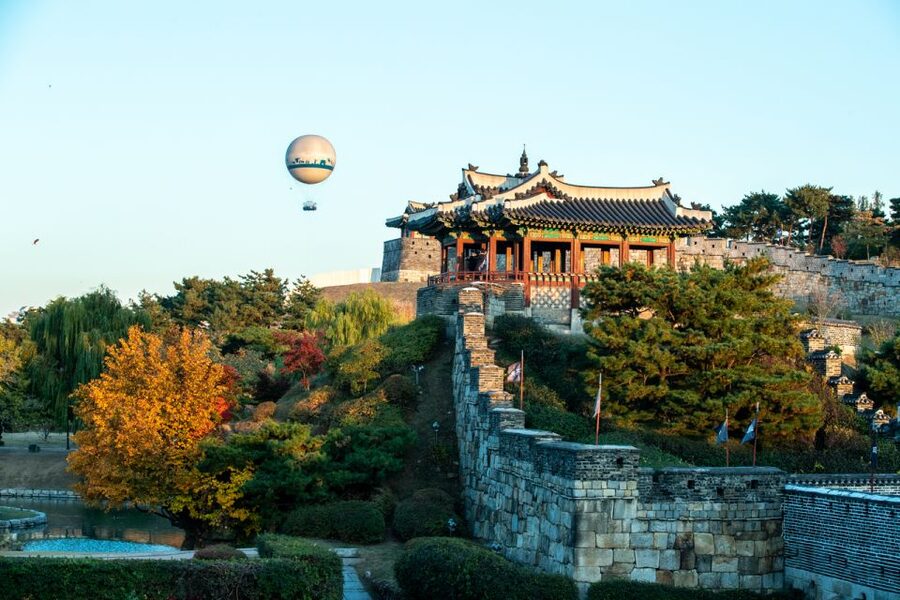
After the Folk Village, the tour continues to Suwon Hwaseong Fortress. This UNESCO World Heritage site was built in the late 18th century and reflects the military and planning skills of the Joseon period.
The fortress is more than a single gate for a quick photograph. You walk along sections of the wall and see gates, towers, defensive structures, and views over Suwon. The design blends Eastern and Western architectural influences, an unusual detail that your guide can place in context.
The guided portion lasts about 90 minutes. That is enough to introduce the major features and walk a meaningful section, but it is not a complete circuit of the entire fortress. You should think of this as a focused visit, not an all-day hike.
The walk is the strength of this stop and also its main challenge. The walls and elevated sections give you better views and a sense of how the defenses worked, but they require steady movement. One family enjoyed the stories and photographs but found parts of the walk tiring. Another visitor found the heat made the walls less enjoyable.
Weather changes the fortress experience more than the village experience. In hot weather, the exposed walk can feel tough, especially after a full morning. In rain, surfaces and views may be less comfortable. Bring water, wear supportive shoes, and use sun protection in summer. The tour operator may adjust the schedule because of weather and traffic.
I like the balance here. The Folk Village is a reconstruction designed for cultural learning. Hwaseong gives you a genuine historic structure within a living city. You can see how defense, government, and urban life connected, rather than treating Joseon history as a collection of isolated objects.
More castles to explore around the world:
- Stonehenge, Windsor Castle, and Bath from London
★ 4.5 · 18,662 reviews - Bucharest: Dracula’s Castle, Peles Castle, & Brasov Old Town
★ 4.5 · 17,858 reviews - From Munich: Neuschwanstein & Linderhof Castle Full-Day Trip
★ 4.6 · 14,646 reviews - Edinburgh Castle: Guided Walking Tour with Entry Ticket
★ 4.7 · 11,699 reviews
Nammun Market: the best present-day contrast
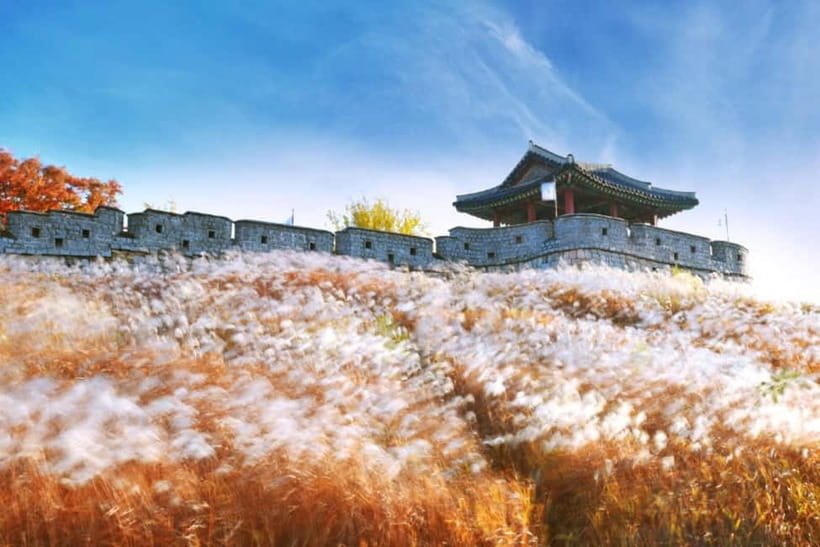
The final sightseeing stop is Nammun Market, with about an hour for free time. This is not a staged cultural display. It is a working market area where you can look at local shopping, try snacks, and see ordinary Suwon life after the formal history stops.
The market is a smart choice for this tour. After several hours of traditional buildings and military architecture, you need a change of pace. Here you can choose what interests you: food, small gifts, people-watching, or a short walk through the surrounding streets.
Hotteok has been a popular snack choice on this stop. You can also look for other local street foods, though the exact options and prices are not specified. Meals are not included, so keep Korean won available for anything you want to eat or buy.
One practical point: an hour goes quickly. Use the first few minutes to understand where the meeting point is, then explore. A family once became separated in the market before the guide located them, so I would not wander too far from your group or ignore the return instructions.
The market is especially valuable if you want something less polished than a palace courtyard. It gives you a glimpse of contemporary shopping habits and local food culture without adding another formal attraction to an already full day.
Transport, timing, and the real cost of the day
The advertised price is $74 per person. For that amount, you receive round-trip transportation, entrance fees, and an English, Chinese, or Korean-speaking tour staff member. You pay separately for meals, snacks, souvenirs, and personal expenses.
I consider that fair value for a long day outside Seoul. Public transport or independent taxis could reduce or increase your cost depending on your choices, but you would also need to plan the route, pay separate admissions, and manage transfers between the village, Suwon, and the market. The guided transport removes that planning burden.
The day begins at a central Seoul location and ends at one of several central drop-offs. The outbound bus ride is listed at about 80 minutes. The return journey is listed at roughly 2 hours and 10 minutes, though real traffic can change both figures.
Previous departures have used clean, comfortable buses or vans. One visitor specifically appreciated the comfortable vehicle and views during the ride. Do not count on USB charging ports, however. One person found they were not available, so bring a power bank if you use your phone for photographs, maps, or translation.
The schedule is full but generally balanced. You get guided time at the main sites and free time for eating and photographs. Still, one person found the day occasionally rushed. That is the normal compromise of fitting three major stops into one excursion.
Who will get the most from this tour
I would choose this tour if you want a clear introduction to Korean history and culture without arranging a complicated day trip yourself. It suits first-time visitors, families with older children, and anyone who wants a mix of performances, architecture, food, and walking.
It is also a good choice if you have already seen Seoul’s central palaces and want a change of setting. Suwon adds a different city, while the Folk Village supplies the visual details that palace visits often lack.
Families should find plenty to hold their attention, especially at the village and market. The amusement park area can be useful for children, but the day is still built around cultural sites and walking. Explain that expectation before you go.
I would hesitate to recommend it to anyone with significant walking limitations. The supplied information specifically advises comfortable shoes, and the fortress includes wall walking and some tiring sections. Stroller users should tell the operator at least 48 hours ahead of time, and infants aged zero to two can ride free if they do not need a seat.
The tour is offered in English, Chinese, and Korean. You should confirm your preferred language when selecting the option, since the meeting point and details may vary.
Small details that make the day easier
Wear shoes you can use for several hours on mixed surfaces. Sandals or fashionable but unsupportive shoes may make the fortress uncomfortable.
Carry water, a snack, sunscreen, and a power bank. The early lunch break means you may want food later, and your phone battery can disappear quickly among the village and fortress photo spots.
Keep your guide’s meeting instructions in mind at Nammun Market. Free time is useful, but markets are easy places to turn the wrong way.
The tour offers free cancellation up to 24 hours before departure and a reserve-now, pay-later option. Those policies help if your Seoul plans are still changing, but you should still check the selected departure time and meeting point.
Should you book the Suwon day trip?
I would book it if you want a well-supported cultural day with strong guides, comfortable transport, and three distinct experiences. The most praised part is not one single monument. It is the way guides such as Joon, Laura, Jonathan, and Jamie connect the village, fortress, and market into an understandable story.
Book with realistic expectations. This is long, active, and sometimes weather-exposed. It is not ideal for a slow, flexible day, a specialist fortress study, or anyone who needs very little walking.
For most visitors with one spare day in Seoul, the $74 cost is sensible. You get history, performances, photographs, local food, and a working market, all without having to solve the transport puzzle yourself.
FAQ
How long does the tour last?
The tour lasts about 10 to 11 hours, including transportation between Seoul and the attractions.
Where does the tour begin and end?
The starting point depends on the option you book. Returns are available to central Seoul locations, including Lotte Department Store Main Store, Dongdaemun History and Culture Park Station Exit 10, and Hongik University Station Exit 4.
What languages are available?
Tour staff and guides are available in English, Chinese, and Korean.
Are entrance fees included?
Yes. Entrance fees and round-trip transportation are included in the tour price.
Are meals included?
No. Meals, market food, snacks, travel insurance, and personal purchases are not included.
How much walking is involved?
You will walk through the Korean Folk Village and spend about 90 minutes visiting Hwaseong Fortress, including sections along the walls. Comfortable shoes are recommended.
Is the tour suitable for young children?
Infants aged zero to two can join free if they do not occupy a seat. The village may suit families because it includes performances, photographs, and an amusement park area, but the full day involves substantial walking.
What happens if I bring a stroller?
You need to inform the tour operator at least 48 hours before the tour if you plan to bring a stroller.
Can I cancel the booking?
You can cancel up to 24 hours in advance for a full refund. A reserve-now, pay-later option is also available.
New castle tours around the world
- From Prague: Karlštejn Castle & Koněprusy Caves Tour★ 4.9 · 183 reviews
- Prague: 2.5-Hour Vyšehrad Castle with Gorlice & Tickets★ 4.5 · 118 reviews
- Prague: Alchemy & Mysteries Bridge and Castle Evening Tour★ 5.0 · 8 reviews
- Prague Castle: 1-Hour Introduction Tour with Entry Ticket★ 4.2 · 41 reviews
- Potsdam: The evening Wannsee tour. Castles, parks, and villas.★ 4.7 · 63 reviews
- Prague: Stunning Viewpoints, Castle, City & Park Bike Tour★ 4.6 · 38 reviews
- Prague: River & Park Bike Tour to Troja Chateau★ 5.0 · 8 reviews
- Ljubljana: Postojna cave & Predjama castle small group tour★ 4.9 · 29 reviews
Fortress & Citadel Tours, compared.
Carcassonne: Castle and Ramparts Entry Ticket
Read our review →
Salzburg: Hohensalzburg Fortress Admission Ticket
Read our review →
Salzburg: Best of Mozart Fortress Concert and Dinner
Read our review →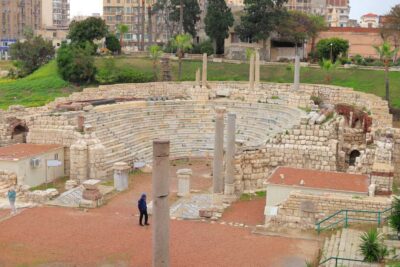
From Cairo Alexandria Catacombs, Citadel Day Trip with Lunch
Read our review →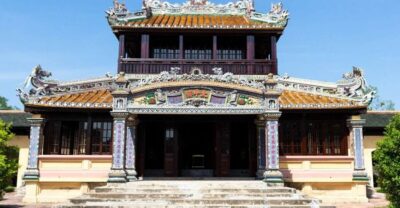
Hue Customizable Tour with Imperial Citadel & Forbidden City
Read our review →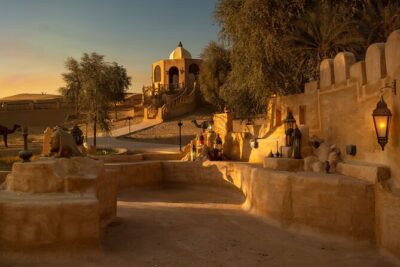
Desert Safari: Luxury Fortress Dinner, Camel Ride & Dune Bashing
Read our review →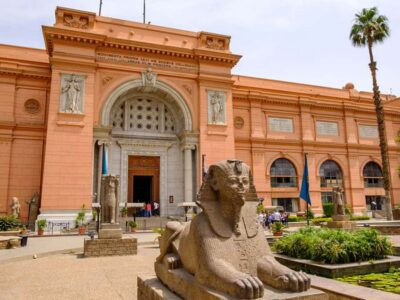
Cairo: Egyptian Museum, Citadel, and Old Cairo Guided Tour
Read our review →
Cairo Citadel, Old Cairo and Khan El Khalili: Private Tour
Read our review →Browse the lists this tour appears in