
Review · OSAKA
1-Day walking tour in Osaka:Castle, temples and Ukiyoe
Osaka’s story unfolds in layers on this full-day walk: a warlord’s castle, Japan’s first Buddhist temple, a food market, neon-lit Dotonbori, and the old art of ukiyoe. I like that the day moves from ancient Osaka to modern Osaka, instead of keeping you in one sightseeing district. I also like the way public trains connect the stops, giving you a practical feel for how the city works.
Guide Winky is praised for patient, clear explanations, and for making the day work well for families, including a five-year-old. The catch is stamina: you will be outdoors for hours, riding trains, walking between sights, and paying separately for lunch and drinks. In hot, wet, or very busy weather, this can feel like a long day.
Key points to know before you book
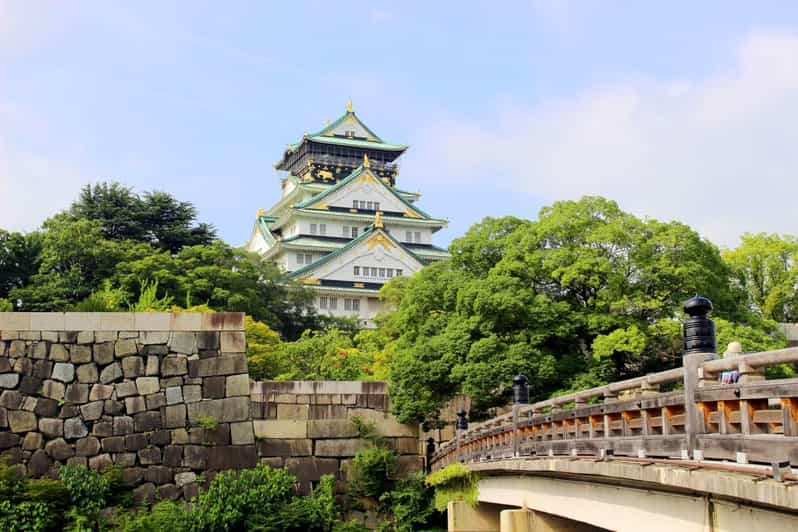
- Osaka Castle begins the day with Japanese political history, including a visit inside its museum.
- Shitennoji gives the tour a religious and cultural center, with stories about Buddhism’s path from India through China to Japan.
- Kuromon Ichiba Market lets you choose your own lunch, but food is not included in the $136 price.
- Dotonbori combines Osaka’s famous signs with a hands-on ukiyoe experience, not just a photo stop.
- Public transportation is part of the experience, with train time built into the day.
- Shinsaibashi finishes the route in a useful shopping district, and you may stay in central Osaka afterward.
A one-day view of Osaka’s past and present
This tour works because it does not treat Osaka as only a food city or only a shopping city. In one day, you see the city’s castle-centered past, its early Buddhist tradition, its market culture, its entertainment districts, and one of Japan’s best-known art forms.
The price is $136 per person. That covers entrance fees, train tickets needed during the tour, the ukiyoe experience, and an English-speaking guide. You still buy your own food and drinks, and you need to cover train travel before meeting the group and after the tour ends. For a full day with several admissions and guided interpretation, the price can make sense, especially if you want structure and historical background rather than simply collecting photographs.
I would not choose this for a slow day. You get roughly one hour at Osaka Castle, 50 minutes at Shitennoji, an hour at Kuromon Market, two hours around Dotonbori, and 30 minutes in Shinsaibashi, with train rides between major stops. The schedule gives you variety, but it also means you need to keep moving.
More Castle Walking Tours in Japan
- Ultimate Osaka Walking Tour: Castle, Dotonbori & Hidden Gems
★ 5.0 · 862 reviews - Osaka Castle Walking Tour and Castle Tower Admission
★ 5.0 · 561 reviews - Osaka: Castle History Walking Tour / Castle Tower Admission
★ 4.9 · 230 reviews
Meeting at JR Osaka Station without getting turned around
The meeting point is Akatsuki Plaza, called 暁の広場, on the first floor of the North Gate Building inside JR Osaka Station. It is north of the Central Exit ticket gates and near the North Central Exit. Look for an open space with two escalators on either side.
The important detail is simple: do not go up the escalators. Wait on the first floor for the guide holding a SNOW MONKEY RESORTS sign. The meeting time is 9:25 in the morning.
If you arrive on the Midosuji Subway Line from places such as Namba or Shinsaibashi, follow signs for JR Osaka Station. You may need to use connecting corridors or stairs before reaching the Central Exit area. Once you reach or pass the Central Exit gates, walk north toward Yodobashi Camera. Akatsuki Plaza is ahead on the first floor.
Osaka Station is large enough to make a late arrival stressful, so I would allow extra time. The meeting point itself is clear once you are in the right part of the station, but getting there from another rail line can take longer than expected.
Osaka Castle: a powerful symbol with a complicated past
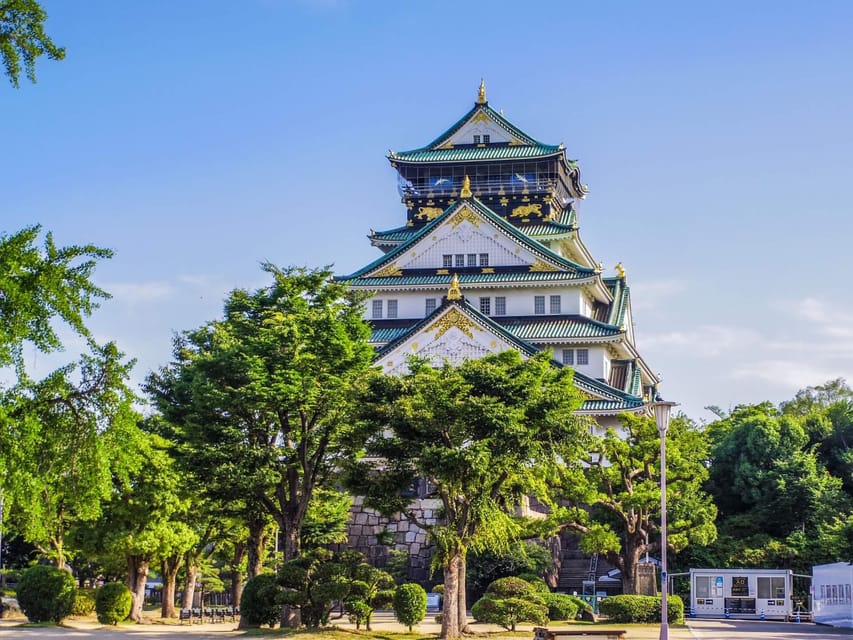
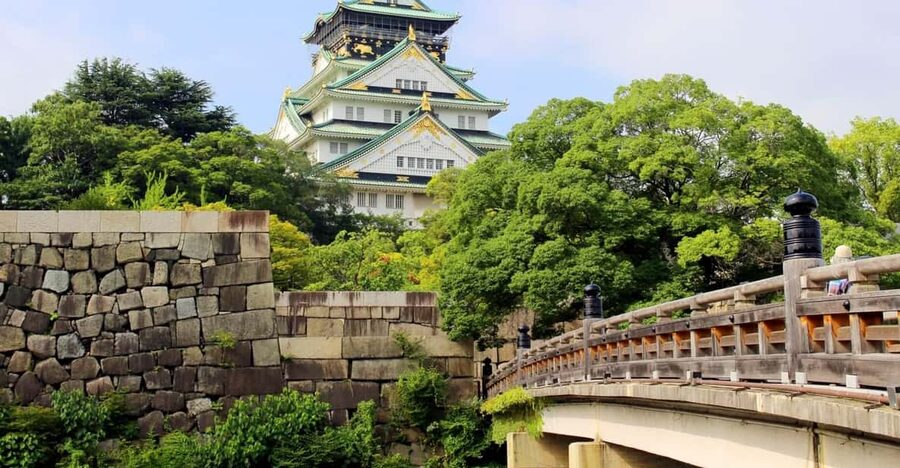
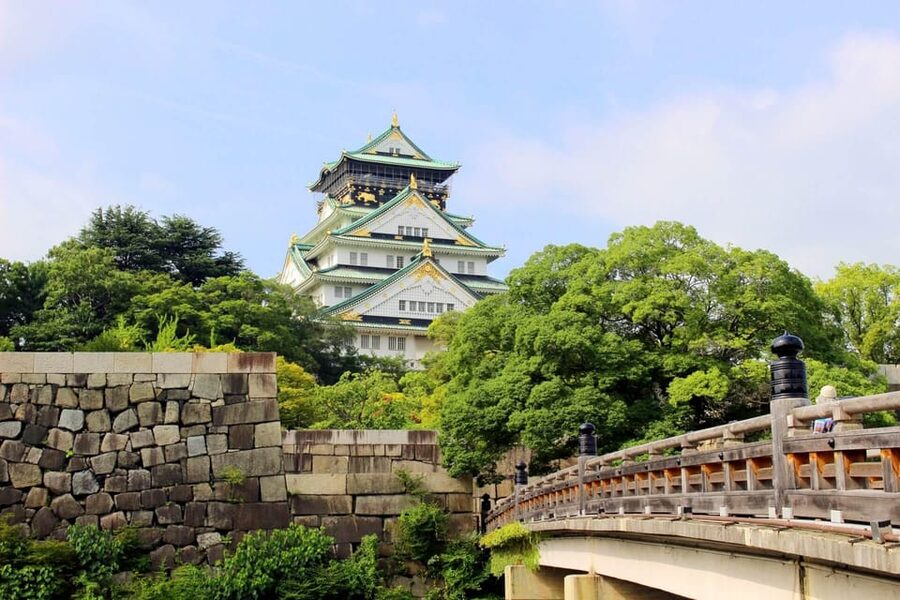
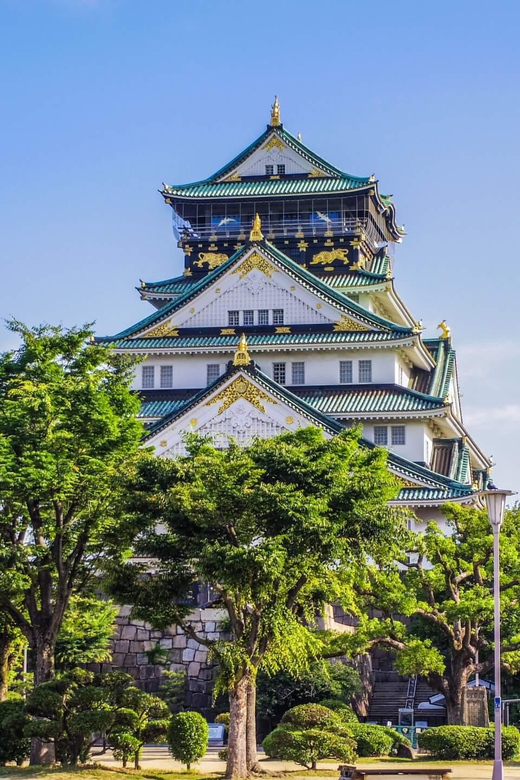
Osaka Castle is the first major stop, and it gives the day a strong start. The castle was completed in 1597, but it was destroyed several times. The current building was rebuilt by the Japanese government in 1995, so you are not looking at the original structure in its original form.
That distinction matters. Osaka Castle is both a historic site and a modern reconstruction. The museum inside helps explain the castle’s role in Osaka and the people connected with it. You can expect a guided visit lasting about an hour, with time around the castle grounds as well.
I like this stop because it gives you a clear entry point into Japanese history. You are not simply hearing that the castle is old. You learn that buildings, political power, and memory have all changed over time. The guide can help connect what you see today with the earlier castle that was completed in the late 16th century.
The drawback is that the modern building can surprise visitors expecting an untouched medieval fortress. Go for the museum, the setting, and the historical explanation rather than for original castle interiors. Comfortable shoes help here, since the visit involves outdoor walking as well as time inside.
Shitennoji and the arrival of Buddhism in Japan
After Osaka Castle, you take a train for about 30 minutes to Shitennoji Temple. The visit lasts around 50 minutes and focuses on the temple’s place in Japanese religious history.
Shitennoji is described as the first Japanese Buddhist temple. The guide explains how Buddhism traveled from India to China and then reached Japan thousands of years ago. This gives the temple a wider Asian context, which is useful if your knowledge of Japanese religion begins and ends with a few shrine and temple photographs.
The stop can include more than architecture. You may hear stories about Buddhist practice, observe ceremonies, hear monks chanting prayers, and pay respects to a relic at the top of the Buddhist temple. Those details give the visit a quieter, more thoughtful tone than the castle and the commercial districts that follow.
I would pay attention to the difference between a Buddhist temple and a Shinto shrine here. The tour later includes a shrine around the Kuromon area, so the day offers a chance to compare two important Japanese traditions. Your guide can explain the customs and stories as you move through them.
The 50-minute visit is enough for a guided introduction, but not enough for a slow, independent exploration of every part of the grounds. If religious sites are your main interest, you may want to return on your own after the tour.
More Castle Walking Tours in Osaka:
- Osaka: Osaka Castle 3 hours Historical Walking Tour
★ 4.6 · 14 reviews - Edinburgh Castle: Guided Walking Tour with Entry Ticket
★ 4.7 · 11,699 reviews - Prague: 3-Hour Walking Tour of Old Town & Prague Castle
★ 4.7 · 5,696 reviews - Edinburgh Castle: Guided Walking Tour with Entry Ticket
★ 5.0 · 5,540 reviews
Kuromon Ichiba Market: lunch on your own terms
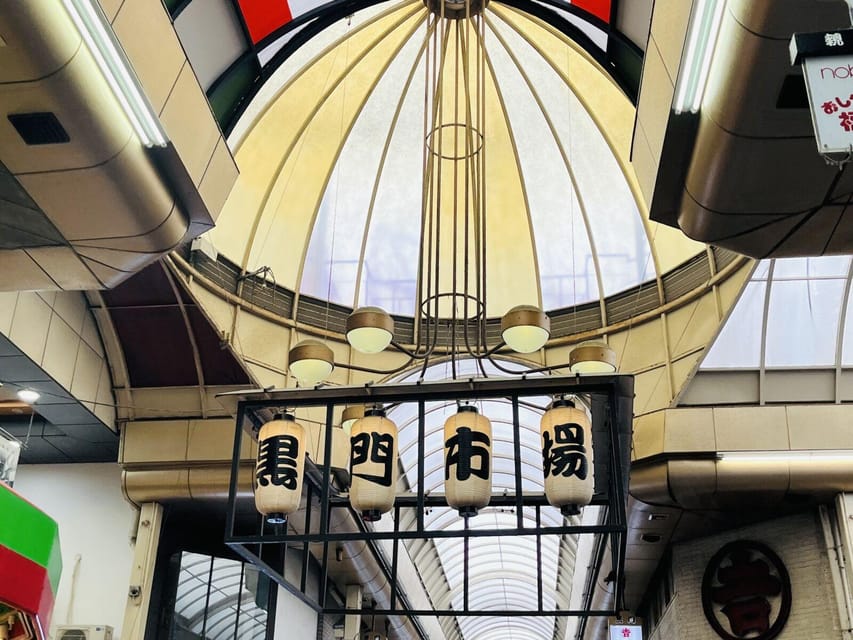
A train ride of about 30 minutes brings you to Kuromon Ichiba Market. The market stretches for roughly 580 metres and includes about 150 shops selling seafood, vegetables, fruit, prepared food, drinks, clothing, and other goods.
This is your first chance to choose what and how much you eat. Lunch is not included, which is a drawback for anyone who prefers an all-inclusive tour, but it is also a strength. You are not locked into one restaurant or a set menu. You can look around, select something that appeals to you, and control your spending.
The guide leads you through the market and allows free time. I like that arrangement because markets are best experienced with a little room to wander. You can focus on the food you want, while the guide helps explain the area and keeps the group on schedule.
Do not treat this as a long restaurant lunch. The market stop lasts about an hour, so you need to make choices fairly quickly. If you have dietary restrictions, the supplied information does not promise special arrangements, so it is sensible to ask the guide early and choose carefully.
Kuromon also marks a clear change in mood. The morning has focused on castles and religion. Here, the emphasis shifts to everyday food, shopping, and the practical side of Osaka life.
A local shrine before the bright lights
After lunch, the group visits a distinctive shrine in the area before spending about two hours in Dotonbori. The shrine is not named in the supplied details, so you should see it as an additional cultural stop rather than booking the tour around one specific shrine attraction.
That small visit helps keep the afternoon from becoming only a food and shopping crawl. You get another chance to see local religious customs before entering one of Osaka’s most famous commercial districts. I like the contrast: a quiet place of worship followed by giant signs, crowded streets, and constant movement.
The guide’s role matters here. A shrine can look simple if you do not know what you are seeing. Explanations about prayers, customs, and the meaning of the site can turn a short stop into a useful cultural lesson.
Dotonbori, Osaka’s loud and photogenic center
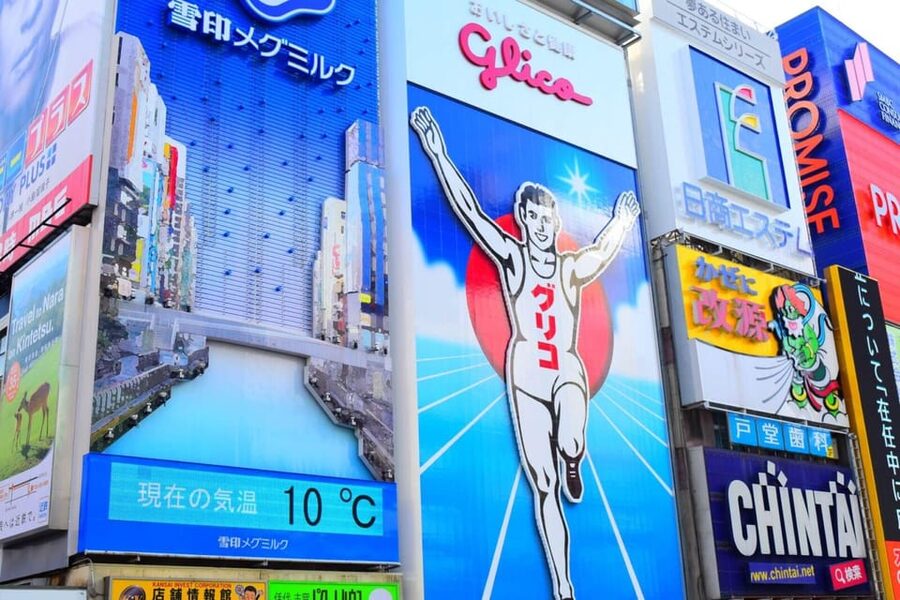
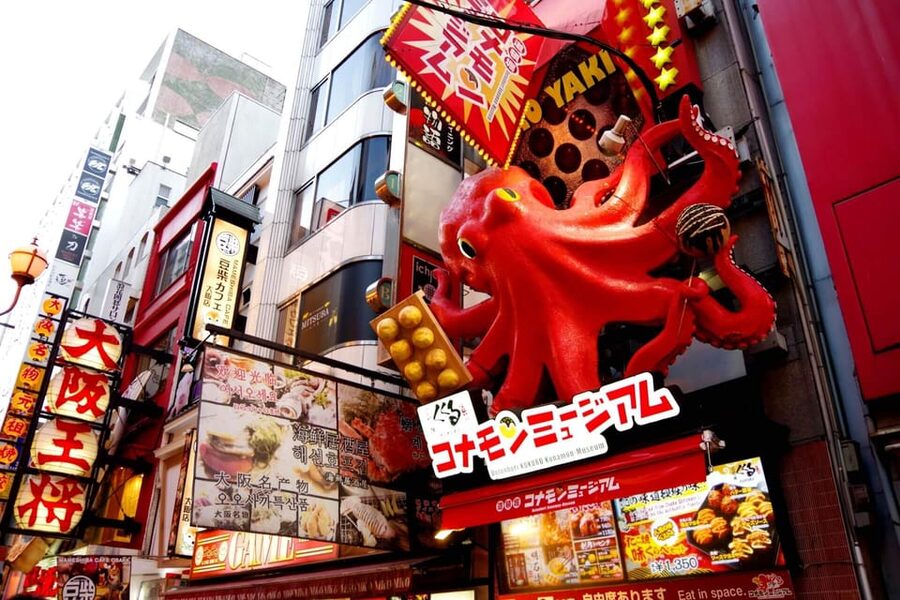
Dotonbori is the afternoon centerpiece. It is the symbolic business and downtown area of Minami, Osaka, known for huge three-dimensional billboards and famous signs. You get about two hours here, which is enough time for a guided walk, photographs, and the ukiyoe activity.
This is where the tour shows Osaka’s modern personality. The district is famous for eating, but it is not only about food. The oversized signs, dense commercial streets, and narrow side areas make it a lively place to observe how Osaka presents itself.
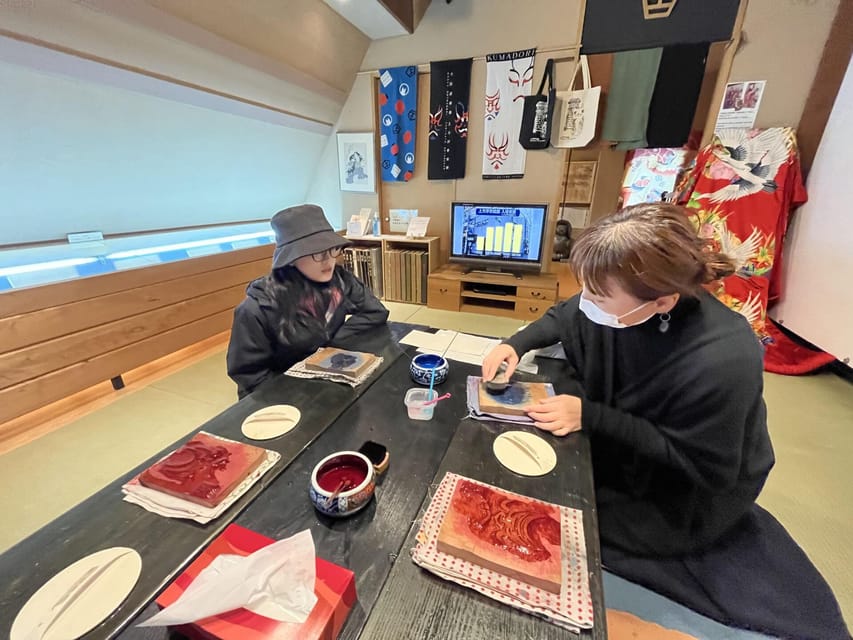
You will also have a traditional Japanese art experience focused on ukiyoe. The earliest ukiyoe works date from the 1670s, and the art form flourished from the 17th through the 19th centuries. It later became one of the images most closely associated with Japan.
The hands-on element is a real advantage. You are not only told that ukiyoe influenced Japanese visual culture. You get time to try the art yourself, with the experience fee included in the tour price. The exact project and level of instruction are not specified, so do not expect a full art course. Think of it as a compact cultural activity within a larger sightseeing day.
Dotonbori can be crowded and noisy. That is part of its appeal, but it can also be tiring after a morning of walking and public transportation. Stay aware of the meeting instructions during free time. The guide will tell you when and where to regroup, and you should keep that information handy.
Shinsaibashi and the famous Osaka photo stop
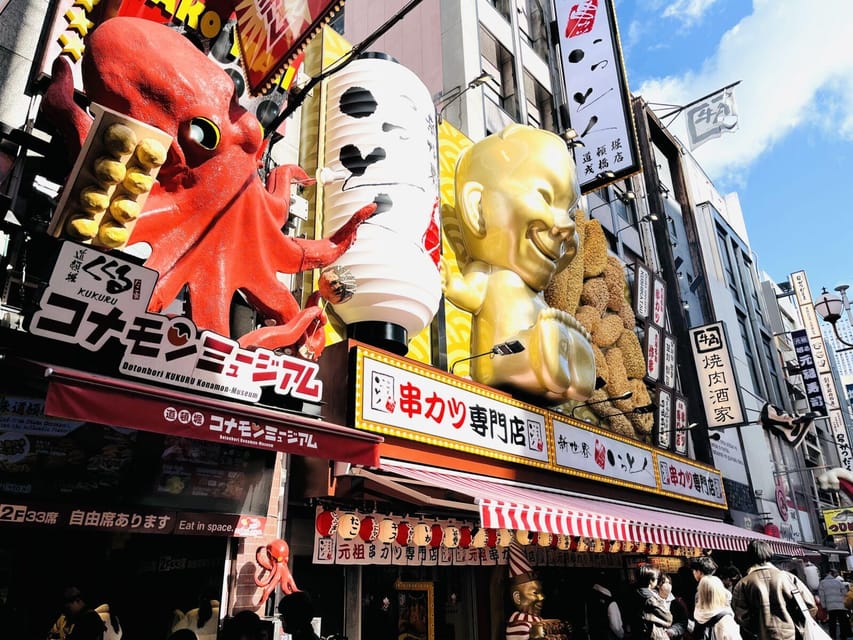
The final walking section leads to Shinsaibashi, a shopping street with a long history as a regional commercial center. You will find Japanese local shops alongside international brands, making it a useful place to continue exploring after the guided portion ends.
Along the way, you pass a famous Osaka billboard and have time to pose for photographs. This is a small but practical part of the day. You get the classic Osaka image, but you also finish in an area where you can keep shopping or eating without having to retrace your steps.
The walk through Shinsaibashi lasts about 30 minutes. The group then returns together to Akatsuki Plaza at JR Osaka Station. You are welcome to leave the tour in the city center instead of returning with the group, which is useful if you want to spend the evening around Dotonbori or Shinsaibashi.
What the guide adds to the day
The strongest part of this experience is the guide-led storytelling. Winky has been especially effective with detailed explanations, patient answers, and family groups. One child as young as five enjoyed the day and wanted to see the guide again the next day, which tells me that the presentation is not aimed only at adults with a serious interest in history.
A good guide is important on this route because the locations are varied. Without context, Osaka Castle may be just a large reconstructed building, Shitennoji may be just another temple, and Dotonbori may be just a wall of advertisements. The guide connects those places into a story about power, religion, food, art, and commerce.
The tour is conducted in English. The positive descriptions of Winky focus on patience, friendliness, and clear historical explanations. That combination should suit you if you want to ask questions rather than listen to a fixed speech and move on.
Walking, trains, weather, and the real pace
This is a walking tour that uses public transportation, not a private vehicle tour. The schedule includes about one hour on a train at the beginning, then roughly 30-minute train rides between several stops. You should expect repeated boarding, walking through stations, and keeping track of the group.
Wear comfortable shoes and clothing. Bring sun protection and rain protection if needed. The activity takes you outdoors for hours, and the timing can change because of weather and train conditions.
Free time is built into the day, especially at Kuromon Market and Dotonbori. That is convenient, but you need to remember the next meeting time and place. If you become separated or forget where to meet, the instructions ask you to call the tour provider immediately.
I would not recommend this for someone who wants a relaxed, sit-down sightseeing day. It is a better fit for an active visitor who wants to cover several parts of Osaka in one organized outing.
Who gets the best value from $136
At $136, this is not the cheapest way to see Osaka. You could visit many areas independently for less, especially if you skip paid admissions and already understand the train system.
The value comes from the combination of transport, admissions, the ukiyoe activity, and an English-speaking guide. You also avoid spending time planning a route between Osaka Castle, Shitennoji, Kuromon, Dotonbori, and Shinsaibashi. For a first visit, that convenience can be worth paying for.
I think the tour suits you best if:
- You have one full day for Osaka and want a broad introduction.
- You enjoy history but also want food, shopping, and street scenes.
- You prefer a guide to explain customs at temples and shrines.
- You are comfortable walking outdoors and using trains.
- You are traveling with children who can manage a full day.
- You want to stay in central Osaka after the tour ends.
It may not suit you if you want long, quiet visits at each historical site, if you dislike group timing, or if you want lunch included in the cost.
Should you book this Osaka day tour?
I would book it if you want one organized day that links Osaka’s major sights with useful cultural context. The best parts are the contrast between Osaka Castle and Shitennoji, the freedom to choose lunch at Kuromon Market, and the ukiyoe activity in Dotonbori. Winky’s patient approach is another reason this works well for families and first-time visitors.
I would skip it if you already know Osaka well or prefer to explore at your own pace. The day is active, some train rides are long, and food costs extra. For a first visit with limited time, though, $136 is a fair price for the range of places covered and the guidance that holds the whole day together.
FAQ
Where does the tour meet?
Meet at Akatsuki Plaza, or 暁の広場, on the first floor of the North Gate Building inside JR Osaka Station. It is north of the Central Exit ticket gates and near the North Central Exit.
What time does the tour begin?
The meeting time is 9:25 in the morning.
How do I find Akatsuki Plaza from the Midosuji Subway Line?
Follow signs toward JR Osaka Station, then head toward the Central Exit. Walk north toward Yodobashi Camera after reaching the Central Exit area. Akatsuki Plaza is on the first floor.
Is the tour conducted in English?
Yes. The tour includes a live English-speaking guide.
Are train tickets included?
Train tickets required during the tour are included. Train tickets needed before the meeting point or after the tour are not included.
Is lunch included in the price?
No. Food and drinks at Kuromon Market are purchased separately.
What does the $136 price include?
The price includes entrance fees for the scheduled sights, train tickets needed during the tour, the ukiyoe experience fee, and the English-speaking guide.
How long is the tour?
The experience lasts one day. The listed schedule includes visits to Osaka Castle, Shitennoji, Kuromon Ichiba Market, Dotonbori, and Shinsaibashi, with train travel between locations.
Can I stay in central Osaka after the tour?
Yes. You may continue your time in the city center after the guided route. The group returns to JR Osaka Station together, but you are welcome to remain in the central area.
Can I cancel for a full refund?
You can cancel up to 24 hours in advance for a full refund. The reserve-now, pay-later option also lets you book without paying on the day of reservation.
More one-day castle trips around Osaka
- Osaka: 1-Day Guided Tour – Sky Bldg, Castle, Namba Shinsekai
★ 5.0 · 6 reviews - From Munich: Neuschwanstein & Linderhof Castle Full-Day Trip
★ 4.6 · 14,646 reviews - Bucharest: Dracula’s Castle, Peleș Castle & Brașov Day Trip
★ 4.4 · 6,100 reviews - Windsor Castle, Stonehenge, and Oxford Day Trip from London
★ 4.5 · 5,292 reviews
New castle tours around Osaka
- From Osaka: Himeji Castle, Arima Onsen & Mt. Rokko Day Tour★ 4.6 · 339 reviews
- Osaka: Osaka Castle 3 hours Historical Walking Tour★ 4.6 · 14 reviews
- Osaka: Osaka Castle Guided Tour with Local Guide★ 4.7 · 78 reviews
- Osaka: Osaka Castle – Tsuruhashi – Tennoji (Spanish Guide)★ 4.7 · 10 reviews
- Osaka: Early Morning Osaka Castle Guided Tour, Avoid Crowds★ 4.9 · 12 reviews
- Osaka: Explore Every Bit of Osaka Castle in 3 Hours★ 5.0 · 5 reviews
- Osaka: Castle, Tea Ceremony, Calligraphy, and Samurai Armor!★ 5.0 · 4 reviews
- Osaka: Osaka Castle & Historical Museum Guided Tour★ 4.8 · 28 reviews
Castle Walking Tours, compared.

Edinburgh Castle: Guided Walking Tour with Entry Ticket
Read our review →
Prague: 3-Hour Walking Tour of Old Town & Prague Castle
Read our review →
Edinburgh Castle Guided Walking Tour in English
Read our review →
Budapest: Buda Castle Walk with Saint Stephen’s Hall
Read our review →

Prague 3-hour Afternoon Walking Tour including Prague Castle
Read our review →
Royal Mile and Edinburgh Castle – Small Group Walking Tour
Read our review →
Browse the lists this tour appears in