

Review · FRANCE
Paris: Château de Vincennes Entry Ticket
The great draw here is the 52-meter medieval keep, one of Europe’s tallest fortified towers. A short trip east of central Paris takes you to a castle built to protect the monarchy, later used as a prison, barracks, arsenal, and national memorial. It is a serious fortress, not a dressed-up palace.
I like the chance to see rooms linked with Fouquet, the Marquis de Sade, and Mirabeau, along with the chamber where King Henry V died. I also like the 365-day ticket validity, which gives you unusual freedom if your Paris plans change.
The main thing to consider is that transport, food, and drinks are not included, and the regular guided tours are in French. You can explore independently with multilingual material, but visitors who want a full live tour in English will need to plan around that limitation.
Key points to know before you go
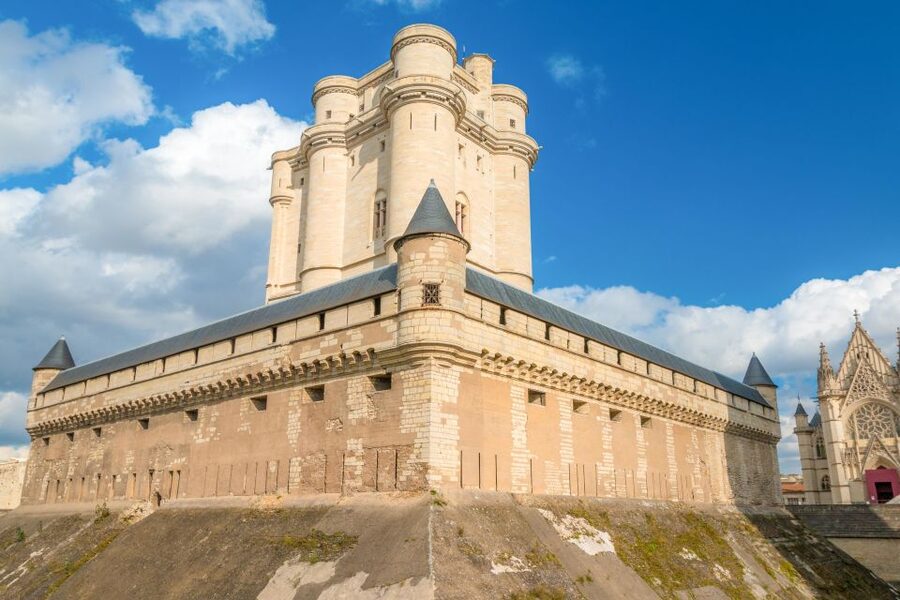
- Climb the 52-meter keep: The tower gives the visit its physical challenge and its strongest sense of medieval power.
- See a prison with famous inmates: Fouquet, the Marquis de Sade, and Mirabeau were held in rooms inside the keep.
- Follow seven centuries of change: The site traces France from the 14th century royal court through Napoleon’s military use and the Second World War.
- Use the flexible ticket: Admission remains valid for 365 days, useful when rain, crowds, or a busy Paris schedule disrupt your plans.
- Choose French or self-guided touring: French guided visits run every day at 2:15 PM and 3 PM, with no reservation required.
- Allow for an eastern Paris outing: The château is in Vincennes, not central Paris, and transport is your responsibility.
Why Château de Vincennes feels different from a Paris palace
Paris has grand royal rooms at Versailles and the Louvre, but Château de Vincennes tells a harder-edged story. Its original job was defense. The thick walls, fortified keep, and surrounding grounds speak of a monarchy that needed protection from both foreign attacks and unrest close to home.
The fortress was built in the 14th century to affirm royal power and guard the capital. For centuries, it was tied closely to the French monarchy. It remained at the heart of royal life until 1682, when Louis XIV moved the court to Versailles.
That shift helps you read the site properly. Vincennes was not simply abandoned when Versailles became the royal showpiece. Its role changed. The building moved from royal residence to prison, then to military base and arsenal. A visit here is useful because you see how one place adapts to the needs of the state.
I find that more revealing than a room full of royal furniture. Here, the architecture itself explains the political story. A tall tower says power. A prison cell says punishment. A military arsenal says preparation. The restored fortress also carries the scars of the Second World War, when it suffered extensive damage.
More Castle Entry Tickets in France
- Carcassonne: Castle and Ramparts Entry Ticket
★ 4.6 · 2,884 reviews - Chambord: Entry Ticket to the Castle
★ 4.6 · 1,841 reviews - Chenonceau Castle Admission Ticket
★ 4.7 · 1,515 reviews
Reaching the eastern edge of Paris
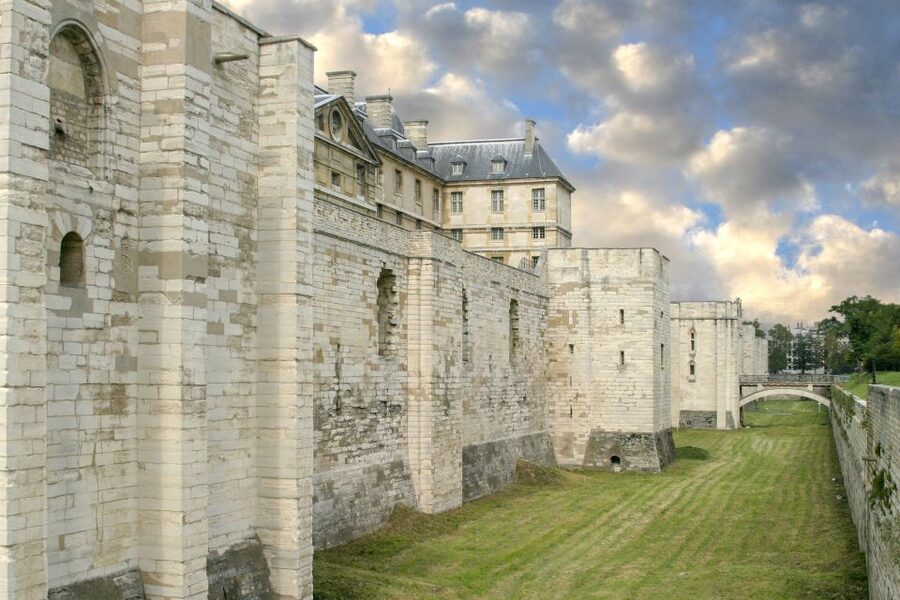
The meeting point is Château de Vincennes on Avenue de Paris in Vincennes, in the Île-de-France region. The experience description calls it a short journey from Paris, but the ticket does not include transport, so you need to handle that part yourself.
That is not a major problem, but it affects your timing. Check your route before leaving central Paris, especially if you have a timed museum visit or dinner reservation later. The castle is an easy choice for a half-day plan, though the ticket’s long validity means you do not need to force the visit into a tight schedule.
The setting also gives you a break from the most crowded central sights. You are still close to the capital, yet the visit feels focused on one major fortress rather than a string of rooms and galleries. If you are planning several days in Paris, Vincennes works well as a change of pace.
Bring a passport or identity card. Visitors under 18 and European Union citizens under 26 can enter free, but they must first show photo identification at the ticketing station before going to the monument entrance. That small step matters, since arriving at the gate without the required proof could delay you.
Entering a royal fortress built for defense
The first stage of the visit is the castle complex itself. The most important idea to keep in mind is why it was built. This was a royal statement in stone, designed to protect the capital and defend the monarchy against uprisings.
The scale makes that message clear. You are not walking into a delicate country retreat. You are approaching a fortified compound whose purpose was security. The site later became a symbol of the modern French state, which gives the walls a meaning beyond medieval architecture.
Take your time before heading straight for the keep. Look at how the fortress presents itself as a defensive structure. The experience is stronger when you connect the physical design with the political reason for its construction.
The castle’s royal period lasted until Louis XIV selected Versailles in 1682. That date marks a useful turning point. Vincennes helps explain the move from a defended royal seat to the theatrical court culture associated with Versailles.
Climbing the 52-meter medieval keep
The keep is the main event, and you should be ready for stairs. At 52 meters, it is described as the tallest fortified tower of its kind in Europe. Climbing it gives you the clearest sense of the building’s strength and purpose.
The ascent is not just a way to reach a view. It takes you through the defensive heart of the castle. The height helped protect the royal occupants and gave the fortress a commanding position. Even without adding a modern interpretation, the climb makes the medieval design easier to understand.
This is where I would slow down rather than rush toward the top. Notice how the experience changes as you move through a building that served different functions over time. The same tower that supported royal authority later held prisoners and formed part of a military system.
The stairs may be a consideration for anyone who finds climbing difficult, but the supplied information does not give details about accessibility or alternate routes. Plan on the keep visit involving stairs, and ask at the ticketing station if you need current information about access.
Same stronghold, another way through the gate:
- Loire Valley Castles Day Trip from Paris with Complementary Wine
★ 4.5 · 3,907 reviews - From Paris: Loire Valley Castles Day Trip With Wine Tasting
★ 4.6 · 1,727 reviews - Medoc or Saint Emilion Wine Tasting and Chateau from Bordeaux
★ 5.0 · 1,415 reviews - ★ Walking Tour of Old Nice and Castle Hill
★ 5.0 · 1,318 reviews
Inside the former prison of famous names
From the 16th through the 19th century, the keep was used as a prison. That long period adds a stark layer to the visit. The tower was not only a symbol of royal power above the city. It was also a place where the state confined people.
You can see rooms connected with Fouquet, the Marquis de Sade, and Mirabeau. Those names make the prison story easier to grasp, but the rooms matter even without knowing every detail of their lives. You are looking at spaces shaped by detention, authority, and reputation.
The keep also includes the room where King Henry V died. That detail links the tower back to monarchy and gives the building a human scale. Royal history can feel abstract when reduced to dates and rulers. A death room, a prison room, and a narrow stairway bring it closer.
I would not expect a polished palace presentation here. The appeal is the setting and the sequence of uses. If you enjoy political history, prison history, or old buildings with layers of purpose, this part may be the most rewarding.
From royal stronghold to Napoleon’s barracks
Under Napoleon I, Château de Vincennes was transformed into a barracks and arsenal. This is one of the most useful parts of the visit because it shows the fortress adapting to a new France.
The building no longer served a medieval king in the old sense. It became part of a modern military system. The fortress also helped protect Paris during invasions in the 19th century, giving it a direct role in the defense of the capital.
That change helps you avoid seeing the château as a frozen medieval object. It remained useful because military power kept changing. The royal keep, prison, barracks, and arsenal are different chapters in one structure.
If you are interested in Napoleon, national defense, or the development of the modern French state, this section adds real value to the ticket. If you mainly want ornamental interiors, the site may feel less rewarding than Versailles.
Second World War damage and national memory
The château suffered extensive damage during the Second World War and was later restored. That fact changes how you should read the monument. It is not simply an untouched medieval survivor. It is also a place that required repair and preservation after modern conflict.
Today, the building is considered a place of national remembrance. The historical services of France’s three armed forces are housed there, which gives the site an ongoing official and military role.
This is an important distinction. You are not visiting only a former royal residence. You are entering a place still tied to the memory and administration of the French state. The experience links medieval authority, royal imprisonment, Napoleonic military use, wartime damage, and present-day remembrance.
The site’s modern role may appeal to some visitors more than others. I like it because it keeps the château connected to France today instead of presenting it as a sealed-off relic.
Guided French tours and self-guided options
A French guided tour is offered every day at 2:15 PM and 3 PM, with no reservation required. If you understand French, this is the easiest way to add a live explanation to your visit.
For English speakers and anyone visiting at another time, self-guided touring is the practical choice. A visitor guide is available in several languages, and an augmented reality terminal is included in Charles V’s study. That gives you more support than a bare admission ticket.
The activity information lists a small group size limited to 10 participants. Because the regular guided tours are in French and no guide name is provided, you should not book this expecting a personally led English-language tour. The strength here is flexibility, not a highly customized private experience.
I would set aside enough time to read and look closely rather than treating the château as a quick photo stop. The ticket is valid for 365 days, so you can return within that period according to the stated validity. Check the available opening times before you go, since the long ticket validity does not mean the monument is open every day of the year.
Is the $15 ticket good value?
At $15 per person, admission is reasonably priced for a major historic site with a 52-meter keep, self-guided materials in several languages, and an augmented reality terminal. The value improves if you care about military history, prisons, royal power, or the way buildings change with the state around them.
The 365-day validity is unusual and useful. Many sightseeing tickets force you to choose a date and hour. Here, you have much more room to adjust your plan, though the activity is non-refundable, so buy only when you are confident you want the visit.
The price is less compelling if you are looking for a full guided experience in English. French tours are included at set times, but transport, food, and drinks are not. You are paying mainly for access to the monument and its interpretation tools.
Free admission can change the calculation. Visitors under 18 and European Union citizens under 26 may enter free with the required photo ID. There is also free entry on the first Sunday of January, February, March, November, and December, plus the European Heritage Days weekend, held on the third weekend of September each year.
Timing, closures, and useful planning details
Last entry is 45 minutes before the stated closing time. That rule matters at a large fortress, since arriving late could leave you too little time for the keep and the prison rooms.
The château is closed on January 1, May 1, and December 25. It is wise to check availability before setting out, particularly around public holidays and the free-entry dates.
The best visit plan depends on your interests. History-minded visitors should aim for the French tour if they can follow it. Independent visitors can arrive at a convenient time, use the multilingual guide, and spend extra attention on the keep, prison rooms, Charles V’s study, and the military chapters.
Do not forget your identity document if you might qualify for free admission. Even if you expect to pay the standard price, carrying a passport or ID card is part of the stated preparation.
Who should book Château de Vincennes?
I would recommend this experience to you if you want a historic site with a strong military and political story, rather than another ornate royal interior. It suits adults and older children who are comfortable with stairs and interested in castles, prisons, Napoleon, or French state history.
It is also a good pick for repeat Paris visitors who have already seen the central landmarks and want a short outing with a different mood. The eastern location and 365-day validity make it easier to fit into a flexible schedule.
I would hesitate if you need an English-speaking guide, dislike climbing, or want an attraction where every room is richly furnished and brightly presented. The self-guided material helps, but the regular live tours are in French.
Final verdict: book it for the keep and the historical layers
Book Château de Vincennes if the idea of climbing a 52-meter medieval keep and moving through royal, prison, Napoleonic, and wartime history appeals to you. The $15 price is fair, and the year-long ticket validity gives you welcome flexibility.
Skip it if your Paris plans are already packed with central sights and you have little interest in military history or fortress architecture. For the right visitor, though, Vincennes offers a clear view of how France’s power changed over seven centuries, all inside one imposing complex.
FAQ
Where is Château de Vincennes located?
It is at Avenue de Paris, 94300 Vincennes, in the Île-de-France region of France, east of Paris.
How long is the ticket valid?
The ticket is valid for 365 days. Check availability for the relevant starting times.
Are guided tours included?
French guided tours are included every day at 2:15 PM and 3 PM. No reservation is required for these tours. Self-guided visits are also available.
Is an English guided tour available?
The provided information specifies guided tours in French. Multilingual visitor guides and an augmented reality terminal in Charles V’s study are included.
Who can enter free?
Visitors under 18 and European Union citizens under 26 can enter free. You must show a photo ID at the ticketing station before going to the monument entrance.
When is Château de Vincennes closed?
The château is closed on January 1, May 1, and December 25. Last entry is 45 minutes before the stated closing time.
New castle tours around France
- Pierrefonds: Château de Pierrefonds Entrance Ticket★ 4.7 · 152 reviews
- PARIS: Private transfer Château Versailles van 7 people 4H★ 3.0 · 4 reviews
- Paris: Loire Valley Castles Tour with Wine Tasting★ 4.9 · 22 reviews
- Paris to Loire Valley Castles Chambord & Chenonceau -DayTrip★ 4.7 · 2 reviews
- Paris: Loire Valley Castles Tour with Chambord & Chenonceau★ 4.8 · 51 reviews
- Avignon: Full-Day Wine Tour around Châteauneuf-du-Pape★ 4.9 · 83 reviews
- Paris: O Chateau’s Wine Tasting Dinner★ 4.2 · 30 reviews
- Nice: Theatrical History Tour – Secrets of the Castle Hill★ 5.0 · 21 reviews
Castle Entry Tickets, compared.

Edinburgh Castle: Guided Walking Tour with Entry Ticket
Read our review →
Prague: Castle Tour with Local Guide and Entry Ticket
Read our review →
Prague Castle 2.5-Hour Tour Including Admission Ticket
Read our review →

Prague: Prague Castle and Lobkowicz Palace Entry Tickets
Read our review →
Seville: Alcázar and Cathedral Entry Ticket and Guided Tour
Read our review →
Carcassonne: Castle and Ramparts Entry Ticket
Read our review →Browse the lists this tour appears in