
Review · CAIRO
Museum of Egyptian Civilization, Citadel & Old Cairo Tour
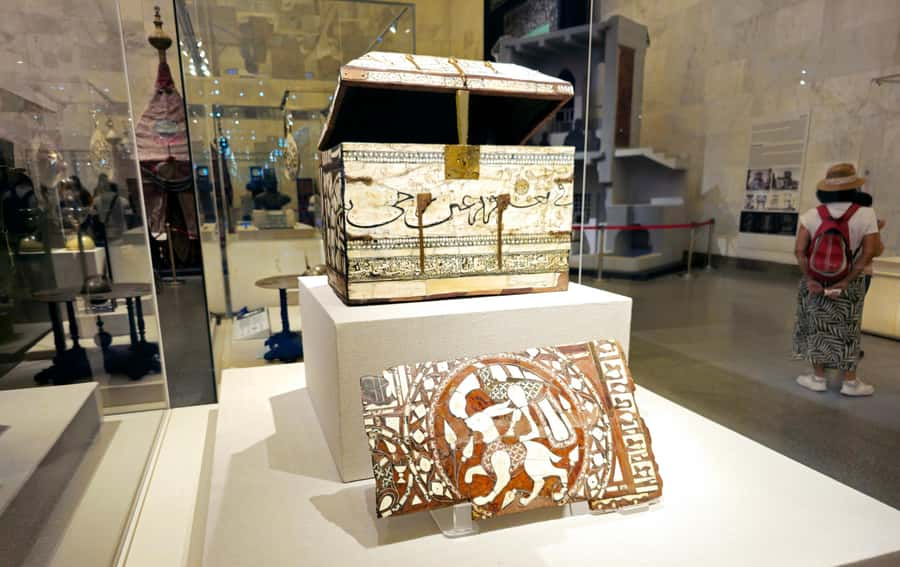
Cairo’s many eras come together in one packed day: royal mummies at the National Museum of Egyptian Civilization, Ottoman-era views from Saladin’s Citadel, Coptic churches, and the tight lanes of Khan El Khalili. It is a useful way to understand the city as more than just pharaohs and pyramids.
I like the range of this tour, and I like the human touch from guides such as Basant, Tony, Ramy, Nadia, and Mahmoud, who are praised for clear explanations and thoughtful pacing. The main drawback is the schedule: with pickup, traffic, and several long walking stops, you should allow 8 to 9 hours, not just the advertised seven.
Key points at a glance
- Royal mummies in a modern museum: The National Museum of Egyptian Civilization includes more than 50,000 objects, with a famous display of 22 royal mummies.
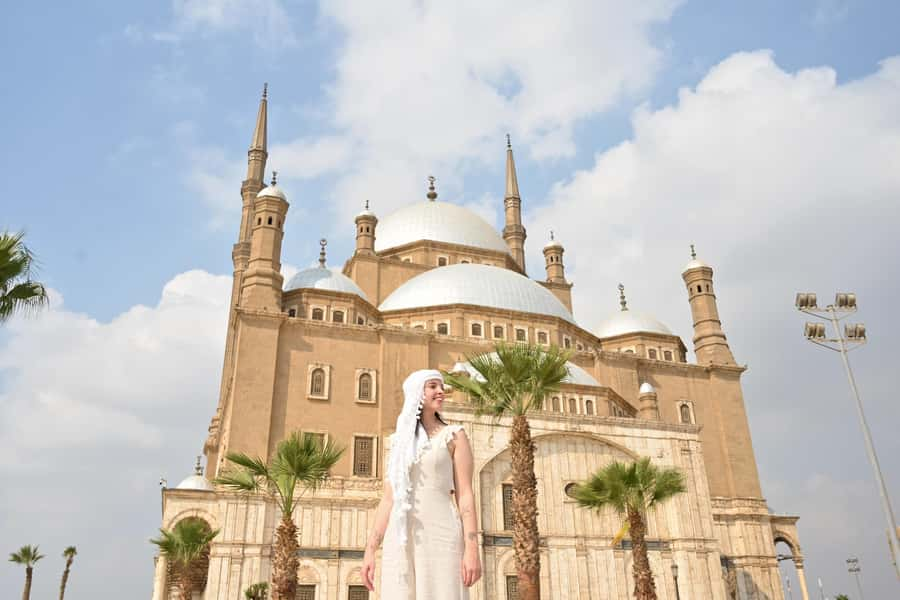
- A high viewpoint over Cairo: Saladin’s Citadel gives you city views and access to the impressive Muhammad Ali Mosque.
- Three religious traditions in one day: The route moves from ancient Egyptian culture to Islamic Cairo and the Coptic churches of Old Cairo.
- A market with a tourist edge: Khan El Khalili is atmospheric and historic, but it is geared toward shopping and can feel less local than a neighborhood market.
- A guide makes the difference: Basant, Tony, Ramy, Nadia, Mahmoud, and others are repeatedly praised for history, patience, photography, and organization.
- Convenient door-to-door service: Pickup, an air-conditioned vehicle, entry fees, parking, water, and return transport are included.
A Cairo day built around three eras
I like this route because it gives you a broad picture of Cairo without asking you to organize a complicated day across several districts. You move from pharaonic Egypt to Islamic Cairo and then to the Christian quarter, with a market stop in between.
The day begins with pickup from your accommodation in Cairo or Giza. The exact time is confirmed by WhatsApp, email, or phone the day before. The drive to the first major stop is listed at about 45 minutes, though Cairo traffic can affect the pace.
This is a guided sightseeing day rather than a slow, independent wandering tour. You will spend about 105 minutes at the National Museum of Egyptian Civilization, 45 minutes in Islamic Cairo, an hour at Khan El Khalili, and roughly an hour in Old Cairo. Another hour in Islamic Cairo appears in the schedule, so expect a full day with plenty of movement.
The vehicle is air-conditioned, and bottled water is included. That matters in Cairo, where heat, traffic, and dusty streets can make even a short transfer tiring. Still, bring a sun hat, wear comfortable clothes, and avoid taking large bags or luggage.
More fortresses and citadels around Cairo:
- From Cairo Alexandria Catacombs, Citadel Day Trip with Lunch
★ 4.6 · 1,312 reviews - Cairo: Egyptian Museum, Citadel, and Old Cairo Guided Tour
★ 4.7 · 853 reviews - Cairo Citadel, Old Cairo and Khan El Khalili: Private Tour
★ 4.6 · 741 reviews
The National Museum of Egyptian Civilization and its royal mummies
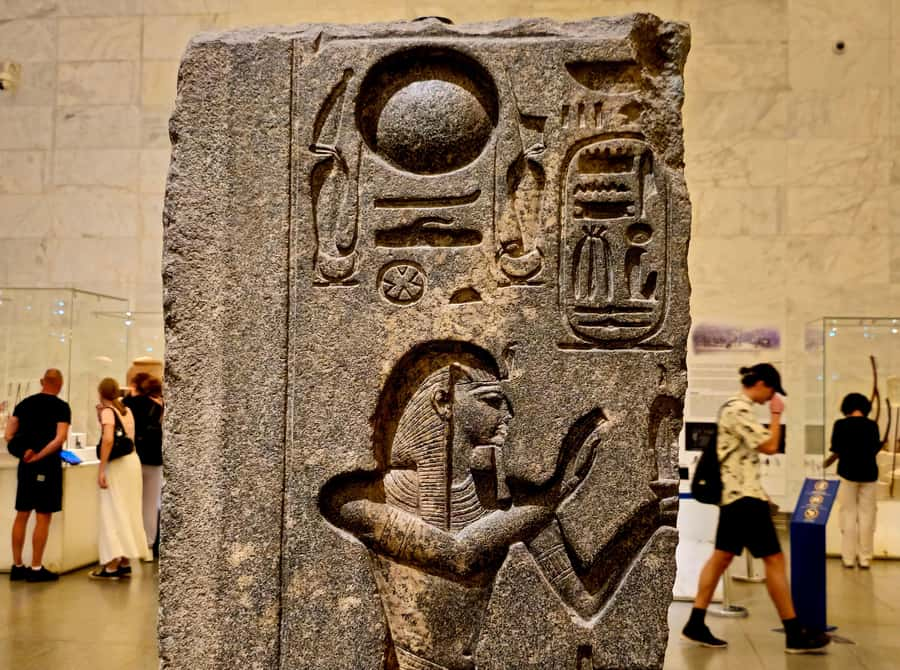
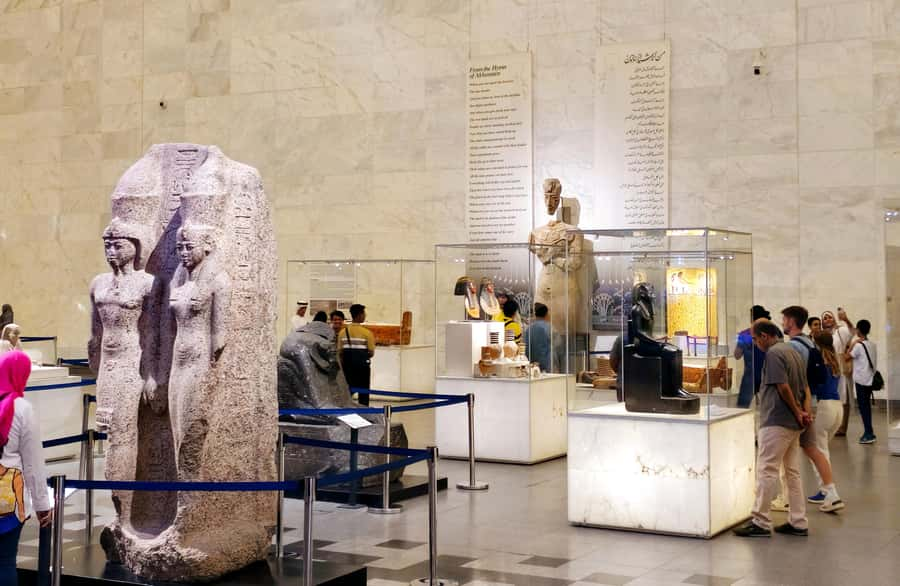
The museum is the strongest stop for understanding Egypt as a long-running civilization rather than a collection of famous monuments. Your Egyptologist guide helps connect the objects to daily life, customs, traditions, and the way Egyptian society changed over time.
The collection includes more than 50,000 artifacts from ancient Egypt. That is a lot to absorb, so your guide’s ability to select the important pieces matters. Guides such as Basant, Tony, and Ramy are praised for explaining objects in simple language and answering questions without turning the visit into a lecture.
The main emotional pull is the Royal Mummies Hall. The display includes 22 mummies, among them famous pharaohs. Seeing the preserved remains in person gives the ancient world a direct, physical presence that books and photographs cannot quite match.
You should know that the museum is not the same experience as visiting the Giza pyramids or the old Egyptian Museum downtown. This is a museum of civilization, so its purpose is broader. You see how Egypt developed and how its people lived, rather than focusing only on monumental tombs and famous rulers.
The allotted time is useful but not generous. If you read every label, you could spend much longer here. Stay close enough to your guide to benefit from the explanations, and tell the guide if the mummies are your priority.
Saladin’s Citadel and the Muhammad Ali Mosque
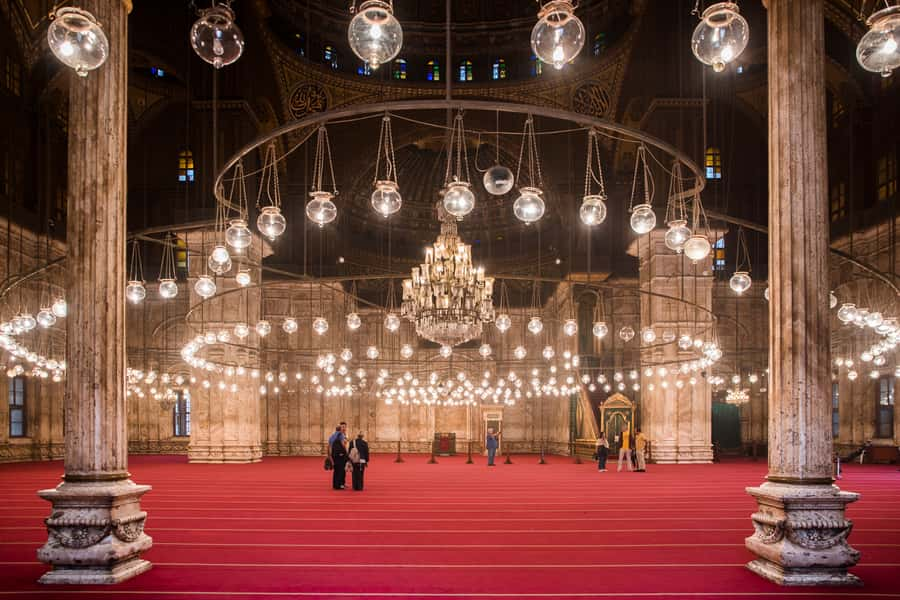
From the museum, the tour moves into Islamic Cairo and up to the Citadel of Saladin. Built by Salah Al-Din on the Mokattam Hills nearly 850 years ago, the fortress has played a major role in Cairo’s political and military story.
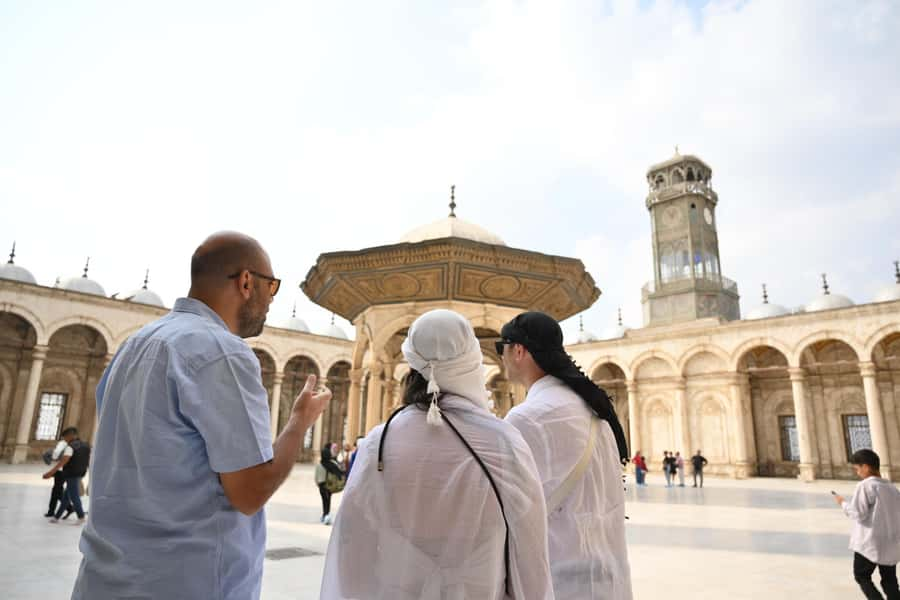
The setting is part of the appeal. From the citadel, you get a raised view across the city, and the open space offers a welcome change after the museum’s interior galleries. Your guide explains how the citadel functioned and why this hilltop position mattered.
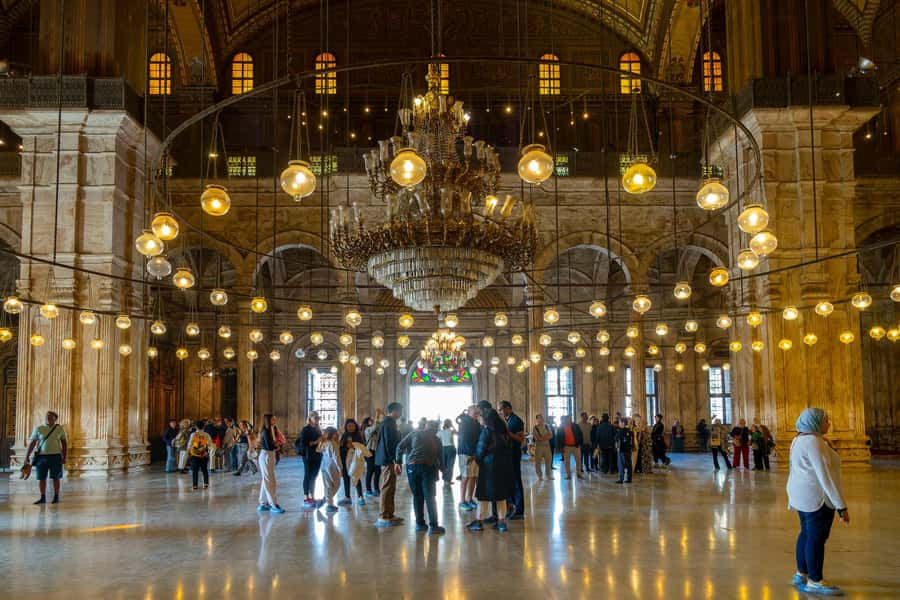
The Muhammad Ali Mosque is usually the visual highlight here. Its large domes and imposing architecture give the complex a grand feel, and the visit adds a strong Ottoman-era layer to the day. Several guides are praised for bringing the citadel and mosque to life with clear historical explanations rather than simply pointing out the buildings.
The citadel involves walking and some uneven surfaces. This is one reason the tour is not suitable for wheelchair users. You should also keep your shoulders and knees covered for mosque visits, and carry your passport or an accepted copy because identification is required for the activity.
I would give this stop real attention instead of treating it as a quick photo break. The city view, the architecture, and the political story work together. If you are interested in Cairo’s Islamic past, this is one of the day’s most rewarding sections.
Khan El Khalili, Cairo’s famous market quarter
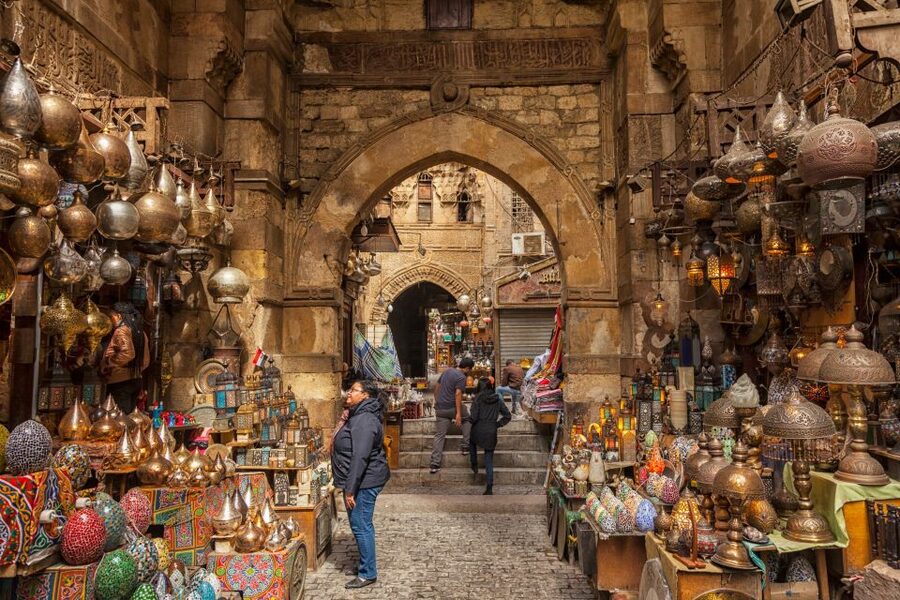
Khan El Khalili is a 14th-century bazaar with narrow lanes, small shops, antiques, handicrafts, and the familiar energy of a major visitor market. You will have a guided walk, time to look around, and an opportunity to shop.
This is the stop where expectations matter most. The market is historic and photogenic, but much of it is aimed at tourists. You may find souvenirs, jewelry, decorative pieces, and handicrafts, yet the experience is more commercial than a local food or produce market.
I would use the guide’s help here. Several guides, including Tony, Ahmed Zaki, and Behary, are praised for helping with purchases and negotiations. That does not remove the need to compare prices, but it can make the shopping less confusing.
One useful improvement would be more time spent on the market’s past before shopping begins. If shopping is not your priority, tell your guide early. The bazaar is scheduled for about an hour, and that time can pass quickly if you are browsing.
The market is also a good place to practice restraint. Decide what you actually want before entering the shops, ask the price clearly, and do not feel obliged to buy. The guide can help, but the final choice is yours.
More castle museums around Cairo:
- The Egyptian Museum, the Citadel, Khan Khalil Bazaar & Old Cairo
★ 5.0 · 418 reviews - Private Day Tour in Egyptian Museum, Citadel and Coptic Cairo
★ 5.0 · 99 reviews - Cairo/Giza: Saladin Citadel, Egyptian Museum, & Bazaar Tour
★ 4.6 · 92 reviews - Cairo Day Tour visit Egyptian Museum, Citadel and Khan Khalil Bazaar
★ 4.5 · 65 reviews
Lunch and the practical rhythm of the day
Lunch is provided if you select the lunch option. The meal is at a local restaurant and features traditional Cairo cuisine, giving you a chance to sit down during a day that otherwise involves walking, traffic, and sightseeing.
Because the information does not specify a fixed restaurant or menu, you should treat lunch as a convenient included meal rather than a special culinary tour. If you do not add lunch, bring your own plan for eating. One useful point is that the schedule does not promise a long independent restaurant search, so the lunch option may save time.
The day’s pace is generally efficient. Guides are repeatedly praised for being patient when people need extra time, and some private departures have allowed the schedule to be adjusted. That flexibility depends on the group and the day, so do not assume you can add major extra stops.
The tour price is $77 per person. For that amount, you are paying for transport from Cairo or Giza, an Egyptologist guide, attraction admissions, parking, bottled water, taxes, and service charges. Lunch is included only if you choose the add-on.
I consider that solid value if you want several major Cairo sights in one day and would otherwise need to arrange a car, driver, tickets, and a guide separately. The value is lower if you prefer to spend half a day in one museum or shop at a relaxed pace.
Old Cairo’s churches and the Coptic quarter
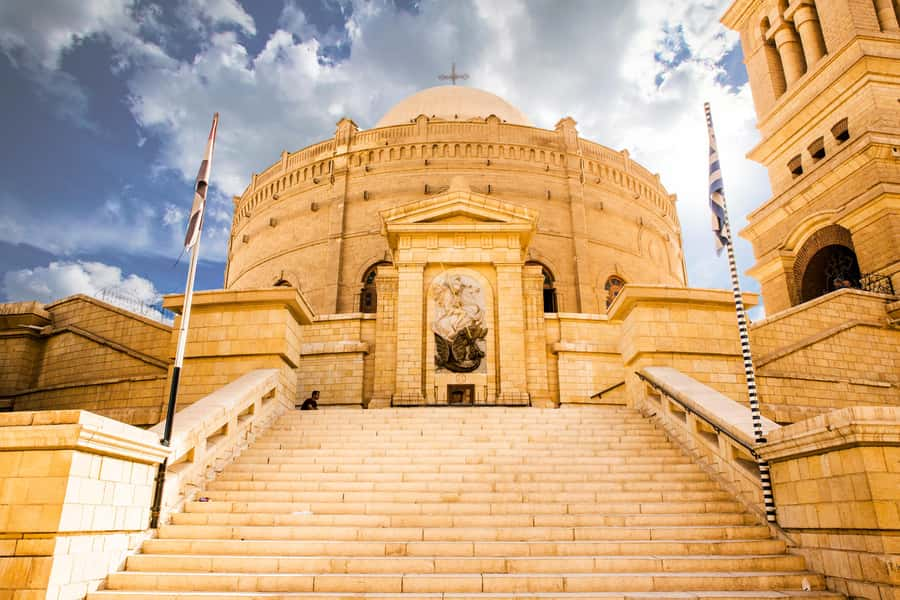
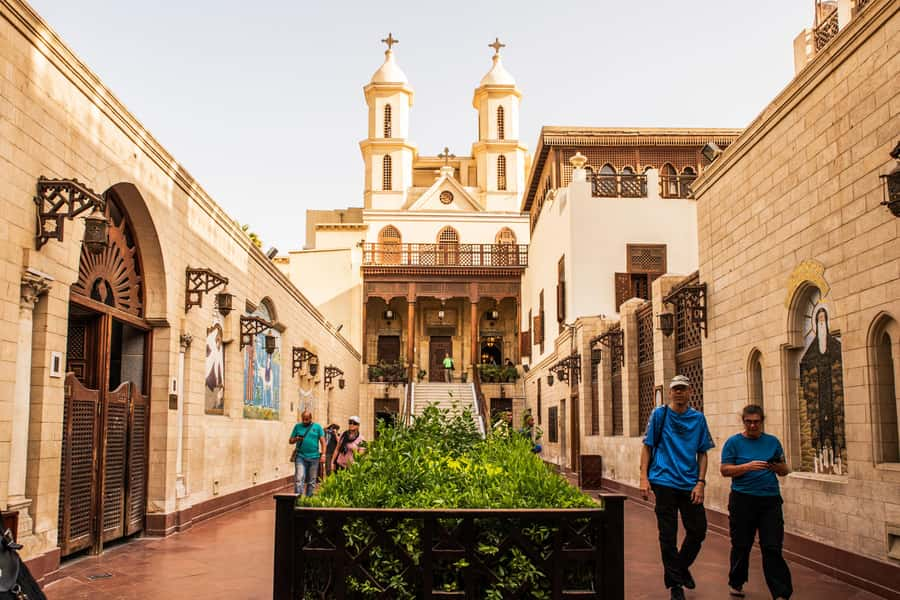
The final major section visits the churches of Old Cairo, including the Hanging Church, the Church of St. Barbara, and the Church of Abu Serga. This changes the tone of the day again, taking you into Egypt’s Christian history and the older layers of Cairo.
The Hanging Church is one of the best-known landmarks in this quarter. The Church of St. Barbara adds another important religious site, while Abu Serga is connected with the Holy Family tradition in Egypt. Guides explain the religious meaning, architecture, and stories behind the buildings.
This is where a good guide earns the fee. Guides such as David, Mariam Alfy, Hussein, and Ahmed Behary are praised for explaining the churches in a way that is easy to follow. The best commentary helps you notice details you might otherwise walk past, while also placing the churches within the wider story of Cairo.
The churches are active religious places, not just museum displays. Dress modestly, keep your voice low, and follow instructions about photography. The walk can include uneven ground, so comfortable shoes are more useful than stylish ones.
You may feel that the day is strongest when it moves between traditions without treating them as separate attractions. Ancient Egyptian, Islamic, and Coptic sites are presented as parts of one city. That is the tour’s central strength.
Guides, drivers, and the quality of the day
The guide is the main variable in this experience. The most praised guides include Basant, Tony, Ramy, Nadia, Mahmoud, Michael, Ahmed Zaki, and several others. Their strengths are consistent: clear history, patience, good English or other listed languages, help with photographs, and a willingness to answer questions.
Language options include English, Arabic, Spanish, French, German, and Italian. One Italian-speaking booking had to be conducted in English when an Italian guide was unavailable, although the group received a private tour and appreciated the flexibility. If your language is essential, confirm it before the day.
The driver also matters in Cairo. Traffic can be stressful, and several guides and drivers are praised for safe, calm driving and punctual pickups. You will spend time in the vehicle, especially if your hotel is far from central Cairo, so the air conditioning and door-to-door service are useful.
The standard pickup area is Cairo or Giza. Long-range pickup from Nasr City, Cairo Airport, Heliopolis, Mirage City, Rehab City, Madinaty, New Cairo, the New Capital, or 6th of October is available as a paid add-on. Check that extra cost before booking.
The tour is described as seven hours, but the practical guidance says to allow eight to nine hours including pickup, drop-off, and driving. Plan nothing important immediately afterward. Cairo traffic has the final word.
Who should book this Cairo tour?
I would choose this tour if you have limited time in Cairo and want a guided introduction to several parts of the city. It works especially well for first-time visitors who want context instead of simply being dropped at monuments.
It also suits people who value convenience. Hotel pickup, a driver, admission fees, water, and a guide remove much of the day’s planning. The option to reserve now and pay later, along with cancellation up to 24 hours before the start for a full refund, gives you some booking flexibility.
I would hesitate if you want a slow museum visit, a serious food experience, or a market with little tourist trade. Khan El Khalili is the weakest match for that last preference. I would also think twice if mobility is limited, since the tour is not suitable for wheelchair users and includes walking at several sites.
Bring your passport or a copy, a camera, sun protection, water if you prefer more than the supplied bottle, and shoes that can handle a full day on foot. Keep bags small, since luggage and large bags are not allowed.
Should you book it?
Book this tour if you want one efficient day that links royal mummies, a hilltop fortress, a grand mosque, a famous bazaar, and historic Coptic churches. At $77, it offers good practical value when you count transport, guiding, entry fees, and the number of districts covered.
Choose a private departure if available and important to you, especially if you want more control over museum time or shopping. If you join a shared group, expect the schedule to stay fairly structured.
The best reason to book is the range. The main caution is the pace. You will see a lot, but you will not linger everywhere. For a first look at Cairo’s many eras, that is a fair trade.
FAQ
Where does the tour pick me up?
Pickup is available from your accommodation or selected location in Cairo or Giza. You receive the exact pickup time by WhatsApp, email, or phone the day before.
How long does the tour take?
The listed duration is seven hours, but pickup, drop-off, and travel time can bring the total to about eight or nine hours.
What is included in the $77 price?
The price includes Cairo or Giza pickup and drop-off, air-conditioned transport, an Egyptologist guide, admission fees for the listed attractions, bottled water, parking, taxes, and service charges.
Is lunch included?
Lunch is included only if you select the lunch add-on. The meal is served at a local restaurant and features traditional Cairo cuisine.
Which languages are available?
Guides are available in English, Arabic, Spanish, French, German, and Italian. Language availability should be confirmed when booking.
What will I see at the National Museum of Egyptian Civilization?
You will see exhibits covering Egyptian civilization, customs, traditions, and more than 50,000 artifacts. The museum also displays 22 royal mummies, including famous pharaohs.
Can wheelchair users join the tour?
No. The activity is not suitable for wheelchair users.
What should I bring?
Bring a sun hat, camera, comfortable clothes, and a passport or accepted copy. Pets, smoking, luggage, and large bags are not allowed.
New castle tours around Cairo
- Egyptian Civilization Museum, Citadel & Old Cairo Tour★ 4.9 · 7 reviews
- Cairo/Giza: Saladin Citadel, Egyptian Museum, & Bazaar Tour★ 4.6 · 92 reviews
- Cairo Tour To Egyptian Museum, Citadel & Khan Khalili Bazaar★ 4.1 · 21 reviews
- Cairo: Private Tour to Museum, Citadel & Coptic Churches★ 4.7 · 3 reviews
- Cairo: Salah El Din Citadel and Old Cairo Bazar Guided Tour★ 4.7 · 176 reviews
- Cairo: National Museum, Egyptian Museum, and Citadel Tour★ 4.3 · 6 reviews
- Cairo: Pyramids, Bazaar, Citadel Tour with Photographer★ 4.9 · 68 reviews
- Cairo: National Museum, Egyptian Museum, and Citadel Tour★ 4.3 · 3 reviews
Fortress & Citadel Tours, compared.

Carcassonne: Castle and Ramparts Entry Ticket
Read our review →
Salzburg: Hohensalzburg Fortress Admission Ticket
Read our review →
Salzburg: Best of Mozart Fortress Concert and Dinner
Read our review →
From Cairo Alexandria Catacombs, Citadel Day Trip with Lunch
Read our review →
Hue Customizable Tour with Imperial Citadel & Forbidden City
Read our review →
Desert Safari: Luxury Fortress Dinner, Camel Ride & Dune Bashing
Read our review →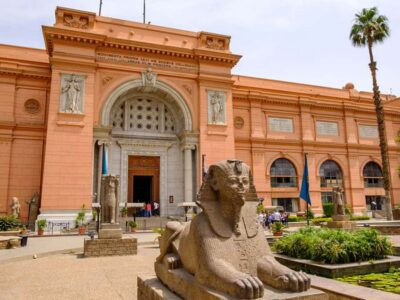
Cairo: Egyptian Museum, Citadel, and Old Cairo Guided Tour
Read our review →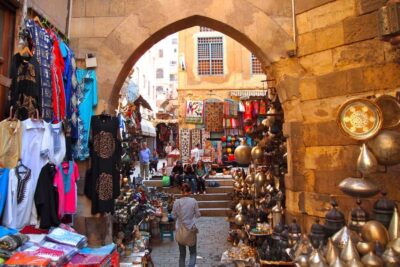
Cairo Citadel, Old Cairo and Khan El Khalili: Private Tour
Read our review →Browse the lists this tour appears in