
Review · FRANCE
Amboise: Clos Lucé Castle, Da Vinci Park and Museum Ticket
Leonardo da Vinci spent his final three years at Clos Lucé, working for King Francis I and filling his days with painting, engineering, architecture, and scientific study. This ticket lets you enter his former home, then follow his ideas outdoors through 40 recreated inventions and a park built for hands-on discovery.
I like the combination of an authentic-feeling château and a generous park. I also like that the displays make Leonardo more than the painter of the Mona Lisa: flying machines, military engineering, hydraulics, mechanics, and city planning all get their turn. The main caution is simple: $23 is fair for a half-day or full-day visit, but it may feel high if you rush through in two hours.
Key points
- Leonardo’s final home: Explore his apartments, Renaissance rooms, and restored workshops in the château.
- 40 invention models: See recreated machines in both indoor displays and life-size outdoor installations.
- Interactive Da Vinci Park: Use 20 large machines, eight audio stations, and 40 translucent panels to connect nature with technology.
- New immersive presentations: Learn about Leonardo’s work in painting and architecture through interactive visual displays.
- Good family stop: Children have room to move, touch, test, and look, while adults get the historical context.
- Plan for time outdoors: The gardens are a major part of the experience, with shade, walking paths, bridges, and places to pause.
Why Clos Lucé matters in Leonardo’s story
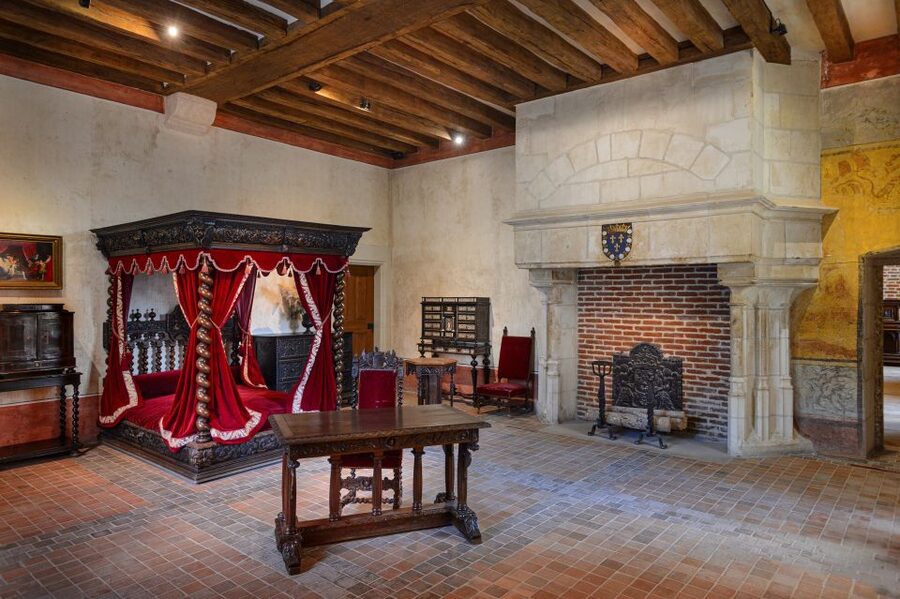
Clos Lucé is not just another château linked to a famous name. It was Leonardo’s home from 1516 until his death on May 2, 1519. King Francis I invited him to France, gave him the title of First Painter, Engineer and Architect to the King, and allowed him to work from this residence in Amboise.
That final period matters because it shows Leonardo as an older working thinker, not only as the young Italian artist usually presented in textbooks. At Clos Lucé, he continued to study, design, and refine ideas across several fields. The house gives you a sense of his private world, while the park turns his drawings into objects you can see at full size.
I like this balance. You are not asked to admire a painting in silence and then leave. You can move from a bedroom or workshop to a flying-machine model, then out into the gardens to test a mechanical idea. It makes Leonardo’s habit of connecting art, science, and nature easier to understand.
More Loire chateaux to visit around France:
- Loire Valley Castles Day Trip from Paris with Complementary Wine
★ 4.5 · 3,907 reviews - Chambord: Entry Ticket to the Castle
★ 4.6 · 1,841 reviews - From Paris: Loire Valley Castles Day Trip With Wine Tasting
★ 4.6 · 1,727 reviews
Inside the château: rooms, workshops, and daily life
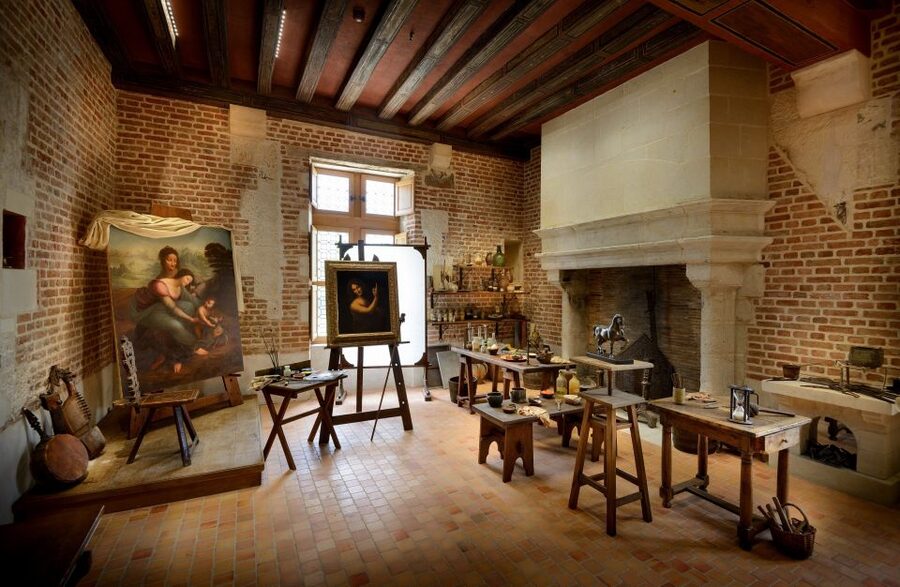
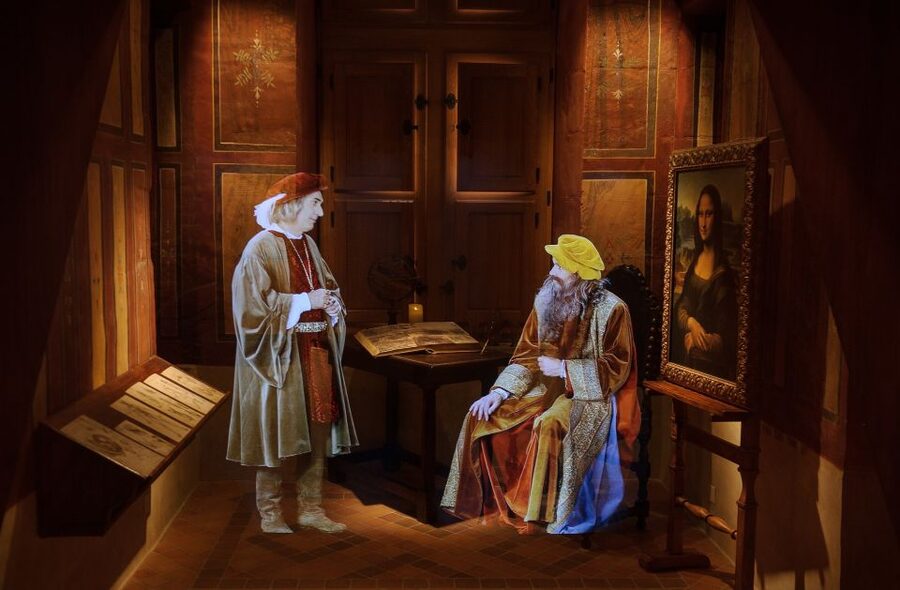
Begin inside the château, where the visit focuses on Leonardo’s life in France. You can explore his apartments, period rooms, and newly restored workshops. The setting is important because it gives his work a human scale. Instead of meeting Leonardo only through grand inventions, you see the place where he lived and created.
The château is described as a private world, and that is the right way to approach it. Look at the rooms as part of a working home, not as a vast royal palace. The Renaissance interiors help explain the setting in which Leonardo spent his last years, while the workshops connect the building to his practical work.
The indoor exhibition covers military engineering, urban planning, mechanics, flying machines, and hydraulics. That range is one of the strongest parts of the visit. Leonardo was not simply sketching attractive ideas. He was thinking about bridges, water, machines, cities, defense, and flight.
You should allow enough time to read the explanatory material. The displays reward curiosity, especially if you want to understand how a drawing became a working model. An English booklet guide is available, according to one visitor’s experience, but the ticket itself does not include a guided tour. If you want a scheduled expert explanation, check separately before booking.
The invention models make Leonardo easier to understand
The recreated inventions are the heart of the experience for many people. Some are miniature models, while others appear at life size in the park. Together, they show how Leonardo observed problems and looked for mechanical answers.
You will find ideas connected with flight, water, movement, construction, and military design. The displays are valuable because many of Leonardo’s drawings can seem abstract on a page. A model gives you something physical to study. You can see the scale, the structure, and the way separate parts might work together.
The outdoor machines are especially effective for families and anyone who prefers learning by doing. The park includes 20 giant interactive machines, so this is not a purely hands-off museum. The exact level of interaction can vary by installation, but the whole presentation is designed to make Leonardo’s ideas accessible rather than leaving them behind glass.
There is one useful limitation to keep in mind. The machines are recreations, and some are not movable or directly accessible in the same way as the invention displays at the Florence museum of inventions. If you want a museum built around operating machines, that difference matters. Clos Lucé is stronger as a complete visit, combining a historic home, open-air displays, gardens, and art presentations.
Da Vinci Park is more than a garden walk
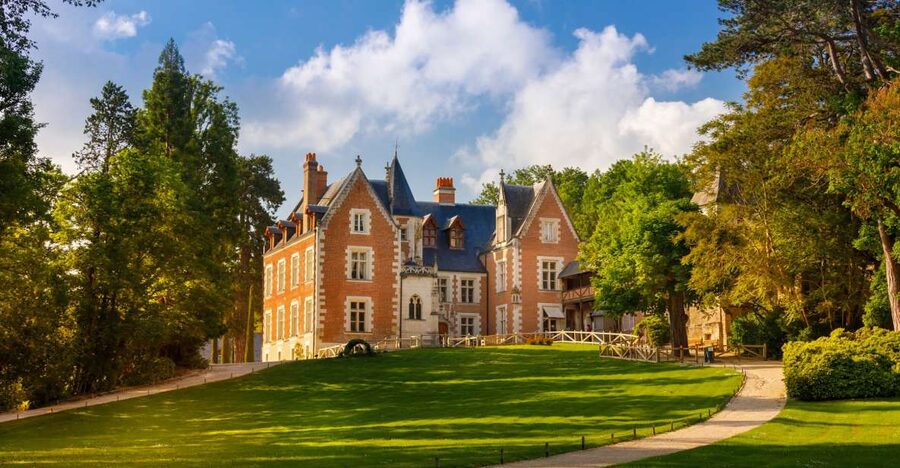
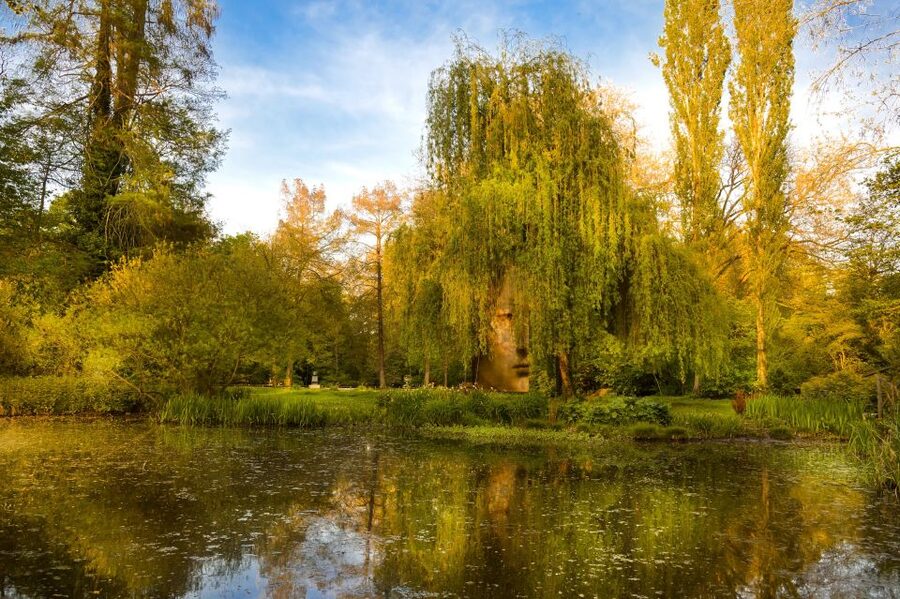
The park is not simply a pleasant green area attached to the château. It is an open-air museum arranged around Leonardo’s study of nature. A landscaped trail leads you through the grounds, with 40 translucent canvases, eight audio stations, and large installations linked to his ideas.
I like this part because it gives the visit breathing room. After the rooms and indoor displays, you can walk among trees, water, bridges, and invention models. The setting also helps explain why Leonardo looked so closely at birds, water, plants, and the movement of the natural world.
The outdoor area can be especially appealing in warm weather. Shade provides a welcome break, and the gardens offer places to slow down rather than hurry from one display to the next. One person described the grounds as good enough to justify the ticket on their own, which is a fair assessment if you enjoy gardens as much as museums.
Allow more time than you would for a quick château stop. In good weather, the park can fill a full couple of hours, and you may want longer if you pause at the interactive machines, listen at the audio stations, or take photographs from the bridges. A peacock has also been seen on the grounds, a small bonus rather than a promised feature.
More castle museums around France:
- Check out the Château de Savigny museums: planes, cars, motorcycles…
★ 4.7 · 46 reviews - Osaka Castle: Museum and Tower Entry Ticket
★ 4.5 · 2,380 reviews - Chapultepec Castle & Anthropology Museum Tour
★ 4.5 · 1,348 reviews - Cairo: Egyptian Museum, Citadel, and Old Cairo Guided Tour
★ 4.7 · 853 reviews
The immersive presentations on painting and architecture
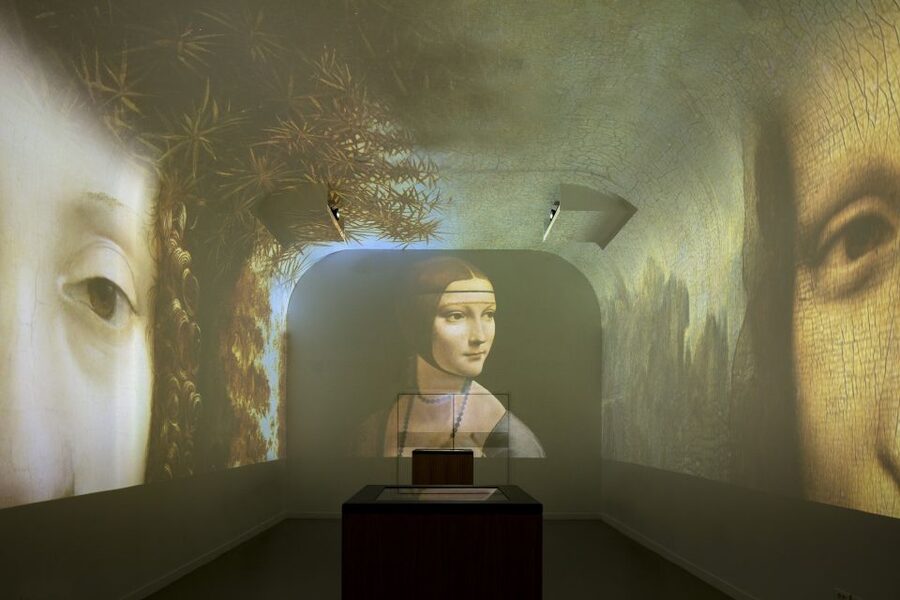
A newer cultural and museum space adds interactive presentations on two major areas of Leonardo’s work: painting and architecture. This section is intended to show how his visual imagination crossed from art into the design of buildings and spaces.
The presentation is useful if you want more than mechanical inventions. Leonardo’s reputation often narrows to painting, while his engineering work can receive all the attention in a place like this. The newer displays help connect both sides of his career.
The visual format may appeal to children and to anyone who enjoys modern museum design. It also gives you an indoor option if the weather turns hot or wet. One visitor particularly liked the modern art and the large indoor display area, including its air conditioning.
Keep your expectations sensible. This is an interpretive, interactive presentation, not a chance to examine original masterpieces at close range. The strength is in making ideas visible and linking painting with architecture.
How long should you spend at Clos Lucé?
The ticket is valid for one day, so you do not need to race. A quick, focused visit can take around two hours, but that leaves little room for a relaxed walk, extra reading, or a meal. For most people, I would plan at least half a day.
A comfortable visit might look like this:
- Start in the château with the apartments, Renaissance rooms, workshops, and indoor invention displays.
- Move into the park for the machines, audio stations, translucent panels, and outdoor models.
- Return indoors for the presentations on painting and architecture.
- Finish with time for the gardens, cafés, or a meal.
The site includes cafés, and one account specifically mentions a Renaissance-style restaurant within the park and museum grounds. That makes it easier to turn the visit into a longer outing rather than a short stop between castles.
The grounds also work well as a rest stop during a busy Loire Valley itinerary. You can enjoy the setting without treating every minute as a lesson. That mix of education and quiet outdoor time is one reason the site suits different ages.
Getting there and handling the walk
The meeting point is Château du Clos Lucé in Amboise. Paid private car parking is available on Rue du Clos Lucé, about 300 meters from the entrance. That is close, but you should still expect a short walk from the parking area.
The route and entrance area can be a little confusing, particularly if you are driving. SatNav is useful, and the walk uphill to the château can feel demanding if you use sticks or have limited mobility. The site is wheelchair accessible, but the grounds are large and may require careful pacing.
From Amboise railway station, one account describes an easy, scenic walk of about 25 minutes in good weather. Taxis were not readily available at the time, so do not depend on finding one outside the station. If you arrive by train, check the walking route before setting out and allow extra time with luggage.
There are not many bench seats between buildings. If you need frequent rests, take the visit slowly and ask staff for help if required. The site has garden staff vehicles, and a helpful lift to the exit has occasionally been offered, but you should not treat that as a regular shuttle service.
Price, value, and who should go
At $23 per person, this is not the cheapest short museum visit in the Loire Valley. The value depends on how much of the site you use. If you only enter the château, glance at the rooms, and leave after an hour, the price may feel steep.
Use the full ticket and the calculation changes. You receive access to the château, the park, exhibitions, interactive installations, and the newer cultural space. The gardens alone can occupy a couple of hours, and the combination of full-size models, historic rooms, and modern presentations gives you more variety than a standard house museum.
I would recommend it strongly for:
- Families who want a museum with outdoor space and hands-on features.
- Adults interested in science, engineering, art, or the history of ideas.
- Anyone already visiting Amboise and looking for a stop with substance.
- Visitors who enjoy gardens and want a slower half-day.
- People who want to understand Leonardo as an inventor and architect, not only a painter.
It may be less suitable if you want original Leonardo paintings, a formal guided tour, or a compact visit with no walking. The ticket does not include a guide, and the park is a major part of the experience.
Opening hours and practical timing
The château and park are open all year except December 25 and January 1. The ticket is valid on the booked date, and the available start times depend on the date you choose.
From July through August, the château closes at 8:00 p.m., one hour before the park. That difference matters if you arrive late in the day. Go inside first if you want to see the rooms and workshops, then use the remaining daylight for the park.
The site is wheelchair accessible. Even so, the distance between buildings, limited bench seating, and uphill approach from the parking area can affect how comfortable the visit feels. Plan around your own pace rather than trying to cover every display quickly.
Free cancellation is available up to 24 hours before the visit, and you can reserve now while paying later. Those options are useful when your Loire Valley plans depend on weather or changing transport.
Should you book Clos Lucé?
Book this ticket if you want a substantial Amboise stop that combines a historic home, science displays, gardens, and interactive exhibits. The strongest features are the outdoor invention models, the peaceful park, and the way the site presents Leonardo’s work across art, engineering, architecture, and nature.
Think twice if you are looking only for original paintings or a guided tour. You will get more from Clos Lucé if you can give it at least half a day and arrive ready to walk outdoors. For families, science-minded visitors, and anyone curious about Leonardo’s final years in France, it is one of the better-value cultural stops around Amboise.
FAQ
Where is Château du Clos Lucé?
It is in Amboise, in France’s Loire Valley.
What does the ticket include?
The ticket includes access to Château du Clos Lucé, the park, exhibitions, and interactive installations.
Is a guided tour included?
No. The ticket does not include a guided tour.
How long is the ticket valid?
The ticket is valid for one day on the booked date.
How much does admission cost?
The listed price is $23 per person.
Is the site wheelchair accessible?
Yes, Château du Clos Lucé and its park are wheelchair accessible.
Is parking available?
Paid private car parking is available on Rue du Clos Lucé, about 300 meters from the visitors’ entrance.
What are the main things to see?
You can see Leonardo’s apartments, Renaissance rooms, restored workshops, invention displays, 20 interactive machines, eight audio stations, 40 translucent canvases, and presentations about painting and architecture.
Is Clos Lucé open all year?
Yes, the château and park are open all year except December 25 and January 1.
What happens to the opening hours in July and August?
From July through August, the château closes at 8:00 p.m., one hour before the park.
New castle tours around France
- Pierrefonds: Château de Pierrefonds Entrance Ticket★ 4.7 · 152 reviews
- PARIS: Private transfer Château Versailles van 7 people 4H★ 3.0 · 4 reviews
- Paris: Loire Valley Castles Tour with Wine Tasting★ 4.9 · 22 reviews
- Paris: Château de Vincennes Entry Ticket★ 4.5 · 342 reviews
- Paris to Loire Valley Castles Chambord & Chenonceau -DayTrip★ 4.7 · 2 reviews
- Paris: Loire Valley Castles Tour with Chambord & Chenonceau★ 4.8 · 51 reviews
- Avignon: Full-Day Wine Tour around Châteauneuf-du-Pape★ 4.9 · 83 reviews
- Paris: O Chateau’s Wine Tasting Dinner★ 4.2 · 30 reviews
Loire Valley Chateaux, compared.
Loire Valley Castles Day Trip from Paris with Complementary Wine
Read our review →


From Paris: Full-Day Loire Valley Chateaux Tour
Read our review →
Loire Valley Castles Trip with Chenonceau and Chambord from Paris
Read our review →
Loire Valley Wine and Castles Small-Group Day Trip from Paris
Read our review →
Loire Valley: Château Royal d’Amboise Entrance Ticket
Read our review →
From Paris: Small-Group Loire Valley Castles Full-Day Tour
Read our review →Browse the lists this tour appears in