
Review · VIETNAM
Hue Customizable Tour with Imperial Citadel & Forbidden City
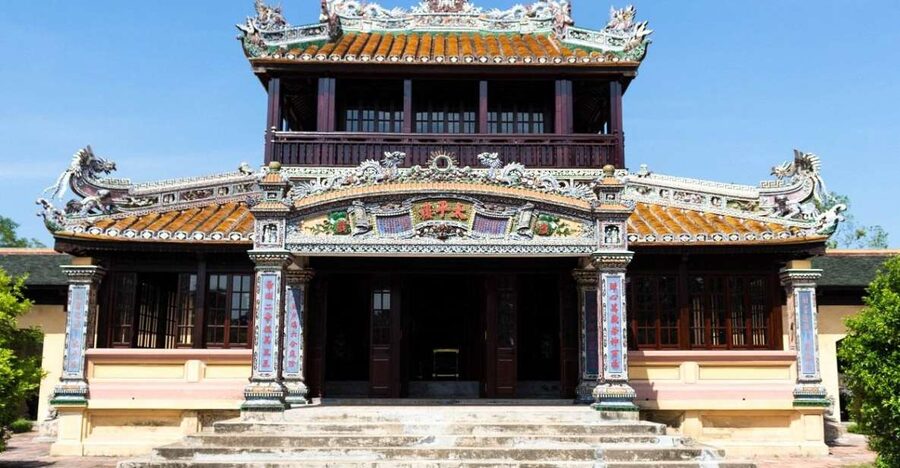
Hue’s Imperial Citadel is not just a collection of old gates and palaces. It is a window into the Nguyen emperors’ tightly ordered world, where rank, ritual, family life, Confucian ideas, Buddhism, and feng shui shaped every building. A good guide turns the ruins and restored halls into a readable story, and this tour does that especially well through guides such as Misa, Nhi, Ha, Duy, and Nhien.
I like the clear choice between a focused 2.5-hour walking tour and a private car day that can run as long as eight hours. I also like the human touch: guides explain the emperors, wives, concubines, and eunuchs, answer questions, take photos, and adjust the pace for heat or rain. The main catch is simple: entrance tickets are extra, and the private car comes with a driver rather than a licensed tour guide.
Key points to know before booking
- The walking tour begins at the four bronze cannons near Ngan Gate, not at your hotel.
- The Imperial City and Forbidden Purple City take about two and a half hours on foot, with stops at major gates, palaces, temples, urns, and gardens.
- Private car trips can include several Hue highlights, such as Thien Mu Pagoda, Minh Mang Tomb, Tu Duc Tomb, Khai Dinh Tomb, and Thuy Tien Abandoned Water Park.
- The English-speaking driver is not a professional guide, so choose the walking option if detailed historical explanation matters most.
- The Imperial City ticket costs 200,000 Vietnamese dong per adult, with combo tickets available for the citadel and two or three royal tombs.
- Early starts are wise, since much of the walking is outdoors and Hue can be very hot.
Why the Imperial Citadel makes a good guided walk
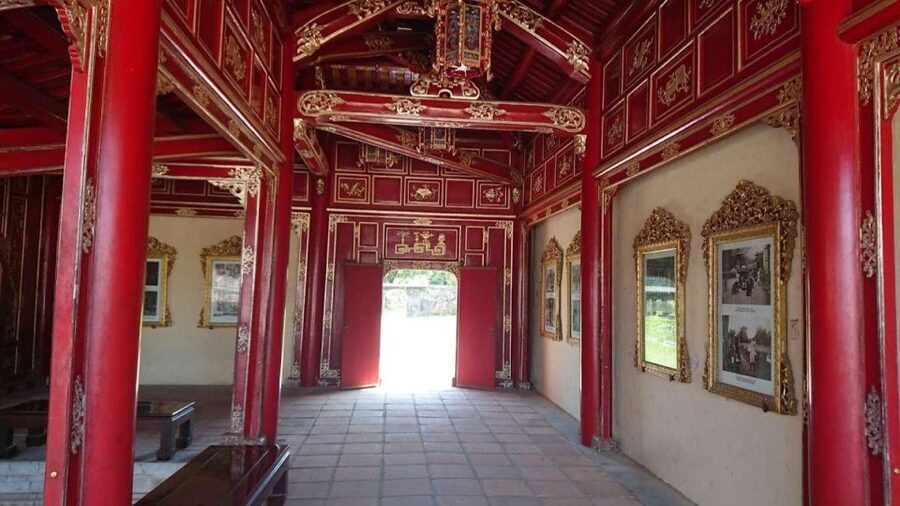
Hue was the capital of Vietnam under the Nguyen Dynasty, and the Imperial Citadel was the political and ceremonial heart of that kingdom. The Forbidden Purple City, located inside the larger complex, was reserved for the emperor and his household. Without help, you can see the walls and surviving buildings, but the purpose of each space is not always obvious.
The walking option gives you a local English-speaking guide for roughly 150 minutes. That is long enough to cover the major sights without turning into an exhausting all-day march. The route includes time for photographs and independent looking, so you are not expected to keep moving while trying to take in every roofline and carved detail.
Guides such as Misa have been praised for explaining difficult subjects in plain English. That matters here. The site includes royal ceremonies, family rules, political symbolism, religious ideas, and a long list of emperors with similar-sounding names. A good explanation helps you understand why a palace sits where it does, why certain animals and numbers appear in the decoration, and why ceremonial buildings mattered so much.
I especially like the way this experience connects architecture with daily life. You hear about the emperors, their queens, minor wives, concubines, eunuchs, and court routines. This gives the Forbidden Purple City a human story instead of leaving you with only dates and construction facts.
More fortresses and citadels around the world:
- Carcassonne: Castle and Ramparts Entry Ticket
★ 4.6 · 2,884 reviews - Salzburg: Hohensalzburg Fortress Admission Ticket
★ 4.6 · 2,236 reviews - Salzburg: Best of Mozart Fortress Concert and Dinner
★ 4.5 · 1,424 reviews
Meeting the guide at the four bronze cannons
Your meeting point is the area of the four bronze cannons near Ngan Gate, also called Cua Ngan. The guide holds an A4 sheet with your name. Pay attention here because five cannons are positioned on the opposite side, and that can cause a small but avoidable mix-up.
The cannons date from 1803, the second year of Emperor Gia Long’s reign. Hue artisans cast them as nine sacred cannons, regarded as important bronze works. They were once placed near the Ngo Mon Gate and later moved to their current position during the reign of Khai Dinh.
This is a useful starting point because the cannons introduce the military and symbolic power of the Nguyen court before you enter the ceremonial center. Allow a few extra minutes to find the correct side of the gate, especially if you arrive independently.
From the Flag Tower to Ngo Mon Gate
The first part of the walk brings you past the Flag Tower, or Ky Dai. It rises from the southern side of the citadel and marks the royal court’s former flag position. The stop is brief, but it gives you a strong sense of the scale of the fortress and its formal south-facing approach.
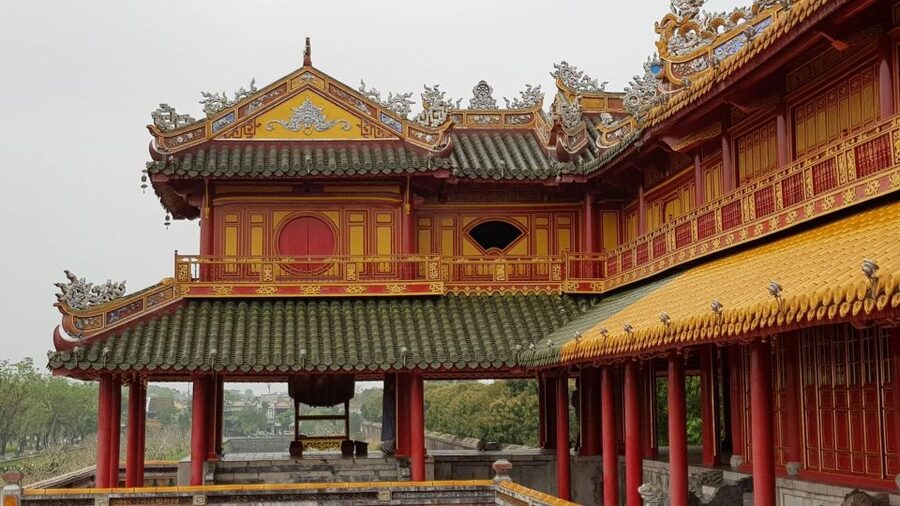
From there, you reach Ngo Mon Gate, also called the Noon Gate. Built in 1833 under Emperor Minh Mang, it was used for royal ceremonies and troop movements. Its traditional Vietnamese design is one of the most recognizable views in Hue, so this is a natural place for photographs.
The route is not simply a parade of photo stops. The guide explains how access to the court was controlled and how ceremony shaped movement through the citadel. You begin to see that gates were not just entrances. They expressed rank, authority, and distance from the emperor.
Thai Hoa Palace and the Nine Dynastic Urns
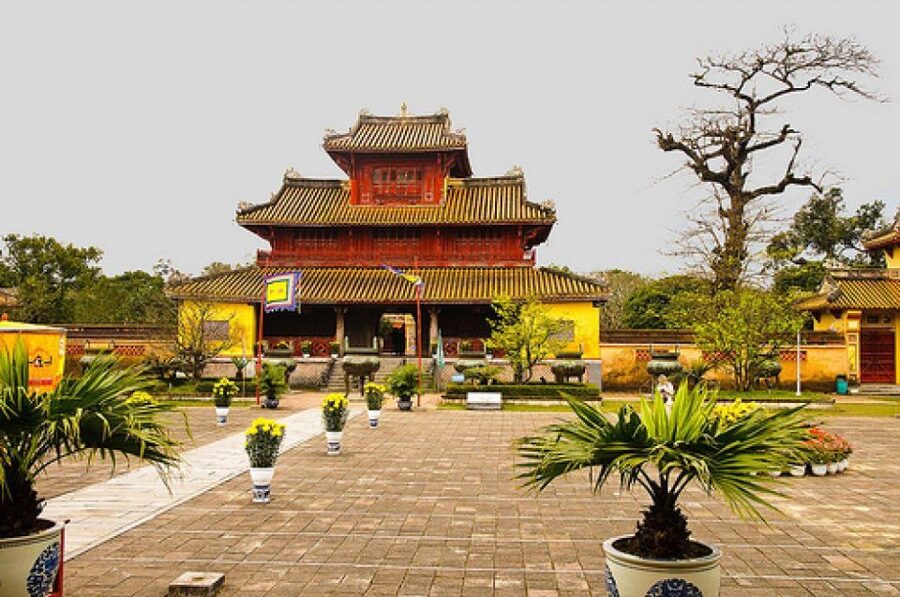
Thai Hoa Palace, or the Palace of Supreme Harmony, is one of the most important stops. Thirteen Nguyen emperors, from Gia Long to Bao Dai, were crowned here. In a monarchy built around ceremony, this was the symbolic center of the country.
The palace is especially rewarding with a guide because the building’s purpose can be missed when you are focused on decoration. The setting, layout, and formal use of the hall all point to the importance of the emperor as the center of the political order.
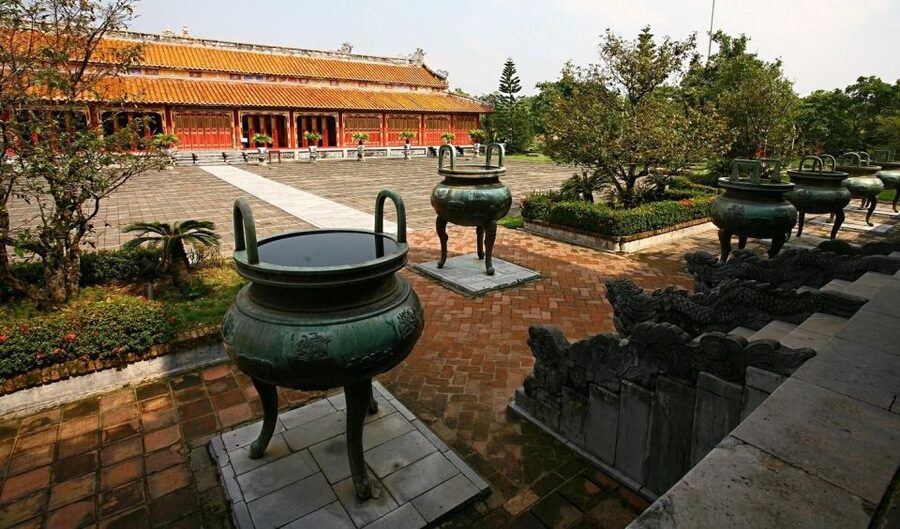
Nearby, you see Hien Lam Pavilion and the Nine Dynastic Urns. Emperor Minh Mang commissioned the nine bronze urns in 1835, and they were completed in 1837. They stand before The Mieu Temple and represent the Nguyen Dynasty and its royal ancestors.
The urns are not generic decorations. Each carries symbolic meaning connected with the dynasty, the country, and the natural world. A guide can point out these connections, including the importance of animals and numbers. This is one of the places where the tour’s explanations add much more than a quick photograph.
More castles to explore around the world:
- Stonehenge, Windsor Castle, and Bath from London
★ 4.5 · 18,662 reviews - Bucharest: Dracula’s Castle, Peles Castle, & Brasov Old Town
★ 4.5 · 17,858 reviews - From Munich: Neuschwanstein & Linderhof Castle Full-Day Trip
★ 4.6 · 14,646 reviews - Edinburgh Castle: Guided Walking Tour with Entry Ticket
★ 4.7 · 11,699 reviews
The Mieu Temple and royal family stories
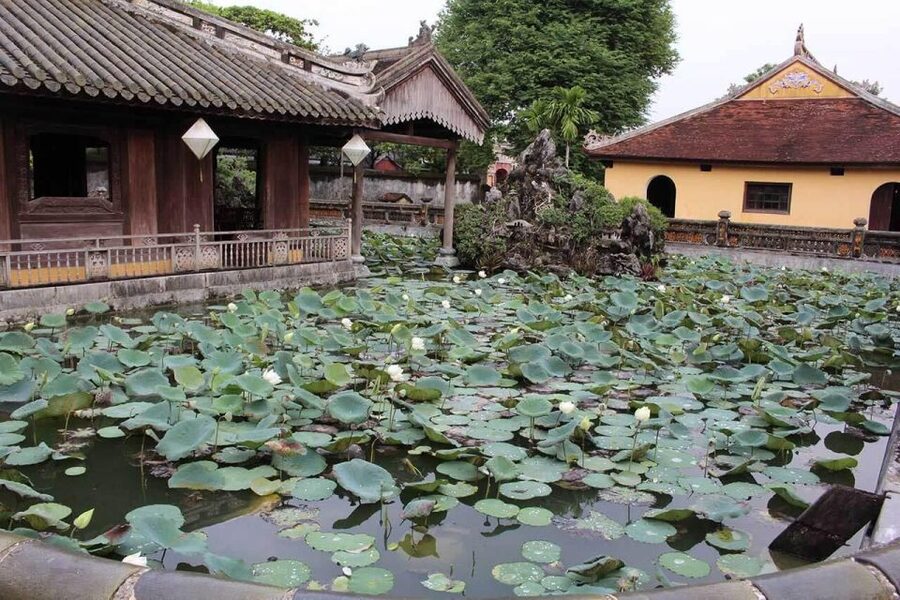
The Mieu Temple was built in 1821 under Minh Mang to honor ten Nguyen kings. Its purpose helps explain the dynasty’s effort to link present rulers with their ancestors and establish continuity.
The temple is also a good place to ask questions. The royal family was not a simple nuclear household. The emperor’s wives, secondary wives, concubines, children, servants, and eunuchs all had defined places within the court system. Guides explain this structure in a way that makes the Forbidden Purple City easier to understand later.
This is a strong point of the walking tour. You are not only looking at monuments. You are learning how the court operated and how social rank shaped everyday life inside the walls.
Entering the Forbidden Purple City
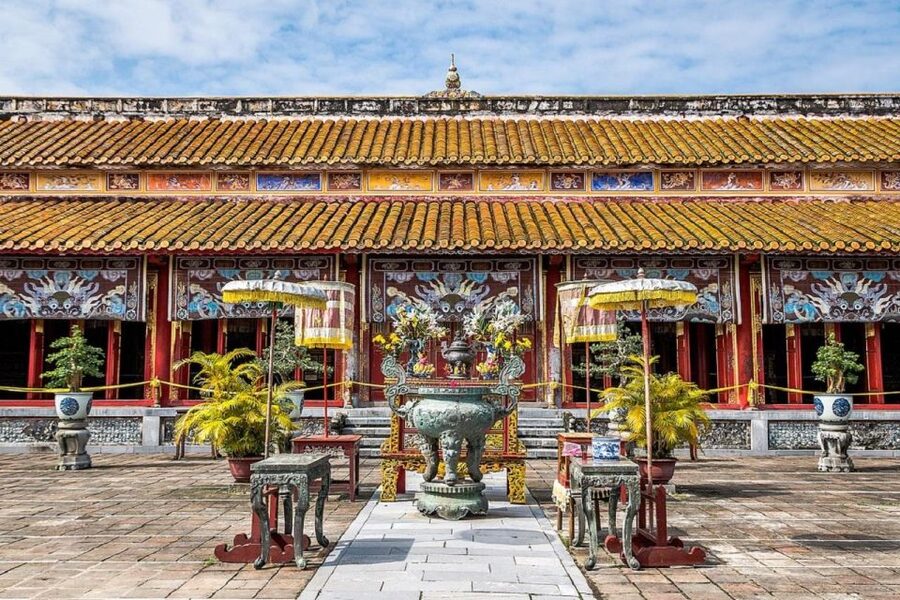
Behind Thai Hoa Palace lies the Forbidden Purple City, first built under Gia Long in 1804 and renamed during the third year of Minh Mang’s reign in 1822. This was the private center of royal life, reserved for the emperor and his close household.
Much of the complex was damaged, so you should set your expectations sensibly. Some sections are restored, some are incomplete, and some spaces are easier to picture than others. The site’s power comes partly from what remains and partly from understanding what once filled these courtyards and halls.
The route can include Kien Trung Palace, Thai Binh Pavilion, Thieu Phuong Garden, Duyet Thi Duong Royal Theater, Trieu To Mieu, and Hien Nhon Gate. You will not treat every stop as a major monument. Some are short viewing points, while the larger Imperial City section receives the most time.
Kien Trung Palace is associated with the later royal period and provides a look at the changing architectural character of the court. Thai Binh Pavilion and Thieu Phuong Garden offer a quieter contrast to the formal gates and ceremonial halls. Duyet Thi Duong Royal Theater reminds you that court life included music, performance, and entertainment as well as administration.
Guides often adjust the walk to the conditions. In hot weather, Misa and other guides have been praised for keeping explanations in shaded areas and allowing cooling breaks. In rain, guides have continued with small groups when conditions permitted. Still, you should bring water, sun protection, and suitable footwear.
What the guides add to the experience
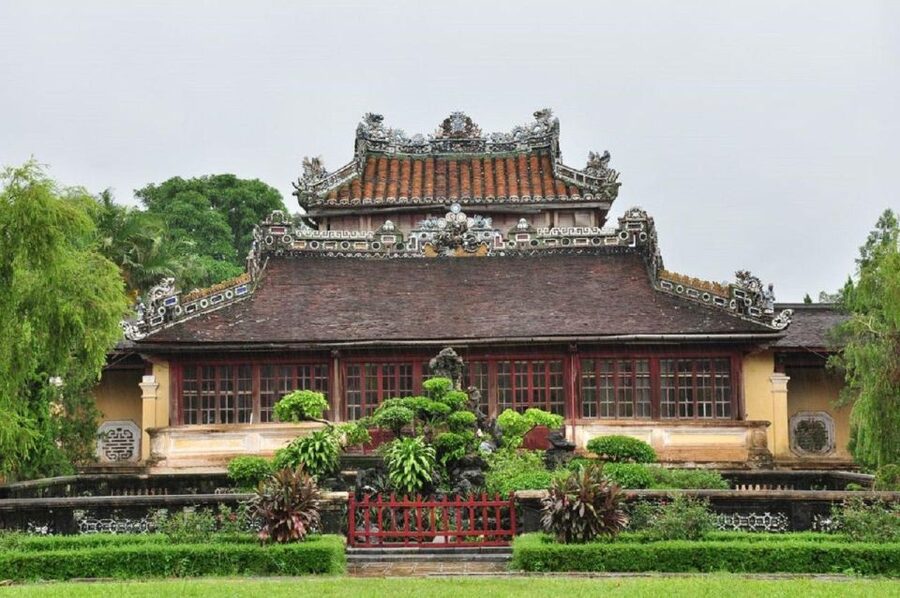
The strongest part of this tour is the guide’s delivery. Names that appear repeatedly in the service include Misa, Nhi, Ha, Duy, Nhien, Linh, Minh Sang, Hoa, and Hung. The individual guide can vary, but the useful qualities are consistent: clear English, friendly conversation, a good pace, and an ability to answer questions.
Misa is known for lively explanations of royal symbolism, architecture, Confucian thought, feng shui, and Buddhism. Nhi has been praised for detailed accounts of the Nguyen emperors and for making the subject enjoyable for families. Ha has a calm, accessible style, while Duy is described as friendly and engaging.
You should expect interpretation rather than a lecture. Guides ask questions, invite conversation, and leave time for you to inspect exhibits independently. That makes the walk a good fit for anyone who wants more than a list of dates but does not want an academic seminar.
The small-group format can sometimes become a private tour if few people book. That gives you more room for questions and makes it easier to adjust the pace. It also means the quality of the experience depends heavily on the guide assigned that day, although the available feedback points strongly toward capable English-speaking staff.
Choosing the private car option
The private car option works differently. An English-speaking driver collects you from a city-center hotel, Hue Railway Station, or another agreed location and takes you around the sights you select. It is designed for flexibility, not detailed guiding.
Possible stops include:
- Imperial City
- Thien Mu Pagoda
- Minh Mang Tomb
- Tu Duc Tomb
- Khai Dinh Tomb
- Thuy Tien Abandoned Water Park
This is the better choice if you want to see several places in one day, avoid arranging separate taxis, or travel with family and luggage. You can set a trip of up to eight hours and move at your own pace.
The limitation deserves emphasis. The driver speaks English for communication, but is not presented as a licensed professional guide. At the Imperial City, you will get transport and practical help, but not the same level of historical explanation offered by the walking option.
For a full day, consider the distance and your energy. The Imperial City alone can take a few hours, and adding two or three tombs makes for a busy schedule. Combo tickets can reduce the total entry cost: the stated options are 420,000 dong for the Imperial City plus two tombs, or 530,000 dong for the Imperial City plus three tombs, valid for two days.
Is the 12 dollar price good value?
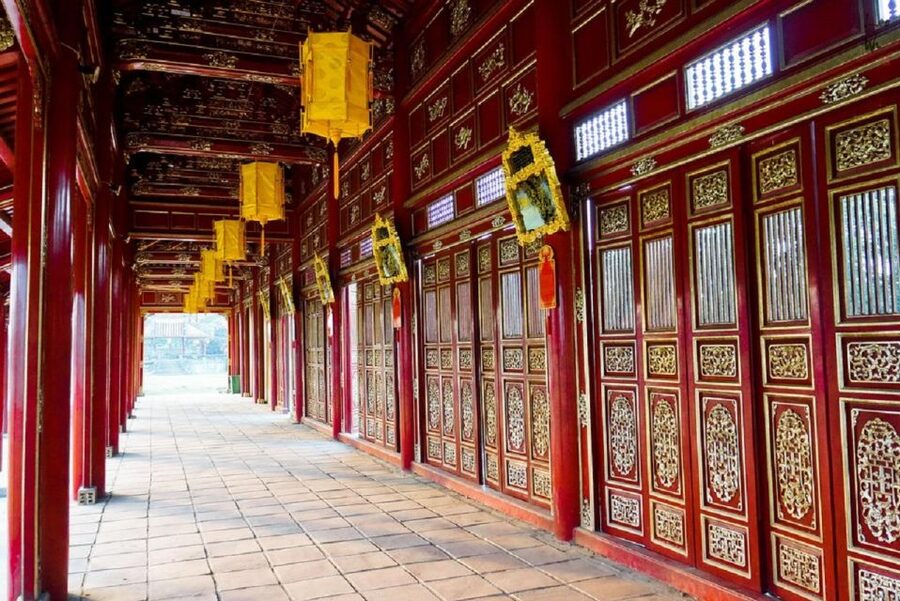
At $12 per person, the walking option is easy to justify if you want context at the Imperial City. The fee covers the local guide and the guided walk, but not entry. You still pay the 200,000 dong adult ticket separately, so compare the total cost rather than treating $12 as the final price.
The private car price may depend on the selected itinerary and group arrangement, so confirm the exact option before booking. Its value comes from convenience and flexibility rather than guiding. For two or more people, a private vehicle can make sense when you are combining distant sights and would otherwise pay for several rides.
I would not choose the car option solely to learn the history of Hue. I would choose it to connect the historical sites efficiently, then add a separate guide or use the walking option at the Imperial City if interpretation is important to you.
Timing, weather, and practical details
The walking trip lasts about two and a half hours, with advertised start times depending on availability. An early morning start is smart. One visitor who toured around 8:30 in mid-May found the timing useful because the site has a lot of open-air walking and the heat builds quickly.
Hue can also be wet. Bring a light rain layer and protect your phone or camera. The pace can be relaxed, but this is still a walking tour over a large historic compound.
Pickup and drop-off are included for the private car option at city-center hotels in Hue or Hoi An, Hue train station, and Phu Bai Airport in Hue. Locations outside the central areas may cost extra, so confirm your address before departure. The walking tour does not include hotel pickup. You meet at the cannons.
Free cancellation is available up to 24 hours before the start time, and you can reserve now and pay later. Those terms are useful if your Hue schedule depends on train times or changing weather, but they do not remove the need to check the meeting point and ticket costs.
Who should book this Hue tour?
I would choose the walking tour for first-time visitors to Hue, families who want the children to understand what they are seeing, and anyone interested in the Nguyen emperors and court life. It is also a good second visit if you previously walked through the citadel alone and felt you missed the meaning behind the buildings.
The private car suits couples, families, and small groups that want several sites in one day. It is especially practical when you want the Imperial City, a pagoda, and one or more royal tombs without arranging transport yourself.
I would be cautious if you want a completely self-guided visit with no fixed meeting time. The walking option depends on finding the guide at Ngan Gate, while the car option requires you to settle the pickup and route details in advance.
Should you book it?
Book the walking option if you want the Imperial Citadel to make sense, not just look impressive. The price is modest, the route covers the essential royal buildings, and guides such as Misa, Nhi, Ha, and Duy bring warmth and clear explanations to a complicated site.
Choose the private car if transport is your main need and you want to link Hue’s major sights at your own pace. Just remember that a driver is not the same as a guide. For most first-time visitors, the best value is the focused walking tour, with separate planning for tickets and, if desired, a car day for the tombs and pagoda.
FAQ
Where does the walking tour meet?
The guide meets you at the four bronze cannons near Ngan Gate, also called Cua Ngan, at the Hue Citadel. The guide holds an A4 sheet with your name. There are five cannons on the opposite side, so make sure you are at the correct location.
How long is the walking tour?
The Imperial City and Forbidden Purple City walking tour lasts about 2.5 hours, or 150 minutes.
Is hotel pickup included for the walking tour?
No. The walking tour meets at the four cannons near Ngan Gate. Pickup and drop-off are included for the private car option at eligible city-center locations.
What does the private car option include?
It includes a private car and an English-speaking driver. You can choose from sites such as the Imperial City, Thien Mu Pagoda, Minh Mang Tomb, Tu Duc Tomb, Khai Dinh Tomb, and Thuy Tien Abandoned Water Park.
Is the private car driver a tour guide?
No. The driver speaks English for communication but is not a professional licensed guide. Choose the walking option if you want detailed explanations inside the Imperial City.
Are entrance tickets included?
No. The Imperial City entrance ticket is listed at 200,000 Vietnamese dong per adult. Combo tickets are available for the Imperial City with two or three royal tombs.
Can I cancel or pay later?
You can cancel up to 24 hours before the activity for a full refund. You can also reserve now and pay later.
New castle tours around the world
- From Prague: Karlštejn Castle & Koněprusy Caves Tour★ 4.9 · 183 reviews
- Prague: 2.5-Hour Vyšehrad Castle with Gorlice & Tickets★ 4.5 · 118 reviews
- Prague: Alchemy & Mysteries Bridge and Castle Evening Tour★ 5.0 · 8 reviews
- Prague Castle: 1-Hour Introduction Tour with Entry Ticket★ 4.2 · 41 reviews
- Potsdam: The evening Wannsee tour. Castles, parks, and villas.★ 4.7 · 63 reviews
- Prague: Stunning Viewpoints, Castle, City & Park Bike Tour★ 4.6 · 38 reviews
- Prague: River & Park Bike Tour to Troja Chateau★ 5.0 · 8 reviews
- Ljubljana: Postojna cave & Predjama castle small group tour★ 4.9 · 29 reviews
Fortress & Citadel Tours, compared.

Carcassonne: Castle and Ramparts Entry Ticket
Read our review →
Salzburg: Hohensalzburg Fortress Admission Ticket
Read our review →
Salzburg: Best of Mozart Fortress Concert and Dinner
Read our review →
From Cairo Alexandria Catacombs, Citadel Day Trip with Lunch
Read our review →
Desert Safari: Luxury Fortress Dinner, Camel Ride & Dune Bashing
Read our review →
Cairo: Egyptian Museum, Citadel, and Old Cairo Guided Tour
Read our review →
Cairo Citadel, Old Cairo and Khan El Khalili: Private Tour
Read our review →Split: Sunset at Klis Fortress with Sightseeing Bus
Read our review →Browse the lists this tour appears in