
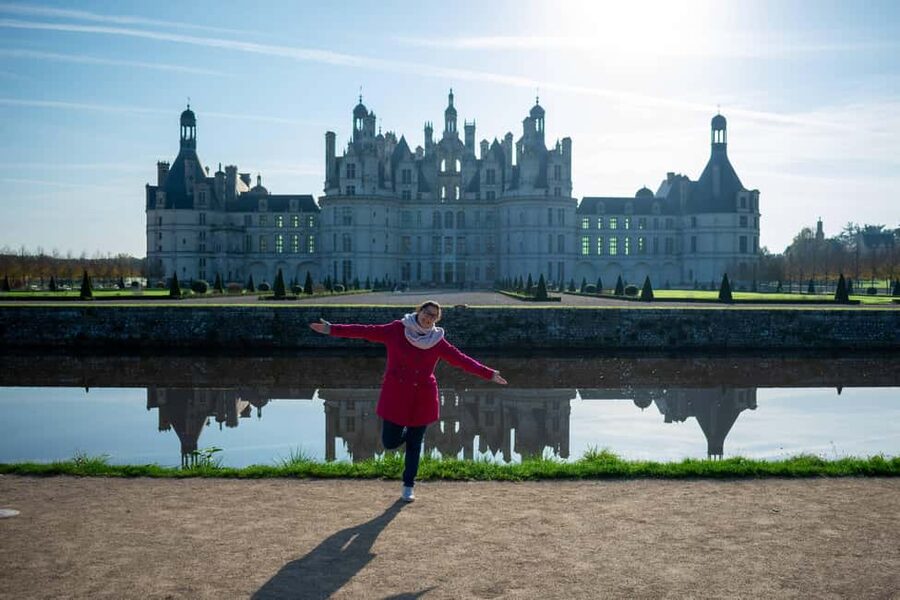
Review · FRANCE
Guided tour of the Château de Chambord
Château de Chambord makes a strong first impression, but its wild design makes more sense once someone explains the ideas behind it. This 90-minute tour with Sarah Guibout-Chatelain brings Francis I, the French court, and the castle’s famous double-helix staircase into the story.
I like two things here: the group is limited to 10, and the tour is interactive rather than a one-way speech. You may be asked to answer questions or imagine yourself as a French courtier climbing the staircase. The microphone and headphones also help you hear Sarah clearly inside the large rooms.
The main catch is practical: your castle admission is not included, and you must buy it separately. The building can also be cold and drafty, and the tour involves standing, walking, and climbing stairs for the full hour and a half.
Key points before you book
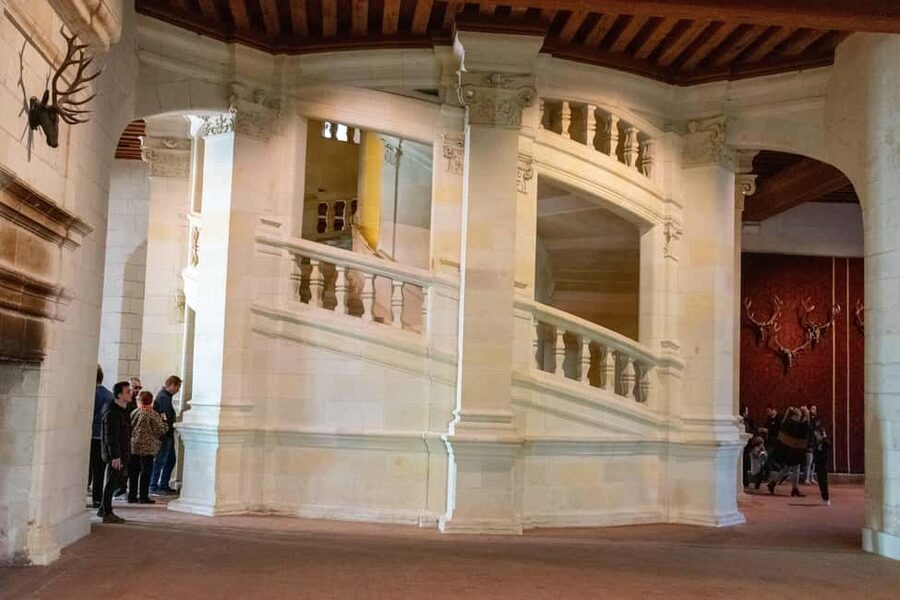
- The double-helix staircase is the tour’s star: Two stairways wind around one another without meeting, creating one of Chambord’s most memorable design tricks.
- Sarah keeps the visit active: Expect questions, historical storytelling, and a little role-play rather than a dry lecture.
- The group stays small: With no more than 10 participants, the guide has room to involve people directly.
- The terraces finish the tour: After the indoor route, you end above the castle with views of the building’s elaborate roofline.
- Budget for a separate entrance ticket: The $53 tour price covers the guide, microphone, and headphones, but not entry to Chambord.
- Dress for an unheated-feeling monument: Warm clothes and good shoes matter, especially in colder months.
Why a guide helps at Château de Chambord
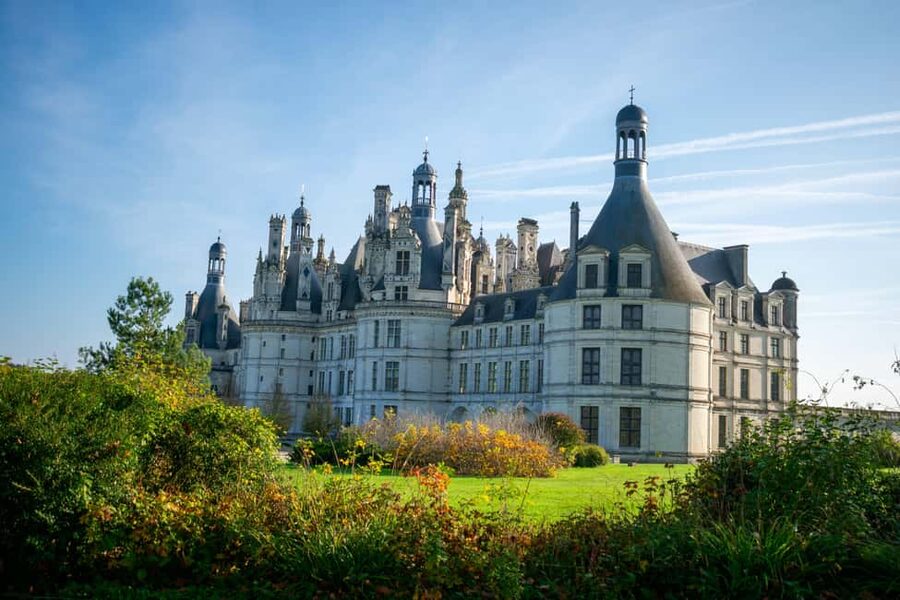
Chambord is easy to admire and surprisingly easy to misunderstand. Towers, chimneys, stairways, and carved details crowd the building. Without context, you can spend your visit simply moving from room to room and missing the ideas that make the design special.
This tour gives the castle a clear thread. Sarah tells the story of Francis I and his ambitious decision to create a royal residence that became a major work of the French Renaissance. The point is not only that the castle is large or ornate. It is that Chambord was conceived as an extraordinary statement of power, imagination, and courtly life.
I especially like the interactive approach. You are not expected to sit quietly while dates and names pass over your head. Sarah may ask questions or invite you to picture yourself as a French courtier. That small change makes the visit easier to follow, particularly for families and for anyone who finds standard historical tours a little stiff.
The age range is broad by design. The tour is presented as suitable for people from age 7 to 97, though younger children still need to remain with an adult. Unaccompanied minors are not allowed.
More Guided Castle Tours in France
- Nice: Old Town & Castle Hill Informative Guided Walking Tour
★ 4.9 · 248 reviews - From Tours: Chenonceau and Chambord Castles Guided Tour
★ 4.8 · 86 reviews - Carcassonne: Private Guided Tour of the Medieval Fortress
★ 4.5 · 64 reviews
Meeting Sarah at the castle entrance
The meeting point is in front of the Château de Chambord entrance, though the exact starting point can vary according to the option you book. Pay attention to your confirmation so you know which of the listed starting options applies to you.
Sarah has been praised for being easy to find and communicative before the tour. That is useful at a large monument, where a vague meeting spot can waste precious time. The group size is capped at 10, and it may be smaller. On one recent visit, the group consisted of only two people, making the tour feel almost private.
The tour is available in English and French. Some material is presented in its original language, so ask for clarification if a name or phrase goes by too quickly. The provided microphone and headphones are a practical touch. Chambord’s interiors can be spacious and echoing, and hearing the guide matters more than having one more decorative detail pointed out.
Allow time to get ready before the start. Large bags and luggage are not allowed, and selfie sticks, flash photography, and touching the exhibits are prohibited. Bring identification for children, as a passport or ID card may be required.
Francis I and the castle’s bold idea
The opening part of the tour sets up the reason Chambord exists. Francis I wanted a royal castle unlike the usual medieval fortress. The result was a huge, theatrical project that is now known as a jewel of the French Renaissance.
The useful thing about this story is that it helps you read the building. The castle is not simply a comfortable home arranged for everyday life. Its scale and decoration send a message. The design asks you to look upward, move through grand spaces, and notice how much effort went into features that could have been made far more simply.
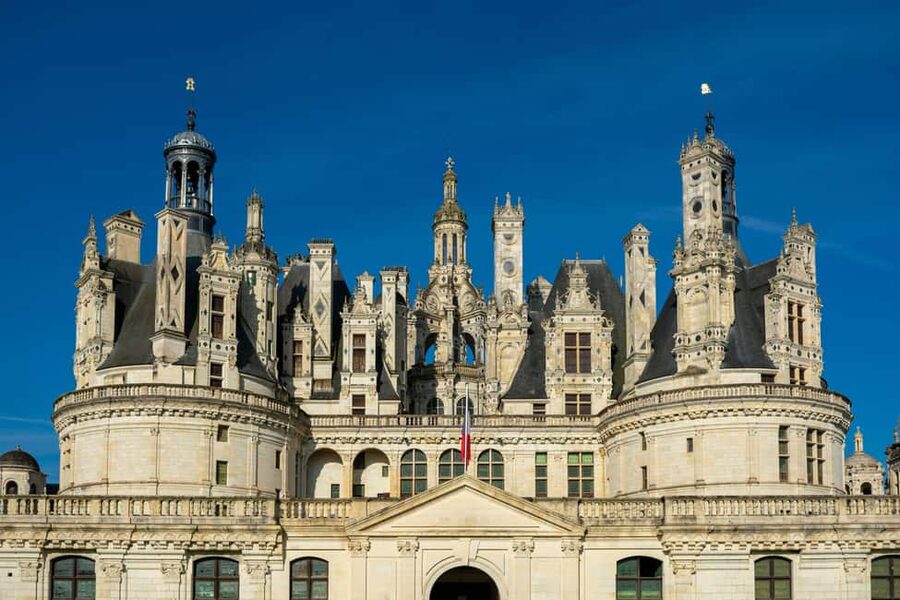
A guide can connect those choices for you as you walk. Instead of seeing a roof covered with towers and chimneys as a busy jumble, you begin to understand it as part of the castle’s visual drama. Instead of treating each room as an isolated stop, you see how the whole project was meant to impress.
Sarah’s style, based on the experience described by several participants, combines strong historical knowledge with humor and enthusiasm. That balance matters. Chambord has plenty of names, dates, and architectural terms, but a little humor keeps the information moving.
The double-helix staircase in person
The double-helix staircase is the clearest reason to choose a guided visit. Two stairways twist around a central space. People using one staircase can see the other, but the two routes do not meet in the usual way.
That makes the staircase more than a way to reach the upper levels. It is a puzzle built into the center of the castle. The interactive format fits it well, since Sarah can ask you to think about how a courtier might use the stairs or what it would feel like to pass someone without sharing the same route.
You should be ready to climb. There is no elevator, and the tour includes stairs as well as walking and standing. Wear shoes that you can use comfortably for 90 minutes. If you dislike stairs or have difficulty with sustained standing, this is not the right activity for you.
The staircase also gives the guide a strong moment for explanation. You can look at the structure while hearing why it is unusual, rather than trying to work out its design from a quick glance. The result is more memorable than simply taking a photograph and moving on.
More Loire chateaux to visit around France:
- Loire Valley Castles Day Trip from Paris with Complementary Wine
★ 4.5 · 3,907 reviews - Chambord: Entry Ticket to the Castle
★ 4.6 · 1,841 reviews - From Paris: Loire Valley Castles Day Trip With Wine Tasting
★ 4.6 · 1,727 reviews - Chenonceau Castle Admission Ticket
★ 4.7 · 1,515 reviews
From rooms and details to the rooftop terraces
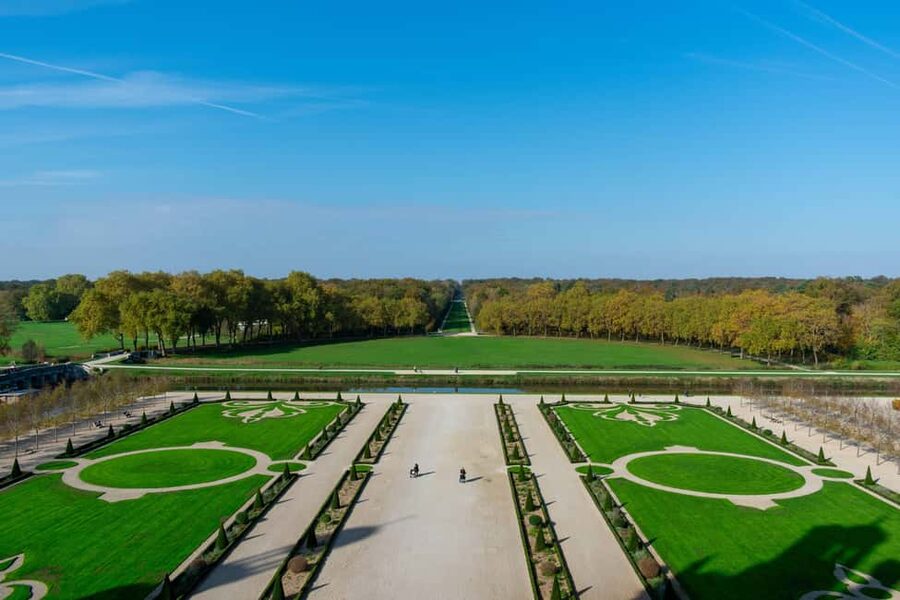
The tour ends on the terraces of Château de Chambord. This is a smart finish because the terraces let you look back at the building as a whole.
From inside, Chambord can feel like a series of rooms, corridors, and stairways. From the top, the roofline comes together. You can see the castle’s collection of towers, chimneys, and architectural details in one broad view. The ending gives you a chance to connect the story of Francis I’s project with the physical scale of what he commissioned.
The terraces are also one reason to bring a warm layer. The castle is open to the outside in places, and cold air can move through the building. A visit in late autumn or winter may feel distinctly chilly. One participant specifically wished for more heating and suggested visiting in summer instead.
That does not make the tour a poor cold-weather choice, but it changes how you should prepare. Wear a coat or warm sweater, and do not assume that a grand castle interior will feel cozy. In warmer months, the temperature should be less of a concern, though suitable shoes remain important.
What $53 means in practical terms
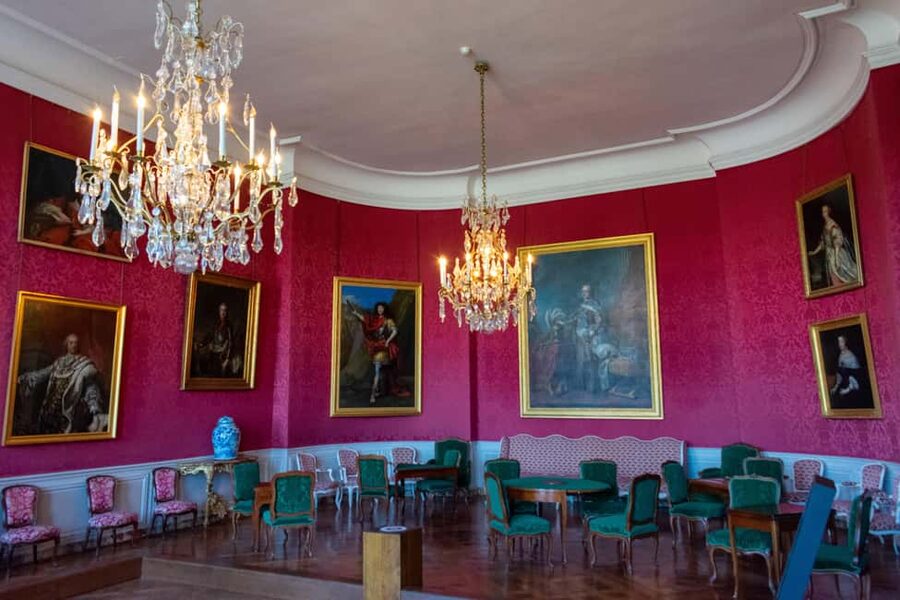
At $53 per person, this is not the cheapest way to see Chambord because the castle entrance ticket comes separately. You need to buy admission through the castle’s own ticket office or website before your visit. Include that extra cost when comparing the tour with a self-guided option.
The real value is the guide’s time and the structure of the visit. You receive 90 minutes with a local guide, a small group, and audio equipment. If you would otherwise wander through the castle without understanding the design, the extra expense can be worthwhile.
I would be less quick to recommend it if you mainly want to walk at your own pace, take photographs, or spend a long time in selected rooms. A 90-minute guided route gives you a focused overview. It does not promise unlimited time at each stop or a full day of independent exploration.
The tour also makes sense for a first visit. One participant said they would not want to visit Chambord without a guide because the castle can lack context on its own. That is a fair point. The building supplies plenty to look at, but the guide supplies the connection between the details.
A good fit for families and curious first-time visitors
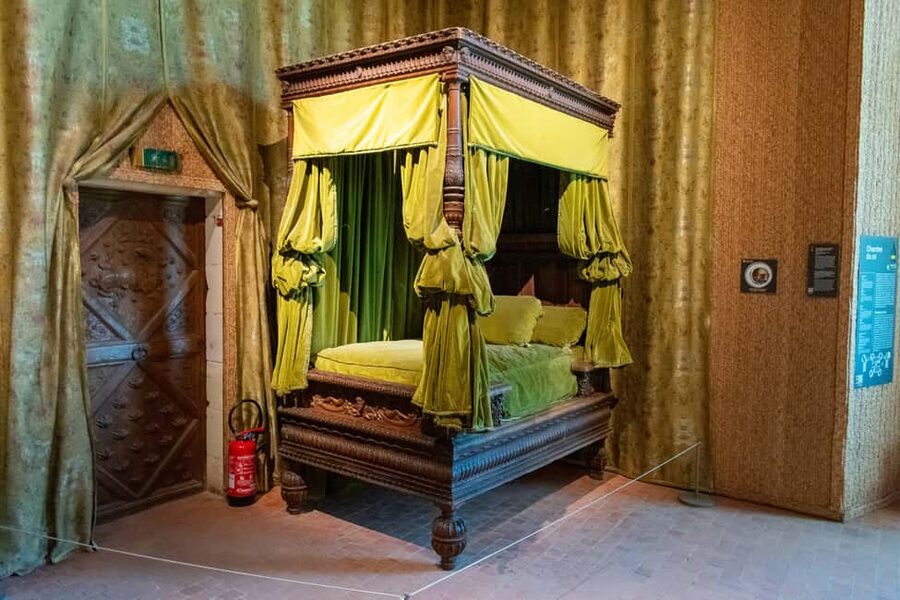
The questions and role-play make this a better choice for families than a formal lecture. Children can take part by answering questions and imagining themselves at the French court. The guide can also keep the large subject of French Renaissance architecture tied to visible objects and spaces.
Adults who enjoy history should find enough substance here as well. Sarah’s storytelling includes Francis I, the castle’s purpose, and the design of the staircase. Her use of humor helps keep the tour from feeling like a string of facts.
A small group also improves the odds of a personal exchange. With up to 10 people, you can ask a question without holding up a large crowd. The guide has room to involve the group, which is central to this tour’s appeal.
This is not a good fit for anyone using a wheelchair or anyone with significant mobility limitations. Strollers can be used on the ground floor, but they must be left downstairs for the upstairs portion. That detail is important for families with young children. You should also plan on remaining with children throughout the visit.
How the tour compares with a screen guide
Chambord offers iPad guides, but this experience gives you a live person who can respond to the group. That difference matters most at the staircase and in the moments when a question comes up.
A screen guide can let you choose your own pace and may suit independent visitors. Sarah’s tour gives you a set route, a human voice, and the chance to ask or answer questions. It also helps prevent the common problem of looking at a striking building without knowing what deserves your attention.
I would choose this tour if you want the castle explained in a lively way and you are happy to stay with the group. I would choose the self-guided option if silence, flexibility, and a slower or faster pace matter more than interpretation.
Planning around the 90-minute route

The stated duration is 90 minutes, with the tour beginning at the castle entrance and ending on the terraces. Since the route includes indoor areas, stairs, and outdoor-facing spaces, dress for changing temperatures.
Book early if your schedule is tight. The group is small, and the tour has limited places. You can reserve now and pay later, which helps if you are still arranging your Loire Valley plans. Free cancellation is available up to 24 hours before the activity for a full refund.
Do not arrive with luggage or a large bag. Flash photography is not allowed, and you should not touch the exhibits. Bring a valid passport or ID card for children, and check the meeting-point details for your selected option.
Who should book the Chambord guided tour?
Book this experience if you want the castle’s architecture explained rather than simply admired. It is particularly useful for a first visit, families who enjoy questions and storytelling, and anyone who wants a small group instead of a large crowd.
Sarah’s tour earns its strongest praise for her enthusiasm, humor, clear communication, and ability to make the past feel present. The double-helix staircase, headphones, and terrace finish add real substance to the 90-minute route.
Skip it if you need step-free access, want to avoid standing, or prefer to explore alone. Also remember to add the separate admission ticket to the total price.
For most curious visitors who can manage the stairs, I think the guide is worth considering. Chambord gives you the spectacle. Sarah helps you understand why it was built that way.
FAQ
How long is the Château de Chambord tour?
The guided tour lasts 90 minutes. It begins at the castle entrance and ends on the terraces.
Is the Château de Chambord entrance ticket included?
No. The castle admission ticket is separate and should be purchased directly through the castle’s ticket office or website.
What languages are available?
The live tour is available in English and French. Some content is shown in its original language.
How large is the tour group?
The tour is limited to 10 participants, making it a small-group experience.
Does the tour include the double-helix staircase?
Yes. The tour includes the famous double-revolution staircase and may ask you to take part by imagining yourself as a French courtier.
Is there an elevator at Château de Chambord?
No. The tour involves climbing stairs, and there is no elevator.
Is the tour suitable for wheelchair users?
No. The experience is not suitable for wheelchair users or people with mobility impairments.
What should I bring and wear?
Wear suitable shoes and warm clothing, since the tour includes walking, standing, stairs, and areas that can be cold and drafty. Bring a passport or ID card for children. Large bags, luggage, selfie sticks, and flash photography are not allowed.
New castle tours around France
- Pierrefonds: Château de Pierrefonds Entrance Ticket★ 4.7 · 152 reviews
- Paris: Loire Valley Castles Tour with Wine Tasting★ 4.9 · 22 reviews
- PARIS: Private transfer Château Versailles van 7 people 4H★ 3.0 · 4 reviews
- Paris: Château de Vincennes Entry Ticket★ 4.5 · 342 reviews
- Paris to Loire Valley Castles Chambord & Chenonceau -DayTrip★ 4.7 · 2 reviews
- Paris: Loire Valley Castles Tour with Chambord & Chenonceau★ 4.8 · 51 reviews
- Avignon: Full-Day Wine Tour around Châteauneuf-du-Pape★ 4.9 · 83 reviews
- Paris: O Chateau’s Wine Tasting Dinner★ 4.2 · 30 reviews
Loire Valley Chateaux, compared.
Loire Valley Castles Day Trip from Paris with Complementary Wine
Read our review →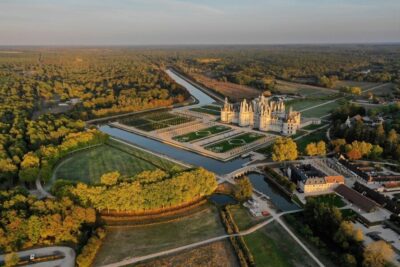


From Paris: Full-Day Loire Valley Chateaux Tour
Read our review →
Loire Valley Castles Trip with Chenonceau and Chambord from Paris
Read our review →
Amboise: Clos Lucé Castle, Da Vinci Park and Museum Ticket
Read our review →
Loire Valley Wine and Castles Small-Group Day Trip from Paris
Read our review →
Loire Valley: Château Royal d’Amboise Entrance Ticket
Read our review →Browse the lists this tour appears in